
Enjoy the benefits of a premium membership!
Upgrade Account
-
TalkBass has been independent since 1998. Add your voice.
Create a free account to reply to discussions, view embedded media, and browse with fewer display ads.
Join free Log in
Want zero display ads or expanded classifieds tools? Compare plans.
You are using an out of date browser. It may not display this or other websites correctly.
You should upgrade or use an alternative browser.
You should upgrade or use an alternative browser.
Installing flatwounds - Noob question
- Thread starter Jazzpunk
- Start date
More options
Who Replied?



Total noob question. I've never owned a bass with flatwounds. Just put on the E string from a new pack of LaBella 760FL and unsure that the string is sitting right. Do these just naturally fall into position or should I be using the ball end as an indicator?
Almost certainly not but we still needs pictures to see what all needs to be sorted out. Going back nearly 40 years, I don't recall using any type or make of bass strings that just naturally fall into correct position, consistently.


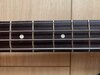

Some pics. I've only changed the low E so far until I can confirm I'm doing it right!
Looks good to me. No major issues with what you have done so far.
Looks good to me. No major issues with what you have done so far.
Great thanks!
You might be able to make a slightly tighter break-angle or witness point on the E string going over the bridge saddle.
The E string does seem to be wrapped around the tuning post properly, though the image of that is cut off. Nothing else to say in that regard about the other strings on their respective tuners because there's no pictures provided for that.
The E string does seem to be wrapped around the tuning post properly, though the image of that is cut off. Nothing else to say in that regard about the other strings on their respective tuners because there's no pictures provided for that.

The unasked question: Do you HEAR a problem with the E string?

From the photos it looks like a heavier gauge, so you might check the nut to make sure it is seated correctly - it might need an adjustment.

I wouldn't be too aggressive setting the witness points at the bridge. I hosed the E of the same strings that way.
I wouldn't be too aggressive setting the witness points at the bridge. I hosed the E of the same strings that way.
That shouldn't happen so it leads to the question, how did you do that? What's your technique for setting your witness points?
Simply firmly pressing down for a moment on the string, just beyond the contact points on the bridge saddles (on the nut side), should do the job fine. At most, one may need to press down on the string on both sides of the bridge saddle with their thumb to get satisfactory seating of the string over the saddle.
It doesn't require being aggressive, like putting full body weight on it or using some other hard object like a tool intended for some other purpose. Don't do that.
Last edited:

From the photos it looks like a heavier gauge, so you might check the nut to make sure it is seated correctly - it might need an adjustment.
Since this is a noob experience, the strings should not bind in the nut slots.


PS: I cut strings 4 finger-widths past the tuner they will be wound around.
This isn't rocket surgery, just make sure the string is on the saddle and nut, not twisted, and after you finish winding and tune it, set the witness points at the nut and bridge by pressing down on the string on each side of the nut and saddle.
This isn't rocket surgery, just make sure the string is on the saddle and nut, not twisted, and after you finish winding and tune it, set the witness points at the nut and bridge by pressing down on the string on each side of the nut and saddle.
Last edited:

It all looks fine to me.
It's just a new set of strings... put them on and play.
No disrespect to @hennessybass, but this, unfortunately, doesn't always work. As @burgerdj points out, the cutting of the nut may not work for strings of a different gauge than the original. Just recently, I put TI flats (low tension, .100 wide E-string) on a very expensive fender Custom Shop bass with a nut cut for .105 Fender strings. The E-string of the TIs bottomed out at the first fret, and the bass was unplayable with the TIs without a new nut. (I opted to switch to a different string brand that also had .105 for the E.)
Hopefully none of this will happen to you, the OP, but make sure that the new string fits snugly in the nut slot. Too loose can make for unpleasant rattle problems, too tight can mean it sits too high and has unpleasant action.

Yes, well maybe.Is the A string seated in the saddle properly.
The saddles have three slots each, and the string can rest in any of them. The purpose is to choose the slot that puts the string in the best position relative to the pickups, the neck, the fingerboard, and the other strings.

Sounds like the 7ender CS didn't cut that slot correctly in the first place. That E string must have been riding above the bottom of the slot, not fully seated in it (as in, the slot was not really wide enough for that string), otherwise, it too, would have been too low for the first fret.No disrespect to @hennessybass, but this, unfortunately, doesn't always work. As @burgerdj points out, the cutting of the nut may not work for strings of a different gauge than the original. Just recently, I put TI flats (low tension, .100 wide E-string) on a very expensive fender Custom Shop bass with a nut cut for .105 Fender strings. The E-string of the TIs bottomed out at the first fret, and the bass was unplayable with the TIs without a new nut.


