There are two sources of interference:
1) Electromagnetic hum - wiring and transformers nearby, the currents flowing in them create fields that will make some basses hum.
2) Electrostatic interference - can be any frequency, the voltages on things create electrostacic fields that can cause noises in your bass.
Your bass is pretty well protected against electromagnetic hum, as the pickups (where the vast majority of that problem comes from) are humbucking. Against electrostatic interference, it hasn't got a chance.
A very well shielded Jazz bass (using single coils) is protected against electrostatic interference. Against electromagnetic hum, it doesn't have a chance. The only way to eliminate hum from single coils is to encase them in a magnetic shield, which.....will kill the intended signal.
Any shielding (assuming the shields are grounded) is better than none, but electrostatic shieding relies on conductivity, which is why the copper stuff is better. Wheter it's a singificant or marginal difference depends on a lot of things - mostly how good the paint is and whether or not it's thick enough.
Star grounding is a useful technique - it's especially useful if you're building something like an AC powered amplifier, where there are currents inside that you have to isolate from small signals. In certain circumstances, star grounding is NOT the right way to do things - RF intrusion, you're better off with a short wire to the closest point in the shiielding, as a longer ground wire is an inductor. In a musical instrument, unless you have a preamp in there with a switching power supply, it's not something that you need to worry about. Getting every thing shielded and all the shields grounded is what you need to focus on.
The good news is, your bass, if you do a decent job of shielding it against electrostatic fields, can be immune to most of what's out there. But as is, it's not bulletproof.




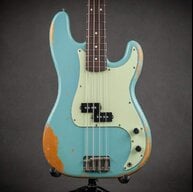





 ) But the split-coil humbuckers and minimal shielding on my PBs have always given me noise free operation wherever I’ve played.