• TalkBass has been independent since 1998. Add your voice.
    Create a free account to reply to discussions, view embedded media, and browse with fewer display ads.
    Join freeLog in
    Want zero display ads or expanded classifieds tools? Compare plans.

Is there an easy 2-way crossover?

I used to use a DBX 2-way crossover to split my signal, and then apply all the effects to just the higher frequencies, and then join the signals back together into one amp, but that involved a fairly elaborate rackmount system, and I'm trying to keep things simpler these days. I haven't kept up with the most current technology (I'm old), so is there now a simple (maybe pedal-based) method to split the signal by frequencies, so the deep stuff bypasses effects?
 
  • Like
Reactions: ThinCrappyTone2
Many 3 way cross overs can function as a 2 way by cranking one of the x-over points to their extreme. (I used an Audioarts back in the day). I also used an Ashley 4 way on a tri-amped system. Shop for used (1980’s) stuff.
You can probably find something for $100 or less.
 
I used to use a DBX 2-way crossover to split my signal, and then apply all the effects to just the higher frequencies, and then join the signals back together into one amp, but that involved a fairly elaborate rackmount system, and I'm trying to keep things simpler these days. I haven't kept up with the most current technology (I'm old), so is there now a simple (maybe pedal-based) method to split the signal by frequencies, so the deep stuff bypasses effects?
If you want a pedal based solution I think you'll get better suggestions posting in the Effects forum. ;) There are a variety of blender/switching ("loooper") boxes out there these days that can likely be adapted to your particular use case for clean/dirty, wet/dry, etc. If you can DIY, something like the Pedal PCB 3 way splitter and mixer boards would get you most of the way there for small money.
 
  • Like
Reactions: BeeBatty
Consider splitting full range and then high pass the other signal instead and use a small guitar amp with your effects. IME it's better to retain the full-range for you unaffected sound, My guitar player in one of the bands has a ver small 50 watt Vox and that thing can play even with a 200 or even 200 watt bass amp and sounds better than what I can do with a pedal ( The Source Audio Ultrawace can so multi-band distortion -- but no contest with just using another amp)
 
I used to use a DBX 2-way crossover to split my signal, and then apply all the effects to just the higher frequencies, and then join the signals back together into one amp, but that involved a fairly elaborate rackmount system, and I'm trying to keep things simpler these days. I haven't kept up with the most current technology (I'm old), so is there now a simple (maybe pedal-based) method to split the signal by frequencies, so the deep stuff bypasses effects?
I did a Google search using crossover pedal.

Maybe?

It's not the only hit I got.
 
one thing i've started doing lately: i run the bass into a sansamp, and then use the parallel out to go through effects.

but, i end up sending signals to 2 channels of the mixer (and roll off the bottom end of the 'effects pedals' channel). mix to taste, goes thorugh foh. not sure if that sort of thing may be useful for you ... ?
 
  • Like
Reactions: BassDaddySky
I did a Google search using crossover pedal.

Maybe?

It's not the only hit I got.

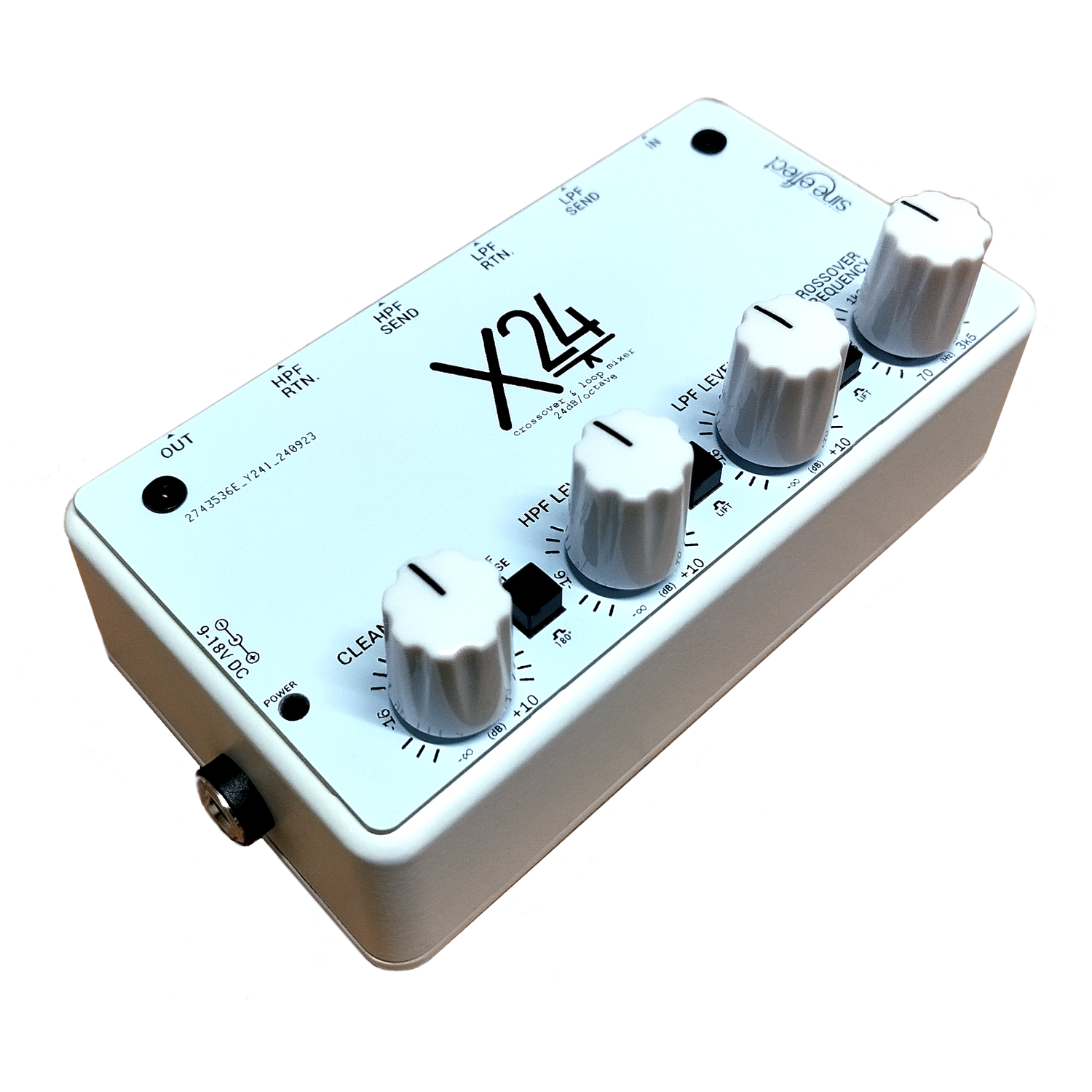
This is what I chose to use, as it's the most compact design compared to most other offerings in the space. It's simple and effective.

@DeepintheWoods for your use case, all the effects go in the high loop, and then you can use the Mix to balance the amount of clean lows with the affected highs. 50/50 mix is a great place to start. I keep the full range clean blend at minimum.

If you're running a lot of distortion or other effects that compress your highs, it can be worthwhile putting a compressor at really gentle compression in the low-loop to help keep the final signal cohesive.

In my setup, I run the XO in my synth chain: Octaver -> XO -> Fuzz, Phaser etc, in high loop -> ...the rest of the board. This keeps that suboctave from getting muddied while the rest of the signal gets modulated.
 
Last edited:
Consider splitting full range and then high pass the other signal instead and use a small guitar amp with your effects. IME it's better to retain the full-range for you unaffected sound, My guitar player in one of the bands has a ver small 50 watt Vox and that thing can play even with a 200 or even 200 watt bass amp and sounds better than what I can do with a pedal ( The Source Audio Ultrawace can so multi-band distortion -- but no contest with just using another amp)
This is what I do for my 8-string bass.
I split my signal using an a/b/y pedal. The A channel goes to the bass amp, B channel to the guitar amp (Katana 50ex) which has the bass rolled off completely and some dirt and reverb added and sometimes some tremolo or rotary effect. The guitar amp doesn't need much volume and solo'd it sounds thin but combined with the bass amp it sounds huge. Good solid bottom end but now with some shimmer and dirt on the top end only.
 
Consider splitting full range and then high pass the other signal instead and use a small guitar amp with your effects. IME it's better to retain the full-range for you unaffected sound, My guitar player in one of the bands has a ver small 50 watt Vox and that thing can play even with a 200 or even 200 watt bass amp and sounds better than what I can do with a pedal ( The Source Audio Ultrawace can so multi-band distortion -- but no contest with just using another amp)

This is what I do for my 8-string bass.
I split my signal using an a/b/y pedal. The A channel goes to the bass amp, B channel to the guitar amp (Katana 50ex) which has the bass rolled off completely and some dirt and reverb added and sometimes some tremolo or rotary effect. The guitar amp doesn't need much volume and solo'd it sounds thin but combined with the bass amp it sounds huge. Good solid bottom end but now with some shimmer and dirt on the top end only.

Even if you don’t buy the XO it’s worth reading through the user manual. They do a really killer job of explaining how the signal splitting/filtering and routing works, and maybe most valuable of all it has a load of usage examples that demonstrate nearly all the setups mentioned in this thread.

It’s good food for thought when you’re thinking about other solutions and ultimately how you’ll set up your signal.

 
Last edited:
  • Like
Reactions: Wasnex
is there now a simple (maybe pedal-based) method to split the signal by frequencies, so the deep stuff bypasses effects?
Check the following thread:

 
  • Like
Reactions: bassbrad