• TalkBass has been independent since 1998. Add your voice.
    Create a free account to reply to discussions, view embedded media, and browse with fewer display ads.
    Join freeLog in
    Want zero display ads or expanded classifieds tools? Compare plans.

Is your bass always in tune?

My G&L L2500 Tribute stays in tune pretty well except when the temperature changes dramatically. My Yamaha MBIII almost never goes out of tune. My other basses don't get played enough to notice but I always check the tuning before every gig and rehearsal on any bass.
 
Back in jazz school, my teacher would have me tune my G to the piano in the room, then tune string by string by harmonics. Fifth seventh and 12th fret harmonics on electric, fifth and seventh on upright with a bow. We were meticulous to the point where absolutely no beats or wavering would exist, but after you do it a while, it only takes a minute or less. Is that just intonation? I know the fretboard is laid out in equal temperament, but if I use that method, are my open strings a tiny bit off by the time I get down to the B? :)

that sounds like a great way to tune all the instruments to a common reference pitch, and an instrument to itself, but that is still even temperament and not just tuning. (one tunes to the piano/keyboard because it is typically difficult to change the tuning of that particular instrument.)

i do not want to hijack the thread too much, so here is a pointer to the wikipedia page i referenced earlier: Equal temperament - Wikipedia check section 3.3 for a nifty chart comparing a system of even temperament to just tuning. thirds, sixths, and tritones are off the most between the two systems...fourths and fifths hardly at all.

i myself do not have perfect pitch, but a developing sense of relative pitch. i still have trouble distinguishing fourths and fifths, though, because they both sound 'in tune' to me.

intonation can compound all these factors. i often intonate my instruments to the ninth fret instead of the twelfth fret so that notes closer to the nut sound more in tune to me. i may start a thread later about all this, seems like there is some interest.

anyway, the point i wished to make to the o.p. is that there may be reasons a bass guitar sounds out of tune that are not related to being 'out of tune' in the standard manner, i.e. even temperament tuning, a poorly intonated instrument, etc. and that some people may be more sensitive to these issues than others are.
 
  • Like
Reactions: Nickweissmusic
I know the fretboard is laid out in equal temperament, but if I use that method, are my open strings a tiny bit off by the time I get down to the B?

i forgot to answer this...if you start by matching an open string and then use open string harmonics to tune, your open strings would be the only notes 'in tune' from a just tuning perspective. sort of like a vocal choir....
 
  • Like
Reactions: Nickweissmusic
My basses all stay in tune pretty well (even my upright). Obviously if you just don't tune them for weeks or months, they will go (usually uniformly) flat or sharp, depending on the humidity and temperature. Generally my bass is out of tune when I take it out of the gig bag just because the tuners get pushed by the bag. I always tune before I play with others; when I play by myself I usually only tune if I am recording something or if I can hear that it's out.
 
Sure I check tune at every practice and gig. I may not have a degree but I have been playing horns, keys, banjo, guitar, bass since I was 12 & my instructors were strict on tuning. When I check my bass, it is slightly out of tune if any. there is an occasion it may be a little more. The MIM jazz I owned was the best. Hate to say this, but the Squier was the 2nd best on staying in tune. I live in South Alabama, close to the beach.
"don't just have the overlay on the LCD of your tuner" gee, I never thought about checking that,

I was mostly trying to be funny, but you have just clarified my point, and I think the post and title may be a little exaggerated. Being just a tiny bit out of tune and having to adjust it, *is not in tune.* That is just normal operation. When I pick up my bass or guitar from one day to the next, I may just need to nudge one or two strings, but that still means it was a little out of tune.

If you are in fact going from and air-conditioned home, out into humid weather, into an air-conditioned club which then gets heated up by the lights and crowd, then going back to your home, then repeating that the next day or week without needing the absolute slightest bit of tuning, you are very lucky.

I believe what you are saying is true, if not slightly exaggerated. If the atmospheric conditions and your playing style allow your basses to truly "always be in tune," so be it. Basses inherently need less adjustments than guitars. I do know several pros who are experienced and good enough to tune themselves by ear on stage, but they do check and make adjustments.

My concern is I think I'm seeing a lot of people who have a looser definition of being "in tune" than they should.

My passion for the subject is mainly to make sure less experienced players are not misled to believe that being just a tiny bit out of tune, is the same thing as being in tune. With the advent of cheap electronic tuners, tuning is one of the very few things we can have near absolute control over as a musician.

So for the less experienced players out there:

1) If the needle on that tuner doesn't settle on dead center for at least a couple seconds, you are not in tune by modern professional standards.

2) It is best practice to "tune up" to the pitch, not down to it, so if you are a little sharp, go down a little flat and tune up to dead center. (Tuning down to pitch is undesirable on stringed instruments because it leaves a little slack in the tuner gears, since you are loosening the string to do so. When you "tune up" you are tightening the string and meshing the gears together tightly. Imagine pulling rope through something (tuning up), versus pushing rope through something (tuning down). If you tune down, When you start playing, you will pull out the slack and pull your string out of tune.)

3) absolute mathematically perfect tuning is essentially impossible with a stringed instrument, however, electronic tuners do a good job of averaging out the frequencies, so if you are dead center on a decent quality tuner, that's good enough.

4) it is absolutely normal and desirable for a string to start out a tiny bit sharp, and settle on dead center perfect for at least a few seconds, then go a tiny bit flat. If you start on dead center perfect, and it immediately rolls a tiny bit flat, that is not in tune. Do not settle for any worse than dead center perfect for at least a couple seconds. If your string won't stay dead center, try to average it out between sharp, perfect, and flat, and it's probably time for a new strings, or possibly a new tuner.

5) if you haven't already, start using these practices today, and every single time you pick your instrument up, so you can get used to what it sounds like to really be in tune.
 
I'm paranoid and check before every time I play as part of setting up. Ususally if at all it just needs a couple cents here and there, but I wouldn't want to sound all out of tune.
I didn't know anyone didn't check their tuning before every gig. I check before every set even though I almost never have to retune.
 
I was mostly trying to be funny, but you have just clarified my point, and I think the post and title may be a little exaggerated. Being just a tiny bit out of tune and having to adjust it, *is not in tune.* That is just normal operation. When I pick up my bass or guitar from one day to the next, I may just need to nudge one or two strings, but that still means it was a little out of tune.

If you are in fact going from and air-conditioned home, out into humid weather, into an air-conditioned club which then gets heated up by the lights and crowd, then going back to your home, then repeating that the next day or week without needing the absolute slightest bit of tuning, you are very lucky.

I believe what you are saying is true, if not slightly exaggerated. If the atmospheric conditions and your playing style allow your basses to truly "always be in tune," so be it. Basses inherently need less adjustments than guitars. I do know several pros who are experienced and good enough to tune themselves by ear on stage, but they do check and make adjustments.

My concern is I think I'm seeing a lot of people who have a looser definition of being "in tune" than they should.

My passion for the subject is mainly to make sure less experienced players are not misled to believe that being just a tiny bit out of tune, is the same thing as being in tune. With the advent of cheap electronic tuners, tuning is one of the very few things we can have near absolute control over as a musician.

So for the less experienced players out there:

1) If the needle on that tuner doesn't settle on dead center for at least a couple seconds, you are not in tune by modern professional standards.

2) It is best practice to "tune up" to the pitch, not down to it, so if you are a little sharp, go down a little flat and tune up to dead center. (Tuning down to pitch is undesirable on stringed instruments because it leaves a little slack in the tuner gears, since you are loosening the string to do so. When you "tune up" you are tightening the string and meshing the gears together tightly. Imagine pulling rope through something (tuning up), versus pushing rope through something (tuning down). If you tune down, When you start playing, you will pull out the slack and pull your string out of tune.)

3) absolute mathematically perfect tuning is essentially impossible with a stringed instrument, however, electronic tuners do a good job of averaging out the frequencies, so if you are dead center on a decent quality tuner, that's good enough.

4) it is absolutely normal and desirable for a string to start out a tiny bit sharp, and settle on dead center perfect for at least a few seconds, then go a tiny bit flat. If you start on dead center perfect, and it immediately rolls a tiny bit flat, that is not in tune. Do not settle for any worse than dead center perfect for at least a couple seconds. If your string won't stay dead center, try to average it out between sharp, perfect, and flat, and it's probably time for a new strings, or possibly a new tuner.

5) if you haven't already, start using these practices today, and every single time you pick your instrument up, so you can get used to what it sounds like to really be in tune.

Thanks for the humor! "post title may be a little exaggerated", I was asking a question, not making a statement. . Maybe I should have said 'close to being in tune'. Like it has been mentioned, some basses won't stay in tune for 15 minutes of playing all the way to almost never touching the tuners. My Jazz would go for a few weeks of regularly going to gig & back home without having to touching the tuners.
 
Last edited:
My "bedroom bass" stands all the time by my bed, no gig bag or anything. I play it most days, anything fom just 20minutes to an hour or so. I rarely check the tuning, maybe once a month when I'm feeling particularly enthusiastic. It is very rare that I have to actually adjust anything, just an occasionnal tweak now and then.

I live on the sea front, summers are usually warm and dry, winter can be quite harsh, although these last few years havebeen more clement. I've never had to touch the truss rod.

It's the cheapest bass I've ever owned, a STAGG "starter pack" bass which came with a little amp, strap, gig bag and lead for less than €150 about 10 years ago, which I bought whilst stuck in a small town with no entertainment for a couple of months on a job.
 
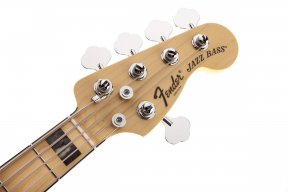
Not a lot of drift once it's in tune, but the tuners sometimes get moved putting the bass in or taking it out of the case. But...

A wizard's bass is never sharp. Nor is it flat. It is tuned precisely how it's meant to be tuned!
maxresdefault[1].jpg
 
No apology necessary, And I'm sorry for the "snark," and for that awful pun right there. I was referring to the implication of your title, truly no offense intended.

Gigging with a wood bass that doesn't need the tuners touched for weeks, seems like a sheer impossibility in my world, but I believe you. I live near the beach in San Diego, and I have a hygrometer in my studio, which is almost always right around 50% naturally. However my studio is separate from my house so it is prone to temperature change from day to night, which is considerable here. All my instruments stay pretty close, but certainly need little nudges on a day-to-day basis. I am a pretty heavy handed player though, and I do bend strings a lot.

Now if you tell me you play in a crust punk band with a metal pick on a rotary hammer drill in drop F tuning, I might have to call BS :)
 
  • Like
Reactions: pappabass
Just as an experiment, I'd love to see the result of a band that tunes up then plays every week, or more, without tuning again for a couple of months and listen to them. No doubt, somebody would be making adjustments in the way they play.
 
I'm paranoid and check before every time I play as part of setting up. Ususally if at all it just needs a couple cents here and there, but I wouldn't want to sound all out of tune.
I'd just call that professional, not paranoid.

I can't really believe there's many folks here who don't use a tuner and check their tuning before and during every gig, before every take in the studio, etc. etc. I mean, come on!
 
  • Like
Reactions: mdogs and lz4005