
Enjoy the benefits of a premium membership!
Upgrade Account
-
TalkBass has been independent since 1998. Add your voice.
Create a free account to reply to discussions, view embedded media, and browse with fewer display ads.
Join free Log in
Want zero display ads or expanded classifieds tools? Compare plans.
You are using an out of date browser. It may not display this or other websites correctly.
You should upgrade or use an alternative browser.
You should upgrade or use an alternative browser.
Isolated bass track shock
- Thread starter rymiraflores
- Start date
-
- Tags
- isolated
More options
Who Replied?

Magnificent.
Somewhat undercuts the contention of the thread, not because it is without flaw, but simply because it is so damn thrilling, even out of context.
Do you know what bass that is played on? Is it the Fenderbird, as pictured?
Really fantastic part.

I agree about with the others about alot of them being ripped from files and not truly isolated master tracks, however, there have been a few Ive come across where the playing has been an eye opener. Sloppy and just not good, but it sounds fine in the mix. I wont name names but some bigger players have disappointed me. *cough* *cough*
I don't know if anybody commented about this but I swear this sounds like programmed synth-bass.
I looked thru the entire thread and noticed some people commented about the track being midi.
Never mind that garbage, listen to Entwistle.
Then said studio will not see any of my money.
Why would you hand out money to a studio if you are the hired gun to lay down the bass-track?
Usually you'll get paid by the studio, which means they control the end-result of your sound.

Typically, mixing engineers and producers want to start with as full range a bass tone as possible so they have more options for making it work in the mix. That's why their first priority is usually getting a clean DI signal. If you've cut a lot of bandwidth before it gets to them it limits how they can fit it among the other instruments.
So, for example, if there's a gap in a mix where some 1500hz would make things sound better and you've cut it all out already, you are not a solution to that problem.
The same is true for live sound guys (myself included). It always works best for your band if you send me everything and let me sort it out at the board. Honestly, I think that's where the whole decades long debate about only taking a DI box to the board and sound guys who insist on it came from.
@rymiraflores I have said it here 1,000 times. Physics is strange. Very likely your favorite "bedroom" tone sounds like garbage in a live mix.
Your band may be the exception, but there are very few exceptions.
If I were you, I would brighten up a tad. If your highs are "noisy" it may be telling you something you need to work on technique wise to clean it up. Some prefer to make it a part of their sound (Geddy amd Squire come to mind).

Think a lot of tone chasers (and I am one) would be surprised to learn how many of thejr favorite tracks were just a bass plugged straight into the board - along with 10k of processing gear, of course...
Heh, listening to isolated bass tracks for Aerosmith last night. Joe Perry playing a Bass VI on Back in the Saddle, and Tom Hamilton on Walk This Way. Sloppy as hell, bad timing, but it sounds great in the mix. It makes you wonder why we agonize over our playing at all. It’s not true for all players, listen to Geddy and Chris Squire, they nail it every time.
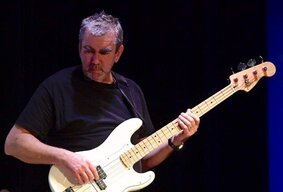
I have this in my collection, some days when I need to get transported to another plane, I escape with my isolated bass tracks.
Never mind that garbage, listen to Entwistle.
Well said.
Kind of blown away. You guys made me go back and listen to some of my fave bass tracks from the early 80s. Great stuff but wow the mistakes damn. And no not complaining or criticizing amazing how the little glitches out of tune, and extra sounds that are in there. Stuff uve never noticed. I will say this I listened to the Isolated track of the song Rio. Wow interesting. 20 year old hammering out that bassline. What makes it interesting beyond his playing are the subtle differences verse to verse and what not. Also the ghost notes and little slip ups. Stuff ud never hear on the finished recording with everything added.
I also listened to my fave song of all time Hungry Like the Wolf and wow its kind of a strange bass line. Its odd my band has played the song for years kind of more straight forward rock, after hearing the bass line i was like damn unique.
Tony Butler from Big Country is like that too. Sometimes im like damn thats what hes playing. Weird.
I guess its safe to say bass is its own special animal on some stuff. I often wonder after hearing these tra ks what the heck were they thinking and how did they come up with that. I guess we are all unique in our own ways how we write and play our basslines. And that many of these guys are human and make mistakes that you often miss when a song is mixed. Kinda cool.. Just my two cents
I also listened to my fave song of all time Hungry Like the Wolf and wow its kind of a strange bass line. Its odd my band has played the song for years kind of more straight forward rock, after hearing the bass line i was like damn unique.
Tony Butler from Big Country is like that too. Sometimes im like damn thats what hes playing. Weird.
I guess its safe to say bass is its own special animal on some stuff. I often wonder after hearing these tra ks what the heck were they thinking and how did they come up with that. I guess we are all unique in our own ways how we write and play our basslines. And that many of these guys are human and make mistakes that you often miss when a song is mixed. Kinda cool.. Just my two cents


Back in the day they compressed the hell out of the bass and bury it. Later on they found that the flat almost acoustic tone works as a foundation and then the studio and artist can add effects and to it. After the late 60's that tone was push on everyone. I remember going into the studio in the early 80's and told what they wanted and how they wanted me to play my bass, I was young and all about myself and my live tone ( Gene Simmons growl), but the sound they wanted was a play with a lighter feel no digging in and acoustic flat sound. like this just enough compression to let the pick attack through and a hint of chorus. A far cry from my aggressive Gibson Ripper dual Svt growl I had live. But it worked and when I heard how it set in the mix you couldn't argue with that. Now again this is us owned by a label who wanted it the way they want it, because they didn't give a flying crap about you it was about selling you and they were in charge. Today artist have more creative freedom to push for putting their "tone" on their record since you are paying for it yourself. It was their money and you played by their rules or you didn't play at all.  If you listen to the heavy hitters on isolated tracks mid 70- and up till today strip down they all have this tone here is a Ozzy song same formula to get it done
If you listen to the heavy hitters on isolated tracks mid 70- and up till today strip down they all have this tone here is a Ozzy song same formula to get it done
Last edited:
- Oct 18, 2012
- 6,683
- 5,538
- Disclosures
- Endorsing Artist: Fender, Spector, Ampeg, Curt Mangan, Nordstrand Pickups, Korg , Conquest Sound
The first time I heard my isolated bass tracks, I was horrified. It sounded terrible and I was sure I was going to lose the gig. Once I heard the final mix, it sounded great. I've heard isolated tracks from famous bass players that also sounded bad. Now, I'm used to the way my bass sounds when isolated and it doesn't bother me as much as it did in the past.
This one sounds pretty phat to me. A little distortion on the busy chorus part also a couple of tiny flubs that I have never noticed in the mix.

A large number of those tracks are reproductions made by Guitar Hero/Rock Band musicians.
In the beginning yes, but as the popularity of the games grew, the actual stems were licensed to the game studios. I wouldn't know the exact percentage of reproduced tracks, but I'd say it's less than 50%.
Many of the flaws and flubs we think we are hearing in isolation tracks are articulations that compliment the minutiae of the drums when put in context.

IME we've usually run a line out direct to the board as flat and completely uncolored as can be had so the producer and engineer can manipulate it as they like. It's nothing like how I would EQ for a live performance. Then we may also mic the bass cab and run several takes of that mix with slightly different EQ settings and/or mic placement. Those may be combined with the direct to the board track or not. It all depends on what the producer wants to use but little of it is much like I would EQ live.
Yeah I’ve always found that when I, or we (my band) are signing the check the engineer is pretty a accommodating in working to preserve my tone.I agree with you up to a point, certainly when I have been in a studio as hired help I have been at the mercy of what is wanted and needed but when I have been recording with my own bands and my own music I have never had a problem reaching an agreement about how I/we want to sound.. my point was that it´s not necessary to start off with that horrible thin tone to end up with a better tone if that´s what one wants.


