• TalkBass has been independent since 1998. Add your voice.
    Create a free account to reply to discussions, view embedded media, and browse with fewer display ads.
    Join freeLog in
    Want zero display ads or expanded classifieds tools? Compare plans.

Jeff Berlin Discussing Music Ed

Status
Not open for further replies.
Eminentbass - What you say is so true and probably an unfortunate byproduct of the 'typical' school process where you are made to go to school and made to do homework at what feels like the expense of your 'fun' time - and for what? So you can pass a test so that you can continue to go to school and get more homework and pass more tests...


But that's were great teachers really shine. I was fortunate to have GREAT teachers through out my school years as a kid and young adult who inspired and challenged me and made advancing as a musician something that's become a part of my DNA. beloved band director and made big hoopla over how much his contribution to our musical lives meant to us all.

If there's one thing I know I'll do until the day I die, it's play music in some sort of ensemble - garage band, jazz lab band, maybe even an orchestra if I ever decide to get serious about upright again. I'm 42 and I've got at least 32 years of musical pursuit under my belt so far. I'm no virtuoso, but I eat sleep and breathe music even if I'm not amazingly good at it.

So to you teachers out there - YOU MATTER BIG TIME!

+1 to this sentiment Tzer. I believe that learning is ALWAYS fun if the student is being challenged properly. Unfortunately, so many kids (and adults) are taught to hate learning. I can tell you that the only time I hated school, was when the teachers were obviously going through the motions and didn't care anymore. These teachers are just punching a timecard, and shouldn't be allowed to teach. Just as a musician who is punching a timecard should be replaced by one who cares about the gig.
But if a teacher was passionate about his subject, and really cared that I master it, then look out! There is something so exciting about learning and knowing that you are growing that makes the effort worth it.
I have recently started up bass lessons again with a local legend and he is kicking my butt, having me study jazz hardcore, learning heads, changes, inversions, and some difficult stuff from the"Chord Studies" book for bass that Jeff recommends.

It is also frustrating, because I haven't studied jazz in many years, and my brain feels like it is trying to run through Jello with this stuff.
It has made me realize how musically LAZY I have allowed myself to become.
That is what a good teacher does, is show you your weaknesses, and help you figure out how to overcome them.

I too had an inspirational high school orchestra teacher who truly loved music, and wanted us to play great music well. It really saved my butt from becoming an apathetic loser in high school, and I will always be grateful.
GO TEACHERS!
 
Does anyone know how much it boosts a teacher to read this thread? I'm still learning, have studied under some great players, had some of my ideas reinforced here, some changed, but mostly inspired to keep going. Living in a small city you start to wonder if people care anymore.
Like some others here too, music can keep you out of trouble in the teen years, it is simply too difficult a persuit to bother with getting into too much trouble.

I've had students come back years later, one was home schooled. He was into Van Halen and all but learned some jazz. He told me he won a scholarship for doing an impromptu "Round Midnight" when asked to play something. Lessons paid for themselves!
 
Jeff Ive taken your advice and learned some theory... but what do i do with it?

It does NOT help me make music... I know the modes of the major scale, chords, etc but the second i start playing thats the last thing i think about.... When i play or jam for fun...

Honestly i feel like i knew theory all along just from my own trial and error of what "things sounded like" and all the possible combinations on bass now i know oh this is dimished this is augmented etc.. this is locrian mode..I now know what certain things are called..

Also
I really want to learn jazz... Should i try to learn all these songs by ear or actually play them through the chord charts?
Should i just play through a real book right off the bat?

Also when i solo in jazz i just kinda go with a chromatic approach ... and use my ear

When soloing over a jazz progression do you pay attention to the total center (key), the chord changes, or neither ??

Is there an actual method to your amazing jazz soloing or is it just all chromatics and what sounds good?

Also jeff much respect man to take the time to help us... It takes alot of Humility from a guy like you to post on a forum answering all our silly questions

I'll jump in here and offer an opinion. If you start with the chord tones and add chromatic approach tones you'll get a bit further. Learn some patterns as well (I recommend Jerry Coker's Patterns for Jazz for starters) and practice them all over your bass in all keys (Patterns for Jazz has some very common harmonic situations to practice). The objective is to not be able to quote a pattern or a lick verbatim, it's to program this into your subconscious mind so that it's there as an option when you're in the creative zone.
I had a great improv teacher at U of M named Vince Maggio. He taught how to negotiate ii-V type changes and Jazz Standards by using lines that start on the 3rd and resolve to the 7th of the chords. This is called 3rd-7th voice leading, and is especially useful for bassists since no one comps for us when we solo!
I've always preferred teaching chord tones/voice leading. I guess I just can't think fast enough to negotiate chord/scale relationships on the fly-it's like thinking about riding a bicycle while attempting to do so. Over you go.....
 
I'll jump in here and offer an opinion. If you start with the chord tones and add chromatic approach tones you'll get a bit further. Learn some patterns as well (I recommend Jerry Coker's Patterns for Jazz for starters) and practice them all over your bass in all keys (Patterns for Jazz has some very common harmonic situations to practice). The objective is to not be able to quote a pattern or a lick verbatim, it's to program this into your subconscious mind so that it's there as an option when you're in the creative zone.
I had a great improv teacher at U of M named Vince Maggio. He taught how to negotiate ii-V type changes and Jazz Standards by using lines that start on the 3rd and resolve to the 7th of the chords. This is called 3rd-7th voice leading, and is especially useful for bassists since no one comps for us when we solo!
I've always preferred teaching chord tones/voice leading. I guess I just can't think fast enough to negotiate chord/scale relationships on the fly-it's like thinking about riding a bicycle while attempting to do so. Over you go.....

After reading this it seems obvious that the whole JB teaching concept is based mostly on bass soloing which a very,very,very small role that a bass player will have to fill. I really don't deny the concept of soloing at all but I believe a bass player has to know how to be a good bass player first and be able to understand his/her role as a time keeper in a band and play the right notes in his/her basslines. And for me this should come first with the help of exercices with a click ( an essential tool for bassist) and the scales and the function of them. A good knowledge of harmony is very important for a bass player.

Sly
 
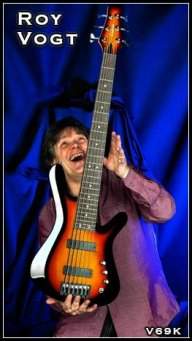
I'll be the first to admit that my experience with jazz and soloing are very limited because as a working bassist my role within in a group is defined by what i'm hired to play. A knowledge of scales is important to me in the sense that the majority of the music i play is diatonic and sticks to one key centre, so scales and modes have helped me understand chord functions and how they relate in a specific key. I'm learning the importance of chord tones vs scales in the sense that to create a good line, you need to know which notes in the scale actually make up the chord you are playing over. The scales and chromatics offer a selection of notes to get from one chord tone to another when creating a line but knowing the notes of each chord teach you which notes to emphasise. I've gone off spending hours practising scales at high speeds simply because when trying to incorporate that into my playing i just hear scales as opposed to interesting and melodic interaction between notes and changes. Maybe that's why scales, though important, aren't the holy grail they've been made into? As for learning my role as a foundation and timekeeper in a band, that's not something i actually sat down and thought about. It came naturally as i learned to play songs and spent hours jamming along to albums. Maybe as bassists we emphasise learning how to solo because for most of us our role in a band is just something we do on a daily basis because it's essentially what we're doing instinctively every time we play in a band. Soloing is a secondary(or non-existant) function for many of us so it's something we have to work on privately in order to do a decent job when we occasionally get thrown in the limelight.
 
After reading this it seems obvious that the whole JB teaching concept is based mostly on bass soloing which a very,very,very small role that a bass player will have to fill. I really don't deny the concept of soloing at all but I believe a bass player has to know how to be a good bass player first and be able to understand his/her role as a time keeper in a band and play the right notes in his/her basslines. And for me this should come first with the help of exercices with a click ( an essential tool for bassist) and the scales and the function of them. A good knowledge of harmony is very important for a bass player.
Your last statement is exactly why I like chords over scales. I got way more out of chordal theory than scales. Scales are cool to learn but I'm with Roy...it involves too much thinking during a gig. Chords cut to the chase, whereas if I go modal, I have to consciously think about what mode to use over each chord, which means another layer of thought getting in the way of my playing. I also don't see where using scales has any great advantage over chords for playing accompaniment. I know my scales and I'm glad I do, but overly modal playing, IMHO, makes people sound like they're running scales instead of creating music.
 
Hey Jimmy, i'm tryping on my phone so i haven't figured out how to include quotes but i'm with you on the modal thing. With regards to soloing when i think modally i always end up feeling the need to emphasise the root(especially because the bass function drops out and the band see a bass solo as a chance to stop playing and take a swig of their drinks). Lately i've been trying to really solo melodically in a way that the changes are heard but without me having to accent the root on every change. This is one area where horn players really have an advantage because they are always thinking melody.
 
Yep, horn players have it made in that regard. That's also why I used to like to study what other instruments do in songs and try to apply their ideas to bass. I should get back into transcribing horn solos so I can absorb it better. Nobody ever calls me for jazz gigs but it's a good skill to have.
 
I have lurked on this board for years; I rarely contribute because I only post if I really have something to add to the discussion. I don't know if I actually have something to add, but after following this thread for the last couple of weeks I feel compelled to weigh in with my thoughts.

I am completely blown away by the quality of this thread; without exaggeration I can say that this is the single most civil and, more importantly, most useful conversation I have ever seen on the internet. Even with some strong opinions and disagreements, the level of discourse has been top-notch, and everyone involved should be proud of themselves. I'd like to thank everyone for that, and especially thank Goldsby, Friedland, and Vogt (and all the established players/teachers) for contributing and raising the quality even higher.

I have followed the controversies surrounding Jeff Berlin's opinions and statements over the years, going way back to the early BP mag columns and the debates with Steve Bailey. As many other have, I took exception to his tone and attitude at first, but as I took the effort to actually hear and understand what he was saying and why he was saying it, it became clear to me that his reasoning was flawless and born out of decades of experience, and that he genuinely cared about music education and about the welfare of those who wanted to study and learn music. While some may still disagree with his opinions and reasoning (although I can't see where there is much room for disagreement), the one undeniable truth that comes out of this thread is that Jeff is truly committed to the student and to spreading the best methods of musical education. Consider this: Jeff is an internationally-known, respected, legendary musician and educator, he presents clinics and performs around the world, and he runs a successful school, yet he is willing to take part in a 25+ page thread on music education and contribute over 100 posts, many of which address specific questions about learning and studying music. That is an incredible investment in time and mental effort, with the only real payoff being the opportunity to help others. Arrogant blowhards with giant egos and attitudes don't do things like that; only an individual who truly cares would put in that sort of effort, and all of those over the years who have taken personal offense to his opinions are clearly misinformed.

Jeff, I'd like to personally thank you for putting out that sort of effort, and I'd like to let you know that it has helped and inspired at least one person on this board (I know it's inspired a lot more than that, but I can only speak for myself). I have played for over 20 years now. I'm completely self-taught and I learned primarily by ear and by playing with others. About ten years ago I started making an effort to really learn music, and I purchased a chord chart and a book on reading the bass clef (http://www.melbay.com/product.asp?ProductID=95297). I found myself frustrated because I had the impression that it wasn't acceptable to play the lessons slowly, and because I didn't see the immediate value in those lessons, so I didn't go very far with my studies. I have been stuck in a rut musically for years, and I hardly ever pick up my bass anymore, but after reading this thread and hearing your approach, I found and dusted off my note reading book and chord chart, and I started putting in about an hour a night working on the lessons and playing the chord tones up and down the neck as you suggested. I find that I'm more excited about playing than I've been in over a decade. I hope to one day attend at least a 1-week intensive at the Player's School, but even if I don't, I feel like a whole new world has opened up for me.

Sorry for the long post, but I had to get that out. I'll end with a couple of simple requests:

  • Mods - please firmly pin this thread to the top of the board.
  • Talkbass community - continue to keep the standard of discussion civil, reasonable, and at a high level, as we all benefit when this happens.
  • And Jeff - have a great time in Italy, and keep up the fight.
-Yools


sums it up nicely. great post.
 
After reading this it seems obvious that the whole JB teaching concept is based mostly on bass soloing which a very,very,very small role that a bass player will have to fill. I really don't deny the concept of soloing at all but I believe a bass player has to know how to be a good bass player first and be able to understand his/her role as a time keeper in a band and play the right notes in his/her basslines. And for me this should come first with the help of exercices with a click ( an essential tool for bassist) and the scales and the function of them. A good knowledge of harmony is very important for a bass player.

Sly


I don't like to do solos on bass, - I play enough instruments that traditionally fill the alto-tenor ranges and if I need to do a solo in the recorded music I do I'll play them on those instruments. Someone asked EVH why he didn't play guitar synth and his reply was that already played keyboards and keyboard synths... there was no real point in struggling with the (then) nascent technology of the 80s guitar synth.

But having said that, the harmonic ideas being discussed here in the context of music ed. applies to the various situations in which I play bass guitar, whether I am playing root fifths with the odd melodic line in relation to chords/scales/modes or walking bass in a jazz trio/quartet.

For me the danger with bass players shooting themselves in the foot is the tendency to address it as a lesser instrument, i.e. an instrument that needs no harmonic education behind it, or an instrument that does not need the same level of musical thinking behind it. It's all music, no more or less than if all you play is a triangle in a symphonic orchestra.
 
The concepts for soloing are essentially the same for walking a line, so they feed off each other. We also mustn't forget how much time to spend on reading. Also it seems, the more you learn, the easier it is to learn and keep a whole lot of songs in your head. Regarding soloing, I agree, I'd just as soon grab a guitar to do that, but I'm discovering the voice on bass for soloing, I'm prefering the middle range of the instrument. "thumb" position is not my favorite place soundwise.
 
After reading this it seems obvious that the whole JB teaching concept is based mostly on bass soloing which a very,very,very small role that a bass player will have to fill. I really don't deny the concept of soloing at all but I believe a bass player has to know how to be a good bass player first and be able to understand his/her role as a time keeper in a band and play the right notes in his/her basslines. And for me this should come first with the help of exercices with a click ( an essential tool for bassist) and the scales and the function of them. A good knowledge of harmony is very important for a bass player.

Sly
Not necessarily. James Jamerson uses the same concepts of chord tones and approach tones in his bass lines. Check out the bass line to "Ain't No Mountain High Enough" in Standing in the Shadows of Motown and you'll see the same chromatic approach tones in use. Since John Paul Jones was influenced by Jamerson, you'll see the same concepts in "Good Times, Bad Times" and JPJ's solo in "The Lemon Song". The only difference is that if you function as a bassist instead of a soloist you're going to be emphasizing the Root of the chord rather than the 3rds and 7ths.
If you're dealing with the chord tones, that's the strongest emphasis of the harmony you can find. I use this analogy:
The chord tones are like the framing in a house. It will hold the roof up, but the wind still blows through. If I add the scale tones it's like adding drywall and siding. It will be more comfortable, but you can't hold a roof up with just drywall and siding. It's still a little boring looking at drywall and siding unless I paint it-the chromatic tones are like paint. Scales and chromatic tones are cool, but they can't hold the song together without the chord tones. Check out a scalar line like Chris Squire's "Roundabout" or Michael Jackson's "Beat It" and you'll see that the chord tones are the framing for the melodic ideas.
I focused my post on 3rds and 7ths because the query was directly related to soloing and Jazz Theory. Scales and modes are a good tool to learn your bass neck and keys and all of my students work on them, but they are not the entire picture.
 
So if I could dedicate 1 hour a day to a solid practice routine - what would it look like?

For example:
1) warm up/stretch (how?)
2) dexterity exercises (alternating finger stuff - string crossing stuff - large interval stuff... etc...)
3) reading exercises
4) Melodic studies...
5) Harmonic studies...
and so on...

I believe that if you have an hour a day (for example) and you try to fit the same 5 elements into the practice session each day you might get slightly better at those 5 elements over a period of time but you won't really master any of them. Your brain never has a chance to solidify any of those things you're practicing.

You example you gave above can be summed up like this for a practice routine: Play Music.

Every single thing you list can be addressed that way. If you take the head for Charlie Parker's "Confirmation" there is enough practice material in those 32 bars to keep you working on it a tweaking and fine tuning it to keep you busy for years on the 5 elements you listed.

Also, you don't need to have a practice routine that must be completed each session. If you want to spend your hour on a tricky 4 bars of Confirmation you'll probably get better faster than trying do everything each day.
 
Your last statement is exactly why I like chords over scales. I got way more out of chordal theory than scales. Scales are cool to learn but I'm with Roy...it involves too much thinking during a gig. Chords cut to the chase, whereas if I go modal, I have to consciously think about what mode to use over each chord, which means another layer of thought getting in the way of my playing. I also don't see where using scales has any great advantage over chords for playing accompaniment. I know my scales and I'm glad I do, but overly modal playing, IMHO, makes people sound like they're running scales instead of creating music.

For me I don't see why chord tones should be learned before scales because actually a scale is a set of chord tones that been connected together by other notes in a scalar way. And those other notes have to be accurate because this is what makes a dorian mode sound this way and a phrygian mode sound that way even if they do share the same chord tones.

While applying diatonic steps from above a chord tone it is imperative to know the function of the chord and the appropriate scale to make sure the approach will sound right.
The scales and chord tones(which is the arpeggio btw) should be learned together because they do the same thing: Define Harmony.

BTW: when I talk about knowing what scale fits a certain chord it doesn't mean you have to run the scale up and down. To me it is a specific set of notes that I can play with in a wide variety of manners.

This is why the study of scales is important to develop a sense of melody,tonality and melodic motifs in a very practical and musical way.

Sly
 
For me I don't see why chord tones should be learned before scales because actually a scale is a set of chord tones that been connected together by other notes in a scalar way. And those other notes have to be accurate because this is what makes a dorian mode sound this way and a phrygian mode sound that way even if they do share the same chord tones.

While applying diatonic steps from above a chord tone it is imperative to know the function of the chord and the appropriate scale to make sure the approach will sound right.
The scales and chord tones(which is the arpeggio btw) should be learned together because they do the same thing: Define Harmony.

BTW: when I talk about knowing what scale fits a certain chord it doesn't mean you have to run the scale up and down. To me it is a specific set of notes that I can play with in a wide variety of manners.

This is why the study of scales is important to develop a sense of melody,tonality and melodic motifs in a very practical and musical way.

Sly

I fail to understand this discussion of scales vs chord tones. Surely no one would argue that it is important to know chords, and scales? Surely they are both useful in our everyday playing?
 
I fail to understand this discussion of scales vs chord tones. Surely no one would argue that it is important to know chords, and scales? Surely they are both useful in our everyday playing?

I think, without answering in absolute terms, the question might be which one gets more emphasis. My classical teachers had me practice scales, but they never taught me a wide variety of chords. Also, widespread advice for those who seek to learn jazz is to learn all of the modes. It is certainly a reasonable matter of debate whether that's more important than learning chords.

And of course we end up learning both scales and chords, so it really does boil down to what comes first, what gets more emphasis, and what teaching methods seem to work best.
 
I think, without answering in absolute terms, the question might be which one gets more emphasis. My classical teachers had me practice scales, but they never taught me a wide variety of chords. Also, widespread advice for those who seek to learn jazz is to learn all of the modes. It is certainly a reasonable matter of debate whether that's more important than learning chords.

And of course we end up learning both scales and chords, so it really does boil down to what comes first, what gets more emphasis, and what teaching methods seem to work best.

I also mostly studied scales, having studied classical upright studies for years. The goal wasn't to learn how to improvise, but rather to gain facility on the instrument.
Nevertheless, when playing jazz or blues, I never think, what scale should I be playing right now? I do think in terms of chord tones, because I had many years of music theory and know the chords.
I guess I could agree that you MUST know the chords and notes in those chords that you are playing and that may be the first order of business. When I was just learning jazz in high school, I definitely was thinking chords. But I am not sure why one couldn't also be studying scales.
 
Status
Not open for further replies.