
Enjoy the benefits of a premium membership!
Upgrade Account
-
TalkBass has been independent since 1998. Add your voice.
Create a free account to reply to discussions, view embedded media, and browse with fewer display ads.
Join free Log in
Want zero display ads or expanded classifieds tools? Compare plans.
You are using an out of date browser. It may not display this or other websites correctly.
You should upgrade or use an alternative browser.
You should upgrade or use an alternative browser.
John Paul Jones ROUND tone
- Thread starter chief redcok
- Start date
More options
Who Replied?
It helps that those clips had the bass isolated or mixed in front of everything else.
Old recordings, yes, but I can still hear what (in my opinion) is roundwound grind.
But I also hear rapid decay (thumpiness) on the notes, characteristic of old dead flatwounds but that can be achieved with roundwounds and palm muting or foam muting.
I don't think flatwounds can produce the grind, though.
I'm not a big flatwound expert so who knows maybe I'm wrong.
Old recordings, yes, but I can still hear what (in my opinion) is roundwound grind.
But I also hear rapid decay (thumpiness) on the notes, characteristic of old dead flatwounds but that can be achieved with roundwounds and palm muting or foam muting.
I don't think flatwounds can produce the grind, though.
I'm not a big flatwound expert so who knows maybe I'm wrong.
All you younger blokes may not know this, but back in the 70's, many of us didn't know you had to change strings until they broke. Many were on there the life of the bass as long as you owned it.
There were no drink and drive laws so we were always holding a wet bottle, never wiped strings down, never knew you had to. Strings were oxidized, rusty, horrible and too trebbly when new, but more like the way they were supposed to sound after a few months.
There were no drink and drive laws so we were always holding a wet bottle, never wiped strings down, never knew you had to. Strings were oxidized, rusty, horrible and too trebbly when new, but more like the way they were supposed to sound after a few months.


Ric5
Inactive
- Jan 29, 2008
- 29,772
- 30,452
- Disclosures
- I like 5, 8, 10, and 12 string basses
And no, I mean ROUND as in the overall tone, kind of like the opposite of PUNCHY
That tone comes from his fingers. His fingerstyle has a smoother low attack quality to it, But the tracks where use uses a pick have a lot of attack. I am not sure of what type of strings he uesd on the first 2 lps but later he was using rounds.
A skilled player can make rounds sound like flats.
Rounds or flats I can listen to this forever:
If I was a betting man I'd say flats, but Roto flats sound a lot like dead Roto rounds, and with the mute and recording processing, who knows.
If I was a betting man I'd say flats, but Roto flats sound a lot like dead Roto rounds, and with the mute and recording processing, who knows.

- Oct 7, 2000
- 18,619
- 38,943
- Disclosures
- Endorsing artist: Musicman basses
Interesting thread. Lots of different takes on this. Here's mine. Oh yeah... I've been playing in a Zep Tribute for about year now. I'm by no means any kind of tone guru, but I'm slowly starting to find what works for me.
I've owned a couple of Jazz basses, and felt the same as some earlier posters. I, for whatever reasons, couldn't squeeze the JPJ tone out of them. Recently bought an antigua Jazz, and I'm in heaven. Not just for the tone mentioned in the OP, but for the clanky, growly, overdriven sounds from the later material. This bass nails it, bigtime. I think it might have to do with pickup location, I'm pretty sure the antigua is modelled after the early 70s basses. Whatever the reason, I feel like I struck gold. Could be too that Fenders are very hit or miss.
Anyhow, for me the three most important things in getting that tone are:
Playing and tweaking the 3 knobs on the bass, which isn't all that difficult. One of the 2 volumes is always on full, I usually have the tone 3/4 of the way up, and then I play around witht eh other pickup to get as close as I can to the sound I want. JPJs tone varied a lot, so for me it's a matter of getting used to blending the pickups then rolling off or adding highs. I know that doesn't sound too helpful, but everyone's technique (and bass) is different, so there really isn't any set way to do it.
Technique. I can hit the strings a million different ways. While it's cliche at this point, a lot of our tone really does come from our fingers.
And most importantly... some of JPJs tones I can only get by playing at the bottom of the neck. Something I'm still getting comfortable with. I smiled when I saw the pic below because I never really looked (duh!) to see where he was hitting the strings, but there are times it's the only way I'm getting the sound I'm looking for. How Many More Times is a great example. I'm not saying tha's how HE played it (I don't know), but it's the way I have to play it if I want it to sound the way HE played it.
Bottom line for me, listen closely - and experiment.
I've owned a couple of Jazz basses, and felt the same as some earlier posters. I, for whatever reasons, couldn't squeeze the JPJ tone out of them. Recently bought an antigua Jazz, and I'm in heaven. Not just for the tone mentioned in the OP, but for the clanky, growly, overdriven sounds from the later material. This bass nails it, bigtime. I think it might have to do with pickup location, I'm pretty sure the antigua is modelled after the early 70s basses. Whatever the reason, I feel like I struck gold. Could be too that Fenders are very hit or miss.
Anyhow, for me the three most important things in getting that tone are:
Playing and tweaking the 3 knobs on the bass, which isn't all that difficult. One of the 2 volumes is always on full, I usually have the tone 3/4 of the way up, and then I play around witht eh other pickup to get as close as I can to the sound I want. JPJs tone varied a lot, so for me it's a matter of getting used to blending the pickups then rolling off or adding highs. I know that doesn't sound too helpful, but everyone's technique (and bass) is different, so there really isn't any set way to do it.
Technique. I can hit the strings a million different ways. While it's cliche at this point, a lot of our tone really does come from our fingers.
And most importantly... some of JPJs tones I can only get by playing at the bottom of the neck. Something I'm still getting comfortable with. I smiled when I saw the pic below because I never really looked (duh!) to see where he was hitting the strings, but there are times it's the only way I'm getting the sound I'm looking for. How Many More Times is a great example. I'm not saying tha's how HE played it (I don't know), but it's the way I have to play it if I want it to sound the way HE played it.
Bottom line for me, listen closely - and experiment.
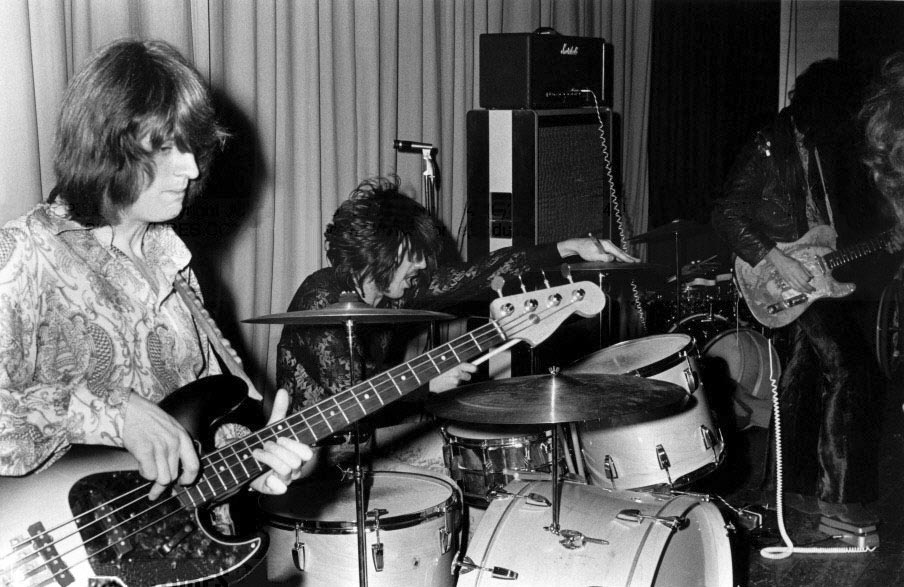
Also in the video that got posted earlier - - check out his bass at the 0:35 mark. He has a bunch of foam stuffed under the strings at the bridge.

Rounds or flats I can listen to this forever:
If I was a betting man I'd say flats, but Roto flats sound a lot like dead Roto rounds, and with the mute and recording processing, who knows.
Sounds like a jazz with flats to me.
I once went after that sound a long time ago. Came doggone close with a Fender Jazz strung with flats, the bridge pickup dumping trough a .022 cap and the neck pickup through a .047 or maybe it was the other way around I don't remember. You'll also want to mute your strings at the bridge to get that thump going on. There's a number of ways to mute but just some foam stuffed under the strings at the bridge is a easy way - retuning required afterwards ofcourse
I call JPJ the secret weapon of Led Zep - Zep is always rocking around here
I call JPJ the secret weapon of Led Zep - Zep is always rocking around here

I wonder if this would be his standard pu setup... full neck pu, 3/4 bridge pu and tone knob rolled off?what about the controls on that Jazz? did he favor the neck pup? tone knob rolled quite a bit?
Hard to tell from a picture. Sometimes knobs get misaligned. But I wouldn't be surprised if he used that setting. That's a really good setting on a J Bass. He probably used that setting to adjust for a sound he wanted, or maybe to adjust to the room and what he was hearing on stage.I wonder if this would be his standard pu setup... full neck pu, 3/4 bridge pu and tone knob rolled off?
View attachment 1171564
My guess is that a lot of what we think of as the classic JPJ tone was: bass wide open, into some kind of studio pre, and then to the board. Some compression probably, EQd, Mixed, Etc... I bet he used some smaller amps at times. I bet he didn't change his strings very often. Again, my guess.
He used a cranked Leslie (40 watts) to record Heartbreaker. We know he used mutes or foam in the early days from live shots, so he probably did that in the studio too at some point. And most important, his attack... way up on the neck sometimes. Right in the middle of the pickups in the pic above. Just that hand position difference can totally change your tone as well as the note envelope.
He's said two things about his strings. Once he said he used flats until he got his first Alembic, and started using rounds because the flats weren't doing justice to the bass. Decades later he said he stopped using flats before Zep. I'm gonna go with what he said in an extensive interview in Guitar Player ca. 1977 (there were no bass mags at the time and GP was a great resource in many ways back in those days). That's where he said he used flats. It sounds a lot like flat to my ear, and that's what he said at a time when he was much closer to the events.
Interesting that people pontificate about what they perceive from a recording. We know Entwistle used nylon wound strings to record "My Generation", but it doesn't have the typical sound of those strings. I got in a protracted discussion of "I Want You Back" and whether Felder used a pick or not. The man himself said "Never a pick, always fingers" yet I still get comments from people who believe their own perceptions over the man who played the part.
jte
Interesting that people pontificate about what they perceive from a recording. We know Entwistle used nylon wound strings to record "My Generation", but it doesn't have the typical sound of those strings. I got in a protracted discussion of "I Want You Back" and whether Felder used a pick or not. The man himself said "Never a pick, always fingers" yet I still get comments from people who believe their own perceptions over the man who played the part.
jte
He's said two things about his strings. Once he said he used flats until he got his first Alembic, and started using rounds because the flats weren't doing justice to the bass. Decades later he said he stopped using flats before Zep. I'm gonna go with what he said in an extensive interview in Guitar Player ca. 1977 (there were no bass mags at the time and GP was a great resource in many ways back in those days). That's where he said he used flats. It sounds a lot like flat to my ear, and that's what he said at a time when he was much closer to the events.
This is pretty much exactly my thinking on the flats vs rounds debate.
I coulda swore I read somewhere that JPJ used Rotosound round wounds. However he does have a duller sound. Time to do some search

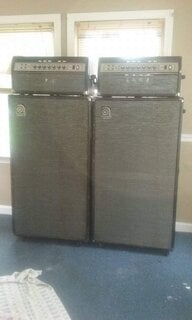
...prefered the Acoustic transistor amp for it's fast response.
That fast response is somewhat reduced when you're using those 18'' folded-horn speaker cabs that came with the 360 amps.

My thoughts are that there is no reason to assume JPJ used his Acoustic 360 amps in the studio. Jimmy Page used all sorts of oddball amps and mic'ing techniques in the studio, so he could have done the same for JPJ. he could have DI'd the bass, for example. I wonder what tricks and tips Page picked up during his session days. My ears always hear a Gibson bass on Dazed and Confused. I'm not sure how you can get that pillowy thump from a Fender. The pronounced click on the start of each note on the intro makes me think there is some sort of compression on there as well.
Part of the JPJ tone also stems from Page's mixing style. His guitar tones are often surprisingly thin, and there is a lot of room in the mix for the drums to breathe and the bass to sit comfortably.
JPJ's contradicted himself many times about flats/vs round wounds, he used flatwounds at least on the first few albums, plain as day, I use them and you can get a great rock sound out of them if you really dig in with your bass, they actually sound better than roundwounds when you beat the hell out of them.
Last edited:

Flats on a jazz is just one component.
To get that sound you need to pluck the strings very close to, or even over, the neck. That's a huge part of that "round sound".
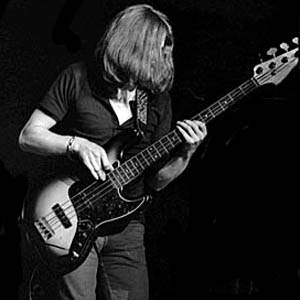
To get that sound you need to pluck the strings very close to, or even over, the neck. That's a huge part of that "round sound".
It doesn't sound like flats to me.
There is an octave up guitar recorded with the bass or something an octave up
That fast response is somewhat reduced when you're using those 18'' folded-horn speaker cabs that came with the 360 amps.
My thoughts are that there is no reason to assume JPJ used his Acoustic 360 amps in the studio. Jimmy Page used all sorts of oddball amps and mic'ing techniques in the studio, so he could have done the same for JPJ. he could have DI'd the bass, for example. I wonder what tricks and tips Page picked up during his session days. My ears always hear a Gibson bass on Dazed and Confused. I'm not sure how you can get that pillowy thump from a Fender. The pronounced click on the start of each note on the intro makes me think there is some sort of compression on there as well.
Part of the JPJ tone also stems from Page's mixing style. His guitar tones are often surprisingly thin, and there is a lot of room in the mix for the drums to breathe and the bass to sit comfortably.
He used those old Acoustics in the early days because they were about the only amps going that really projected your sound, they were about the only thing going for big and loud until SVT's came along and blew them off the face of the earth a year or two later. That being said they are cool amps but I only tried one once years ago and didn't really like it as they only sound good when you are way out in front of them, up close they have no balls at all, they project the sound out into the audience which is why they were good for big stages.
He's said two things about his strings. Once he said he used flats until he got his first Alembic, and started using rounds because the flats weren't doing justice to the bass. Decades later he said he stopped using flats before Zep. I'm gonna go with what he said in an extensive interview in Guitar Player ca. 1977 (there were no bass mags at the time and GP was a great resource in many ways back in those days). That's where he said he used flats. It sounds a lot like flat to my ear, and that's what he said at a time when he was much closer to the events.
jte
Every time this subject comes up, you and I are the only ones who seem to know about this 1977 interview. I, like you, think it's far more likely that what he said then regarding this subject is more likely to be correct that what he said thirty years later.
But, people will believe what they want to believe, I suppose.
He used those old Acoustics in the early days because they were about the only amps going that really projected your sound, they were about the only thing going for big and loud until SVT's came along and blew them off the face of the earth a year or two later. That being said they are cool amps but I only tried one once years ago and didn't really like it as they only sound good when you are way out in front of them, up close they have no balls at all, they project the sound out into the audience which is why they were good for big stages.
Wasn't there at the time, But it's highly unlikely he used the 360/361 in the studio for tracking. Live (after the first tour) yes, but in the studio, no. Just wasn't typical for the time period. There was not a lot of isolation in studios at the time, frequently everyone was in the same large room with gobos around amps to minimize (but not eliminate) bleed. A big amp like the acoustic would be rather difficult to tame in that setting. Additionally, close mic'ing it would likely sound like doo doo.


