
Enjoy the benefits of a premium membership!
Upgrade Account
-
TalkBass has been independent since 1998. Add your voice.
Create a free account to reply to discussions, view embedded media, and browse with fewer display ads.
Join free Log in
Want zero display ads or expanded classifieds tools? Compare plans.
You are using an out of date browser. It may not display this or other websites correctly.
You should upgrade or use an alternative browser.
You should upgrade or use an alternative browser.
KORG ACQUIRES AGUILAR
- Thread starter 57pbass
- Start date
More options
Who Replied?
I bought the Korg M3-73 synth when it came out (2007), not knowing Korg was more than willing to ignore basic engineering best practice when it suited them by using gold to tin connections. The pair of Kawai K5000s (1996) across the room still work as new and mock me to this day for the $3200.00 I sank into the M3. So while I hope they don't screw up Mesa I wont spend money to find out.

I bought the Korg M3-73 synth when it came out (2007), not knowing Korg was more than willing to ignore basic engineering best practice when it suited them by using gold to tin connections. The pair of Kawai K5000s (1996) across the room still work as new and mock me to this day for the $3200.00 I sank into the M3. So while I hope they don't screw up Mesa I wont spend money to find out.
Korg bought Aguilar. Gibson bought Mesa.

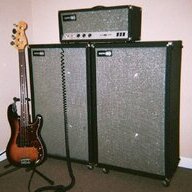
In a live setting there is no guarantee that you're even hearing the aguilar gear in the front of house. Even if using the DI on the head it can be set to "pre" and nothing from the head is coming through.
I've heard him playing WITHOUT front-of-house sound as well as with it.
I've heard him playing WITHOUT front-of-house sound as well as with it.
Cool. Tone is very subject.
Now that I think about it, I DO have a fairly recent Aguilar product: the AG4P-Hot pickup, which I love! Especially through my DB359 and GS410.
Cool. Tone is very subject.
Of course it is! That's why we all have opinions! :-D
Much thanks for your dedication, your imagination, and your products.
Hey Everyone,
First, the garlic farming thing was a little tongue in cheek. Me and the missus bought a house this summer that came with an amazing vegetable garden. We have green beans, eggplant, cabbage, lots of ghost peppers, and.... very tasty garlic! I put this in my personal facebook post to friends; but the music press picked it up as if it was a press release. Anyway, I am very much looking forward to having some free time and being able to have a hobby or two. I hope that you can appreciate a little joking at myself about becoming a "garlic farmer"; but who knows?
Aguilar is a very healthy company; but the brand can grow and be an even better company as part of the right company. Korg is the right company for us. They are very respectful of our history and who we are. Every current employee has been retained, and the new company is working out of our same space in NYC. The cabinets are still being made in Ohio. I am staying as a design consultant and I'll be able to work with Goran and other engineers many more hours each week than I am now. I'm optimistic that being part of the Korg family will yield great new products. Korg believes in high quality in design and manufacturing. Longtime CEO Dave Avenius is still in charge and is now managing director. The future is an untold story, so here we go, writing it with you. You play bass, and we'll do our very best to make great tools for you!oh, this is Dave Boonshoft, co-founder of Aguilar Amplification

Ampeg exists now because of be acquired buy larger companies.
If they were not (and they have been passed around quite a bit) the last 30+ years of Ampeg would not exist, as well as the parts supplied that keep the old SVT's and V4B's going.
The ability to purchase new versions of these great amps with a warranty is also only possible because they are still around as well as great new amps and cabs.
Like them or not, Ampeg is one of the biggest bass amp companies around and they owe that to being bought out buy "Larger Companies".
If they were not (and they have been passed around quite a bit) the last 30+ years of Ampeg would not exist, as well as the parts supplied that keep the old SVT's and V4B's going.
The ability to purchase new versions of these great amps with a warranty is also only possible because they are still around as well as great new amps and cabs.
Like them or not, Ampeg is one of the biggest bass amp companies around and they owe that to being bought out buy "Larger Companies".

Ampeg exists now because of be acquired buy larger companies.
If they were not (and they have been passed around quite a bit) the last 30+ years of Ampeg would not exist, as well as the parts supplied that keep the old SVT's and V4B's going.
The ability to purchase new versions of these great amps with a warranty is also only possible because they are still around as well as great new amps and cabs.
Like them or not, Ampeg is one of the biggest bass amp companies around and they owe that to being bought out buy "Larger Companies".
Fair point. It doesn’t have to be rapacious capital out of the usual playbook.

My old Spector had an Aguilar pre-amp. Great tone for sure.Now that I think about it, I DO have a fairly recent Aguilar product: the AG4P-Hot pickup, which I love! Especially through my DB359 and GS410.

I've worked on $billions of acquisitions for several Fortune 100 companies, plus a handful of Fortune 500 companies, and in acquisitions there are always 2 truths I've found:
1: The executive leadership of the acquired always says this a a great match and their employees will succeed in the merger. (Duh, because it's in the acquisition contract and if they say otherwise, it will be a breach of contract that won't result in the acquisition falling apart, but potential monetary loss)
2: Staff reduction usually happens about 6 months down the road.
It really sucked each time I had to represent the executives of the acquiring company and met the employees of the company being sold. I've seen a lot of really good employees laid off down the road simply because of being acquired.
The only time I've seen where disparaging comments were made that resulted in the acquisition being called off happened at Agilent. The company acquiring one of Agilent's operations called it off completely, and Agilent laid off everyone in that operation, hard and fast. Iirc, it was Fluke Networks that was the acquiring company.
If you ever are part of a company being acquired, the key thing you should know is an exhibit where employees are classified as A, B, or C listed. A listed employees have to sign on to the new company in order for the acquisition to go through. B listed employees are similar but in that an agreed upon percentage has to sign on. They don't care about C listed employees and I've never seen names in that section other than all employees not on A or B lists.
If you are on A list, you have strength in negotiating your terms to sign on. Use it!
If you are B listed, then you are playing musical chairs. If there is not enough B listed employees willing to sign on, and they need you to help hit the percentage, you can negotiate, but not like an A listed one. The caveat here is if you play too hard to get, they move on.
If you are C listed, then you don't control your future at the new company. Somebody else does. If you find yourself in this position, you might want to start looking early.
The trick is to find out which list you are on. It will take some sleuthing or a good friendship with trust with someone who knows the list.
1: The executive leadership of the acquired always says this a a great match and their employees will succeed in the merger. (Duh, because it's in the acquisition contract and if they say otherwise, it will be a breach of contract that won't result in the acquisition falling apart, but potential monetary loss)
2: Staff reduction usually happens about 6 months down the road.
It really sucked each time I had to represent the executives of the acquiring company and met the employees of the company being sold. I've seen a lot of really good employees laid off down the road simply because of being acquired.
The only time I've seen where disparaging comments were made that resulted in the acquisition being called off happened at Agilent. The company acquiring one of Agilent's operations called it off completely, and Agilent laid off everyone in that operation, hard and fast. Iirc, it was Fluke Networks that was the acquiring company.
If you ever are part of a company being acquired, the key thing you should know is an exhibit where employees are classified as A, B, or C listed. A listed employees have to sign on to the new company in order for the acquisition to go through. B listed employees are similar but in that an agreed upon percentage has to sign on. They don't care about C listed employees and I've never seen names in that section other than all employees not on A or B lists.
If you are on A list, you have strength in negotiating your terms to sign on. Use it!
If you are B listed, then you are playing musical chairs. If there is not enough B listed employees willing to sign on, and they need you to help hit the percentage, you can negotiate, but not like an A listed one. The caveat here is if you play too hard to get, they move on.
If you are C listed, then you don't control your future at the new company. Somebody else does. If you find yourself in this position, you might want to start looking early.
The trick is to find out which list you are on. It will take some sleuthing or a good friendship with trust with someone who knows the list.
I've worked on $billions of acquisitions for several Fortune 100 companies, plus a handful of Fortune 500 companies, and in acquisitions there are always 2 truths I've found:
1: The executive leadership of the acquired always says this a a great match and their employees will succeed in the merger. (Duh, because it's in the acquisition contract and if they say otherwise, it will be a breach of contract that won't result in the acquisition falling apart, but potential monetary loss)
2: Staff reduction usually happens about 6 months down the road.
It really sucked each time I had to represent the executives of the acquiring company and met the employees of the company being sold. I've seen a lot of really good employees laid off down the road simply because of being acquired.
The only time I've seen where disparaging comments were made that resulted in the acquisition being called off happened at Agilent. The company acquiring one of Agilent's operations called it off completely, and Agilent laid off everyone in that operation, hard and fast. Iirc, it was Fluke Networks that was the acquiring company.
If you ever are part of a company being acquired, the key thing you should know is an exhibit where employees are classified as A, B, or C listed. A listed employees have to sign on to the new company in order for the acquisition to go through. B listed employees are similar but in that an agreed upon percentage has to sign on. They don't care about C listed employees and I've never seen names in that section other than all employees not on A or B lists.
If you are on A list, you have strength in negotiating your terms to sign on. Use it!
If you are B listed, then you are playing musical chairs. If there is not enough B listed employees willing to sign on, and they need you to help hit the percentage, you can negotiate, but not like an A listed one. The caveat here is if you play too hard to get, they move on.
If you are C listed, then you don't control your future at the new company. Somebody else does. If you find yourself in this position, you might want to start looking early.
The trick is to find out which list you are on. It will take some sleuthing or a good friendship with trust with someone who knows the list.
Yep. All I can say for myself as a customer is that if Aguilar changes too much, if the production is moved offshore, or quality suffers, I'll be a former customer. There are other companies I can give my business to. Korg can take that however they want. I'd never by a Korg-branded bass amp no matter how good it was. Same goes for Mesa and Gibson.
Yep me either. I'm looking for another db112 cab but the only one I'll take is before Korg and after that I'm done with Aguilar. There is a ton of other small quality bass companies I'd rather support and give my business to than a mega conglomerate. Nothing against Korg personally in, just my personal modus operandi.Yep. All I can say for myself as a customer is that if Aguilar changes too much, if the production is moved offshore, or quality suffers, I'll be a former customer. There are other companies I can give my business to. Korg can take that however they want. I'd never by a Korg-branded bass amp no matter how good it was. Same goes for Mesa and Gibson.
Yep me either. I'm looking for another db112 cab but the only one I'll take is before Korg and after that I'm done with Aguilar. There is a ton of other small quality bass companies I'd rather support and give my business to than a mega conglomerate. Nothing against Korg personally in, just my personal modus operandi.
I'll still buy their stuff if certain things don't change. I want to support the employees while getting gear that I like. In my mind they are still deserving of support, the employees, not Korg.

On the lighter side, I see that the Yamaha acquisition has already resulted in exciting innovations at Ampeg:
Ampeg Announces Limited Edition Micro-VR Stack Bass Amp
Genuine red Tolex!
Ampeg Announces Limited Edition Micro-VR Stack Bass Amp
Genuine red Tolex!

A new product in record time after acquisition...On the lighter side, I see that the Yamaha acquisition has already resulted in exciting innovations at Ampeg:
Ampeg Announces Limited Edition Micro-VR Stack Bass Amp
Genuine red Tolex!

I've worked on $billions of acquisitions for several Fortune 100 companies, plus a handful of Fortune 500 companies, and in acquisitions there are always 2 truths I've found:
I'm not sure Mesa or Aguilar are as complicated as a Fortune 500 or 100 company.
These are relatively tiny operations, with much simpler structures.
I don't think the comparison is valid, nor are the predictions.
Last edited:

I've worked on $billions of acquisitions for several Fortune 100 companies, plus a handful of Fortune 500 companies, and in acquisitions there are always 2 truths I've found:
1: The executive leadership of the acquired always says this a a great match and their employees will succeed in the merger. (Duh, because it's in the acquisition contract and if they say otherwise, it will be a breach of contract that won't result in the acquisition falling apart, but potential monetary loss)
2: Staff reduction usually happens about 6 months down the road.
Even if I had all those glorious qualifications, I still wouldn’t feel qualified to present Randall and Andy and the others at Mesa as liars or disillusioned.


