
Enjoy the benefits of a premium membership!
Upgrade Account
-
TalkBass has been independent since 1998. Add your voice.
Create a free account to reply to discussions, view embedded media, and browse with fewer display ads.
Join free Log in
Want zero display ads or expanded classifieds tools? Compare plans.
You are using an out of date browser. It may not display this or other websites correctly.
You should upgrade or use an alternative browser.
You should upgrade or use an alternative browser.
More options
Who Replied?

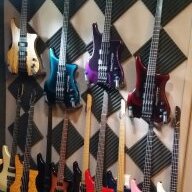
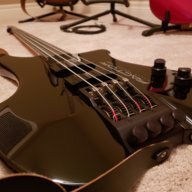
I think you should read my PM..View attachment 3451431 View attachment 3451432 View attachment 3451434 Just picked up this Midnight Blue ‘closet queen’. If not for a bit of hazing on the back (not even ‘rash’) you’d think it never got played.
Should I keep it or sell it? Already have one this color. Or maybe sell the other which is only slightly less nice.
What do you guys think?

Hi Kubicki fans! I've got a question.
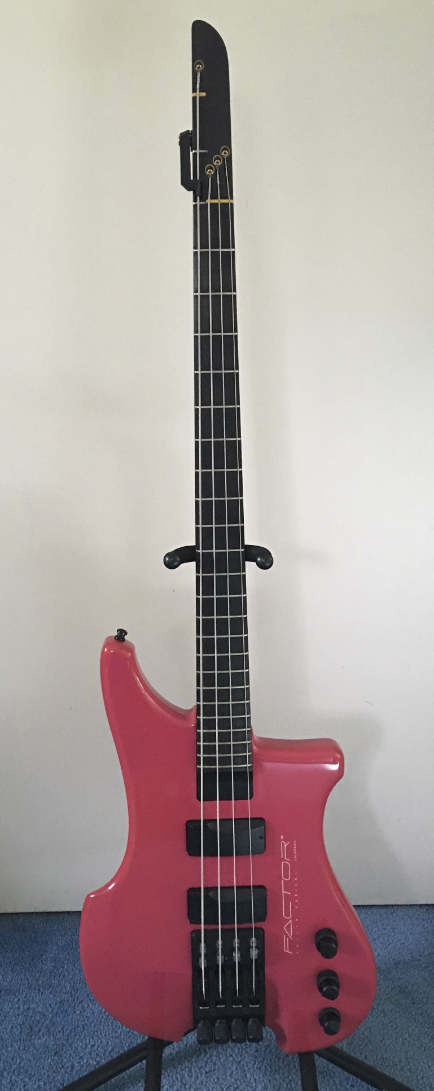
I just bought a 1990 FCS Ex Factor in Raspberry -- pepto pink, really -- and am pretty stoked about it. Despite its Fender provenance, it has the 18v system.
Now, I thought only the first 300 Factors of the FCS period (starting at 1287, IIRC) used that system, but this one has a 20XX serial number. I found online some examples of Factors with serial numbers up in the 2200s, and they, too, used the 18v system. Then I found some later FCS specimens, mostly 2600s, and they all have the 9v system. It seems, then, that Fender continued to use the 18v system for at least some of the first 1000 Factors produced under their auspices.
So my question is, is there a clear terminus for the 18v system -- midway through 1990 perhaps -- or did Fender continue to make the occasional 18v example throughout their tenure producing these basses?
I just bought a 1990 FCS Ex Factor in Raspberry -- pepto pink, really -- and am pretty stoked about it. Despite its Fender provenance, it has the 18v system.
Now, I thought only the first 300 Factors of the FCS period (starting at 1287, IIRC) used that system, but this one has a 20XX serial number. I found online some examples of Factors with serial numbers up in the 2200s, and they, too, used the 18v system. Then I found some later FCS specimens, mostly 2600s, and they all have the 9v system. It seems, then, that Fender continued to use the 18v system for at least some of the first 1000 Factors produced under their auspices.
So my question is, is there a clear terminus for the 18v system -- midway through 1990 perhaps -- or did Fender continue to make the occasional 18v example throughout their tenure producing these basses?

Hi Kubicki fans! I've got a question.
I just bought a 1990 FCS Ex Factor in Raspberry -- pepto pink, really -- and am pretty stoked about it. Despite its Fender provenance, it has the 18v system.
Now, I thought only the first 300 Factors of the FCS period (starting at 1287, IIRC) used that system, but this one has a 20XX serial number. I found online some examples of Factors with serial numbers up in the 2200s, and they, too, used the 18v system. Then I found some later FCS specimens, mostly 2600s, and they all have the 9v system. It seems, then, that Fender continued to use the 18v system for at least some of the first 1000 Factors produced under their auspices.
So my question is, is there a clear terminus for the 18v system -- midway through 1990 perhaps -- or did Fender continue to make the occasional 18v example throughout their tenure producing these basses?
The number of first generation non FCS stamped Fenders with the 18v board and non glossy anodized knobs is closer to 500ish units.
I have a later one, 89 in white.
Disclaimer: I’ve found no definitive point they switched over serial number wise personally. Just rounding it down through research.
Edited to add. There are probably MANY Fender 9V ExFactors that were converted over the years either by Phil personally or someone else.

- Jun 30, 2010
- 49,603
- 222,065
- Disclosures
- musician/artist/owner - Gildaxe
The number of first generation non FCS stamped Fenders with the 18v board and non glossy anodized knobs is closer to 500ish units.
I have a later one, 89 in white.
Disclaimer: I’ve found no definitive point they switched over serial number wise personally. Just rounding it down through research.
Edited to add. There are probably MANY Fender 9V ExFactors that were converted over the years either by Phil personally or someone else.
Yes - I for one had Phil convert my '86 Ex-Factor that unusually had a 9v system when I bought it in '94, to the 18v system.
Yes - I for one had Phil convert my '86 Ex-Factor that unusually had a 9v system when I bought it in '94, to the 18v system.
A little unusual but there’s plenty of folks that prefer the 9V board. You being one if I recall. I can see someone installing one but it most certainly wouldn’t have come that way from Phil in 86.
I really like the 9V active circuit myself but I’m almost always on one of the passive settings on the 18V’s.
The number of first generation non FCS stamped Fenders with the 18v board and non glossy anodized knobs is closer to 500ish units.
I have a later one, 89 in white.
Disclaimer: I’ve found no definitive point they switched over serial number wise personally. Just rounding it down through research.
Edited to add. There are probably MANY Fender 9V ExFactors that were converted over the years either by Phil personally or someone else.
Mine, still en route, is January 1990.
Mine, still en route, is January 1990.
Cool. Post pics. I’m at work (can’t recall the serial#) and would wager it’s not too far off from my white one.
- Jun 30, 2010
- 49,603
- 222,065
- Disclosures
- musician/artist/owner - Gildaxe
A little unusual but there’s plenty of folks that prefer the 9V board. You being one if I recall. I can see someone installing one but it most certainly wouldn’t have come that way from Phil in 86.
I really like the 9V active circuit myself but I’m almost always on one of the passive settings on the 18V’s.
Yes, I do prefer the 9v version. After I bought the '86 I sent it to Phil to install a fretless neck and he recommended the 18v system. Having then used both I found the 9v to be more my cup-of-tea.

This^ .... I bought a '90 FCS a few years ago that had been converted to 18v. Being that I like the 9v system I ordered a new one from the mothership.The number of first generation non FCS stamped Fenders with the 18v board and non glossy anodized knobs is closer to 500ish units.
I have a later one, 89 in white.
Disclaimer: I’ve found no definitive point they switched over serial number wise personally. Just rounding it down through research.
Edited to add. There are probably MANY Fender 9V ExFactors that were converted over the years either by Phil personally or someone else.
I've recently come into possession of a post FCS '93 and trying to make peace with the 18v system once and for all. With mute being position 1, I seem to gravitate towards pos 2 on my 9v basses and position 3 on my 18v basses. I don't use the passives at all. I think it's weird that the bass and treble controls are opposite of one another between the 9v and 18v systems too.
Totally agree. I'm an 18v user, I've never used a 9v. But I feel like when you buy an active Kubicki you are buying that active tone, not the passive. On the 18V I mostly use position 2 and 3. Both are top notch.
It's all in the ears.
It's all in the ears.
I don't even need to punch in when you're on the case. You're like the kubicki trivia king. Keep up the good work mang!Cool. Post pics. I’m at work (can’t recall the serial#) and would wager it’s not too far off from my white one.
I don't even need to punch in when you're on the case. You're like the kubicki trivia king. Keep up the good work mang!
All of a sudden I’m reminded of the scene from Roadhouse when Jeff Healey introduces Sam Elliot.
You’re Sam

Help, please ....
First off, sorry I haven't combed through this entire thread as i am sure the answer to my question resides within the pages ....
I recently picked up my first Factor, a beautiful 1990 beautiful blue burst ... and I absolutely love it and love it's tone.
Problem is that immediately upon arrival, I noticed the truss rod needs a tweak as there is a very noticeable dip in the neck. I then do a bit of googling and see that the truss rod screw is on the top of the headstock and can be adjusted with a Phillips head screwdriver. I try this and that damn nut is already as tight as it gets, there's no play there at all ... Very upsetting.
I then go to try and adjust the action, let's see what she plays like if i lower her string height a bit, maybe she'll be more comfortable to play (that is, until I figure out the neck adjustment situation)
I go to adjust the action screws that sit on the bridge and those wont move either ....
What am I doing wrong here? ... With all my other bass brands, setups come fairly easy for me. With this Factor, I can't seem to get it to adjust at all.
Just trying to see if anyone can offer any tips before I take here to the Kubicki shop over in Pennsylvania for an overhaul.
Thanks all.
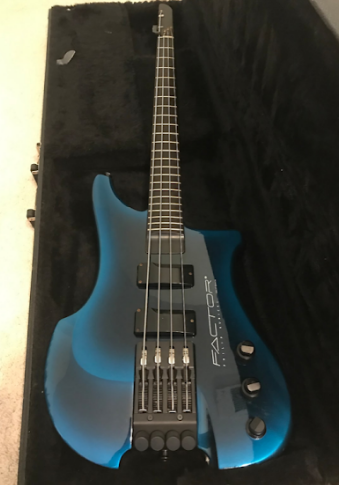
First off, sorry I haven't combed through this entire thread as i am sure the answer to my question resides within the pages ....
I recently picked up my first Factor, a beautiful 1990 beautiful blue burst ... and I absolutely love it and love it's tone.
Problem is that immediately upon arrival, I noticed the truss rod needs a tweak as there is a very noticeable dip in the neck. I then do a bit of googling and see that the truss rod screw is on the top of the headstock and can be adjusted with a Phillips head screwdriver. I try this and that damn nut is already as tight as it gets, there's no play there at all ... Very upsetting.
I then go to try and adjust the action, let's see what she plays like if i lower her string height a bit, maybe she'll be more comfortable to play (that is, until I figure out the neck adjustment situation)
I go to adjust the action screws that sit on the bridge and those wont move either ....
What am I doing wrong here? ... With all my other bass brands, setups come fairly easy for me. With this Factor, I can't seem to get it to adjust at all.
Just trying to see if anyone can offer any tips before I take here to the Kubicki shop over in Pennsylvania for an overhaul.
Thanks all.
The Kubicki shop? Cool! And that's one of the coolest-looking Factor's I've seen. Post a front shot if you can. Outstanding score - enjoy.
Thanks, yeah .. as soon as I saw that color, all financial sense was lost
Here's the only other pic I have of her on my phone ...

Beautiful! That finish and the one just like it, but not faded in, are way up there in my favorite choices.
Congrats on your first ExFactor! I'll try to help you here.... First - do not use a phillips screwdriver on that truss rod nut. It is a + pattern but made for a wide straight blade screwdriver. See if you can loosen the thing first before you try to tighten it. I always assist mine by pulling back on the headstock while tightening... and no more than 1/8 or 1/4 turn max at a time. Even though the necks are laminated, mine still need to be adjusted about twice a year, and they can feel tight. I've contemplated removing the nuts on mine and applying a little bowling alley wax to lube them up but haven't done it yet. I spoke to Mike Haney a couple of years ago about the possible eventuality of these things bottoming out. He suggested adding a washer, though recommended sending it to him for that. Good luck with sorting that part out.
The saddles just screw in and out of the saddle blocks, 1/2 turn either way, to set the height. Out of 3 of these, I have 1 or 2 saddles that turn freely by hand. All the rest need a small wrench to turn. DO NOT get carried away and run the saddles down so far that they make contact and crack the bridge/tailpiece assembly frame. Don't even let them touch the frame. If that doesn't get the action low enough, then you have too much relief. Always set the relief first before saddle height (on any bass).
Those big phillips screws that sit at each saddle are for adjusting intonation. They are tightened COUNTERCLOCKWISE up to the underside of the frame to secure. You can crack the frame if you try to "loosen" it further by going more counterclockwise.To make an adjustment, turn it clockwise to allow it to free float within the channel. Once set, turn it counterclockwise again to secure it in position.
Hope this helps
The saddles just screw in and out of the saddle blocks, 1/2 turn either way, to set the height. Out of 3 of these, I have 1 or 2 saddles that turn freely by hand. All the rest need a small wrench to turn. DO NOT get carried away and run the saddles down so far that they make contact and crack the bridge/tailpiece assembly frame. Don't even let them touch the frame. If that doesn't get the action low enough, then you have too much relief. Always set the relief first before saddle height (on any bass).
Those big phillips screws that sit at each saddle are for adjusting intonation. They are tightened COUNTERCLOCKWISE up to the underside of the frame to secure. You can crack the frame if you try to "loosen" it further by going more counterclockwise.To make an adjustment, turn it clockwise to allow it to free float within the channel. Once set, turn it counterclockwise again to secure it in position.
Hope this helps
Last edited:
Since it's Friday, I submit mine as a close-second