I've been a Lakland fan since the early days. I remember playing a Sherwood Green 55-94 at Cascio music in Milwaukee back in the 90s and being blown away. My first was a 55-02 that was simply amazing. A few years later I visited the factory to meet Dan and pick up my custom Joe Osborn 5 with clear pickguard and clean "no dots" Birdseye maple neck. Since then I've had a Duck Dunn, a 55-94 Classic, 44-94 deluxe and still have a Skyline Hollowbody. They've all been amazing. After foolishly trading my 55-94 I've regained my sanity with an early 55-94 in shoreline Gold rosewood board. In my opinion any call musician needs a P, a J and a 55-94. All basses covered.

Enjoy the benefits of a premium membership!
Upgrade Account
-
TalkBass has been independent since 1998. Add your voice.
Create a free account to reply to discussions, view embedded media, and browse with fewer display ads.
Join free Log in
Want zero display ads or expanded classifieds tools? Compare plans.
You are using an out of date browser. It may not display this or other websites correctly.
You should upgrade or use an alternative browser.
You should upgrade or use an alternative browser.
More options
Who Replied?

All basses covered.
So punny...
I'm going to get my hands on a 4-94or 5-94 one of these days
My bass received a compliment recently from a friend who's been playing for 20+ years (electric and upright) and he was very impressed with the feel and tone of Old Joe. I confirmed his statement last night when I looked at the clock and realized I had been jamming for close to two hours. Love this bass!

Oh hey, look what I got. The Death Star is mine.


Ok you are way to close for me not to ask, I really want to play this bass (actually I'd love to buy it from you) but I will be satisfied playing it. I've got a Hollow 30 among other things and don't live all that far away?
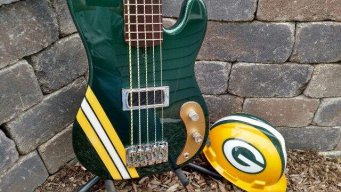
Anyone know about the D. Laklin basses?
I played a few of the first batch....pretty nice actually. there are a few threads about them on TB ...but I will warn you some of the posters have preconceived notions that they cannot or will not leave by the side of the road.
Oh hey, look what I got. The Death Star is mine.


drool......shorty neck??
very nice!
congrats!
My bass received a compliment recently from a friend who's been playing for 20+ years (electric and upright) and he was very impressed with the feel and tone of Old Joe. I confirmed his statement last night when I looked at the clock and realized I had been jamming for close to two hours. Love this bass!
ain't life GREAT when life is "GREAT"????

From today's Chicago Tribune:
Made From Scratch in Chicago
Chicago-based Lakland Guitars touts some premier names among its clients, customizing bass guitars for U2's Adam Clayton and Black Sabbath's Geezer Butler, whose signature is engraved on the back of his instrument.
The company previously had outsourced production of its American-made line to about a dozen companies throughout the United States, which then shipped the raw necks, bodies and other parts to Chicago for final production and assembly. They also have a line of bass guitars that are made in Asia and finished in the United States.
But four years ago, John Pirruccello and his three brothers became majority owners and slowly began to move production of the American line in-house to have more control over the products and lead times. They have invested about $500,000, including in computer-run machines and training.
The new technology will allow them to make 600 bass guitars in 2015 — double the number of bass guitars they now make and a quantity that would increase their leverage when negotiating prices for raw materials.
In early 2011, the brothers moved the company near the Ravenswood Metra stop, renting 8,500 square feet in a brick building on the 1800 block of Berteau Avenue. The sweet smell of wood fills the factory floor, set up with cubicle-size stations where workers test the Asian-made line or build the American-made products.
On a recent morning, a worker operated a phone booth-size machine that measures distances with a laser and levels the frets so that they are all even. It's important, said Pirruccello, because if the frets aren't level, a string would vibrate and touch one fret before another one, making it buzz.
"It has to be able to vibrate freely," Pirruccello said.
A few feet away, two workers manually worked on frets for the American line. One used sanding blocks to file the frets until they were all even. Another used a hand file to shape the top of each fret until it was round and smooth.
"Each one of these guys take (the bass guitars) from beginning to end," Pirruccello said.
Pirruccello said it's almost three times more expensive to make bass guitars in the U.S. compared with Asia, because of the cost of labor. But he said, demand for the line is increasing, and customers are willing to pay more. The American line retails for $2,500 to $4,000, while the Asian-made line sells for $900 to $1,800.
Lakland was founded in Chicago in 1994 by Dan Lakin and Hugh McFarland. Their combined names became the name of the company, which struggled financially in the 1990s. In 2000, a group of investors, including John and his brothers, bought into the company. The next year, it introduced a lower-priced series called Skyline, which was partially built in Korea and finished in the U.S.
During the recession, Pirruccello said demand for the Skyline series dropped about 20 percent, while sales of the U.S. bass guitar flattened at about 250 pieces a year. Demand has since increased for both. The company sells about 2,000 Skyline bass guitars and about 300 of the American-made line. He could sell more, he added, but he didn't have the capacity until now.
The first product to be made in-house were pickups, a small, rectangular component attached to the body of the guitar that uses magnets and copper wire to capture vibrations from the strings and convert them to an electrical signal that is later amplified.
"This is all (technology) from the 1930s and '40s, but that's what everyone wants," Bo Pirruccello said. People, he added, want the vintage sound. "We are driven by customer preference."
Lakland manufacturers about 20 styles of pickups, which it sells to consumers for replacement in other guitars and to a Japanese guitar-maker.
"It became another profit line," Bo Pirruccello said.
The brothers began investing in more machines. Their biggest purchase came in 2011: A $100,000 milling machine about the size of a pickup truck. The wood-cutting machine can make a neck and a body in less than two hours and can cut multiple pieces at once. It was the final piece of the puzzle needed to expand the business.
Steve Pirruccello, an engineer, was tasked with learning how to operate the machine and the 3-D program that comes with it.
"That looked like something from Mars to me," Steve Pirruccello said as he pointed to the machine's controls. "Now we are pretty good with it."
He attended classes, but he learned the hard way that there are multiple ways to crash the machine, he said. One day, early on in his learning, he keyed in the wrong measurements in a design and drove the spindle straight through the cutting table.
"I think we both wanted to cry," Steve Pirruccello said of himself and his brother John.
Now that the investment is in place, the Pirruccellos said they are committed to being local manufacturers.
"We would like to see our purely made-in-the-U.S. instruments just continue to grow and grow," Steve Pirruccello said.
Made From Scratch in Chicago
Chicago-based Lakland Guitars touts some premier names among its clients, customizing bass guitars for U2's Adam Clayton and Black Sabbath's Geezer Butler, whose signature is engraved on the back of his instrument.
The company previously had outsourced production of its American-made line to about a dozen companies throughout the United States, which then shipped the raw necks, bodies and other parts to Chicago for final production and assembly. They also have a line of bass guitars that are made in Asia and finished in the United States.
But four years ago, John Pirruccello and his three brothers became majority owners and slowly began to move production of the American line in-house to have more control over the products and lead times. They have invested about $500,000, including in computer-run machines and training.
The new technology will allow them to make 600 bass guitars in 2015 — double the number of bass guitars they now make and a quantity that would increase their leverage when negotiating prices for raw materials.
In early 2011, the brothers moved the company near the Ravenswood Metra stop, renting 8,500 square feet in a brick building on the 1800 block of Berteau Avenue. The sweet smell of wood fills the factory floor, set up with cubicle-size stations where workers test the Asian-made line or build the American-made products.
On a recent morning, a worker operated a phone booth-size machine that measures distances with a laser and levels the frets so that they are all even. It's important, said Pirruccello, because if the frets aren't level, a string would vibrate and touch one fret before another one, making it buzz.
"It has to be able to vibrate freely," Pirruccello said.
A few feet away, two workers manually worked on frets for the American line. One used sanding blocks to file the frets until they were all even. Another used a hand file to shape the top of each fret until it was round and smooth.
"Each one of these guys take (the bass guitars) from beginning to end," Pirruccello said.
Pirruccello said it's almost three times more expensive to make bass guitars in the U.S. compared with Asia, because of the cost of labor. But he said, demand for the line is increasing, and customers are willing to pay more. The American line retails for $2,500 to $4,000, while the Asian-made line sells for $900 to $1,800.
Lakland was founded in Chicago in 1994 by Dan Lakin and Hugh McFarland. Their combined names became the name of the company, which struggled financially in the 1990s. In 2000, a group of investors, including John and his brothers, bought into the company. The next year, it introduced a lower-priced series called Skyline, which was partially built in Korea and finished in the U.S.
During the recession, Pirruccello said demand for the Skyline series dropped about 20 percent, while sales of the U.S. bass guitar flattened at about 250 pieces a year. Demand has since increased for both. The company sells about 2,000 Skyline bass guitars and about 300 of the American-made line. He could sell more, he added, but he didn't have the capacity until now.
The first product to be made in-house were pickups, a small, rectangular component attached to the body of the guitar that uses magnets and copper wire to capture vibrations from the strings and convert them to an electrical signal that is later amplified.
"This is all (technology) from the 1930s and '40s, but that's what everyone wants," Bo Pirruccello said. People, he added, want the vintage sound. "We are driven by customer preference."
Lakland manufacturers about 20 styles of pickups, which it sells to consumers for replacement in other guitars and to a Japanese guitar-maker.
"It became another profit line," Bo Pirruccello said.
The brothers began investing in more machines. Their biggest purchase came in 2011: A $100,000 milling machine about the size of a pickup truck. The wood-cutting machine can make a neck and a body in less than two hours and can cut multiple pieces at once. It was the final piece of the puzzle needed to expand the business.
Steve Pirruccello, an engineer, was tasked with learning how to operate the machine and the 3-D program that comes with it.
"That looked like something from Mars to me," Steve Pirruccello said as he pointed to the machine's controls. "Now we are pretty good with it."
He attended classes, but he learned the hard way that there are multiple ways to crash the machine, he said. One day, early on in his learning, he keyed in the wrong measurements in a design and drove the spindle straight through the cutting table.
"I think we both wanted to cry," Steve Pirruccello said of himself and his brother John.
Now that the investment is in place, the Pirruccellos said they are committed to being local manufacturers.
"We would like to see our purely made-in-the-U.S. instruments just continue to grow and grow," Steve Pirruccello said.

Awesome, thanks for posting that! I learned a few new things about Lakland.
I'll have to look through the Tribune here in my house and find the piece.
I'll have to look through the Tribune here in my house and find the piece.
Oh hey, look what I got. The Death Star is mine.


Nice score! Where did you find it?
Oh hey, look what I got. The Death Star is mine.


Aw man you're the one who got it! I was waffling on this bass for like 6 months. Finally told the dude I wanted to buy it and he mentioned that an interested party was finalizing a deal
 glad to see it was you! Enjoy the Death Star
Called lakland and found out they're not offering replacement guards anymore. Has anyone had any experience with Quick Guards out of Florida ? Looking for a replacement for my DJ4. Thanks.
Tony at pickguardian is great as wellMike Quick is great, and Jeannies is supposed to be open again on eBay.

How do you find the "new Jeannie's" on Ebay? Do you have their username you could pass along or a link? Thanks!Yep... Contacted through eBay.
How do you find the "new Jeannie's" on Ebay? Do you have their username you could pass along or a link? Thanks!
I just called Jeannie & the best way to order is by phone.
Their tech is out for the next week on vacation, so calling next week would be best.
They have templates for a ton of US & Skylines up until the Indos started causing them fits.
Thanks for that- just the number listed on their caveman-era website? I have a Korean Glaub so I should be good!I just called Jeannie & the best way to order is by phone.
Their tech is out for the next week on vacation, so calling next week would be best.
They have templates for a ton of US & Skylines up until the Indos started causing them fits.
I think I'm gonna go with Quick guards. He has a black sparkle model that should go very well with my '08 korean black sparkle DJ4. Bling!!!! 

Hey Lakland, gimme an endorsement deal or I'll get angry.....

You won't like me when I'm angry
You won't like me when I'm angry

I take it this is a picture from your Bee Gees cover band?Hey Lakland, gimme an endorsement deal or I'll get angry.....

You won't like me when I'm angry


