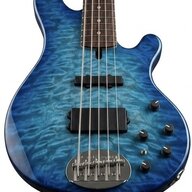
By the way, love my Gecko Leather Works straps!

TalkBass has been independent since 1998. Add your voice.
Create a free account to reply to discussions, view embedded media, and browse with fewer display ads.
Join free Log in
Want zero display ads or expanded classifieds tools? Compare plans.

It's all about personal taste. It's so easy to pop the cover out and play with the settings.Hey,
Has anyone ever tried to change his Bart preamp frequencies from the centered 250 to 400hz ? or have 600hz ?
I am about to test that but not just wanted to have your thoughts guys.
Thanks!
It's all about personal taste. It's so easy to pop the cover out and play with the settings.
But you don't have those frequencies you mentioned in the Bartolini setups that used to come with Lakland basses.
You have 250, 500, 700 and 850Hz, according to the PDF attached.
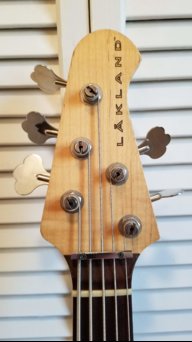


All done in house with CNC.I'm curious to know how "hands on" Lakland 55-94 U.S.A. production is in a couple of areas.
For instance, do they actually cut their own neck blanks by hand or Computer? Do they make their own Bodies from wood stock? Do they Laminate th custom tops or are they outsourced? Just curious.
Beautiful man, nice build, congrats!NBD! I know a few TBers have owned this one. It's a 55-63 or 55-JJ (couldn't really find a clear definition between the models) in transparent white, and loaded with Sadowsky electronics. How can you go wrong....that great Lakland 5 neck, sounds fantastic in both active and passive mode, and only weighs about 8.5 lbs!
View attachment 7478608
View attachment 7478610
View attachment 7478611
View attachment 7478612
Growing family, I am envious! that Buckeye AJ is something else! thanks for sharing!Current family photo... 55-64 US Classic, 55-AJ Custom, 55-OS Fretless. Pretty much covers everything from Vintage to Modern. Will likely be adding a 55-60 US and a US Fretless at some point.

Sweet. That trans white looks excellent! Very interested to hear your thoughts on the differences between the two. I've been thinking about a passive five string like the duel J or a 55-60 to compliment my 55-94.NBD! I know a few TBers have owned this one. It's a 55-63 or 55-JJ (couldn't really find a clear definition between the models) in transparent white, and loaded with Sadowsky electronics. How can you go wrong....that great Lakland 5 neck, sounds fantastic in both active and passive mode, and only weighs about 8.5 lbs!
View attachment 7478608
View attachment 7478610
View attachment 7478611
View attachment 7478612
Sweet. That trans white looks excellent! Very interested to hear your thoughts on the differences between the two. I've been thinking about a passive five string like the duel J or a 55-60 to compliment my 55-94.


So tell me, does the UNI 5 make the Stingray tone more "Stingray"…ish? The UNI has some crispy settings. I find the Barts a little more mellow then a trad Alnico big pole MM pickup. Can you elaborate on the effect the UNI has given?Ditto! Love the Bart/Umipre combo.View attachment 7473585
Yea, Ive played with them all. I find the 500 hz to be adequate. The thing is, even fully dimed the effect is not aggresive. i find the whole bart pre to be useful but on the tame side. And oh, how a passive tone would be great to have.Hey,
Has anyone ever tried to change his Bart preamp frequencies from the centered 250 to 400hz ? or have 600hz ?
I am about to test that but not just wanted to have your thoughts guys.
Thanks!
Yes and no. The Bart quad coil MM pup is not in the exact ray position and it is voiced differently than an authentic Stingray pup. The Unipre being so versatile with the sweepable mids, bright switch and powerful EQ can get close, in the Stingray neighborhood, if you will.So tell me, does the UNI 5 make the Stingray tone more "Stingray"…ish? The UNI has some crispy settings. I find the Barts a little more mellow then a trad Alnico big pole MM pickup. Can you elaborate on the effect the UNI has given?

You can do it easily enough (says the guy who can't solder), but where to put the knob?And oh, how a passive tone would be great to have.

Good to know. Since both my 55=94's are from 1999/2001 I know that Dan said in a Forbes article that, back in the day, the bodies were out sourced to a supplier in California and the necks were from Oregon ( he never said where that was) I would imagine that the deluxe flame maple tops were put on at the supplier where they were finished, before they were shipped out to Chicago. The necks were probably shipped as blanks to Lakland. Can anybody confirm this? If so the early Lakland's were neck finished, carved and fretted, added electronics, hardware installed and assembled at the Lakland shop. This is a different bass than the ones made after 2005. Not that I'm complaining mine are beautifully made and exquisitely crafted. They play and sound incredible. I'm just curious how much of the process was back then.All done in house with CNC.

I have your fretless mate:NLD: Lakland 55-02 Deluxe "Blondie"
I just took delivery of a Lakland 55-02 Deluxe Natural with Ebony fretboard. Dubbed "blondie"
Beautiful maple top. Dark Ebony board.
Just about perfect setup out of the box. Really nice!
Haven't had a brand new Lakland in a long time!
View attachment 7465672View attachment 7465673
View attachment 7465674
View attachment 7465675View attachment 7465676
Oh! That's where it wandered off to!