
Enjoy the benefits of a premium membership!
Upgrade Account
-
TalkBass has been independent since 1998. Add your voice.
Create a free account to reply to discussions, view embedded media, and browse with fewer display ads.
Join free Log in
Want zero display ads or expanded classifieds tools? Compare plans.
You are using an out of date browser. It may not display this or other websites correctly.
You should upgrade or use an alternative browser.
You should upgrade or use an alternative browser.
Legit 1964 or Refinish
- Thread starter Farfetched
- Start date
More options
Who Replied?


Damn! Nice score. I would not have bought it without seeing the neck. Taking the neck off is really not a big deal, I don't see why he was so opposed to the idea. He could even have taken it to a tech if he was afraid of messing it up.


Thats a beaut....no way that a refin. The finish has too many realistic chips. Relic guys usually put in dings and belt sander marks. For some reason, these basses seem to wear with lots of chips.
Here's my '66.
[Invalid or Expired Link Removed]
[Invalid or Expired Link Removed]
[Invalid or Expired Link Removed]
Here's my '66.
[Invalid or Expired Link Removed]
[Invalid or Expired Link Removed]
[Invalid or Expired Link Removed]


I have an all original 62...also sunburst. I've thought about selling it from time to time, as I'm almost exclusively an upright player.
Couple of questions for you guys:
1.Mactac - would you be willing to give us your purchase price?
2. Mine could use new frets - still works fine, but it could use it if I start to play it more. My guess is that would reduce the value. True?
Couple of questions for you guys:
1.Mactac - would you be willing to give us your purchase price?
2. Mine could use new frets - still works fine, but it could use it if I start to play it more. My guess is that would reduce the value. True?
I can't speak for everyone but for me a fret job would raise the value. Who wants a bass with bad frets? Some modifications would definitely lower the value in my mind, but regular maintenance is not one of them. That is, of course, assuming it's professionally done.
Thanks radical. Just to be clear, I'm talking about replacing the frets...not just filing them. I'm thinking that replacing the frets would mean it was no longer ALL original, and that would reduce the value some. But I'm no vintage expert. I just bought this thing in 1976 and I've had it ever since. Killer bass.

Fair enough.
Wow, that's uncanny. VERY similar wear patterns! Thanks for posting.
Damn! Nice score. I would not have bought it without seeing the neck. Taking the neck off is really not a big deal, I don't see why he was so opposed to the idea. He could even have taken it to a tech if he was afraid of messing it up.
I could tell that it was original without taking the neck off. I can't tell you exactly how, but everything was consistent. The type of wear, the feel of the neck, it was definitely a "whole bass" that had been the same for 50 years, and no ebay-parts-put-together thing. It has mojo to the extreme (whatever the heck that is), and I could just tell.

I bought it for $4600 Canadian (4300 US?). It included the original case.
After talking to a lot of people, and thinking about it - Frets are pretty much a consumable. Replacing the frets shouldn't affect the value other than to increase the value, as long as the fingerboard doesn't get chipped up from the fret job.
Original frets are sort of "neat", but I don't think they affect the value really. Actually, when you think about it - There are amazing vintage basses, and there are dogs from every year. The really special ones don't sit is a case, they get played. A LOT. I'd be really suspicious of a mint 1964 Fender bass - those are the ones that often are dogs. I'm not saying that if it's in good shape it's no good, as there are a million exceptions, but generally speaking but I'd feel more comfortable buying one over the net that's been played & loved. Crappy basses sit in a closet. Great basses go to gigs.
So, in my opinion a bass that has worn frets is probably a really good bass. It's even better once fresh new frets are on it.
I think that the only time original frets would be a plus would be on a "pristine" bass. Ie it's in mint shape. But you know my thoughts on pristine vintage basses.
Thanks. I'd say you got a really good deal. I was offered quite a bit more than that for mine a few years ago, sight unseen, by a shop in NYC based on pictures.
I get your point on "mint" vintage instruments. My case is a bit different - it has, for the most part, sat in its case for almost years because I play almost all upright. There have been a few recording sessions where they wanted a Fender bass on certain tracks. Before that, it was my main bass for years. As the value shot up after 1995 or so, I stopped taking it to gigs for fear it would get damaged (knocked over, whatever), and put it in the case. I bought a couple of new Fenders to gig with.
It might be helpful to distinguish between "Players" and "collectors" regarding the fret question. A person buying it as for a "player" would probably like to have the frets in great shape. A person buying it only as a "collector", or an "investor", may be more concerned about any changes to the instrument that are not original.
It might be helpful to distinguish between "Players" and "collectors" regarding the fret question. A person buying it as for a "player" would probably like to have the frets in great shape. A person buying it only as a "collector", or an "investor", may be more concerned about any changes to the instrument that are not original.
I completely agree with this - A very good distinction. I can't see how my bass would be of much interest to a collector, it's pretty "used" - this is why I don't care too much about the frets. If it was in really nice shape, I might think otherwise..
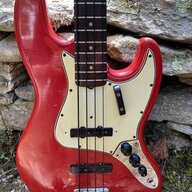
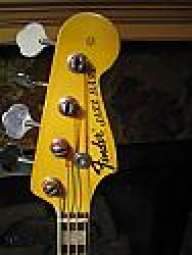
The ones I worry about are the ones that look brand new. I don't care if it was under a bed for 50 years it will still age.


