
Enjoy the benefits of a premium membership!
Upgrade Account
-
TalkBass has been independent since 1998. Add your voice.
Create a free account to reply to discussions, view embedded media, and browse with fewer display ads.
Join free Log in
Want zero display ads or expanded classifieds tools? Compare plans.
You are using an out of date browser. It may not display this or other websites correctly.
You should upgrade or use an alternative browser.
You should upgrade or use an alternative browser.
Let's clear one thing one and for all: Tonewood: Does it really matter?
- Thread starter MovingPitchers
- Start date
- Status
- Not open for further replies.
More options
Who Replied?

It makes no difference to the Mothman. Mothman tone comes from hate and weeping orphans.


Likely has much more to do with quality of materials and craftsmanship than species used. The wood may influence how vibrations flow through the instrument, which in turn could effect how the string vibrates which, as we know, is the basis for the electronic aspect. I am in the "sum of its parts" camp.

Hopkins
Commercial User
Depends on amp.
My friend had kick a$$ amp for some time: 10 different bass guitars = 10 different sounds. We tested 4 bass guitars on that amp. Every bass sounds different. There were Mahogany and Alder P,Alder J and Cherry PJ.
So you tested 4 totally different basses with different pickups and electronics and they all sounded different? You are right, it must be the wood.
So let's all buy poplar/balsa bass bodies, and save 2-3 pounds per bass.
Ive used poplar a few times, its a great body wood IMHO, its light weight, tight grained, so its easy to finish and somewhat inexpensive. It is very similar to alder in weight, and hardness and grain. It just has a tendency to have ugly green streaks so its best suited for a solid color.
Last edited:

DiabolusInMusic
Functionless Art is Merely Tolerated Vandalism
Depends on amp.
My friend had kick a$$ amp for some time: 10 different bass guitars = 10 different sounds. We tested 4 bass guitars on that amp. Every bass sounds different. There were Mahogany and Alder P,Alder J and Cherry PJ.
Considering 2 were P's, one was a J, and one was a PJ I would expect them all to sound different regardless of body wood. I don't think the amp had anything to do with it.
There is no evidence to support tone wood. There is evidence to suggest people cannot tell an alder body from a chunk of plywood but there is no evidence to disprove tone wood.
I personally do not believe in tone wood. I do believe in the finger/fretboard affecting the tone but the little nuances will be lost in the mix anyways.
People love to argue in favour of imaginary/magic things they cannot see or scientifically quantify/qualify. Guitars are no different.

buldog5151bass
Kibble, milkbones, and P Basses. And redheads.
Poplar is lighter and softer than alder, and is easy to dent. It does have nice grain. It takes a stain nicely, and when does so, can look close to maple.

Except that it's not, so, go figure- rosewood is MUCH harder than maple.I find rosewood DOES make the sound a bit warmer since it's softer than maple,....

Hopkins
Commercial User
Any differences in tone that wood will make on a solid body electric instrument with potted pickups is going to be nothing more than a subtle nuance. Some people may be able to pick up on these subtle nuances, others (most people) may not hear any difference at all.
When brands advertise the characteristics of "tonewoods" is where it gets into pure nonsense, Warmoth is the worst offender here. They speak in absolutes, like ash and maple are bright sounding, mahogany and alder are dark sounding ect. The problem is that wood is a very inconstant material, and two boards cut from the same log can have totally different physical characteristics. I have had an Alder body blank that was 2 pounds heavier than a mahogany body blank, this would go against what every manufacturer would advertise about the characteristics of either wood.
So does wood impact the tone of a solid body electric instrument, possibly, but only slightly. You can't make absolute statements describing the different tonal attributes of different species, because there are far to many variations in different boards of the same species, so the way tonewood is often described is pure advertizement and nothing more.
In the end, wood should be chosen for its structural characteristics, aesthetics, and weight, and in no way its tonal attributes. Tone should be determined by other things that can be controlled like pickup placement, strings, electronics, and EQ,
When brands advertise the characteristics of "tonewoods" is where it gets into pure nonsense, Warmoth is the worst offender here. They speak in absolutes, like ash and maple are bright sounding, mahogany and alder are dark sounding ect. The problem is that wood is a very inconstant material, and two boards cut from the same log can have totally different physical characteristics. I have had an Alder body blank that was 2 pounds heavier than a mahogany body blank, this would go against what every manufacturer would advertise about the characteristics of either wood.
So does wood impact the tone of a solid body electric instrument, possibly, but only slightly. You can't make absolute statements describing the different tonal attributes of different species, because there are far to many variations in different boards of the same species, so the way tonewood is often described is pure advertizement and nothing more.
In the end, wood should be chosen for its structural characteristics, aesthetics, and weight, and in no way its tonal attributes. Tone should be determined by other things that can be controlled like pickup placement, strings, electronics, and EQ,
buldog5151bass
Kibble, milkbones, and P Basses. And redheads.
Weight can vary over 30%, even at the same moisture level, depending on where on the tree it was harvested. Generally, the lower on the tree, the lighter it is.
Hopkins
Commercial User
Poplar is lighter and softer than alder, and is easy to dent. It does have nice grain. It takes a stain nicely, and when does so, can look close to maple.
You do realize I have build multiple instruments out of poplar and alder before right? I am not just shooting from the hip on my description that they are very similar in terms of weight, and hardness. Some alder boards may be harder than some poplar boards and vice-versa, but when finished poplar does not dent any worse than any other wood I have used.
The red one is poplar, the gold is alder, they weight within a pound of each other on the bathroom scale, and the gold one has much heavier pickups.
Hopkins
Commercial User
Weight can vary over 30%, even at the same moisture level, depending on where on the tree it was harvested. Generally, the lower on the tree, the lighter it is.
That is kind of the point I am getting at, if weight can vary so much from boards cut from the same tree, than that means density varies as well. Which means that any tonal properties they have will also vary. Which is why I say that any tonal descriptions of wood is pure advertizement.
buldog5151bass
Kibble, milkbones, and P Basses. And redheads.
Not entirely. Wood has characteristics other than weight/density that can affect vibrations.
I know you are not a novice, and I also work with these woods - I make baseball bats. Nice work BTW.
I know you are not a novice, and I also work with these woods - I make baseball bats. Nice work BTW.

I'm sure that there is a difference. I'm also sure no human can really, truly tell the difference.
I only really choose wood because of the way it looks. I really like the look of certain woods on a bass, like mahogany or ash. Weight isn't a factor for me, and unless it's the finger/fretboard, neither does tone.
I only really choose wood because of the way it looks. I really like the look of certain woods on a bass, like mahogany or ash. Weight isn't a factor for me, and unless it's the finger/fretboard, neither does tone.
Hopkins
Commercial User
Not entirely. Wood has characteristics other than weight/density that can affect vibrations.
I know you are not a novice, and I also work with these woods - I make baseball bats. Nice work BTW.
I don't see poplar or alder making a very good baseball bat
 I have worked with hickory and northern ash a few times. I absolutely see why those are perfectly suited for the task.
I have three Strats in the planning stages. They will all have the same necks, electronics, and hardware, and same solid color finish. One will be alder, one mahogany, and one maple (I hate finishing ash, so I am leaving it out). They will all be weight matched by chambering or adding weight. So they are within a few ounces of each other.
I know a few guitar players who think they will accurately tell me which is which by playing them, so we shall see.
Last edited:
Hopkins
Commercial User
I'm sure that there is a difference. I'm also sure no human can really, truly tell the difference.
I only really choose wood because of the way it looks. I really like the look of certain woods on a bass, like mahogany or ash. Weight isn't a factor for me, and unless its the finger/fretboard, neither does tone.
I compare it to throwing a rock in a pond. It displaces water so it has to raise the water level, but not enough that you can see or even measure it.
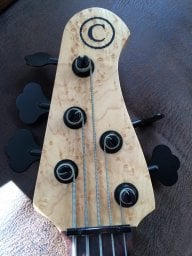
The man is right. Connoisseurship has been defined as "the increasing importance of diminishing differences." But bass land is a big, big space - some jazz-oriented tonemeister may be sensitive to tonal nuances you and I can only dream of, while some headbanger may comprehend differences between fuzz pedals that are lost on lesser mortals.How much it matters depends on the particular instrument and the ability of the listener to discern the differences.
Wait for it....
Let's also consider the difference between what an audience likely can hear and discern in the way of differences (not much, once electronics, amp and room issues kick in), as compared with what you, as a player, hear and feel on a particular axe.
I'd submit that differences in wood (fingerboard, body and neck) manifest themselves most at the level of feedback between instrument and player. Which in turn can affect the player's sense of ease and possibility on that particular instrument - do your notes feel well-supported in all registers? Uniformity? Clarity? Attack/Release capabilities? Punch/Impact? When not plugged in, does the axe feel comfortable, and MAKE YOU WANT TO PLAY IT? That will be a function of ergonomics, design parameters (neck-thorugh/bolt-on, body shape and size) and wood.
Personally, I'm convinced that wood makes a difference. How much? Depends on the axe, and the kind of music I'm playing with it. I think electronics will be more determinative in an electronic environment, but at this point I'm pretty confident that without amplification, most experienced players - meaning folks who have played a long time, and in a variety of genres - could distinguish among mahogany, ash and alder bodies. I think fretboard choices can make even more of a difference - consider that your left hand is in contact with the wood itself, and that so much of your sound may be a function of how that interface is working out, along with the tonal characteristics of the fingerboard wood. Again, I expect most "experienced" players could distinguish among rosewood, maple and ebony boards, based on feel and tone.
YMMV, IMO, etc.

I'm in the middle between absolute no and yes.
I think that it does matter, BUT the effect is both unpredictable and very subtle.
Additionally, it's almost impossible to rule out all the other variables that can affect tone, so that a valuable assessment is almost impossible.
This feeds this kind of threads on TB, a never ending quest...
at the end, play that damn thing, if you like it, you like it
I think that it does matter, BUT the effect is both unpredictable and very subtle.
Additionally, it's almost impossible to rule out all the other variables that can affect tone, so that a valuable assessment is almost impossible.
This feeds this kind of threads on TB, a never ending quest...
at the end, play that damn thing, if you like it, you like it

I think people's brains are really good at convincing them their ears and eyes know what's going on.
That will probably end up in someone's signature.

Wow, I think we're getting close to an answer!!
No, wait... no, I was wrong. Not any closer at all. Maybe after another 10,000 such threads?
No, wait... no, I was wrong. Not any closer at all. Maybe after another 10,000 such threads?
- Status
- Not open for further replies.


