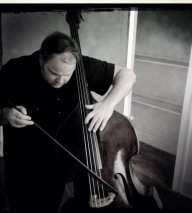
One of the things I've been working for a while now has been to treat RH pizz as and extention (or even a punching) of the finger tips through the fingers. I started looking at this mainly to avoid blisters - which is mostly coming from the shearing force applied on the finger when you pull on the string. The extreme case is the way RAB slap players pull, it's pretty much 90% shearing forces on the finger tips. When I play that way it's instant blisters.
In the case of using the "chicken wing", or the drop of the wrist, the thumb sorta becomes a fulcrum to which the hand rotates upward as the notes get "pulled". As the wrist drops past the level of the knuckles (with the rest of the arm weight), the fingers push through the strings. To me, this definitely reduces the shearing motions and incorporates more finger meat, although it can be a little slow as you have to drop the big mass of the arm to get it going.
The alternative I've been working with is to actually sorta reverse the chicken wing. Extend through the fingers, pushing or punching the finger tips through the string. You can think of this as raising the wrist rather than dropping it, but with one addition: a slight rotation of the hand along the axis of the arm. Pizz with the middle finger rotates the hand outward (thumb moves away from me), pizz with the index moves inward. Combing both the extension and the rotation, it forms a spiral like motion where the entire mass of the arm comes into play but even less movement. The rotation is tiny, probably imperceptible as you advance but I found it helpful to emphasize it when I was figuring it out. Add to this a slight swinging of the elbow outward and inward and you have this technique that is specific to each finger.
The result is that I get a fat sound as all of the density of my arm is incorporated, and can in a way eliminate the chicken wing altogether. Speed is a little better since there are many but smaller movements, and I don't have to rely on a thumb anchor but it does help stabilize things. I'm punching through the pads of the fingers and string just flops off - there's even less shearing forces so I don't get many blisters anymore. The thumb just keeps the hand in a more consistent place but doesn't provide any counter-force support. But the draw back is that the motions of the two spirals can make things sound inconsistent between the two fingers, also there is seemingly a speed limit to me.
The old school two finger pull might still be the fastest but it takes time to develop that too.
Anyways, I can play a long time effortlessly this way and it brings into play all the large muscle groups in the shoulder and back. I only get blisters now if I go after hard phrases during a solo and pushing my technique to the limit. I practice walking occasionally at 240-300bpm to stay conditioned and trying to push up the speed limit when possible.
I'll occasionally work on this to even it out but effectively I've added another trick to the bag and have an additional tool that uses the muscles differently. This approach serves well for walking but I think you still need to have all those other tricks as well for other purposes.
More tricks = more uses of different muscles = less burnout.
In the case of using the "chicken wing", or the drop of the wrist, the thumb sorta becomes a fulcrum to which the hand rotates upward as the notes get "pulled". As the wrist drops past the level of the knuckles (with the rest of the arm weight), the fingers push through the strings. To me, this definitely reduces the shearing motions and incorporates more finger meat, although it can be a little slow as you have to drop the big mass of the arm to get it going.
The alternative I've been working with is to actually sorta reverse the chicken wing. Extend through the fingers, pushing or punching the finger tips through the string. You can think of this as raising the wrist rather than dropping it, but with one addition: a slight rotation of the hand along the axis of the arm. Pizz with the middle finger rotates the hand outward (thumb moves away from me), pizz with the index moves inward. Combing both the extension and the rotation, it forms a spiral like motion where the entire mass of the arm comes into play but even less movement. The rotation is tiny, probably imperceptible as you advance but I found it helpful to emphasize it when I was figuring it out. Add to this a slight swinging of the elbow outward and inward and you have this technique that is specific to each finger.
The result is that I get a fat sound as all of the density of my arm is incorporated, and can in a way eliminate the chicken wing altogether. Speed is a little better since there are many but smaller movements, and I don't have to rely on a thumb anchor but it does help stabilize things. I'm punching through the pads of the fingers and string just flops off - there's even less shearing forces so I don't get many blisters anymore. The thumb just keeps the hand in a more consistent place but doesn't provide any counter-force support. But the draw back is that the motions of the two spirals can make things sound inconsistent between the two fingers, also there is seemingly a speed limit to me.
The old school two finger pull might still be the fastest but it takes time to develop that too.
Anyways, I can play a long time effortlessly this way and it brings into play all the large muscle groups in the shoulder and back. I only get blisters now if I go after hard phrases during a solo and pushing my technique to the limit. I practice walking occasionally at 240-300bpm to stay conditioned and trying to push up the speed limit when possible.
I'll occasionally work on this to even it out but effectively I've added another trick to the bag and have an additional tool that uses the muscles differently. This approach serves well for walking but I think you still need to have all those other tricks as well for other purposes.
More tricks = more uses of different muscles = less burnout.