also, I will say that a lot of the gut string guys say they switched to it because it's easier to produce that sound with less effort. I'm not totally sure if I can verify that, but I think it might be worth looking into for you

Enjoy the benefits of a premium membership!
Upgrade Account
-
TalkBass has been independent since 1998. Add your voice.
Create a free account to reply to discussions, view embedded media, and browse with fewer display ads.
Join free Log in
Want zero display ads or expanded classifieds tools? Compare plans.
You are using an out of date browser. It may not display this or other websites correctly.
You should upgrade or use an alternative browser.
You should upgrade or use an alternative browser.
Double Bass Lightness of touch (DB forum thread)
- Thread starter Chris Fitzgerald
- Start date
More options
Who Replied?
Jazzdogg
Less barking, more wagging!
I guess I was lucky in retrospect. About twenty five years ago I had a bad bout of tendonitis. I went to The Clinic For Performing Artists here in Chicago. It's part of Northwestern Hospital and very famous worldwide for injuries for dancers, musicians, etc.. They had me play for them and helped me to rebuild my technique concentrating on balance and no tension. I literally practiced for two years in front of a mirror to identify any tension or imbalances, and went back monthly so they could make small corrections. The injury was the best thing that could have happened to me. I have had no problems physically playing since then. And I'm an old fart.
Sounds like you could succeed wildly with a video the rest of us could view to learn more about tension and imbalance. I've been recovering from a rotator cuff injury for the past 8 months; I'd buy a copy.

Really interesting stuff!Choked up is maybe not the best descriptor. Impeded perhaps.
The bass can only put out a finite amount of volume no matter how much energy you put into it. If you pull harder than is required for maximum volume that effort is wasted on the bass and can actually impede it's movement when you go to far past what is required for maximum acoustic output. There is a sweet spot in the pull of the finger or the draw of the bow where you are exerting just enough energy to obtain maximum volume but not so much that you are dampening down the natural ring of the plates.
It's a subtle spot, I go past it all the time. When I hit the sweet spot the bass sounds great, projects well and I don't get tired playing. When I go past it I work to hard, don't get as clear or useful a tone and I end up worn out by gigs end.
What is the best way to find the 'sweet spot'? Or practice playing there? Apologies if i'm hijacking the thread a little, my inquisitive mind can't help it!
- May 6, 2003
- 5,272
- 160
- 64
- Disclosures
- Proprietor Fifth Avenue Fret Shop. Technical Editor Bass Gear Magazine
I dunno, some things are hard to articulate. There is art in playing after all.Really interesting stuff!
What is the best way to find the 'sweet spot'? Or practice playing there? Apologies if i'm hijacking the thread a little, my inquisitive mind can't help it!
Practice, perform, play the same instrument over and over and over. You'll know intuitively.

[progris riport]
Just checking in on this thread again after a couple of years. I had an interesting experience that could be described as "a tale of three basses". Eddie Gomez visited the school in February and borrowed the school bass, having me set it up very low and light. I left it that way. The second bass in my office, the ply LaScala (spiro mitts, 7-10mm), is having growing pains and feels/sounds very tight, which tells me it is in need of a tune up session from Nnick. I recently had to play for student jazz exams while also grading, which is about 10 hours spread over a couple of days. I decided to play the school bass with the Gomez setup to give myself a break, and found that I really like the light and loose feel of it over the other tight bass in the office.
Since I also had a couple of gigs in the evenings of these sessions, I took the Gomez bass (spiro weichs, 5-8mm) to the first one. It felt great, but the sound got swallowed up too easily, making me compensate too much or use too much amp. No go. Last night I took the main bass with the 7-10mm Dominant setup and found that I could play it with a "hybrid feel" - left hand digging in fully with a ton of relaxed arm weight, but right hand playing lighter with the elbow at a less severe angle, less "into the board" whenever I would feel too much tension building up. This seemed to be a good part of what I was feeling with the lighter setup, and produced a good tone that was still relaxed and bouncing well.
The upshot - for me at least, and at this time - is that I need to focus on the notion that it's OK to "mismatch" the technique in the two hands: I can't see any benefit to using less weight in the left arm than will produce a full and deep stop, but am learning to have variable weight and angle in the right while keeping the left constant. More on this story as it develops.
[end progris riport]
Just checking in on this thread again after a couple of years. I had an interesting experience that could be described as "a tale of three basses". Eddie Gomez visited the school in February and borrowed the school bass, having me set it up very low and light. I left it that way. The second bass in my office, the ply LaScala (spiro mitts, 7-10mm), is having growing pains and feels/sounds very tight, which tells me it is in need of a tune up session from Nnick. I recently had to play for student jazz exams while also grading, which is about 10 hours spread over a couple of days. I decided to play the school bass with the Gomez setup to give myself a break, and found that I really like the light and loose feel of it over the other tight bass in the office.
Since I also had a couple of gigs in the evenings of these sessions, I took the Gomez bass (spiro weichs, 5-8mm) to the first one. It felt great, but the sound got swallowed up too easily, making me compensate too much or use too much amp. No go. Last night I took the main bass with the 7-10mm Dominant setup and found that I could play it with a "hybrid feel" - left hand digging in fully with a ton of relaxed arm weight, but right hand playing lighter with the elbow at a less severe angle, less "into the board" whenever I would feel too much tension building up. This seemed to be a good part of what I was feeling with the lighter setup, and produced a good tone that was still relaxed and bouncing well.
The upshot - for me at least, and at this time - is that I need to focus on the notion that it's OK to "mismatch" the technique in the two hands: I can't see any benefit to using less weight in the left arm than will produce a full and deep stop, but am learning to have variable weight and angle in the right while keeping the left constant. More on this story as it develops.
[end progris riport]
Jazzdogg
Less barking, more wagging!
Very thought provoking post, Chris. I've been considering a change myself - playing while seated to allow the weight of my left arm to do more of the work.
Choked up is maybe not the best descriptor. Impeded perhaps.
The bass can only put out a finite amount of volume no matter how much energy you put into it. If you pull harder than is required for maximum volume that effort is wasted on the bass and can actually impede it's movement when you go to far past what is required for maximum acoustic output. There is a sweet spot in the pull of the finger or the draw of the bow where you are exerting just enough energy to obtain maximum volume but not so much that you are dampening down the natural ring of the plates.
Ironically, I found this to be true years ago with the electric as well.
Lately on the double bass, I have been trying to find the sweet spot. It's strange because we don't hear ourselves as others do, so we don't really know how loud we actually are. I was practicing in the living room, and my wife was in the kitchen about twenty feet away, and had to put her hands over her ears, because I was that loud unamplified. I wasn't playing that hard, so I guess that is a good thing.
Hi - I like what is being said in this thread. Indeed, it is the ongoing challenge to find a "balance" point, especially in music.
My question: many of you have mentioned gut strings - i think you are referring to gut core strings, not the old style plain gut? Which, having only used once, seem to go out of tune and chew up your left hand finger tips?
Is that what you meany by gut? Like the Velvet Animas?
Craig
My question: many of you have mentioned gut strings - i think you are referring to gut core strings, not the old style plain gut? Which, having only used once, seem to go out of tune and chew up your left hand finger tips?
Is that what you meany by gut? Like the Velvet Animas?
Craig
I just read through this and wish I had 20 yrs ago
I'm pretty much done with DB (very depressing thought) due to right hand damage.
Having been through all the Drs and therapy one can imagine, not once but twice in 10 yrs I cannot play more than 30 mins and if I do, I'm done for weeks with pain.
Although no one can specifically identify the exact source of the damage, I'm now convinced that it is nerve damage somewhere between the the index and middle fingers. Too many years of brutally fast straight ahead.
Anyway, I thank you guys for the different perspectives and you have me thinking about guts and whether I can replace the plucking action of the fingers with a purely arm motion?? Any hints are appreciated.
I'm pretty much done with DB (very depressing thought) due to right hand damage.
Having been through all the Drs and therapy one can imagine, not once but twice in 10 yrs I cannot play more than 30 mins and if I do, I'm done for weeks with pain.
Although no one can specifically identify the exact source of the damage, I'm now convinced that it is nerve damage somewhere between the the index and middle fingers. Too many years of brutally fast straight ahead.
Anyway, I thank you guys for the different perspectives and you have me thinking about guts and whether I can replace the plucking action of the fingers with a purely arm motion?? Any hints are appreciated.

Bringing back another of these great older threads because they are still pertinent. I got out of shape (what a friend at the U once called "educator chops"
 ) a few months back and had string of high profile gigs coming up. On one of the early ones I was sick with a cold but the band was cooking and I was digging in to keep up, and I got cramps in both arms that actually locked several of my fingers in the closed position until they passed... like a charley horse, but in the forearms. It was pretty scary. At any rate, I stayed super hydrated and ate about 1000 bananas after that and didn't have any more problems, but it did serve as a wake up call to not allow myself to get that out of shape again.
In the meantime, it's been back to Bach, and I'm noticing that it's all about calibration. After a few weeks of steady maintenance it takes less and less time to find the range, and then everything is easier and cleaner. Nothing really new to add, just thought to open this back up in case anyone has any new hamburger stories to share.

IME, hours alone is not enough. One part is to play at slow tempos with zero effort and tension, another is to take that effortlessness and bump it up to tempos at the edge of your personal envelope.
You can't train for marathons by running 10Ks, nor can you become a sprinter that way. Build speed and stamina by practicing regularly at those tempos and start getting used to phrasing at those speeds. But establishing that zero tension playing is a prerequisite. If you can't do it slow, you def won't be doing it fast. Not to mention the need to develop a voice and language for those speeds - it's a different game.
Edit: Not sure why Tom deleted his post before mine but this post was in response to him and not Chris.
You can't train for marathons by running 10Ks, nor can you become a sprinter that way. Build speed and stamina by practicing regularly at those tempos and start getting used to phrasing at those speeds. But establishing that zero tension playing is a prerequisite. If you can't do it slow, you def won't be doing it fast. Not to mention the need to develop a voice and language for those speeds - it's a different game.
Edit: Not sure why Tom deleted his post before mine but this post was in response to him and not Chris.
Last edited:
This is a wonderful thread. I`ve been having most of my problems with the right hand for some time now and I`ve been working to solve the issues. Bent endpin has helped me a lot, as the major problem with the right side of my whole upper back has been getting much better. I have a big bass and a setup of low tension strings at 9-12mm at the end of the fingerboard, bent endpin helps me to get the right shoulder of the bass out of the way and relax the whole system of my right arm, it allows me to really take advantage out of gravity.
I`ve been shedding on the slab a lot lately and strange but true, found some answers for my upright pizz problems from there. For me, the slab is all about post-60`s rock music to the present and I`ve been having a serious ball playing along all kinds of rock stuff and in the band too. Playing some fast and aggressive stuff fingerstyle can get pretty physical and made me to really dig in on how to be able to do that without killing myself. The major factor for me is to keep my right hand fingers curved all the time with the floating thumb technique, this lets me to relax my right hand and my thumb takes care for most of the damping, just following with the rest of the hand. I can play loud, fast and steady this way, even while beeing a true novice on the slab.
Then I started to wonder if some things that I found from slab technique could help my DB pizz problems. I noticed that I had developed a giant callus on the inside side of my right thumb, from keeping it mostly on the sharp lower corner of fingerboard side, with my 1st finger almost straight and most of it`s side on the plucked string, trying to go thru the string as much as possible. That thumb callous has really been hurting and the whole right hand and arm been sore after some high volume / energy playing. I changed my approach after my slab technique findings, now keeping the upper part of my right thumb pad on the very side of the fingerboard, with the rest of my fingers curved all the time. And bang, there it was, a lot bigger sound with smaller effort, with my whole right wrist and arm relaxed and gravity doing most of the work. I`m in the very beginnig of all of this but I find it promising, more sound with less hurting. Relaxation and co-operation with the Mother Gravity seems to allways be the key. And I seriously hope that I find out some of this for not killing myself, and / or the music with the stick of pain.
I`ve been shedding on the slab a lot lately and strange but true, found some answers for my upright pizz problems from there. For me, the slab is all about post-60`s rock music to the present and I`ve been having a serious ball playing along all kinds of rock stuff and in the band too. Playing some fast and aggressive stuff fingerstyle can get pretty physical and made me to really dig in on how to be able to do that without killing myself. The major factor for me is to keep my right hand fingers curved all the time with the floating thumb technique, this lets me to relax my right hand and my thumb takes care for most of the damping, just following with the rest of the hand. I can play loud, fast and steady this way, even while beeing a true novice on the slab.
Then I started to wonder if some things that I found from slab technique could help my DB pizz problems. I noticed that I had developed a giant callus on the inside side of my right thumb, from keeping it mostly on the sharp lower corner of fingerboard side, with my 1st finger almost straight and most of it`s side on the plucked string, trying to go thru the string as much as possible. That thumb callous has really been hurting and the whole right hand and arm been sore after some high volume / energy playing. I changed my approach after my slab technique findings, now keeping the upper part of my right thumb pad on the very side of the fingerboard, with the rest of my fingers curved all the time. And bang, there it was, a lot bigger sound with smaller effort, with my whole right wrist and arm relaxed and gravity doing most of the work. I`m in the very beginnig of all of this but I find it promising, more sound with less hurting. Relaxation and co-operation with the Mother Gravity seems to allways be the key. And I seriously hope that I find out some of this for not killing myself, and / or the music with the stick of pain.
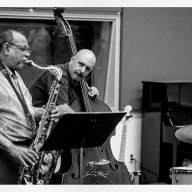
Dave Captein in Portland uses floating thumb for upright. He has a You tube video about it. He is one of the best bassists around that area. I messed around with it a bit but found it hard to keep from stressing my tendons. Certainly food for thought.
This is a wonderful thread. I`ve been having most of my problems with the right hand for some time now and I`ve been working to solve the issues. Bent endpin has helped me a lot, as the major problem with the right side of my whole upper back has been getting much better. I have a big bass and a setup of low tension strings at 9-12mm at the end of the fingerboard, bent endpin helps me to get the right shoulder of the bass out of the way and relax the whole system of my right arm, it allows me to really take advantage out of gravity.
I`ve been shedding on the slab a lot lately and strange but true, found some answers for my upright pizz problems from there. For me, the slab is all about post-60`s rock music to the present and I`ve been having a serious ball playing along all kinds of rock stuff and in the band too. Playing some fast and aggressive stuff fingerstyle can get pretty physical and made me to really dig in on how to be able to do that without killing myself. The major factor for me is to keep my right hand fingers curved all the time with the floating thumb technique, this lets me to relax my right hand and my thumb takes care for most of the damping, just following with the rest of the hand. I can play loud, fast and steady this way, even while beeing a true novice on the slab.
Then I started to wonder if some things that I found from slab technique could help my DB pizz problems. I noticed that I had developed a giant callus on the inside side of my right thumb, from keeping it mostly on the sharp lower corner of fingerboard side, with my 1st finger almost straight and most of it`s side on the plucked string, trying to go thru the string as much as possible. That thumb callous has really been hurting and the whole right hand and arm been sore after some high volume / energy playing. I changed my approach after my slab technique findings, now keeping the upper part of my right thumb pad on the very side of the fingerboard, with the rest of my fingers curved all the time. And bang, there it was, a lot bigger sound with smaller effort, with my whole right wrist and arm relaxed and gravity doing most of the work. I`m in the very beginnig of all of this but I find it promising, more sound with less hurting. Relaxation and co-operation with the Mother Gravity seems to allways be the key. And I seriously hope that I find out some of this for not killing myself, and / or the music with the stick of pain.
It's an inexact measurement but it's typically at the end of the fingerboard.When people speak of string height, what is the measurement? End of board to bottom of string? Top? Center?
Dave Captein in Portland uses floating thumb for upright...
Thanks for the tip! I`ll check that one out
Edit: I find it`s hard for the right hand to pluck without decent anchoring point ( is this correct word?), but I`ve been messing with something like that, with 1, 2 or 3 fingers plucking one string at the same time. I`m about to learn some slapping ( on DB ) too and it`s interesting where that is going to get the right hand issues. Had my first slap lesson today
Last edited:
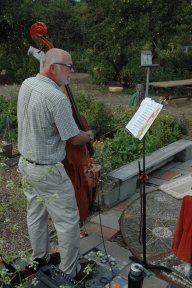
I`ve been shedding on the slab a lot lately and strange but true, found some answers for my upright pizz problems from there.
Hmmm. I'm not sure I'm understanding what you're saying here. Personally, I've found that most of my technique problems / pain is the result of my unwise transfer of my BG technique to the upright. For example, recently, I discovered that on the upright, I need to lead off fast passages with my middle finger, not with the index like on the BG. I was not only able to execute more smoothly, but the pain I felt after playing one certain song went away.
You mentioned that your BG technique helped you refine your right-hand thumb placement. I also was having right thumb problems, but my issue was not a callous; I was unconsciously collapsing my thumb due to holding it on the edge of the fingerboard. I solved the issue by hooking my right thumb behind the fingerboard, and really like how this has eliminated the joint popping and pain. Plus, I think I can execute faster passages more smoothly, as the hooked thumb provides a more stable pivot point for my fingers.
No criticism intended. Different strokes for different folks (literally). You should use the techniques that work for you. I just find it interesting how we each develop different techniques to deal with our issues.
I also was having right thumb problems, but my issue was not a callous; I was unconsciously collapsing my thumb due to holding it on the edge of the fingerboard. I solved the issue by hooking my right thumb behind the fingerboard, and really like how this has eliminated the joint popping and pain. Plus, I think I can execute faster passages more smoothly, as the hooked thumb provides a more stable pivot point for my fingers.
No criticism intended. Different strokes for different folks (literally). You should use the techniques that work for you. I just find it interesting how we each develop different techniques to deal with our issues.
Agree. I'm with you on the "deep thumb hook" position. My callus is basically in the webbing between the thumb and index finger. But I've spent time around a lot of really great players, and most have their own individual take on this. So again...many roads to Rome. As long as you get to have lunch with the pope eventually, it's all good.


