How does the airline companies determine a guitar was not detuned, after it was already broken?...the airlines declined to pay blaming the damage on the owners not detuning the strings.

TalkBass has been independent since 1998. Add your voice.
Create a free account to reply to discussions, view embedded media, and browse with fewer display ads.
Join free Log in
Want zero display ads or expanded classifieds tools? Compare plans.
How does the airline companies determine a guitar was not detuned, after it was already broken?...the airlines declined to pay blaming the damage on the owners not detuning the strings.

How does the airline companies determine a guitar was not detuned, after it was already broken?



They probably trick you into saying it wasn't.How does the airline companies determine a guitar was not detuned, after it was already broken?
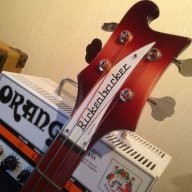
They ask you when you try to file a claim. If you state that is was not detuned, they reply with 'Sorry, we won't cover that as there was too much stress on the neck'. If you state that it was detuned, they reply with 'Sorry, we won't cover that as manufacturers ship guitars tuned to pitch for a reason'.How does the airline companies determine a guitar was not detuned, after it was already broken?
Yes. You seem to know an awful lot about this contentious issue so, please, the floor is yours.....
I know of a set of deaf ears that will fall upon.Relevant information as Taylor weighs in on the subject.
[Invalid or Expired Link Removed]
Two things that strike me as adding credibility to their viewpoint.I know of a set of deaf ears that will fall upon.
Imagine holding a bass at the neck joint and then trying to break the neck by pulling forward on the headstock. Now imagine holding a bass at the nut and trying to break the headstock off. The longer lever in the first case makes it much easier than the short lever in the second case. Now if you take the strings off fine, but then imagine trying to break the headstock off in the opposite direction. It should be roughly the same amount of force.I read through that Taylor page, and it made me think of something that I am probably completely wrong about, but here goes:
Truss rods act to balance the tension of the strings on the neck, but on most, if not all, guitars/basses, the truss rod, essentially, ends at the nut, so how does a truss rod help prevent a headstock from breaking? Jim Kirlin's comment regarding truss rods prompted this thought.
I read through that Taylor page, and it made me think of something that I am probably completely wrong about, but here goes:
Truss rods act to balance the tension of the strings on the neck, but on most, if not all, guitars/basses, the truss rod, essentially, ends at the nut, so how does a truss rod help prevent a headstock from breaking? Jim Kirlin's comment regarding truss rods prompted this thought.

While this remains an unsolvable crisis in the TB world, I would sum it up in the following way.
The person proposing a solution bears the burden of proving the problem exists in the first place. Loosening the strings is a solution and therefore that is the camp that bears the burden of proof in this conversation. But as far as I can see there isn't any evidence of even a single bass damaged in shipping where string tension was a significant contributing factor. Also, all evidence points to instrument manufacturers shipping with strings in tune and the world somehow keeps turning.
But let us carry on. I enjoy a hypothetical discussion probably even more than the next guy.

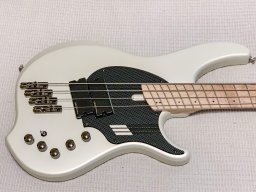
If they had been mishandled while not under over 100 ft/lbs of tension, they might not have broken.

If you loosen the strings you will be applying a lot of back bow to the neck.

The one I received with the strings slacked also had the truss rod loosened.
It was just fine as well, not unlike those you received that were tuned to pitch.

OK, so everyone is saying you should loosen the strings & the truss rod?
That sounds right to me.