• TalkBass has been independent since 1998. Add your voice.
    Create a free account to reply to discussions, view embedded media, and browse with fewer display ads.
    Join freeLog in
    Want zero display ads or expanded classifieds tools? Compare plans.

Magnets & Copper Wire: A Pickup Building Thread

Alright, here is my second go at a design. My original idea was a sidewinder with a very strong magnetic field moving upward made to penetrate 1/4” of wood as well as an air gap. I wanted the rout as structurally unobtrusive as possible, hence the thin rod magnets.

That design being a failure, I nonetheless have been learning a lot from this thread (though I am still profoundly ignorant, to be sure).

The many multi coil pickup designs are pretty cool, so I veered in that direction.

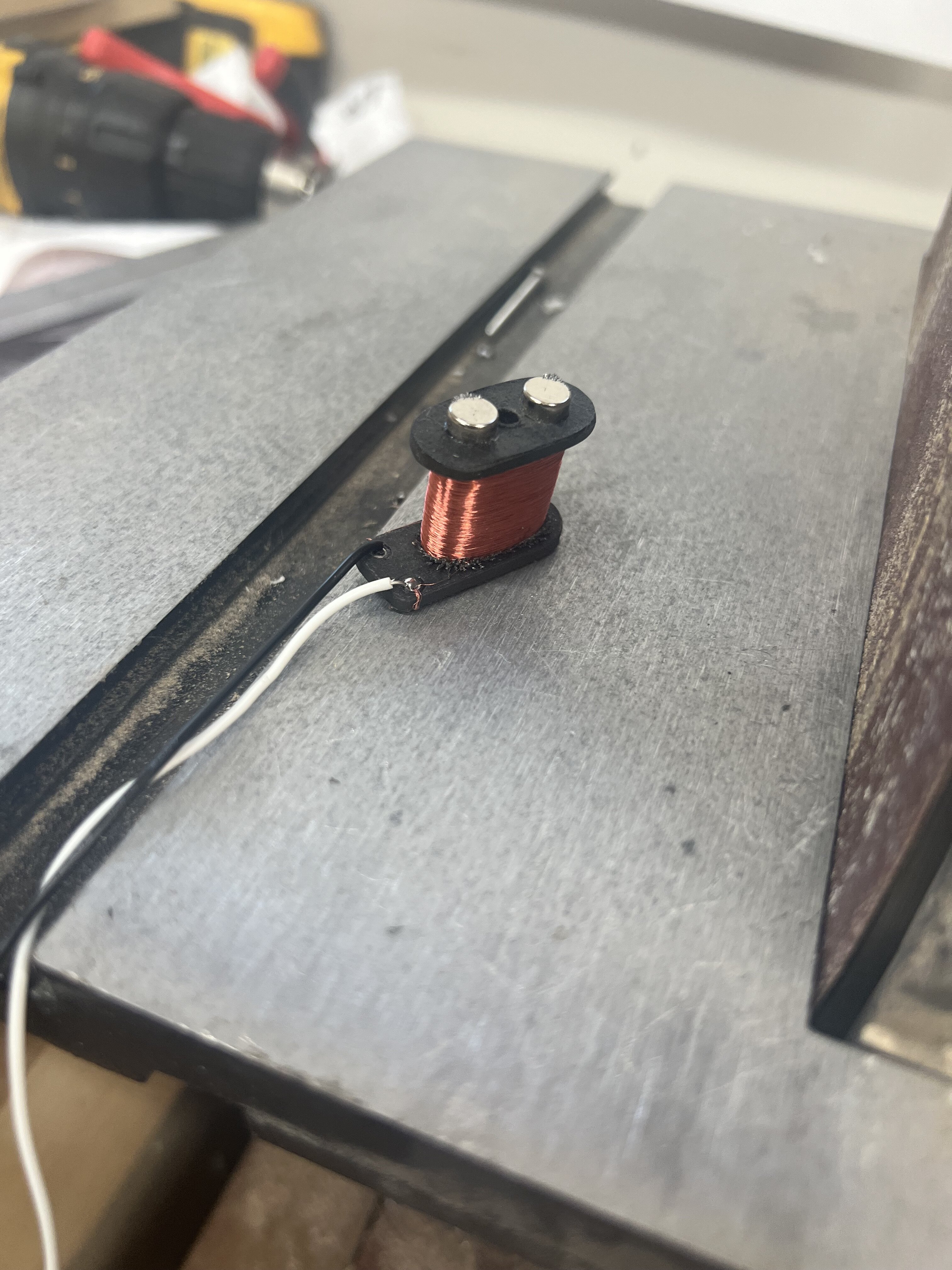
Here is the handmade prototype:
IMG_9986.jpeg


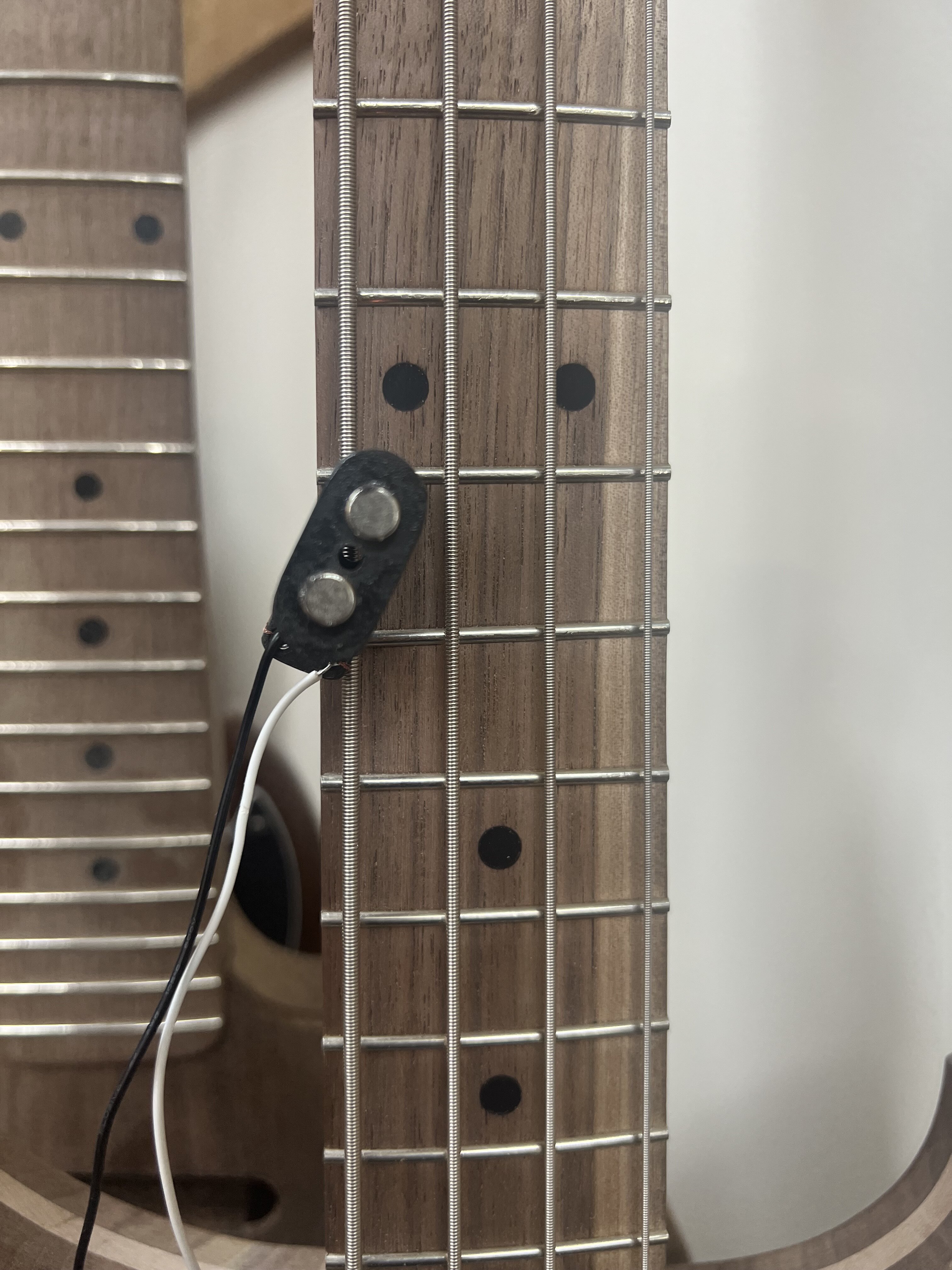
This is a single coil around two rod magnet pole pieces. The idea is to turn it slightly for spaced pieces like a Fender, but at the diagonal to the string:
IMG_9987.jpeg


I tested it out and it works, I used 2500 turns of 42.

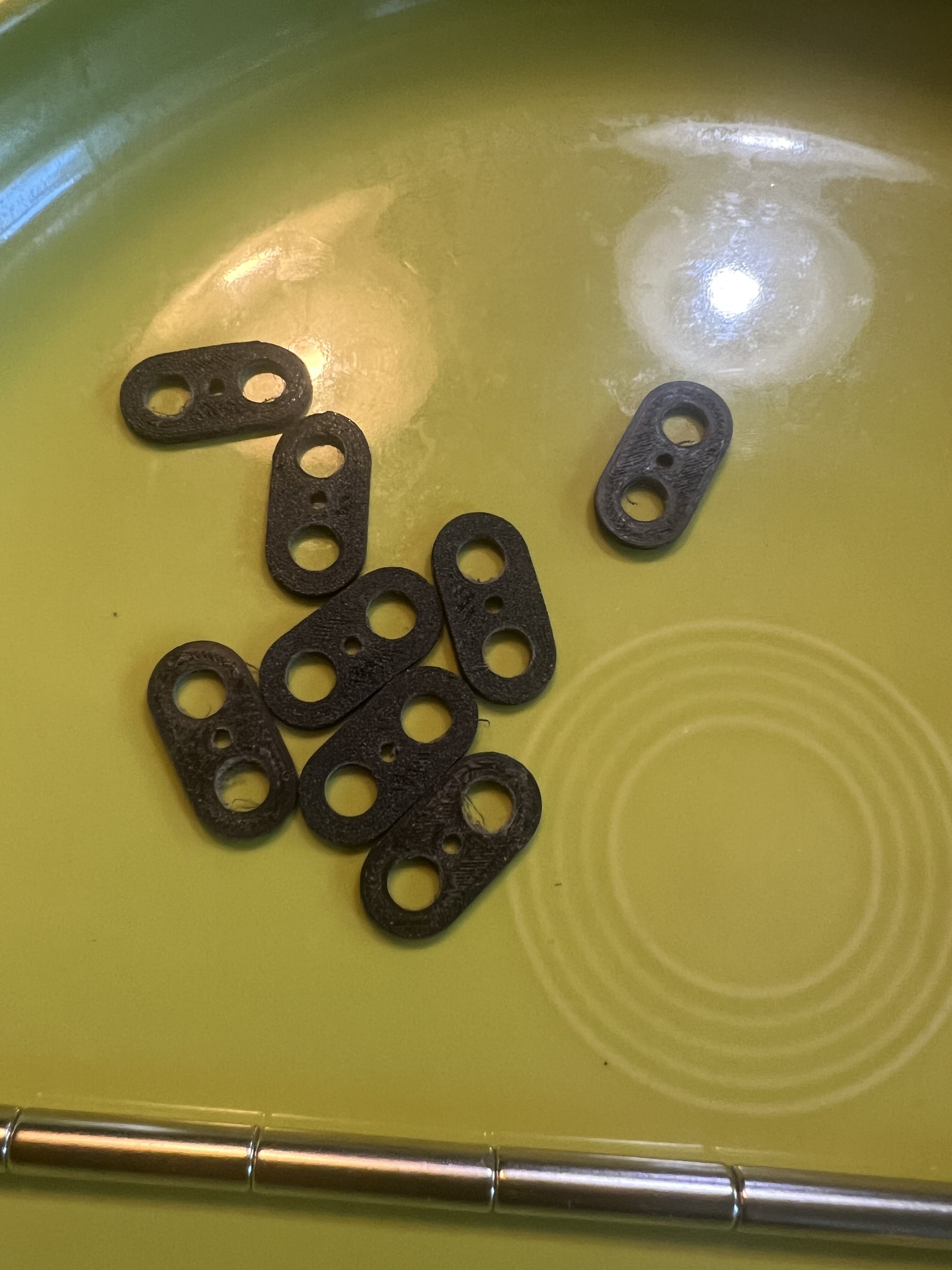
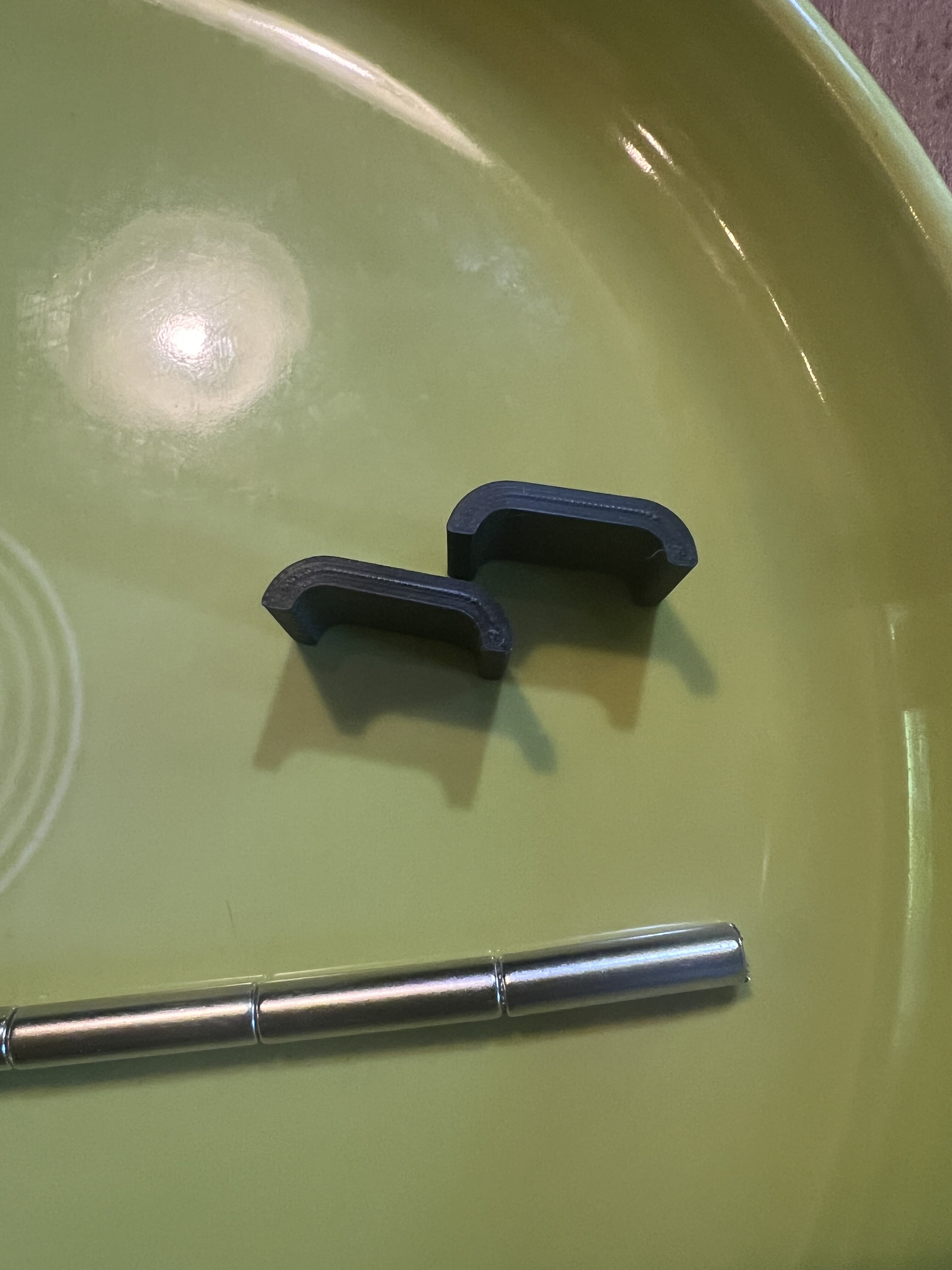
So I then turned to my cad program and made up some pieces to 3D print:
IMG_9989.jpeg
IMG_9990.jpeg


The top pic is a set of spacers, next pic is flat work. The pickups will have a fiber baseplate, you can’t use eyelets in 3D printed plastic. They just melt through.

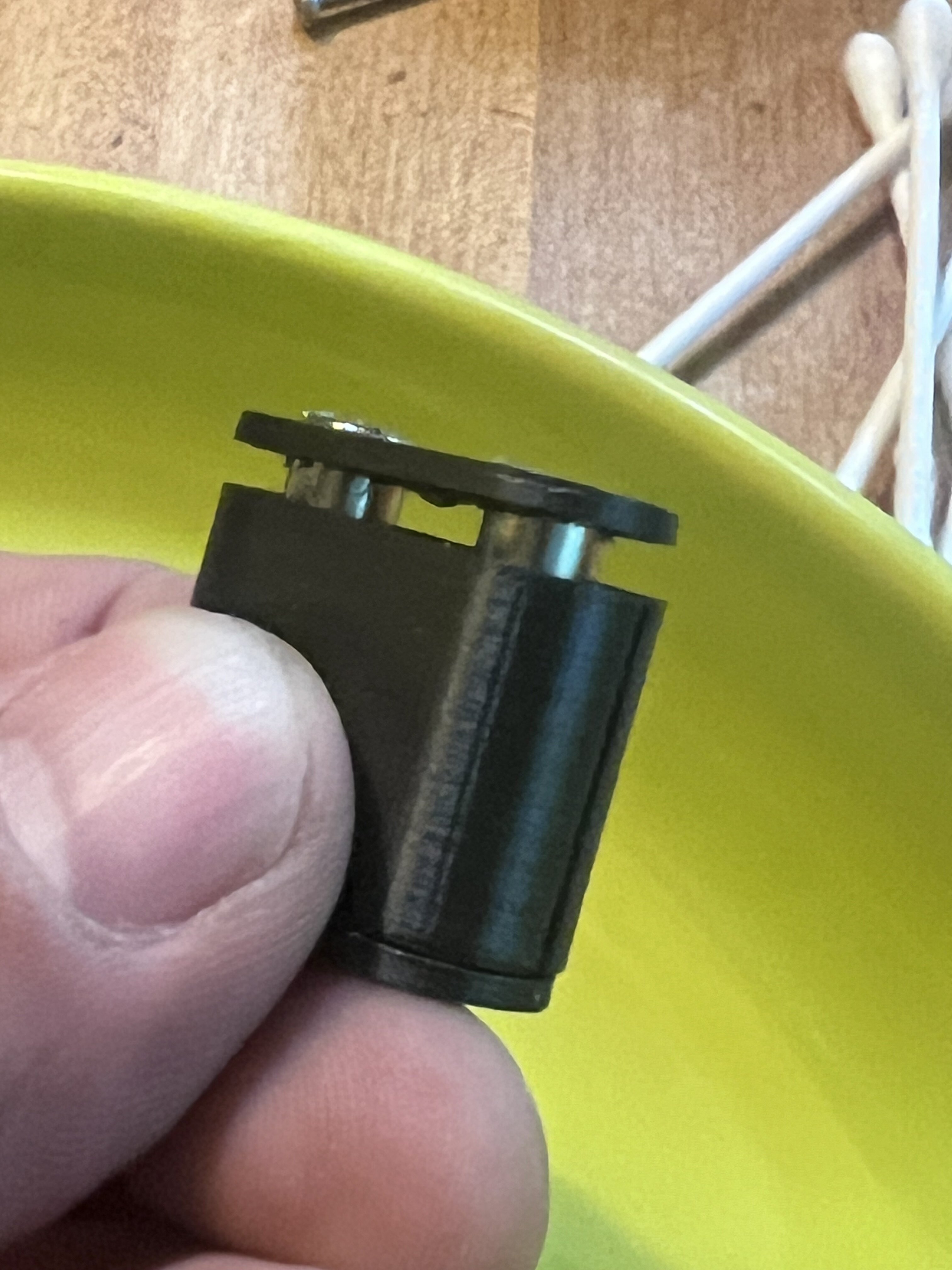
Assembly:
IMG_9991.jpeg
IMG_9992.jpeg
IMG_9993.jpeg
IMG_9994.jpeg
IMG_9995.jpeg

IMG_9996.jpeg

No problems winding at all, until I snapped the darn start end taking it off. So there is a coil down the drain. At least it is a small one.

So I’ll be using these to create a 4 coil pickup, which I am hoping has a strong enough field as well as output to create something equal to a regular pickup through the 1/4” wood obstruction and 1/4” air gap.

Any thoughts on this design?
 
Last edited:
Alright, here is my second go at a design. My original idea was a sidewinder with a very strong magnetic field moving upward made to penetrate 1/4” of wood as well as an air gap. I wanted the rout as structurally unobtrusive as possible, hence the thin rod magnets.

That design being a failure, I nonetheless have been learning a lot from this thread (though I am still profoundly ignorant, to be sure).

The many multi coil pickup designs are pretty cool, so I veered in that direction.

Here is the handmade prototype:
View attachment 5479900

This is a single coil around two rod magnet pole pieces. The idea is to turn it slightly for spaced pieces like a Fender, but at the diagonal to the string:View attachment 5479901

I tested it out and it works, I used 2500 turns of 42.

So I then turned to my cad program and made up some pieces to 3D print:View attachment 5479902 View attachment 5479903

The top pic is a set of spacers, next pic is flat work. The pickups will have a fiber baseplate, you can’t use eyelets in 3D printed plastic. They just melt through.

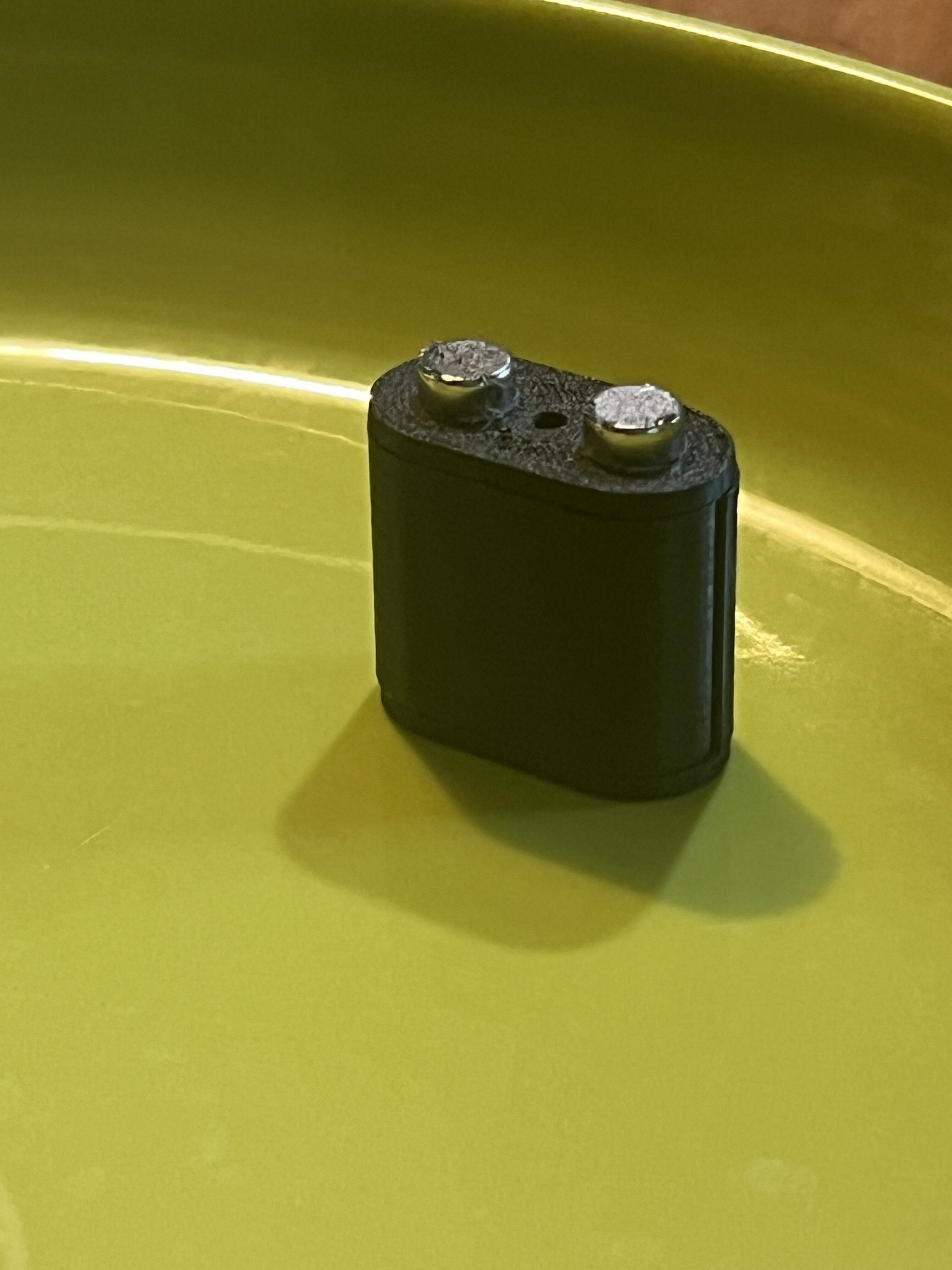
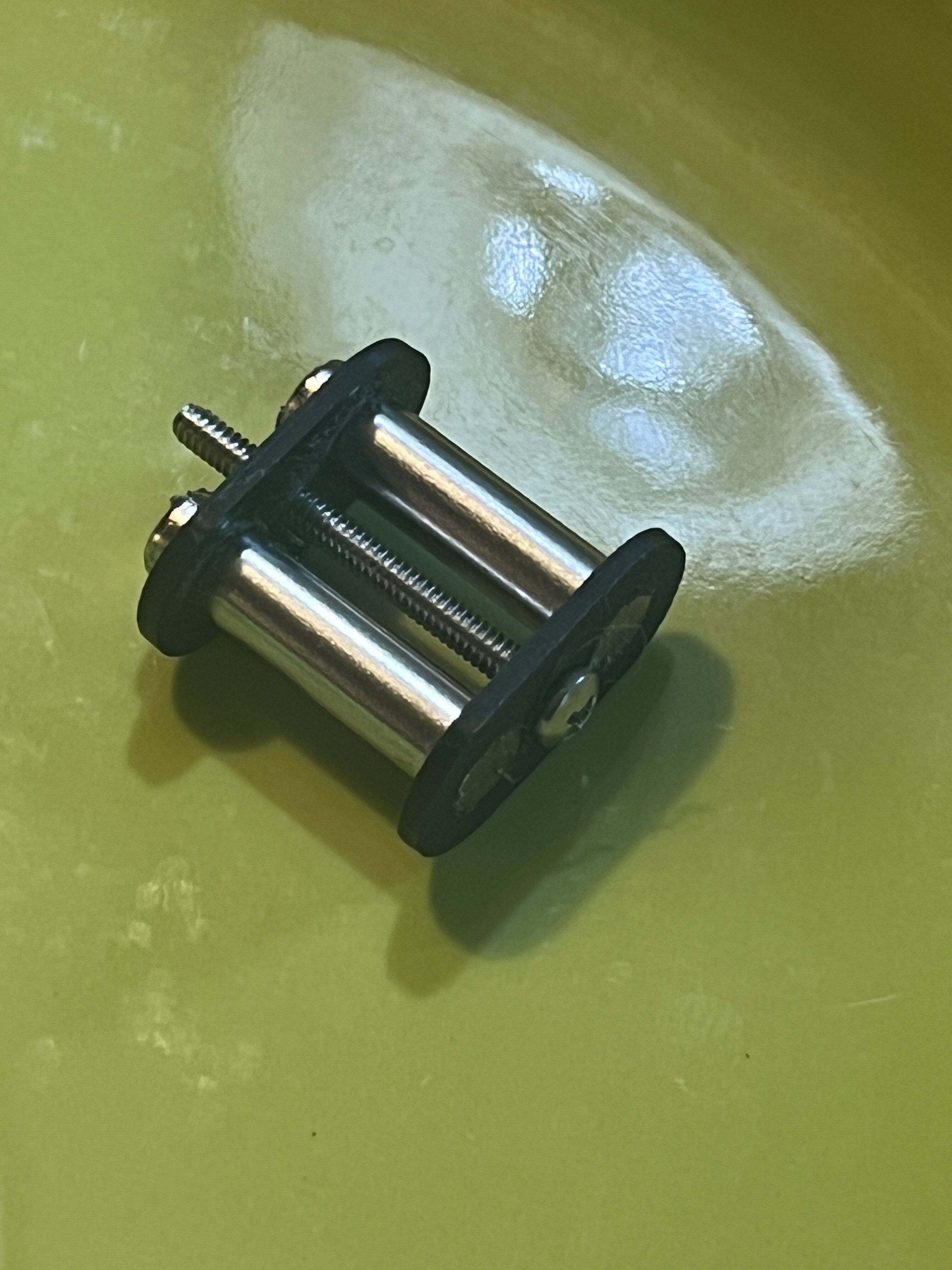
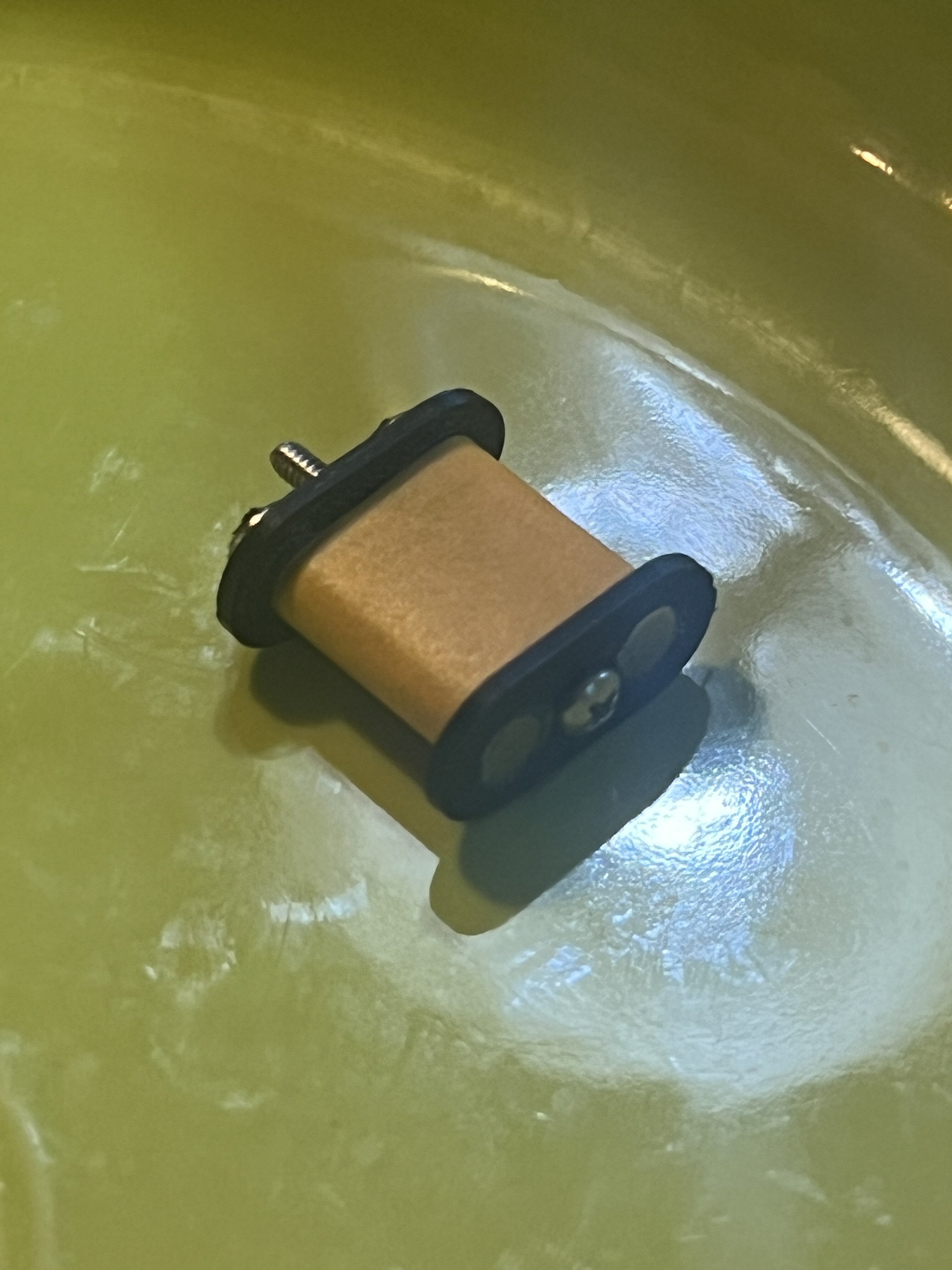
Assembly:View attachment 5479904 View attachment 5479905 View attachment 5479906 View attachment 5479907 View attachment 5479908
View attachment 5479909
No problems winding at all, until I snapped the darn start end taking it off. So there is a coil down the drain. At least it is a small one.

So I’ll be using these to create a 4 coil pickup, which I am hoping has a strong enough field as well as output to create something equal to a regular pickup through the 1/4” wood obstruction and 1/4” air gap.

Any thoughts on this design?


I like it! Reminds me of the Nordstrand Polyvox design.

IMO, I’d think that 2500 winds is pretty low. But the proof is in the pudding… if it works for your needs, it works.
 
I like it! Reminds me of the Nordstrand Polyvox design.

IMO, I’d think that 2500 winds is pretty low. But the proof is in the pudding… if it works for your needs, it works.
Thank you for this comment, that is EXACTLY why I want to pick your experienced brains. What kind of a wind count would you suggest?

My ignorance here shows, as I am not really sure how the cumulative effects of the four separate coils work as opposed to one large coil. For instance, 7500 or so winds make a jazz bass pickup work, right? But my four separate coils of 2500 winds, even though they add up to more total winds, how does that compare on the output end? I’ll be testing with my multimeter, but those who know feel free to cut my experimenting steps ahead!
 
Thank you for this comment, that is EXACTLY why I want to pick your experienced brains. What kind of a wind count would you suggest?

My ignorance here shows, as I am not really sure how the cumulative effects of the four separate coils work as opposed to one large coil. For instance, 7500 or so winds make a jazz bass pickup work, right? But my four separate coils of 2500 winds, even though they add up to more total winds, how does that compare on the output end? I’ll be testing with my multimeter, but those who know feel free to cut my experimenting steps ahead!

As it pertains to output, the wind count will be the biggest contributor (that and magnet strength), and that’s per coil.

So if it were me, I’d probably start with something like 5000 winds if you fit that one there and go from there. But, heck, you might find that your 2500 winds is sufficient. You won’t truly know until you try!
 
  • Like
Reactions: Verner
As it pertains to output, the wind count will be the biggest contributor (that and magnet strength), and that’s per coil.

So if it were me, I’d probably start with something like 5000 winds if you fit that one there and go from there. But, heck, you might find that your 2500 winds is sufficient. You won’t truly know until you try!
That’s really interesting, thank you! Can anyone explain why this is the case?
 
Tried one with 5,000, fits ok, will test that out.View attachment 5480001 View attachment 5480002

Your coils look good. I agree with Chris that you want about 5000 turns per coil to get a reasonable output level. The reason why is because it's a multi-coil. If you pluck one string, only the one coil under that string is operating and generating a signal. The signal passes through all the coils, if they are wired up in series, but the other three magnetic fields aren't wiggling. So all the multiplication of the signal is happening in the one coil under the string. Each coil has to be able to generate a sufficient signal level by itself.

My multi-coils, which I showed on page 3, post 55, had three 1/4" A5 magnets per coil and 5000 turns of #41 wire. That gave them a nice output in a passive circuit. The four coils were wired in series, alternating humbucking. Their output level and EQ curve was about like a Seymour Duncan Quarter Pounder. Yours should be in about the right range.

I don't think angling the coils to put the magnets on either side of the string will gain you much of anything. The field on the 1/4" magnets is pretty wide anyway. It may help some if you were using 3/16" magnets. But try it in your test mule and see. I think I remember trying my coils at an angle in my mule and I couldn't hear any difference.
 
Last edited:
  • Like
Reactions: joover and Verner
Your coils look good. I agree with Chris that you want about 5000 turns per coil to get a reasonable output level. The reason why is because it's a multi-coil. If you pluck one string, only the one coil under that string is operating and generating a signal. The signal passes through all the coils, if they are wired up in series, but the other three magnetic fields aren't wiggling. So all the multiplication of the signal is happening in the one coil under the string. Each coil has to be able to generate a sufficient signal level by itself.

My multi-coils, which I showed on page 3, post 55, had 3 1/4" A5 magnets per coil and 5000 turns of #41 wire. That gave them a nice output in a passive circuit. The four coils were wired in series, alternating humbucking. Their output level and EQ curve was about like a Seymour Duncan Quarter Pounder.

I don't think angling the coils to put the magnets on either side of the string will gain you much of anything. The field on the 1/4" magnets is pretty wide anyway. It may help some if you were using 3/16" magnets. But try it in your test mule and see. I think I remember trying my coils at an angle in my mule and I couldn't hear any difference.
That’s a very helpful explanation, thank you! I agree about the angle, played with that earlier and heard no difference at all. In fact, the only reason I went with two magnets was to have the poles opposing each other. According to the old porky freeman/fender marauder pickup patent, this would cause an increased magnetic field allowing the pickup to be buried under the pickguard.

I don’t know if that is actually true though.

So I’m going to play around with placement, I really just want the smallest structural intrusion possible, since these will be rear mounted. This design will fit in a single pass 1/2” router bit slot (each coil), so I can see a few ways to mount.
 
That’s a very helpful explanation, thank you! I agree about the angle, played with that earlier and heard no difference at all. In fact, the only reason I went with two magnets was to have the poles opposing each other. According to the old porky freeman/fender marauder pickup patent, this would cause an increased magnetic field allowing the pickup to be buried under the pickguard.

I don’t know if that is actually true though.

So I’m going to play around with placement, I really just want the smallest structural intrusion possible, since these will be rear mounted. This design will fit in a single pass 1/2” router bit slot (each coil), so I can see a few ways to mount.

Well, using two magnets will have twice the field strength of one magnet. The field strength also plays a big part in creating the output level. The higher the field strength, the greater the teeny signal as it passes over one turn of the wire. Then that gets multiplied by the number of turns.

In your case, because you are spacing the magnets down farther from the strings than optimum, you definitely want high field strength. The higher the field strength, the farther it can reach out from the magnets and detect the motion of the strings.

I think you'll be fine with this combination as long as you can get the magnets up within 1/4" of the strings. If not, you might consider upgrading your design to two 3/8" magnets. That's what I use in my current pickups. A 3/8" magnet has twice the power/field strength of a 1/4" magnet.
 
  • Like
Reactions: Verner
Well, using two magnets will have twice the field strength of one magnet. The field strength also plays a big part in creating the output level. The higher the field strength, the greater the teeny signal as it passes over one turn of the wire. Then that gets multiplied by the number of turns.

In your case, because you are spacing the magnets down farther from the strings than optimum, you definitely want high field strength. The higher the field strength, the farther it can reach out from the magnets and detect the motion of the strings.

I think you'll be fine with this combination as long as you can get the magnets up within 1/4" of the strings. If not, you might consider upgrading your design to two 3/8" magnets. That's what I use in my current pickups. A 3/8" magnet has twice the power/field strength of a 1/4" magnet.
I am learning so much through all of this, it’s what I love the most about creating anything. That last post answered some intuitive suppositions, which had nagged at me for a while.

ultimately, whatever design I land on, the goal is to create an acceptable passive output 1/2” away from the strings.

So a multi-coil configuration seems less ideal from an output perspective from what I am taking from all of this. I will be limited by the output I can squeeze from each individual coil, unless I can wire those coils in a way that would boost the output.

It seems the best solution may be to simplify, such as an overwound single coil with hefty magnets. Correct me if I am reading this wrong, please, this is all quite fascinating.

Here is my crude test rig, over an unfinished project bass:
IMG_0001.jpeg


It mimics the conditions I will be creating. I just taped it to a 1/4” fingerboard scrap, and there is 1/2” between the magnets and the string.

With 5,000 winds, it is coming through the amp, and I can feel the pull of the magnets towards the strings. It is much quieter than any of the basses I have around by about half, which I would expect.

So what I am hearing is, even if I add a second coil and wired it in series, it would not necessarily change the output I am getting because the second coil would not be directly excited by the string?

Whereas if I were to wind a 9,000 turn single coil, every string would effect the entire coil, and thus my output would be greater?
 
  • Like
Reactions: jeffmensch
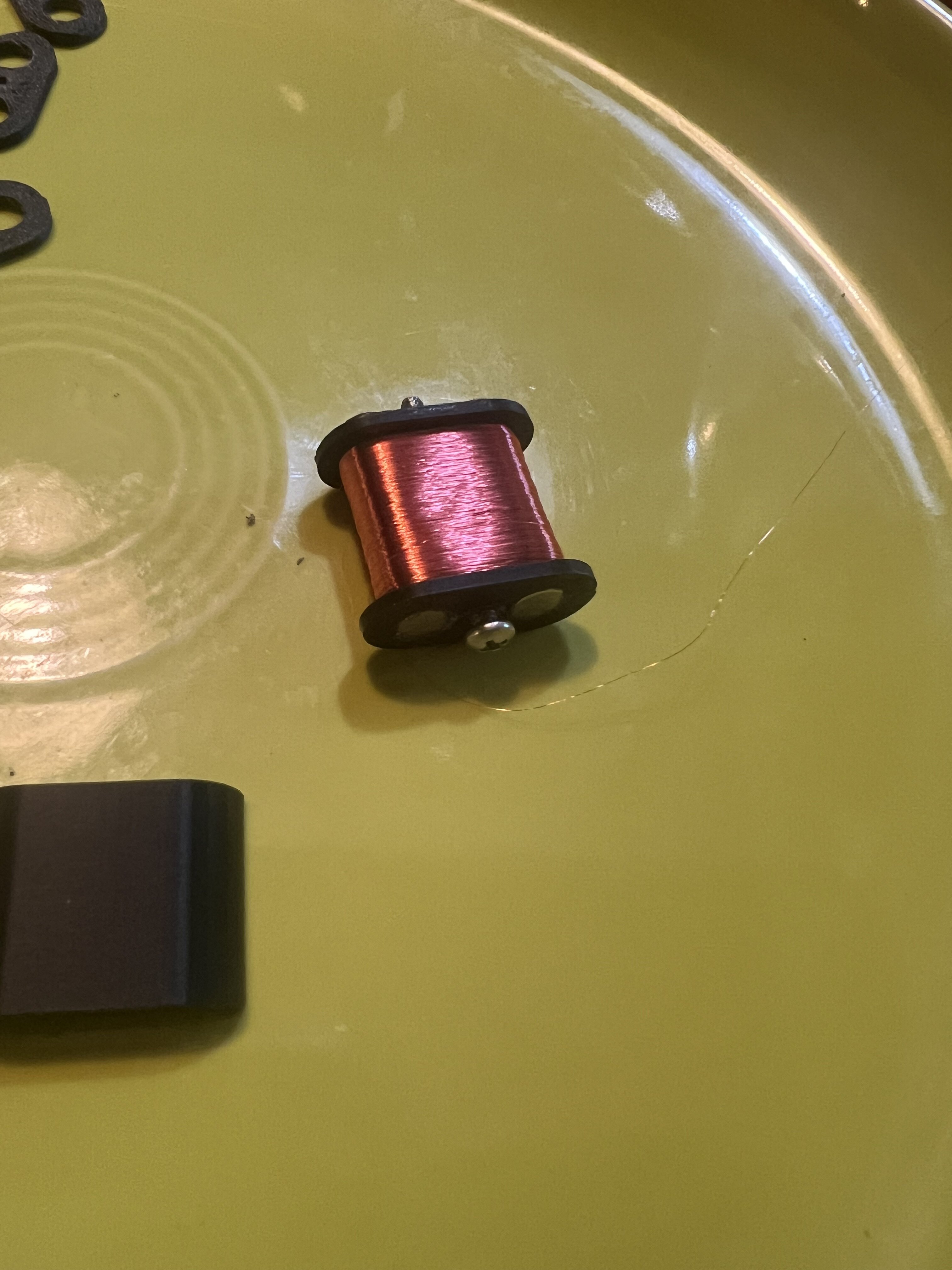
Ok, using all the above discussions, I decided to step the design back to a single coil with a very powerful field. I used fusion to draw up a modified jazz bass set of flatwork, as well as some spacers. Put the pickup together the same as the others.
IMG_0003.jpeg
IMG_0004.jpeg


I should say that my 3D printer does not create perfect prints, I am new at this so perhaps there are things I can do to get better results. My 1/4” holes are always a bit small and need a touch at the drill press. I don’t mind, it is still quicker and more uniform than hand shaping fibre flatwork (although when I make my working final version I will probably use that material, far superior). I just didn’t want anyone to think you can get a printer and churn out industrial quality material, the tolerances and consistency can be sloppy.

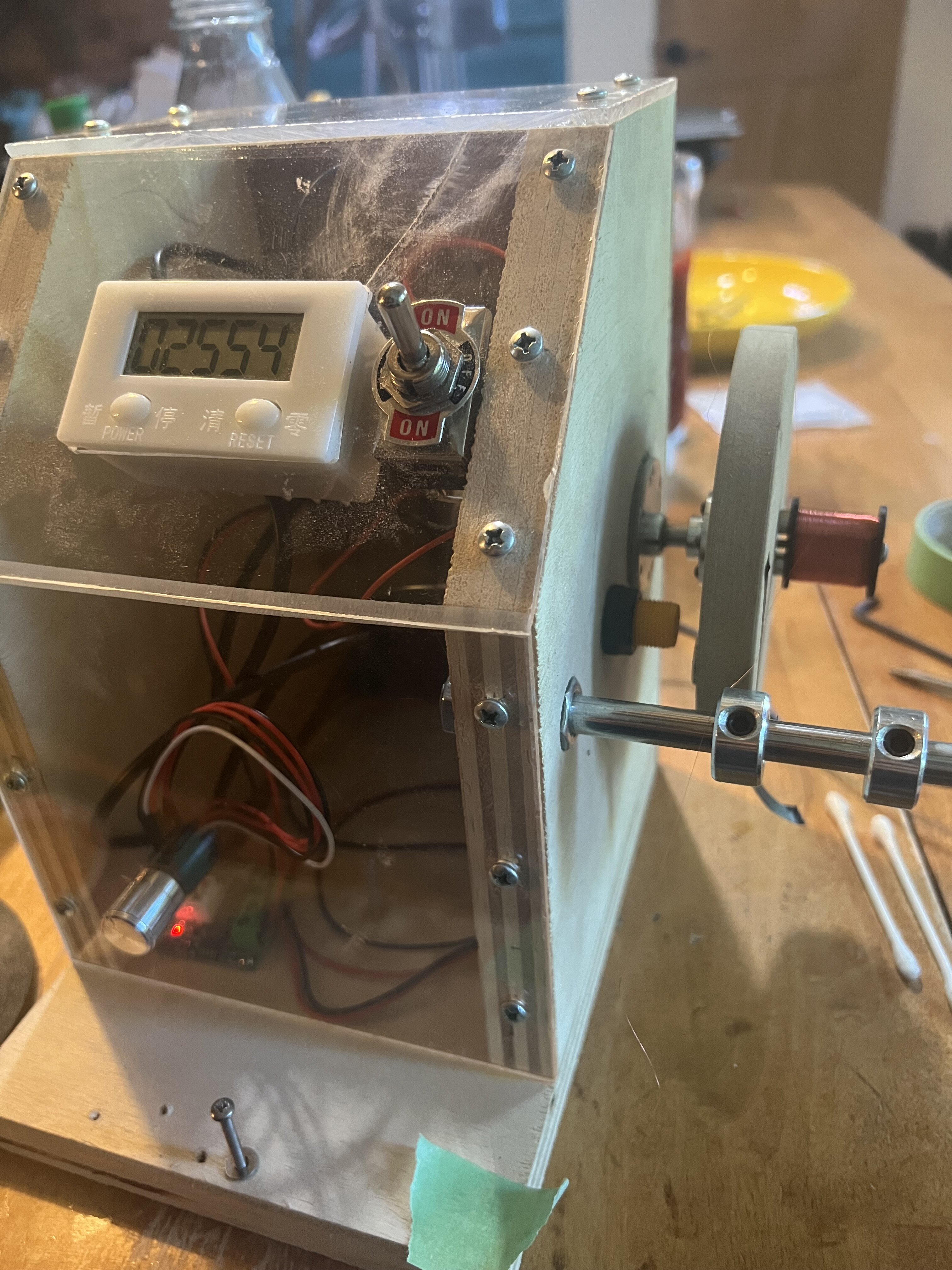
So an interesting phenomenon happened when I started to wind, the counter stopped counting. It kind of worked intermittently at very slow speeds, but just stopped working as soon as it really started moving. I changed the battery, same issue. I suspected that the very strong magnetic field of the pickup was messing with the sensor, which turned out to be the case. Works fine when the pickup was off, but I am flying blind as far as count.

IMG_0005.jpeg
IMG_0006.jpeg


I have used an analog multimeter for pickups for many many years. It was the most basic one imaginable, and I used it to measure resistance and continuity. It finally died this year, and I bought the same model stewmac sells, has ohms x600, x6,000, and x60,000. I didn’t get a reading at 6k, but at 60k it read 9.523.
IMG_0007.jpeg
IMG_0008.jpeg


My super-scientific test rig says this works. Its output 1/2” away from the strings is comparable to my jazz bass. It is noisier than the tiny coil, definitely picks up hum, but I could wind up a few and have them reverse wound like a jazz bass.

My flatwork is way oversized, I will redesign that. I may try a few versions, maybe one with long pole pieces and a flatter coil, another with a taller thinner coil. I also have to figure out a way to count my windings, I wonder if matching polarity with the magnet on my pickup winder will fix the issue. Actually, I can go test that today.

Any other thoughts please let me know, your help is greatly appreciated and has been a lot of fun as well!
 
  • Like
Reactions: Matt Liebenau
Apart from things you might do "next time" like using an optical sensor rather than a reed switch or Hall-effect the obvious (but not overly simple since it seems to mean making new parts) solution would be to move the switch and its magnet further out (so, bigger faceplate, new hole in the box, go through balancing it again...) so it's unaffected by the field.

On a machine with a separate shaft for the winding you could sense at the other end of, or anywhere along the shaft, but here it seems you have just the one side of the shaft available as it's direct mount to the motor.

Don't know if you could sneak a small cogged belt pulley between the faceplate and the motor housing - if so you could run that to another pulley the same size to run the magnet at 1:1 with the shaft away from the pickup.
 
  • Like
Reactions: Verner
About fixing your counter:

With magnetic fields, distance matters. Your new more powerful pickup's magnetic field is too close to your sensor, so it's changing the shape of the pulse that sensor is seeing. The solution is to move the sensor and the pickup farther apart.

The quickest thing may be to add an adapter block onto the front of the face plate, which spaces the coil out another half inch away from the sensor. That may be enough.

And/or you could space the sensor's magnet off the back surface of the face plate, and back the sensor up further into the machine's housing. Move it back a half inch.
 
Thanks @T_Bone_TL and @Bruce Johnson for the ideas, I think I will make a larger plate for this in the short term, but I will also be thinking long term about a more sophisticated machine for the future. I am having a lot of fun learning about this, and I don't see any reason I can't make most of my own pickups going forward, which is pretty cool to think.

I am taking what I just learned and designing my monster single version 2, smaller flatwork and a shorter spacer. Going to try out a shorter coil with more of the magnet protruding. I won't do a play by play since this will be experimenting with smaller parameters, but there won't be much changing otherwise.

My only reservation with this design is the lack of hum cancelling on the individual coils, so i'll continue pondering that. I am thinking of also making a prototype with single pole pieces, the magnets are so strong I may not need so much power for a reasonable effect. Dummy coils, humbuckers, perhaps a strong magnetic field combined with a small low-impedance coil combined with an output transformer to boost the signal, lots of neat options to wade through. Thanks again, I am having so much fun wading through all of this!
 
@Verner Glad to see you've been prototyping and working through different combinations. I had also been poking around with the idea of a multicoil in construction not to dissimilar from the Nordstrand Polyvox, and I took it as a sign that the idea was sound when they announced a pickup of the same basic construction I had envisioned.

Reading about that it seems that the main challenge to a multicoil pickup is the complexity from a production side - it's a lot more parts and time sunk in, which in turn makes them an expensive proposition from a commercial standpoint - I'm sure @slowburnaz can chime in on that point. With a pickup running nearly $200 each, I feel like that's reason enough to mess around and make my own.

I do think that sticking to a more "traditional" pickup design might be more effective while you're developing methods to overcome a large gap between pickups and strings. That way you're focusing on one unusual configuration (the large gap) at time. Then you can just worry about magnet strength and wind count to achieve the output, and less about geometry and how that affects the magnetic field. I do think BIG magnets could be really cool too! If you're suffering from that 60 cycle hum, you can always turn that into a split coil humbucker like any split-jazz coil on the market.

Also - I'd revisit your initial sidewinder idea in the future without the constraint an unusual configuration (the large gap between pickup and strings), get that refined. Then if you want, tackle two the two unusual approaches together (sidewinder + large gap).
 
  • Like
Reactions: Verner
@Verner Glad to see you've been prototyping and working through different combinations. I had also been poking around with the idea of a multicoil in construction not to dissimilar from the Nordstrand Polyvox, and I took it as a sign that the idea was sound when they announced a pickup of the same basic construction I had envisioned.

Reading about that it seems that the main challenge to a multicoil pickup is the complexity from a production side - it's a lot more parts and time sunk in, which in turn makes them an expensive proposition from a commercial standpoint - I'm sure @slowburnaz can chime in on that point. With a pickup running nearly $200 each, I feel like that's reason enough to mess around and make my own.

I do think that sticking to a more "traditional" pickup design might be more effective while you're developing methods to overcome a large gap between pickups and strings. That way you're focusing on one unusual configuration (the large gap) at time. Then you can just worry about magnet strength and wind count to achieve the output, and less about geometry and how that affects the magnetic field. I do think BIG magnets could be really cool too! If you're suffering from that 60 cycle hum, you can always turn that into a split coil humbucker like any split-jazz coil on the market.

Also - I'd revisit your initial sidewinder idea in the future without the constraint an unusual configuration (the large gap between pickup and strings), get that refined. Then if you want, tackle two the two unusual approaches together (sidewinder + large gap).
Thanks! This has been a lot of fun, and it has opened up a whole world I didn’t know much about. Going more basic seems to produce the results I need at the moment, but I like the idea of a split jazz.

In fact, last night I ordered some 3/8” magnets to experiment with (as per @Bruce Johnson ’s suggestion), and some thinner 43 gauge wire to try my hand at a split pickup. Your writing is prophetic![/USER]
 
  • Like
Reactions: tidbits
I think you are heading in the right direction. My suggestions:

  • Try to get the magnets as close to the strings as you can. You keep mentioning leaving 1/4" of wood thickness of the body on top of the magnets. If you can rout deeper from the back and take that down to 1/8" thick, that will take the gap down from 1/2" to 3/8". Which would be a big improvement in the output level.
  • Get 3/8" magnets, long ones. I use 3/8" x 1" A5's in my pickups. Field strength is directly proportional to the volume/mass of the magnet, so a longer magnet is also more powerful. I'd have to run the math, but a 3/8" x 1" magnet is about 3 times as powerful as a 1/4" x 3/4" magnet. With 1" long magnets, you could make your coils 3/4" tall, with the tips of the magnets protruding 1/4" above them.
  • Yes, I'd go with a split coil humbucker. Alternate magnets and alternate coil direction hookup. Don't put up with the hum of a single coil.
  • I would try to keep the turns to 5000-6000 per coil. Going higher turn count increases the output level, but increased resistance and inductance increases the lump in the EQ curve. Keeping the turn count low and the resistance low (by using larger wire) makes a flatter EQ curve.