
Enjoy the benefits of a premium membership!
Upgrade Account
-
TalkBass has been independent since 1998. Add your voice.
Create a free account to reply to discussions, view embedded media, and browse with fewer display ads.
Join free Log in
Want zero display ads or expanded classifieds tools? Compare plans.
You are using an out of date browser. It may not display this or other websites correctly.
You should upgrade or use an alternative browser.
You should upgrade or use an alternative browser.
Mandocello conversion
- Thread starter Verner
- Start date
More options
Who Replied?
I am hoping the larger instrument size doesn’t make it overwhelming, but there is only one way to find out!Yes, in all three combinations the white is very white.


Perhaps a soupçon of yellow/amber? But I also think the 50/50 works if you want to punt and move forward.Yeah, the mando color has a brown tone to it I haven’t fully captured yet. I don’t want to go too crazy over it, I think that 50/50 mix is pretty close, and I think it will look really nice on the instrument. That white top is what is really going to pop.
Last edited:
I have plenty of time to experiment more, I decided on a new neck with a truss rod. I am also leaning towards my first binding experience on this instrument. I figure if I am going to screw up, a $60 old Kay is probably the one to learn my lessons on. If it comes out nice that’s a bonus.Perhaps a soupçon of yellow/amber? But I also think the 50/50 works if you want to punt and move forward.
I have brown, red, and yellow coloring. I want to fill out my set but that’s what I have to work with right now. Is amber a combo of those three? This is an area I have a lot to learn about.
Halloween took over our lives for a bit, but now I can get back to it. I present the body, in the white. There is a little bit of grain on the back, kind of like birch I suppose. Might make the red/brown a bit more interesting.

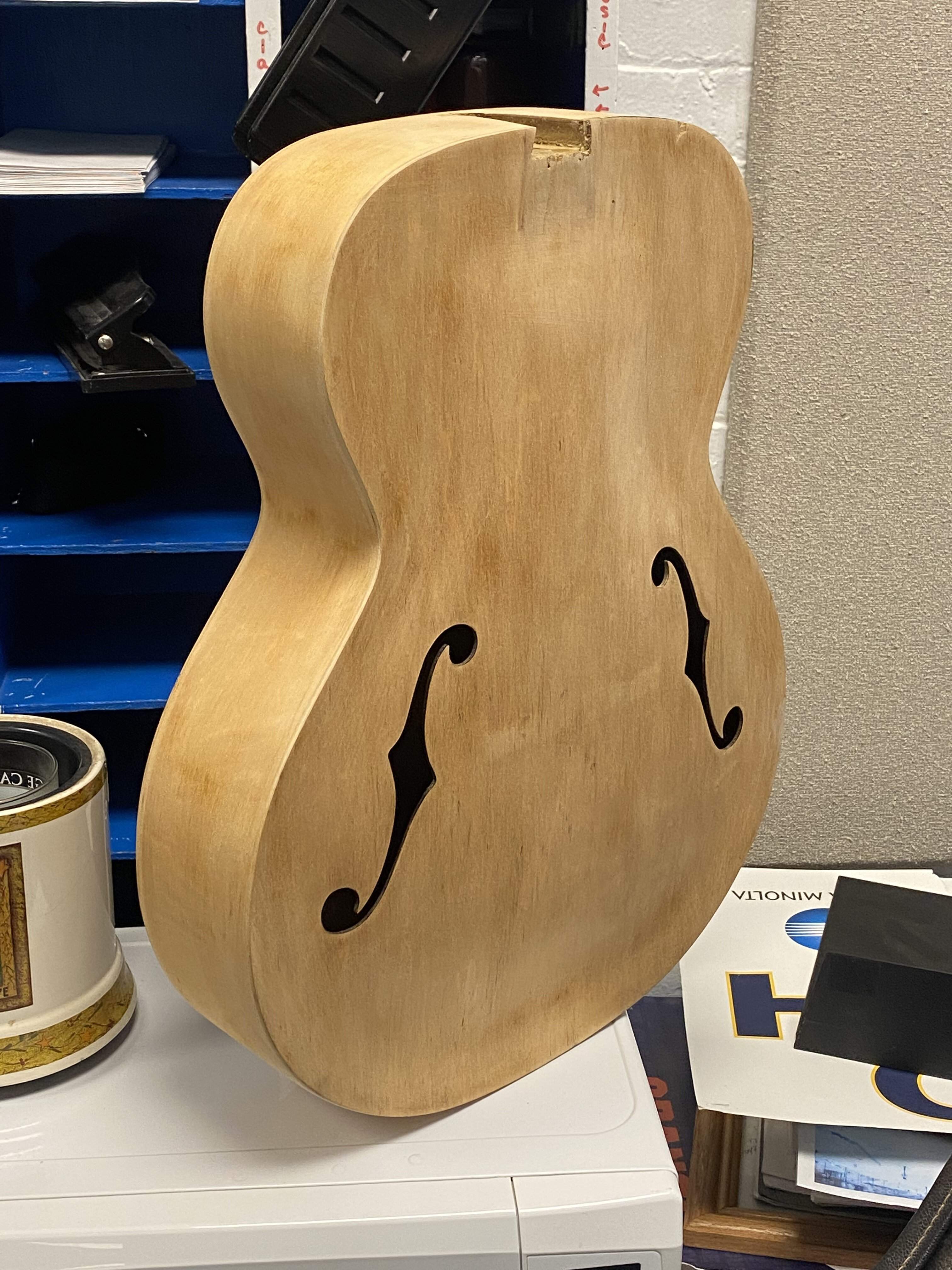

Halloween took over our lives for a bit, but now I can get back to it. I present the body, in the white. There is a little bit of grain on the back, kind of like birch I suppose. Might make the red/brown a bit more interesting.View attachment 4459351View attachment 4459352
It was an old Kay? Harmony? It’s entirely possible the body is thin birch layers laminated over a form to make the arch. I think I remember reading the Chicago manufacturers like that used birch.
It’s a Kay! I even have the kelvinator plate. Have something neat planned for that.It was an old Kay? Harmony? It’s entirely possible the body is thin birch layers laminated over a form to make the arch. I think I remember reading the Chicago manufacturers like that used birch.
Here are some better shots of the back and side, shows some of that grain. I think that may pop nicely, has potential at least. The top isn’t very nice, seems to be missing those natural lines. I feel like the top is mahogany of some sort, but that could be very wrong on my part. I don’t think Kay was obsessed with tone, and it would have made more sense to press the tips and backs exactly the same with the same plywood and this batch looks a little different.
I will have to compare arches and see.
The tail button isn’t centered, they never seem to be on these. I will fix that.
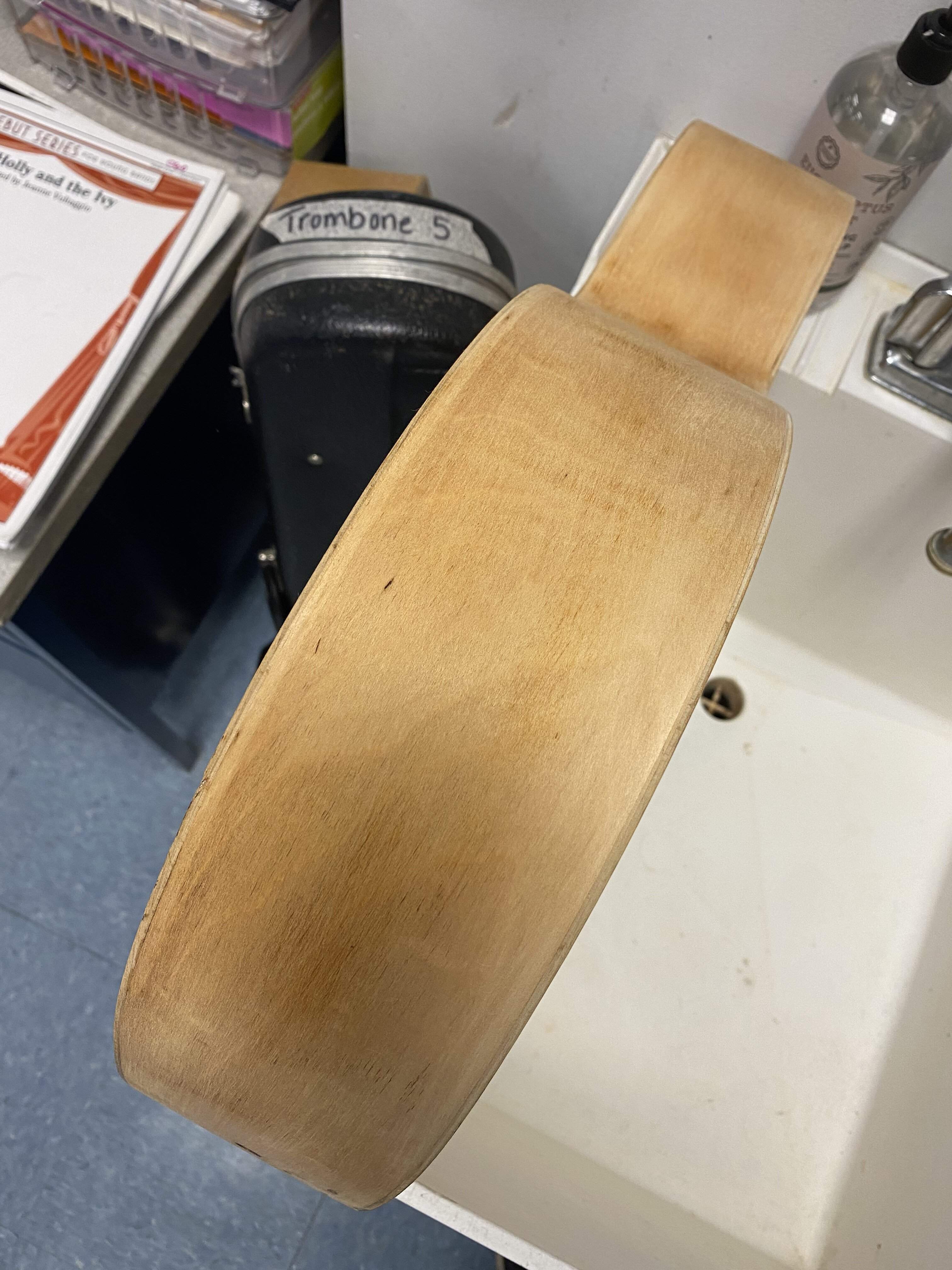
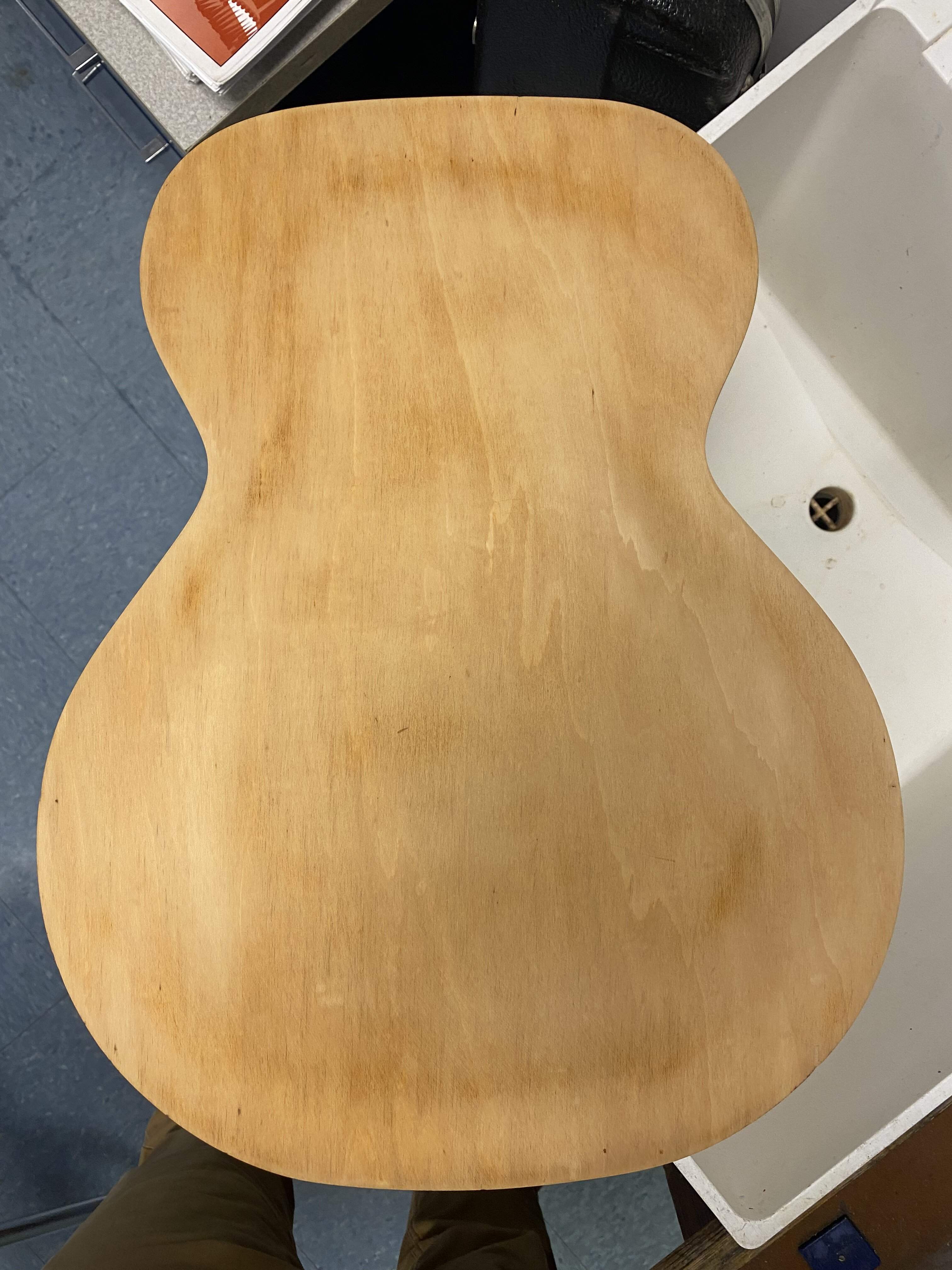
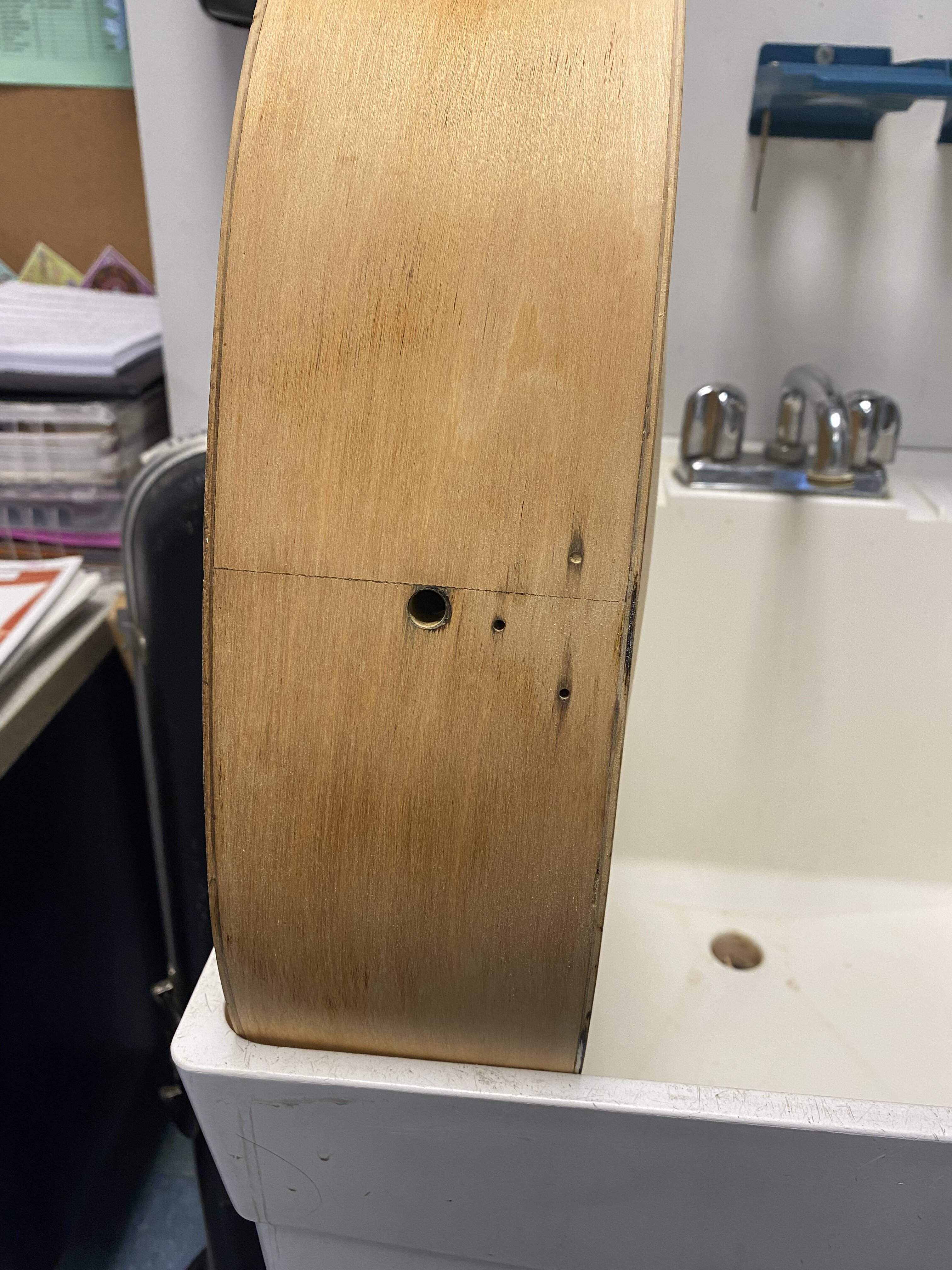
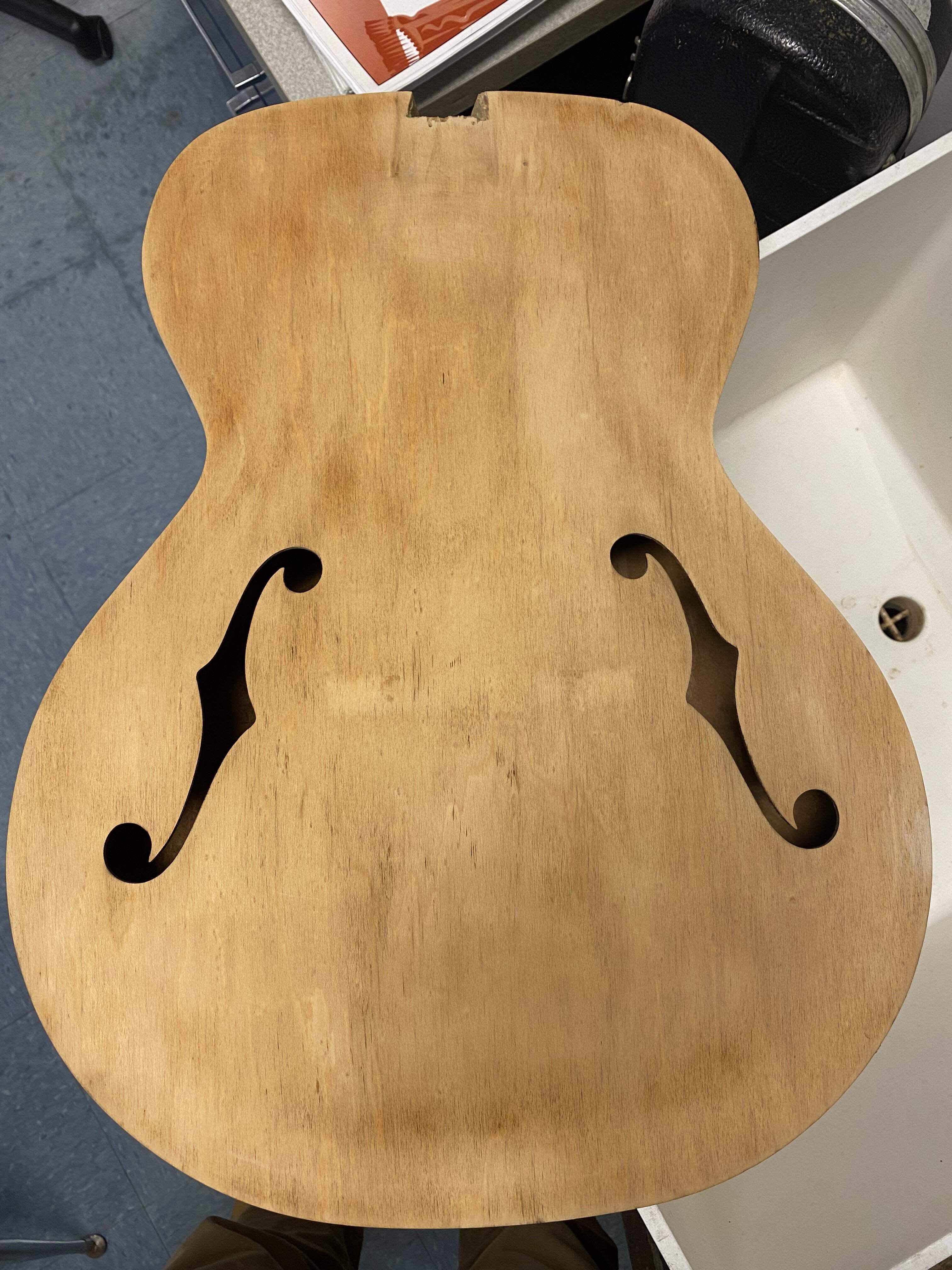
I will have to compare arches and see.
The tail button isn’t centered, they never seem to be on these. I will fix that.
When I see things like that, I tend to stop and ask if there might just be an actual design reason they are "never centered" particularly if they are not "randomly one way or the other" but always offset the same side.The tail button isn’t centered, they never seem to be on these.
I don't have a speculation of what that reason might be at present, but I'd ask the question and think about it before knee-jerking to a centered placement, personally.
I agree, I have to take some measuring tape and see if the sides line up with the centerline where they meet, that may be the issue. It also could be that they lined everything up with the string path, and maybe that is where things ended up in a straight line. I can probably get that string path better centered when I fit the neck if that is the case. Since the tail block was split in the middle it might not hurt to plug and redrill regardless for the added strength to the tail block.When I see things like that, I tend to stop and ask if there might just be an actual design reason they are "never centered" particularly if they are not "randomly one way or the other" but always offset the same side.
I don't have a speculation of what that reason might be at present, but I'd ask the question and think about it before knee-jerking to a centered placement, personally.

On a recent conversion, where originally there was no tail button, I placed the tail button off center in order to let the instrument hang a certain way.
Last edited:
When I see things like that, I tend to stop and ask if there might just be an actual design reason they are "never centered" particularly if they are not "randomly one way or the other" but always offset the same side.
I don't have a speculation of what that reason might be at present, but I'd ask the question and think about it before knee-jerking to a centered placement, personally.
The Kay / Harmony (and other...) production "archtops" were produced to rapidly move through the production process. The neck to body joints were cut in a utilitarian manner without any excess time spent on "proper" neck alignment. Close enough was good, and the tailpiece was positioned where ever it needed to be to align strings on the neck.
The production shortcuts like plywood plates, lack of proper neck alignment and painted binding were all designed to market these as cheaply as possible.
Last edited:
That’s a good point thereOn a recent conversion, I placed the tail button off center in order to let the instrument hang a certain way.
(There originally was no tail button.)
What’s neat is how many are still out there! I reset a neck on a ‘48 arch top that had a p-90 installed, and it plays like a champ now.The Kay / Harmony (and other...) production "archtops" were produced to rapidly move through the production process. The neck to body joints were cut in a utilitarian manner without any excess time spent on "proper" neck alignment. Close enough was good, and the tailpiece was positioned where ever it needed to be to align strings on the neck.
The production shortcuts like plywood plates, lack of proper neck alignment and painted binding were all designed to market these as cheaply as possible.
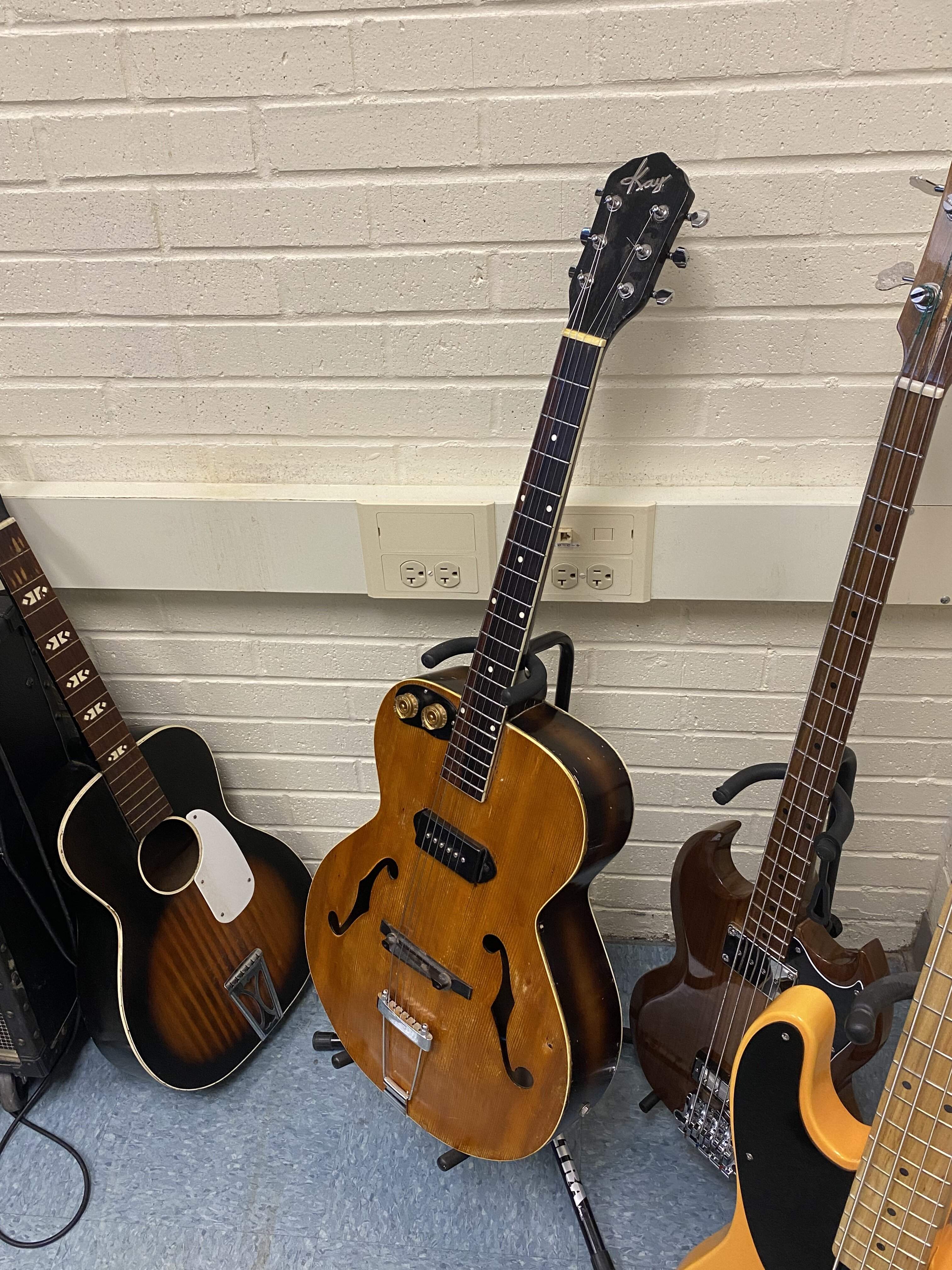
Here’s that Kay whose neck I reset, I also pulled the old frets and refretted, did the ol’ grind and polish, adjusted the nut slots, regular setup stuff (which is new for me). Plays like a champ, neck like a baseball bat, cool tone. My buddy passed it to me in pieces, it was a perpetual project and I was the fourth person it was passed to. Very neat guitar.
Just got notice that my binding shipped! Hopefully will have some movement on this soon, or a spectacular disaster!
Wow, it has been a long time since I updated this thread! I have been pouring all my free time into the workshop, and now it is really paying off!
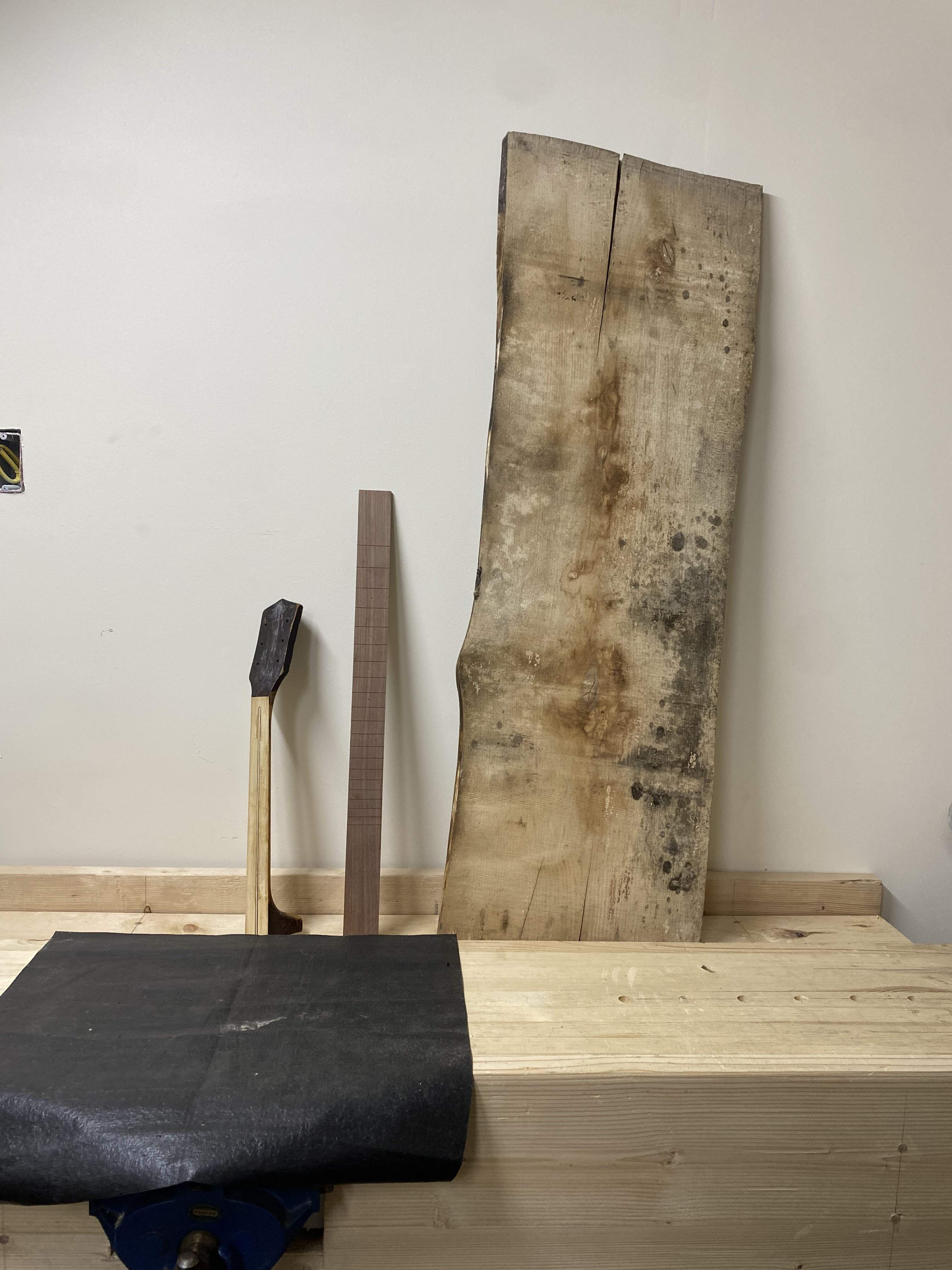
I picked up some maple slabs for a kitchen island top from a local fella, and everything was so reasonable I ended up leaving with a pile of walnut for myself plus a bunch of really cheap offcuts. The offcuts were mostly maple as well, all an inch or less in thickness. I took one ($10) that was sawn on the quarter and cut off a section.
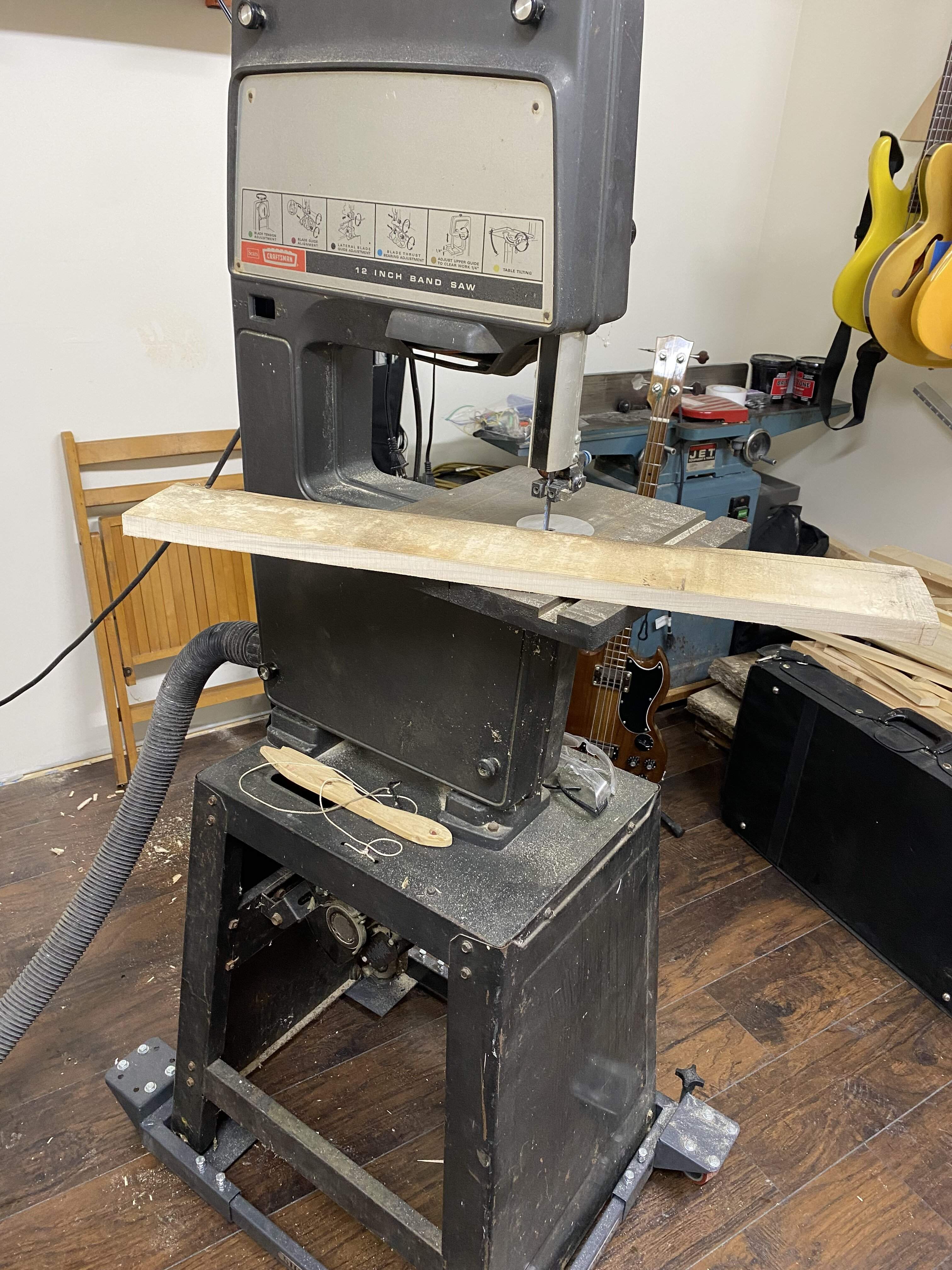
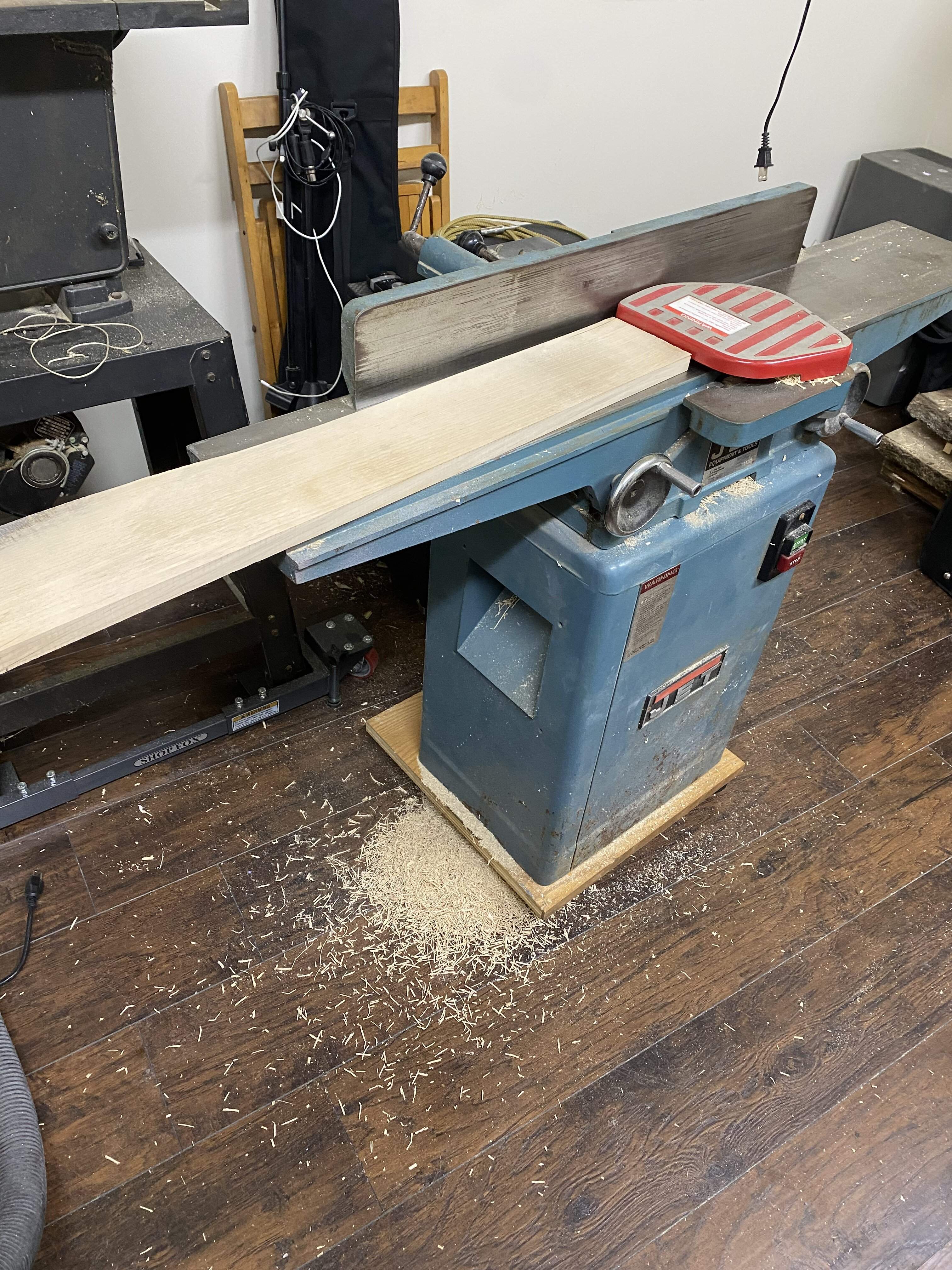
Used my new old jointer to flatten and square, then cut to final size.
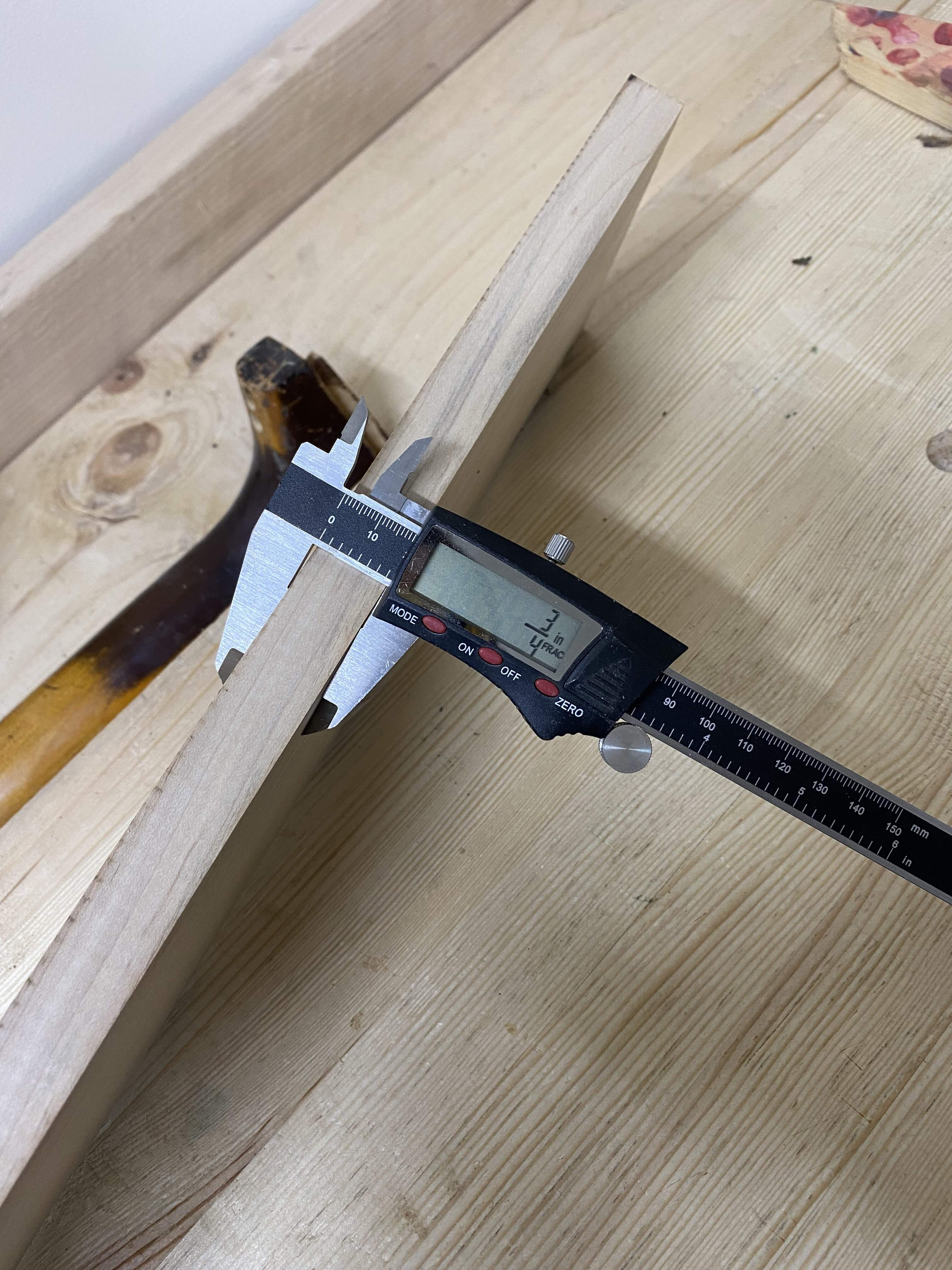
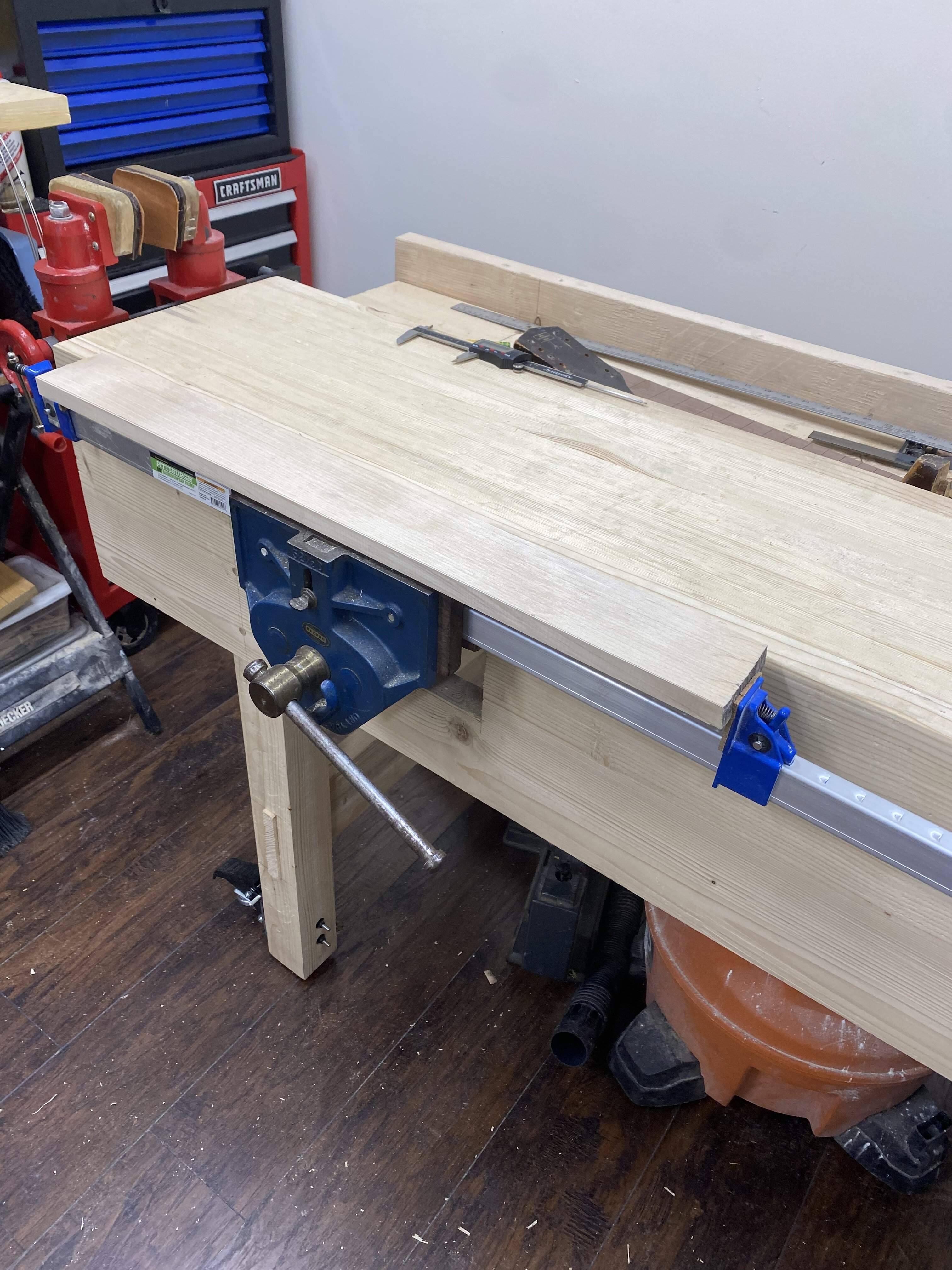
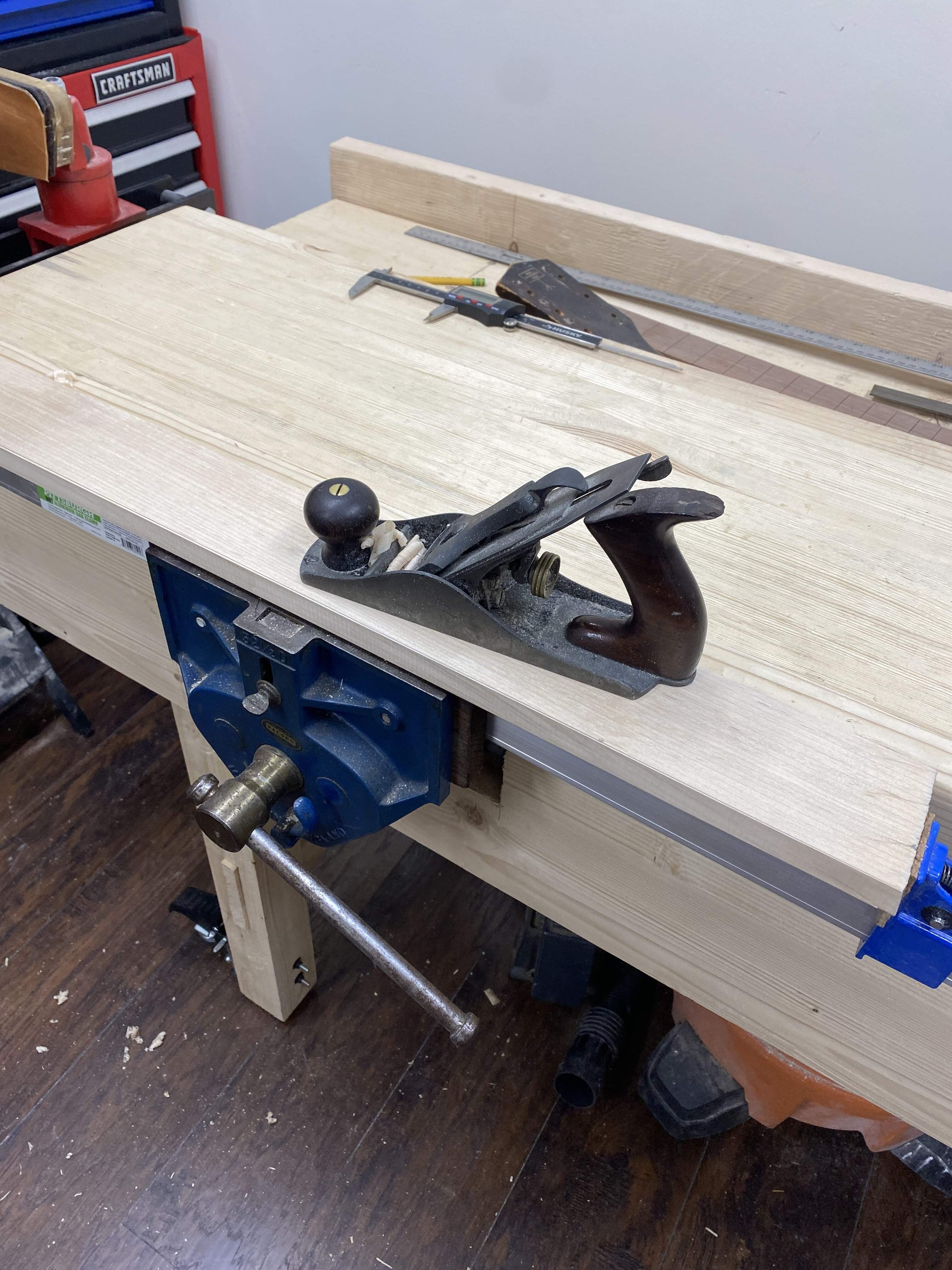
Used a furniture clamp and vise to smooth it with a hand plane. I have dog holes in the bench but I have to make more for longer pieces like this. This worked just fine though.
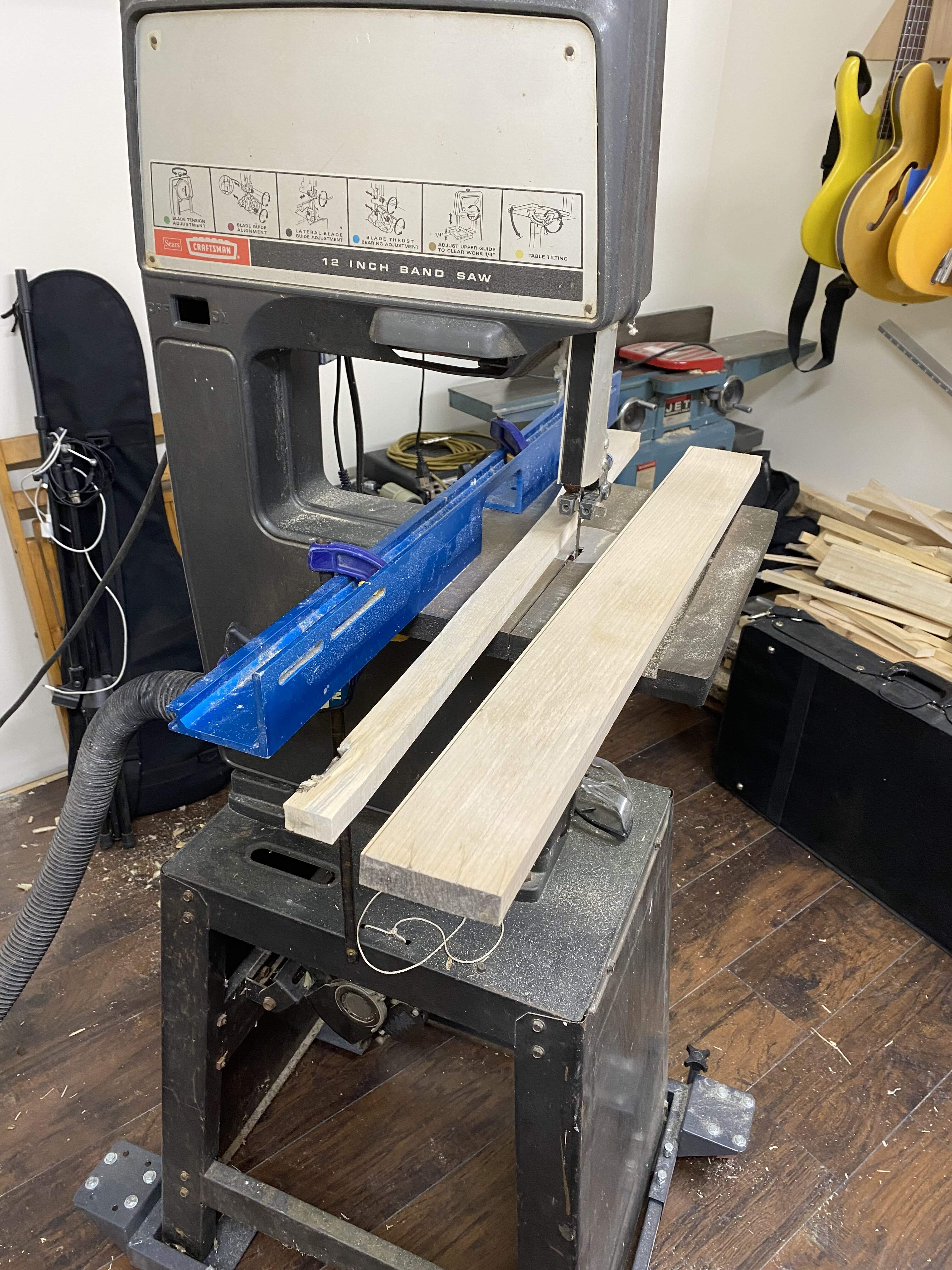
Marked out the scarf angle and cut with a 1/2” blade on the bandsaw, which does well despite the cheap bandsaw. Actually, this little craftsman has cut everything I throw at it no problem, just took time to set it up well and put nice Timberwolf blades on it. Cut pretty darn square. Just need to take your time.
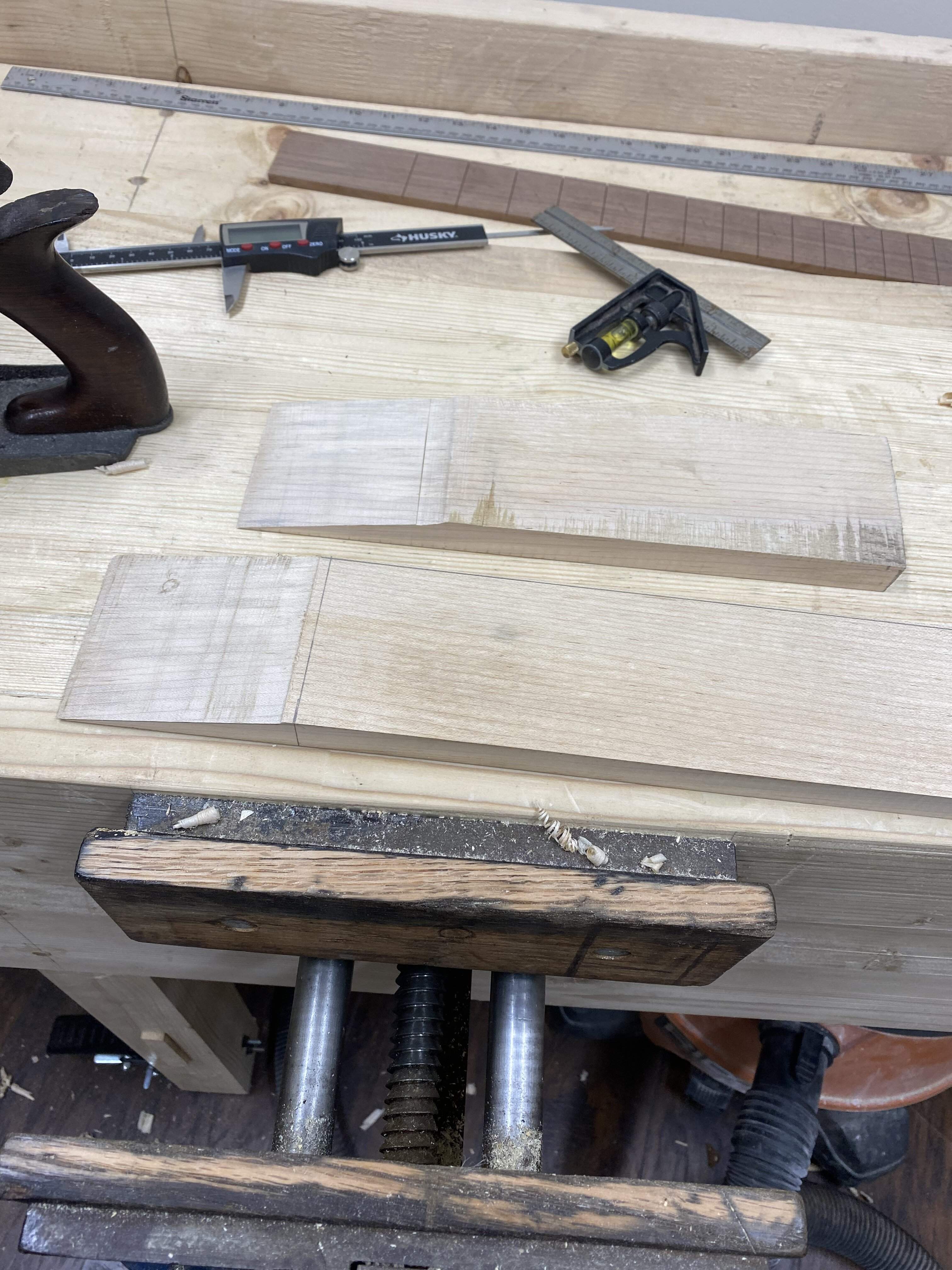
Turned the bench into the center of the room and let it down off it’s casters. It is heavy and doesn’t move. Got the pieces in the vise and planed flat.
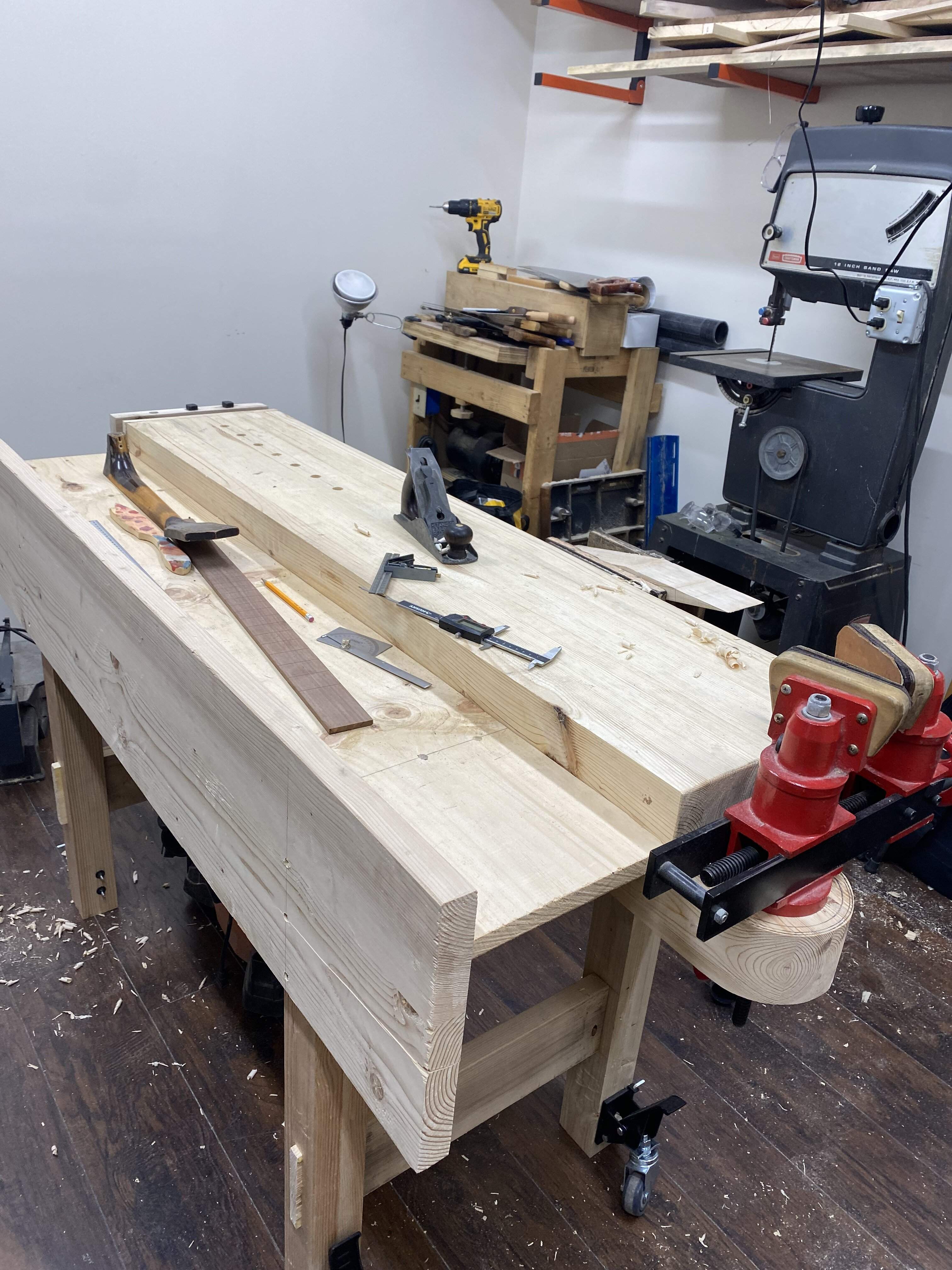
Blanks done.
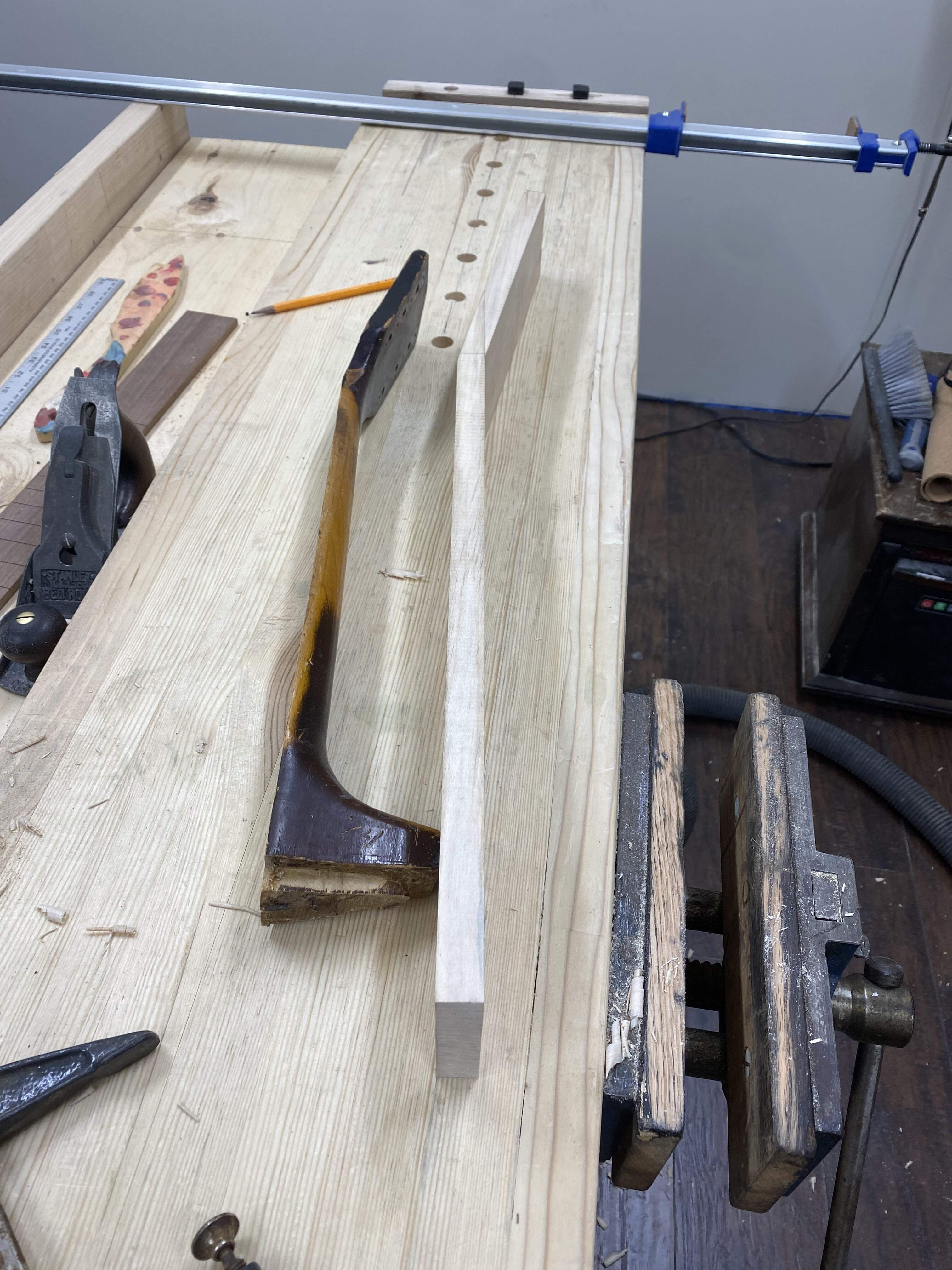
Glue up, no issues. Yet. I forgot to wrap my cauls in packing tape, hopefully they won’t be glued on tomorrow. If they are it will just be the edges. Have to remember next time though.
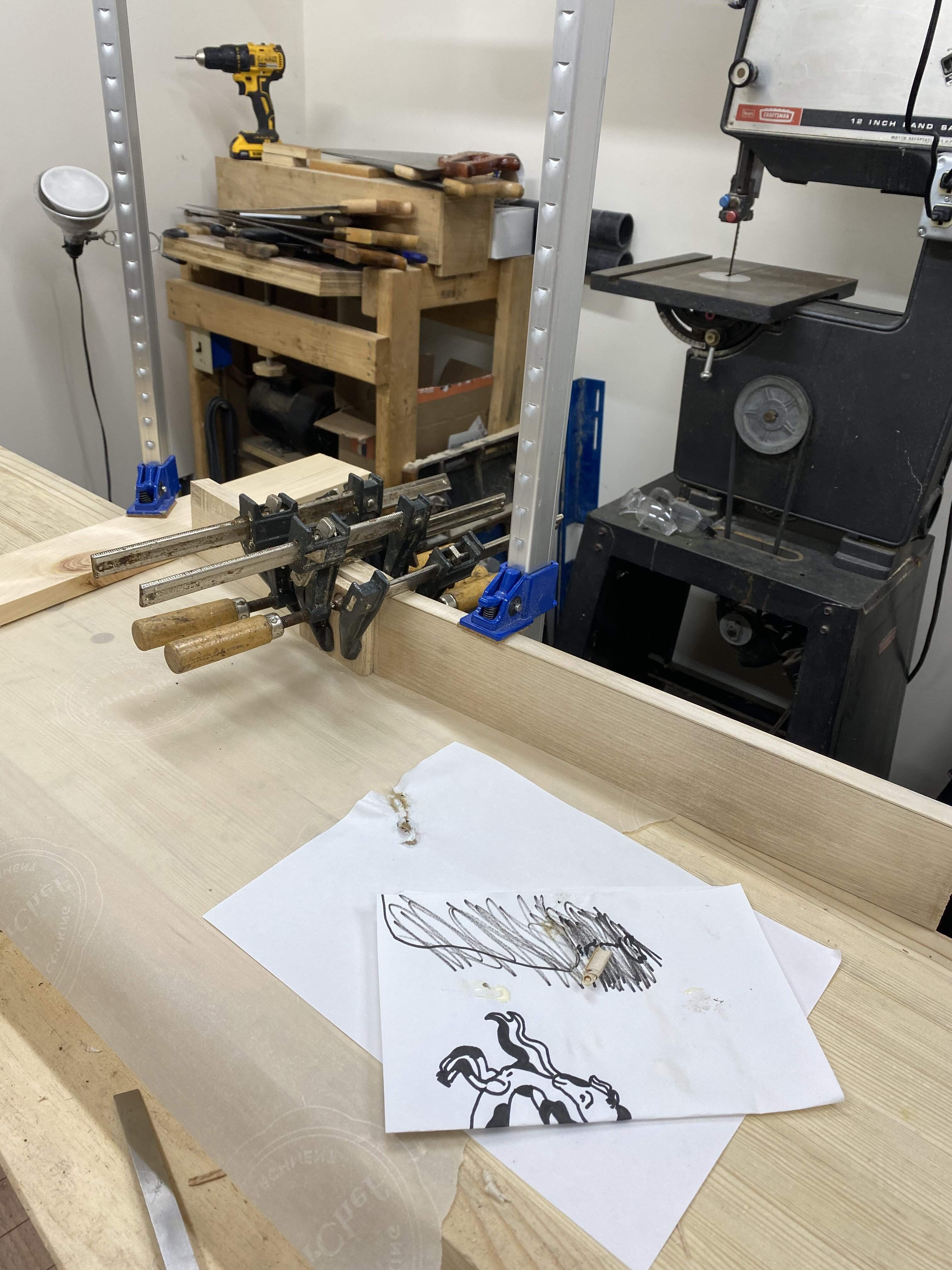
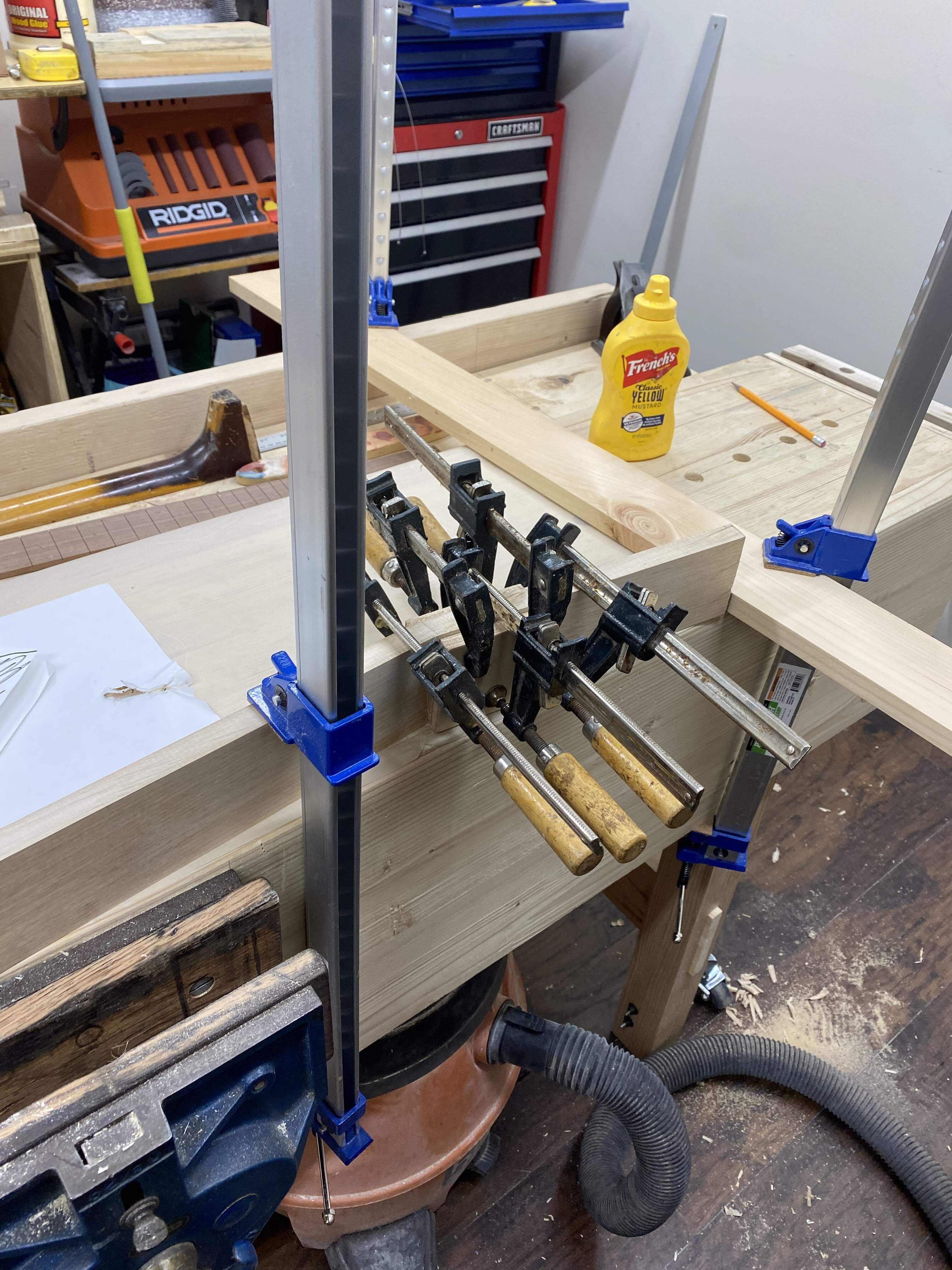
I don’t have a router table set up, my top was mounted to my table saw and there isn’t room for that in my little shop. Will probably rig up something temporary with my workmate for now. A solid router table is on the project list.
I will use the cutoff pieces for a stacked heel. This will be my first hand cut dovetail, but I learned a lot building my workbench by hand with only hand tools, so I am feeling pretty confident.
I picked up some maple slabs for a kitchen island top from a local fella, and everything was so reasonable I ended up leaving with a pile of walnut for myself plus a bunch of really cheap offcuts. The offcuts were mostly maple as well, all an inch or less in thickness. I took one ($10) that was sawn on the quarter and cut off a section.
Used my new old jointer to flatten and square, then cut to final size.
Used a furniture clamp and vise to smooth it with a hand plane. I have dog holes in the bench but I have to make more for longer pieces like this. This worked just fine though.
Marked out the scarf angle and cut with a 1/2” blade on the bandsaw, which does well despite the cheap bandsaw. Actually, this little craftsman has cut everything I throw at it no problem, just took time to set it up well and put nice Timberwolf blades on it. Cut pretty darn square. Just need to take your time.
Turned the bench into the center of the room and let it down off it’s casters. It is heavy and doesn’t move. Got the pieces in the vise and planed flat.
Blanks done.
Glue up, no issues. Yet. I forgot to wrap my cauls in packing tape, hopefully they won’t be glued on tomorrow. If they are it will just be the edges. Have to remember next time though.
I don’t have a router table set up, my top was mounted to my table saw and there isn’t room for that in my little shop. Will probably rig up something temporary with my workmate for now. A solid router table is on the project list.
I will use the cutoff pieces for a stacked heel. This will be my first hand cut dovetail, but I learned a lot building my workbench by hand with only hand tools, so I am feeling pretty confident.

I should say, before anyone gets concerned my neck is going to twist and warp as it dries, I bought this wood a few months back. I ran the dehumidifier on constant until all my rough stock was at the proper humidity level, and the temp and humidity level has been controlled ever since. So hopefully that and the quarter sawn board will make things very stable.
The ends of the screws on the legs for the wheels are looking like they are just biding their time looking for an unwary body part to come into range...


