• TalkBass has been independent since 1998. Add your voice.
    Create a free account to reply to discussions, view embedded media, and browse with fewer display ads.
    Join freeLog in
    Want zero display ads or expanded classifieds tools? Compare plans.

maple vs. ebony

Hey guy's

So I'm looking into buying a couple of left-handed 6string Carvin basses (Icon 6), one fretless and the other fretted.

For the fretless I am going to get an ebony fretboard but for the fretted I am debating getting ebony or maple.

I've tried a couple of maple fingerboards at a local shop and I loved the feel and sound, I also tried a couple of ebony fingerboards and also loved it too... too bad they weren't Carvins and too bad I can't try the Icon 6 before I buy them...

So now big debate about which one I should as the fretboard for the fretted, maple or ebony? comments/suggestions. I want something versatile that I can do different styles with: jazz, pop, r&B, hip-hop, fusion, etc.

Thanks

 
My thoughts:

1. I'm a big fan of ebony, so I'd suggest you to get the ebony fingerboard.

2. Since your fretless bass already has an ebony fingerboard, maple on your fretted would make a nice difference.

Maybe not so much of a help, but that's what comes to my mind. If it were strictly because of personal preference, I'd go for ebony. And FWIW, I'm not a follower of the "tone woods" theory. I actually do believe that different woods create tonal differences, which are relevant on acoustic instruments only. But on solidbody electrics, they are pretty negligible. The truly definitive factors that affect the tone of a regular electric bass are the electronics, strings and the player (and neck construction - neck-thru, bolt-on - to some extent). YMMV, of course.
 
Alvaro Martín Gómez A.;11834397 said:
My thoughts:

1. I'm a big fan of ebony, so I'd suggest you to get the ebony fingerboard.

2. Since your fretless bass already has an ebony fingerboard, maple on your fretted would make a nice difference.

Maybe not so much of a help, but that's what comes to my mind. If it were strictly because of personal preference, I'd go for ebony. And FWIW, I'm not a follower of the "tone woods" theory. I actually do believe that different woods create tonal differences, which are relevant on acoustic instruments only. But on solidbody electrics, they are pretty negligible. The truly definitive factors that affect the tone of a regular electric bass are the electronics, strings and the player (and neck construction - neck-thru, bolt-on - to some extent). YMMV, of course.


I agree, I have a fretted P-Bass with mapple neck and a fretless G&L with ebony; both strung with LaBella black nyon flats and I don't think that the neck material affects the tone significantly. They sound WAY different as a result of electronics though.

Frankly, you can't lose either way.
 
Hey guy's

So I'm looking into buying a couple of left-handed 6string Carvin basses (Icon 6), one fretless and the other fretted.

For the fretless I am going to get an ebony fretboard but for the fretted I am debating getting ebony or maple.

I've tried a couple of maple fingerboards at a local shop and I loved the feel and sound, I also tried a couple of ebony fingerboards and also loved it too... too bad they weren't Carvins and too bad I can't try the Icon 6 before I buy them...

Thanks

When I ordered my Carvin AC50 Fretless, the idea was to eventually have a matching pair of them: fretted and fretless.

What I learned so far is:

1. You want ebony for fretless because it's a much harder wood and the strings will take longer to chew it (depending on what kind they are).

2. You want some easily visible on stage difference between the two matching instruments. Otherwise it's easy to confuse them when you are in a hurry. My plan is to have them identical (both ebony boards) but have the headstocks be different: One "matching" = light colored and the other standard=dark. But in your case something that would work equally well would be totally matching instruments one with ebony fretboard and one with maple to distinguish the basses at a glance.

I know this doesn't tell you which to get, but gives you a point you may not have thought about. Personally I don't think there is much tone difference in fingerboard wood in a fretted bass, and I do like maple necks for the look, but I like ebony too so flip a coin.
 
Since ebony is a much harder/denser wood than maple, an ebony board should be a bit brighter, in theory. But since all of the components contribute, IMO, to the sound there's no way to be sure that otherwise "identical" basses will be predictably brighter or darker than each other. I have two P basses that are "identical", both have alder bodies, maple necks, same electronics/hardware and weigh within ounces of each other. One has a maple fingerboard and the other, rosewood. Common belief would lead you to believe that the rosewood one would sound darker. But it's the other way around, by a landslide. Why? The rosewood neck is by Fender, the maple one is by Allparts. Differences in neck construction trump fingerboard wood.
So I say go with the one that you like the looks of better.
 
Alvaro Martín Gómez A.;11834397 said:
... I actually do believe that different woods create tonal differences, which are relevant on acoustic instruments only. But on solidbody electrics, they are pretty negligible. The truly definitive factors that affect the tone of a regular electric bass are the electronics, strings and the player (and neck construction - neck-thru, bolt-on - to some extent). YMMV, of course.

Okay, we disagree a little. I agree that the body wood has a small effect on tone, but well the neck itself has a larger effect, as you have suggested with your statement about neck construction. It is my opinion that the fretboard wood has a noticeable effect.

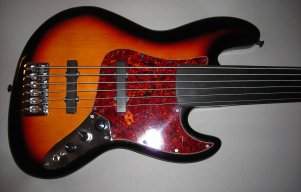
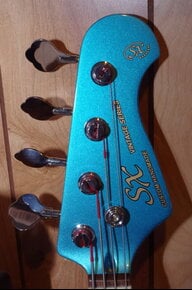
I have a handful of SX basses, same models (all in LPB, maybe you've seen my family pic once or twice on TB). In this group are 4 string J style basses a pair of rosewood board fretted and fretless, and maple board fretted and fretless (the rosewood ones also had LPB headstocks, but I don't think that is significant). The tone of the maple board pair was NOTICEABLY different from the rosewood pair. So much so that I actually changed the neck pups in them to warm them up!

Now you can argue that maple and ebony will be closer in tone, which I have no opinion on, since I don't have any basses with ebony fretboards, but I am SURE that the difference is audible... because neck construction definitely affects tone! In fact, on guitars (I haven't really tried to test this on my basses) the neck thickness (front to back) affects tone!
 
I have two guitars with ebony fretboards... they sound awesome and have very defined attacks. The wood is so dense it almost feels slick to play on.

I'd go with whichever looks cooler. I think they would be pretty similar tonewise.
 
Fretboard are mostly cosmetic thing ... I don,t think you will hear much difference between a maple fretboard and an ebony one.

well with carvin you don,t have a choice for fretless, it will be ebony.

for fretted well it is up to you. I have two LB76, one fretted the other fretless and the fretted has a bird eyed maple fretboard that shrink every winter and so the fret ends didn't shrink ... so I had to cut them to have a nice fretboard edge.

I have tung oil finish so it wasn't awful but if you have a gloss finish it may crack the finish if the fretboard shrink.

No problem with the fretless LB76.
 
I think that fingerboard wood makes more difference on fretless basses because it's the direct contact between the string and the wood that "makes" the sound. I've owned fretlesses with ebony, rosewood, maple, ebonol and epoxy coat fingerboard and they all sounded and felt different (well, I have no proof that the fingerboard is the only reason why).

On fretted basses, it's much more the contact between the string and the fret that produces the sound. So if was to worry about the sound of the fretted bass, I would be more concerned about what type of fret I choose (in combination with the type strings) than the wood choice (which is mostly a question of aesthetics and ergonomics IMHO).

Happy Shopping!
 
Okay, we disagree a little. I agree that the body wood has a small effect on tone, but well the neck itself has a larger effect, as you have suggested with your statement about neck construction. It is my opinion that the fretboard wood has a noticeable effect.

I have a handful of SX basses, same models (all in LPB, maybe you've seen my family pic once or twice on TB). In this group are 4 string J style basses a pair of rosewood board fretted and fretless, and maple board fretted and fretless (the rosewood ones also had LPB headstocks, but I don't think that is significant). The tone of the maple board pair was NOTICEABLY different from the rosewood pair. So much so that I actually changed the neck pups in them to warm them up!

Now you can argue that maple and ebony will be closer in tone, which I have no opinion on, since I don't have any basses with ebony fretboards, but I am SURE that the difference is audible... because neck construction definitely affects tone! In fact, on guitars (I haven't really tried to test this on my basses) the neck thickness (front to back) affects tone!

+1 my experience as well. Sure electronics and playing style and strings all have a big impact on the tone of a bass but so does the wood and construction techniques. My ebony fretboard basses have a warmer tone than my maple fretborard basses which typically have a slightly brighter tone. Unfortunately for this discussion I don't have two identical basses with ebony and maple fretboards to compare. But I have experienced significant tonal impacts between maple and rosewood necks on identical basses, so it stands to reason there could be differences with ebony and maple as well.

I wonder if this thread can make it to the end of the day before evolving into a "wood does/doesn't matter" debate.:hiding:
 
Alvaro Martín Gómez A.;11834397 said:
My thoughts:

1. I'm a big fan of ebony, so I'd suggest you to get the ebony fingerboard.

2. Since your fretless bass already has an ebony fingerboard, maple on your fretted would make a nice difference.

Maybe not so much of a help, but that's what comes to my mind. If it were strictly because of personal preference, I'd go for ebony. And FWIW, I'm not a follower of the "tone woods" theory. I actually do believe that different woods create tonal differences, which are relevant on acoustic instruments only. But on solidbody electrics, they are pretty negligible. The truly definitive factors that affect the tone of a regular electric bass are the electronics, strings and the player (and neck construction - neck-thru, bolt-on - to some extent). YMMV, of course.

My thoughts as well. Funny how we are both knowledgeable and humble.
 
GBassNorth said:
+1 my experience as well. Sure electronics and playing style and strings all have a big impact on the tone of a bass but so does the wood and construction techniques. My ebony fretboard basses have a warmer tone than my maple fretborard basses which typically have a slightly brighter tone. Unfortunately for this discussion I don't have two identical basses with ebony and maple fretboards to compare. But I have experienced significant tonal impacts between maple and rosewood necks on identical basses, so it stands to reason there could be differences with ebony and maple as well.

I wonder if this thread can make it to the end of the day before evolving into a "wood does/doesn't matter" debate.:hiding:

It didn't.:)
 
I have two P basses that are "identical", both have alder bodies, maple necks, same electronics/hardware and weigh within ounces of each other. One has a maple fingerboard and the other, rosewood. Common belief would lead you to believe that the rosewood one would sound darker. But it's the other way around, by a landslide. Why?

I've noticed similar crossover compared to the old wive's tale that rosewood is automatically "darker" sounding. It could easily be the use of different pieces of maple as the neck wood contributing a large share of the tonal difference. In short it's more because they're two different necks than two different fingerboard woods. BTW rosewood is generally harder than maple.

To the OP: I vote ebony. I favorite neck woods for under an ebony fingerboard is bubinga or wenge.
 
Welcome fellow lefty!
With the Carvin you will of course be limited to ebony for your fretless as they will not make a fretless with a maple board. Ebony will serve you well and sound very good.

Having said that, maple is my favorite fretboard wood. I have several basses with maple boards including a fretless. I do not notice much difference tonally between ebony and maple as both are hard, dense woods. I do have a bass that has a rosewood board that I defretted (my first fretless actually) and I have never liked its tone. The rosewood (which is not epoxied) does not produce as clear and distict a tone as the harder woods.

Each bass is different. The tonal characteristics of various woods are generalities and serve well as a basic guideline but the final "voice" of each instrument will vary, sometimes to a surprising degree. Of course the woods are only one part of the equation. :D

I look forward to seeing your new Carvins and reading your own reviews. Carvin makes a very fine instrument and I'm sure you will be well served for years to come.

Cheers!
 
Maple is more stable as ebony expands longitudinally more than laterally in relation to the grain with moisture changes. This can cause a neck to warp more than if it had a maple fingerboard. Of course individual examples won't always follow that rule but in general maple is more stable.

That said I prefer ebony ;)
 

Latest posts