
Al Kraft
Supporting Member
- May 2, 2016
- 10,768
- 40,440
- Disclosures
- Mesa Boogie beta product tester and player support
I'll bet that is one sweet and surprisingly large sounding micro-rig.Going with this for now.


TalkBass has been independent since 1998. Add your voice.
Create a free account to reply to discussions, view embedded media, and browse with fewer display ads.
Join free Log in
Want zero display ads or expanded classifieds tools? Compare plans.
I'll bet that is one sweet and surprisingly large sounding micro-rig.Going with this for now.
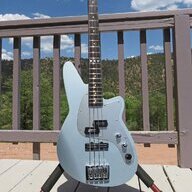


I wish I wasn't stupidly poor or I would get this. Thinking my WD would like a little brother.

That's a good price!

Ahhhrgh! I'm in the east bay... Rats. Missed it by that much.

Yep I thought about that, I wouldn't have to bend over so much but..You should try stacking them vertically just for fun.
Yeah but if you don’t have a second place it’s unnecessary. I’ve been jonesing for a WD-800. But I came to my senses.I wish I wasn't stupidly poor or I would get this. Thinking my WD would like a little brother.
Thanks for the info. Our company owns solidworks and CST, and I work in the high tech arena. Simulation of the connectors which are close pitch does rely on the gold plating for many applications due to the high speed and corrosive Environments. I’m more structural, but the folks on my team that do EMAG are amazing!While the term "gold" sounds exotic and premium, it turns out that gold on gold isn't much (if any) more reliable than passivated tin in most applications, and in fact tin has the added advantage of being a thicker plating and more forgiving in many connector applications. The thickness of the gold flash on connectors is typically ~5 - 10 micro-inches, which when plated on conductive coated clear Mylar can actually be seen through, it's THAT thin. Gold is not plated directly over copper, there must be a diffusion barrier of nickel to prevent copper ion migration through the gold. Tin plating thickness is typically 200-300 micro-inches, and is generally more forgiving.
Gold is better where there is chemical reactivity present (vapors corrosive to copper or tin), or where the dimensions and spacing are very close (ie. fine pitch), or a hard surface is required (like for a switch contact, but the plating will be much thicker and more expensive). Tin is better for general connector applications because it is more forgiving.
We use both gold and tin where appropriate, it depends on the connector and the application. For most switches, we do use gold (called hard gold over nickel) plated contacts because they are more reliable and last longer. I am wary of using gold as a marketing term because in general 5-10 micro-inches of gold is more marketing than performance IMO. If you look at (real) high reliability connectors that are not used in consumer items, you won't see 5-10 micro-inches but considerably thicker and it may also be a type of plating called hard gold.
The ICEPower modules that GK uses in all of their amps use tin plated connectors exclusively, ICEPower does not use ANY gold connectors, therefore all GK connections can't possibly be gold on gold. It's just simple fact, doesn't make it better or worse just not all gold on gold. In general I have always liked the way GK has laid their amps out, and they haven't seemed to have had any issues with their connectors regardless of the material.
I've used tin on tin for over 40 years, I haven't had any corrosion issues with any of my designs over that 40 year period, I'm sure my results would be about the same if I had used gold.
[edit: thought I would do a quick fact check to be sure I was remembering correctly and here's a couple of GK PCB that clearly shows tin connectors]:
View attachment 5121021
View attachment 5121023

Curious how near to a WD-800 a D-350 can get with maybe a pedal or two out front.Yeah but if you don’t have a second place it’s unnecessary. I’ve been jonesing for a WD-800. But I came to my senses.
It depends on what you are looking for.Curious how near to a WD-800 a D-350 can get with maybe a pedal or two out front.

The WD had a tube front end while the D-350 doesn't. That difference will add to them not being similar. A tube preamp pedal or something approximating that could get you close on the D.

Curious how near to a WD-800 a D-350 can get with maybe a pedal or two out front.
Excellent choice in your Flea bass!View attachment 5136662 Packing my D-350 for a couple of fly-in shows up east this weekend. Fits great in the Kapsule. Relying on the venues' cabs but I' taking everything else.

For fine pitch, it’s also used for tin migration control. None of the requirements for gold on gold apply to the connector types used in our industry.Thanks for the info. Our company owns solidworks and CST, and I work in the high tech arena. Simulation of the connectors which are close pitch does rely on the gold plating for many applications due to the high speed and corrosive Environments. I’m more structural, but the folks on my team that do EMAG are amazing!
You're talking to himThere has to be someone out there using a Sushi Box More with the D-350.

The voicing between the two amps is different, has nothing to do with the tube, it’s the basic architecture.