I hate mids on bass, vocals and all other things in life. But flat or slight cut is good enough in most cases.

TalkBass has been independent since 1998. Add your voice.
Create a free account to reply to discussions, view embedded media, and browse with fewer display ads.
Join free Log in
Want zero display ads or expanded classifieds tools? Compare plans.
Mid frequencies, especially low mids, find themselves in any tonal conversation, whether we're talking about live or recording applications. They really are the secret sauce to tone. I've heard so many people say boosting your low mids (anywhere from about 220 to 500) will help you be heard and more present in a mix. I used to be in that camp, with a slight bump in my low mids, and a slight cut in my high mids (with bass and treble flat).
However, in recent years I've reversed my thoughts on that, and favored a slight cut in the low mids, and a slight boost in high mids to give me a little rasp, some airy punch in the articulation, and just a hair of glass on the top end. I'm running a fender jazz (60's voices) through a Markbass lm3 and MB cabs.
Tell me: 1) Where are your mids these days? 2) What bass and amplification are you running it through, and...3) How does that lend to *your* sound?
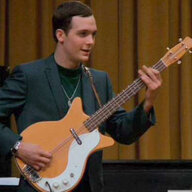
All my amp eqs are typically flat. I tweak if necessary. But usually I prefer a parametric eq so I can target a specific frequency. Any eq-ing beyond that is done on my bass. I figure, if you buy good instruments, you won’t want to eq.Mid frequencies, especially low mids, find themselves in any tonal conversation, whether we're talking about live or recording applications. They really are the secret sauce to tone. I've heard so many people say boosting your low mids (anywhere from about 220 to 500) will help you be heard and more present in a mix. I used to be in that camp, with a slight bump in my low mids, and a slight cut in my high mids (with bass and treble flat).
However, in recent years I've reversed my thoughts on that, and favored a slight cut in the low mids, and a slight boost in high mids to give me a little rasp, some airy punch in the articulation, and just a hair of glass on the top end. I'm running a fender jazz (60's voices) through a Markbass lm3 and MB cabs.
Tell me: 1) Where are your mids these days? 2) What bass and amplification are you running it through, and...3) How does that lend to *your* sound?
...Tell me: 1) Where are your mids these days? 2) What bass and amplification are you running it through, and...3) How does that lend to *your* sound?




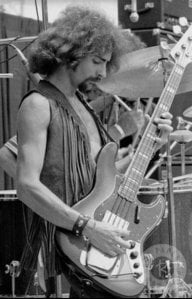
I like it. Honestly, if your ears like it AND it feels good in a mix, it's the right eq. There are many ways to skin the eq cat!Many years ago when I bought my first semi-decent amp, (Peavey Combo 300, about 90 lbs on a single top handle!), it had suggested EQ settings on the back of the owner’s manual for Rock, Funk, & Country.
Since I didn’t know a lot about EQ or “the tone” I should have at that time in my playing career, set my EQ close to the suggested settings in the manual for Rock, which is 99% of what we played. It showed 250 Hz cut by about 6db, but it shows it boosted big time for Funk & Country.
Whether that picture influenced me for life or whether my ears got accustomed to hearing less 250 Hz, I still cut 250 Hz or the closest thing to it in almost all situations on almost any type of gear (PA, bass amp, PA vocal channel). If I just have “low” & “low mid”, as I do on a couple bass amps, I’ll cut the low mid slightly.
If I have a fully parametric EQ or a graphic EQ with a 250 Hz slider, it gets cut.
View attachment 5314003
Interesting. I think it says a lot about how an amp and speakers affects things. I've never played on an orange, but they do sound cool. It makes me wonder how I'd eq it to get comfyI use an Orange Terror Bass. That already kind of implies full mids, and I leave the mids at 10 (theoretically flat). I keep the treble down and add a little drive courtesy of the gain knob.
When I’ve used graphic EQ’s, I’ve tended to cut around 100 or 120, and use the upside-down smiley face after that.
I don’t have to turn up terribly loud to be heard. Disclosure: this is much more Motown than metal.
Yeah, good point. I also think if you're playing with "overdriven power chords" on guitar, that 150-250 hz range (which is not as low as a lot of people think) is where those chords live. With a low mid bump against that it sounds like oil and water to me...the bass is very present, but separate...which can sound good, but I tend to like to envelope the guitar sound a little more.A comprehensive answer to this question would cover a lot of ground.
That being said, guitar cabs usually have a dip between 1kHz-2kHz, so that's a good place to start boosting if you're lost in a guitar-heavy mix.

Tell me: 1) Where are your mids these days? 2) What bass and amplification are you running it through, and...3) How does that lend to *your* sound?