Yep agreed - no big deal. There are reasons why they're the most recorded but if you sampled this by decades you'd have notable peaks in the 60s and noughties. The 60s because there weren't a lot of other choices (although some of the biggest bands like cream and the Beatles didn't really use them) and the noughties because of so much retrospective music. Young indie type bands seem to love anything old but I wonder how much of this is management putting the basses (and guitars) in their hands.

Enjoy the benefits of a premium membership!
Upgrade Account
-
TalkBass has been independent since 1998. Add your voice.
Create a free account to reply to discussions, view embedded media, and browse with fewer display ads.
Join free Log in
Want zero display ads or expanded classifieds tools? Compare plans.
You are using an out of date browser. It may not display this or other websites correctly.
You should upgrade or use an alternative browser.
You should upgrade or use an alternative browser.
MM Stingray vs Fender Jazz???
- Thread starter Jobiebass
- Start date
More options
Who Replied?
Fenders are not necessarily versatile. As a studio bass they are good or adequate because they make a good generic sound suitable especially for genres like jingles, 60s, middle of the road music, comedy records etc etc as well as some other styles. This doesn't make them versatile in all genres. A Stingray can make generic bass sounds just as well but can have a broader palate also. It just so happens that much current pop music has thin bass sound mixed fairly low which suits passive instruments. 60s sounding production - those who remember the 60s will remember they were characterised by tinny sounding music played on very low fi transistor radios or record players where it was difficult to hear the bass - indeed to get a good bass sound on vinyls was difficult owing to the need for deep grooves which reduced the amount of music you could get on the single/album. It was also in mono not stereo.
Fenders are not necessarily versatile. As a studio bass they are good or adequate because they make a good generic sound suitable especially for genres like jingles, 60s, middle of the road music, comedy records etc etc as well as some other styles. This doesn't make them versatile in all genres. A Stingray can make generic bass sounds just as well but can have a broader palate also. It just so happens that much current pop music has thin bass sound mixed fairly low which suits passive instruments. 60s sounding production - those who remember the 60s will remember they were characterised by tinny sounding music played on very low fi transistor radios or record players where it was difficult to hear the bass - indeed to get a good bass sound on vinyls was difficult owing to the need for deep grooves which reduced the amount of music you could get on the single/album. It was also in mono not stereo.
I strongly disagree with you at this point. I can see that you love what you play, and that is totally cool! Lots of people don't play jazz or precision style basses. But if you start trying to argue that they aren't the most predominantly used (which makes them the most versatile also) and the most desired by virtually every studio out there, then you are really misinformed on the subject.
Hey, play what you love! It's all good. But nothing will surplant fender basses and clones any time soon for studio work. Not even close. The gap there is huge, and for good reason. I really don't want to argue it, but they really is no room for debate on this. The only thing to argue is "why? " its that way. For me at least, it is what it is.
We will have to agree to disagree - however I agree that Fender Jazz and Precisions are currently extremely popular. These things do tend to go in cycles.
We will have to agree to disagree - however I agree that Fender Jazz and Precisions are currently extremely popular. These things do tend to go in cycles.
I don't think we're agreeing and disagreeing about the same things though. LOL! Fender Jazz and Precision basses have always been popular. Rays were definitely popular during the 80's when they were used underneath all that synthy, electronic stuff, but they were never as popular as J and P basses even back then.
I understand that you seem to like that type of tone better, and I totally dig that! No problem. I think perhaps you are arguing why that tone is more flexible or versatile, and I can dig that also. No problem. But arguing that your view is factual is what I disagree with because the sheer number of recordings and such don't reveal that at all. In fact, when I used to play Rays, I was very often able to get a great tone for myself, but honestly it was more work for the sound engineers, both at live gigs and in the studio. They required more heavy EQ'ing to fit into the mix they way that they needed to. They're very aggressive, which is typically NOT what a producer or engineer is looking for. What we bass players often want to hear is not what fits the mix best IME. It's a hard lesson to learn and apply.
Hey, play what you want and enjoy! Life is too short to do otherwise! That's the great thing. I used to get compliments all the time when I played my Stingrays. They're great instruments, but they won't ever be taking the crown away from Leo's other two designs I don't think.

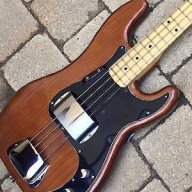
I think if you're looking for comparable models, the EBMM Sterling is a closer model to the Jazz. It has the slimmer neck, and maybe most importantly, the pickup switch that lets you choose between parallel (the StingRay default setting), series (the most aggressive sound), and single-coil - which gives you a much softer, rounder sound, unlike what the default StingRay setup offers.
Neither bass is better than the other; they're both excellent and it all comes down to personal preference and where you'll be using them. But I think the Sterling gets overlooked, when its pickup switch is a "secret weapon" that can really transform the sound you can make.
Neither bass is better than the other; they're both excellent and it all comes down to personal preference and where you'll be using them. But I think the Sterling gets overlooked, when its pickup switch is a "secret weapon" that can really transform the sound you can make.

if you start trying to argue that they aren't the most predominantly used (which makes them the most versatile also)
First, being the most used does NOT automatically anything the most versatile.
Second, you guys are debating versatility and I suspect (I didn't read the whole thread) that you have not defined the term "versatility".
I think people here on TB fall into 2 camps on the definition of versatility. For some, versatility means that a bass can produce a wide variety of tones. By that definition, the G&L L-2500 with single coil mod, and the EBMM Bongo and Big Al are probably the most versatile basses made.
For others, when they talk about versatility, they mean that a bass sounds good when used in a wide variety of genres. By this measure, the "one trick pony" good old Precision bass may be the most versatile bass made.
So, before you debate further, perhaps you should clarify the actual definition of what you're debating over.
For my money, the Precision and its descendants and the MM StingRay are tied for "most versatile", because they virtually always sound good in a mix, no matter what kind of music it is. And the MM Sterling trumps them both by a very slight margin because it has the StingRay sound in parallel mode but also has single coil and series options which broaden its ability to sound good in any genre.
For my money, there is NO genre of music where you can say a Jazz sounds good and you can't make a MM Sterling also sound just as good. But, to me, there are times when a Sterling sounds good and you just can't make a Jazz sound as good in the same setting. ALMOST, but not quite.
But that's just me.
I can understand where you are coming from also, but even what you are saying is highly subjective. For example, imagine taking all those old classic recordings take with a P bass and try replacing them with a Ray, which you also said was tied for being the most versatile. It's hard to imagine any of the thousands of Motown hits being recorded with a Stingray. I'm sure some of them would sound great. I'm also sure they'd be very different, and for a number of people at least, not for the better.First, being the most used does NOT automatically anything the most versatile.
Second, you guys are debating versatility and I suspect (I didn't read the whole thread) that you have not defined the term "versatility".
I think people here on TB fall into 2 camps on the definition of versatility. For some, versatility means that a bass can produce a wide variety of tones. By that definition, the G&L L-2500 with single coil mod, and the EBMM Bongo and Big Al are probably the most versatile basses made.
For others, when they talk about versatility, they mean that a bass sounds good when used in a wide variety of genres. By this measure, the "one trick pony" good old Precision bass may be the most versatile bass made.
So, before you debate further, perhaps you should clarify the actual definition of what you're debating over.
For my money, the Precision and its descendants and the MM StingRay are tied for "most versatile", because they virtually always sound good in a mix, no matter what kind of music it is. And the MM Sterling trumps them bit a very slight margin because it has the StingRay sound in parallel mode but also has single coil and series options which broaden its ability to sound good in any genre.
For my money, there is NO genre of music where you can say a Jazz sounds good and you can't make a MM Sterling also sound just as good. But, to me, there are times when a Sterling sounds good and you just can't make a Jazz sound as good in the same setting. ALMOST, but not quite.
But that's just me.
Take a Jazz bass though, and you could pretty well pull off all those classic recordings by favoring the neck pickup heavily. Take any song recorded by a Stingray, and you could get in the ball park on a jazz by favoring the rear pickup. Exact in either case? No, but of course much closer to both than the other two could do for the other.
And then the Jazz has it's own thing entirely when blending the single coils.
You are right. Versatility can mean many things.
Still, as I said earlier, if you are going to record in a studio or do a session for someone, you better show up with a P and J bass at a bare minimum every time. Chances are than you'll always walk away successful if you can play and meet the demands of the tune. Show up with just a Stingray or even the Sterling? I doubt that would work out very well for very long.
The J and P basses are in high demand because of the way they sound, and the way that producers can get a tone they want out of them time and time again. That makes them versatile by their very nature, even if an individual player prefers something else entirely.
The latter is what I've been arguing here. If someone prefers something else and wants to play that, and even think it's better/more versatile, or whatever else, then they are certainly entitled to that and their opinion is valid. I just wouldn't expect too many other people to feel that way about it. I've gotten great compliments from other bass players when playing all kinds of basses, including MM, G&L, and some modern basses as well. I've even had sound guys and producers tell me they sounded good. But bring a J or P bass, and the engineers and the rest of the band always love you. They just work every time. IME/YMMV
The J and P basses are in high demand because of the way they sound, and the way that producers can get a tone they want out of them time and time again. That makes them versatile by their very nature, even if an individual player prefers something else entirely.
I gave 2 definitions of versatile and your usage of the term in the preceding paragraph does not seem to match either one. Can you please give the definition of versatile that you are using that makes your statement true?
You seem to be saying (again) that being in high demand equates to versatile. There is no logic to that statement that I can discern.
Independently contracted taxi drivers are strongly preferred to have a 4-door passenger car. Does that mean that 4-door passenger cars are the most versatile type of car you can buy?
How many more examples of things which are the most popular item within a class do I need to give to illustrate that most popular is not the same thing as most versatile? It COULD be, but just being most popular does not automatically equal most versatile. Unless of course, you have your own personal definition of the word versatile.
Producers and engineers prefer Fenders because they know how to engineer the sound from one. And, like they used to say in my business, "nobody ever got fired for buying IBM." Or, in this case, for requiring a Fender. Fender made the first commonly available electric bass on the market, preceding all others by some years, right? So, by the time producers and engineers had to address the question of "can I use XYZ bass on this recording", what do you think they were going to do? Mostly, they were going to say "well, every successful record I've ever produced/engineered was recorded with a Fender, so that's what I want you to use." It was, essentially, kind of like a self-fulfilling prophecy - that has nothing to do with the word "versatility".
Hey, another IT guy! I've heard that statement many times, but people get fired for buying IBM all the time now!IAnd, like they used to say in my business, "nobody ever got fired for buying IBM."

Hey, I agree with a lot of what you are saying on paper. I think most any bass can work in most any circumstance given enough time and TLC to work with it. You are right also that Fender is well known, and that sound (clones included) is easy for many people to work with since they already know and understand it. That is it's own form of versatility. But I also offered a counter argument. Try getting a P-style tone out of a Stingray, or vice versa. It'll never happen. A Jazz could get close to both of those.
So while I respect that most any instrument can be made to sound good in most any setting (which is a form of versatility), there's also the perspective of the person who is in charge for shaping your tone for the situation at hand (the live gig of studio session). In the end, that person's definition of what versatility is most likely is the most important. Show up with a J or P, and you have probably got it covered. Show up with a Stingray, and you might never get a call back.

If I had to narrow the quiver down to three basses:
Precision
Jazz
Stingray
If I only could have one bass:
Jazz
Precision
Jazz
Stingray
If I only could have one bass:
Jazz
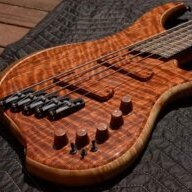
Actually, it's quite easy to do with the HH and HS models. IMO, a HH or HS pull it off better than a J with the neck pickup soloed.Try getting a P-style tone out of a Stingray, or vice versa. It'll never happen. A Jazz could get close to both of those.
I can understand where you are coming from also, but even what you are saying is highly subjective.
Of course it's subjective. I'm talking about what sounds good to me!

And I'm not talking about making any of these basses sound like each other, really. I'm saying that if you use a P bass on old Motown songs, or modern Country, or Jazz fusion, or really old school Big Band, or Bebop, or Latin or whatever, any genre, it will sound good.
And, if you use a Stingray, taking advantage of its EQ, of course, you can use it on any of those, including playing old Motown, and it will sound good. Will it sound the SAME as P bass? No. And that's not what I said. I'm just saying that you can dial it in to sound just as good. If you want to argue that it won't sound as good as a P bass on Motown, okay, I'll counter that a P won't sound as good on some other specific things.
The point is, to me, they both qualify as Most Versatile, when using the definition of versatile as "sounds good in the most different kinds of music."
In contrast, again, yes, this is just my opinion, there are many types of music where a J can sound just as good. But, I think there are some occasions where it doesn't sound as good as the other 2 (particularly, a StingRay and even moreso a Sterling) - in a band mix (to be VERY clear), but there are no occasions that are the opposite. I don't think there's any music that sounds good on a J that you can't make a Sterling sound just as good. I didn't say "the same". I just said "as good". To me. In my opinion, yes. And I certainly don't mind that others have different opinions and think that I'm a moron and have no taste. As my grandmother used to tell me, that's why there's chocolate and vanilla.
Agreed!Of course it's subjective. I'm talking about what sounds good to me!

I think this is where I've been arguing from the entire time. I think they'd all sound good, but you have to be prepared because most engineers will not be happy if you show up with a Stingray to record a Motown-type song. They are expecting old school and thumpy, and they want to get it setup for tracking and sounding great so they can move on to the 50 million other things they have to do that aren't bass related. So in my view, simply sounding great is a very narrow criteria for something being labeled versatile. It has to be versatile for the entire context for which it is being used, and that involves other people and their expectations.And I'm not talking about making any of these basses sound like each other, really. I'm saying that if you use a P bass on old Motown songs, or modern Country, or Jazz fusion, or really old school Big Band, or Bebop, or Latin or whatever, any genre, it will sound good.
And, if you use a Stingray, taking advantage of its EQ, of course, you can use it on any of those, including playing old Motown, and it will sound good. Will it sound the SAME as P bass? No. And that's not what I said. I'm just saying that you can dial it in to sound just as good. If you want to argue that it won't sound as good as a P bass on Motown, okay, I'll counter that a P won't sound as good on some other specific things.
The point is, to me, they both qualify as Most Versatile, when using the definition of versatile as "sounds good in the most different kinds of music."
So really, it comes back to the player knowing what is expected of him/her and showing up with the right tools. Versatility is actually a characteristic of the player himself/herself, and so much of that is gear choice also. Which brings me back to a point I made earlier. If you just show up with a Stingray, don't be surprised if you don't get a call back when the engineer has to spend extra time trying to get the sound he/she she wants and could have easily had in 2 minutes with a P bass.
I love the tone of both basses. But, the more comfortable-playing bass for me is the Jazz Bass. It just fits me better. For some reason, my plucking hand isn't as comfortable on a 'Ray, and the neck isn't as comfortable as the J-Bass neck.

Looks like I posted in this thread back in '08!
Since that last post, I have owned 2 P basses and a Jazz, and sold off my Stingray 5. It was the second 'Ray I've sold in my time as a bassist, and I've regretted selling both. The Jazz is gone and one P bass is gone.
I will be returning to the Stingray world ASAP because it just fits me. I feel like I can do anything and fit into any mix with a 'Ray. It just feels like home. I love the wider neck, the single pickup, the simple 2-band pre, the way it hangs on my shoulder, the way it doesn't fight my playing, etc.
I will say that this last Jazz bass I just sold will be the last Jazz that I will ever own. Every time I get one I can't make it work. It feels goofy and I get buried every time I play one. Other people can make them sound wonderful, I am absolutely not one of them.
Since that last post, I have owned 2 P basses and a Jazz, and sold off my Stingray 5. It was the second 'Ray I've sold in my time as a bassist, and I've regretted selling both. The Jazz is gone and one P bass is gone.
I will be returning to the Stingray world ASAP because it just fits me. I feel like I can do anything and fit into any mix with a 'Ray. It just feels like home. I love the wider neck, the single pickup, the simple 2-band pre, the way it hangs on my shoulder, the way it doesn't fight my playing, etc.
I will say that this last Jazz bass I just sold will be the last Jazz that I will ever own. Every time I get one I can't make it work. It feels goofy and I get buried every time I play one. Other people can make them sound wonderful, I am absolutely not one of them.
Yeah, one of the really cool things about playing a classic Ray (meaning not any of those new models with the neck pickups) is that you can pretty much always hear yourself on stage. Very present and growly tone. I love it personally, and could be happy with that forever for most any kind of fingerstyle playing.
Agreed!
I think this is where I've been arguing from the entire time. I think they'd all sound good, but you have to be prepared because most engineers will not be happy if you show up with a Stingray to record a Motown-type song. They are expecting old school and thumpy, and they want to get it setup for tracking and sounding great so they can move on to the 50 million other things they have to do that aren't bass related. So in my view, simply sounding great is a very narrow criteria for something being labeled versatile. It has to be versatile for the entire context for which it is being used, and that involves other people and their expectations.
So really, it comes back to the player knowing what is expected of him/her and showing up with the right tools. Versatility is actually a characteristic of the player himself/herself, and so much of that is gear choice also. Which brings me back to a point I made earlier. If you just show up with a Stingray, don't be surprised if you don't get a call back when the engineer has to spend extra time trying to get the sound he/she she wants and could have easily had in 2 minutes with a P bass.
The OP posed the question what would YOU choose to play. I'm not sure why you keep trying to steer things around to what you would play when you're being paid to play somebody else's music. Of course, in that case, you'd play what they tell you to play. That doesn't really have anything to do with the question of "what would YOU choose?"
The scenario of "you are being paid to play somebody else's music" is, I suspect, a VERY SMALL portion of the total combined playing that is done by all the TB members put together.


