
Enjoy the benefits of a premium membership!
Upgrade Account
-
TalkBass has been independent since 1998. Add your voice.
Create a free account to reply to discussions, view embedded media, and browse with fewer display ads.
Join free Log in
Want zero display ads or expanded classifieds tools? Compare plans.
You are using an out of date browser. It may not display this or other websites correctly.
You should upgrade or use an alternative browser.
You should upgrade or use an alternative browser.
MOTOWN SOUND
- Thread starter G&l leo
- Start date
More options
Who Replied?

Leo,
Don't forget you'll also need to stick a foam mute under the strings for extra deadening.
I've started using the mute for a bunch of things... I'm using a piece of an old neoprene wrist pad trimmed down under my Jazz and an old neoprene mouse pad on my T-Bird.
[Invalid or Expired Link Removed]
[Invalid or Expired Link Removed]
Yeah, I've found that the mute makes a big difference in getting the Jamerson sound. His notes die quickly. Without it the sustain of the previous note often gets in the way of the next one, and you lose a lot of definition. It's very much like an old school (Paul Chambers) upright sound, which makes sense, since Jamerson started and apparently developed his way of hearing on upright.
I don't use that kind of bottomy sound these days, though, as much as I love it, because in most of the groups I play with, the instrumentation and sounds have changed since the Motown golden era, and that fat, bottomy sound tends to get lost. Note how bright the guitar tone is on those old Motown records, and how there's almost no other musical information in the lower frequencies to compete with the bass. Now, even if your guitarist know to roll off the bottom (after all, there's not a single note the whole bass line in the original of "Knock on Wood" that's got a fundamental below the low E on a standard-tuned guitar, so folks had to make space) you may be playing with a synth that has the capability of going down to 20 Hz and all too often a synth player that doesn't understand what kind of havoc s/he can wreak down there if s/he's not careful. The best ensemble keyboardist I know around here is very sparing with his left hand. What the hell, he's got a bass player whose full-time job is mostly to provide the roots. The fat sound of Jamerson and his contemporaries works to some extent because or when other players and engineers made room for them in the mix.
So these days I play a Sadowsky with lots of highs (and the low B) through a Genz Benz amp in order to both cut through the competition and still provide bottom. I don't want to overwhelm, but I don't want to get stepped on, either. Sounds like I've got an axe to grind, doesn't it? Nonetheless, my feeling is that below about 120 Hz there's room for one bass instrument and the kick drum and not much else.
-Steve
I don't use that kind of bottomy sound these days, though, as much as I love it, because in most of the groups I play with, the instrumentation and sounds have changed since the Motown golden era, and that fat, bottomy sound tends to get lost. Note how bright the guitar tone is on those old Motown records, and how there's almost no other musical information in the lower frequencies to compete with the bass. Now, even if your guitarist
So these days I play a Sadowsky with lots of highs (and the low B) through a Genz Benz amp in order to both cut through the competition and still provide bottom. I don't want to overwhelm, but I don't want to get stepped on, either. Sounds like I've got an axe to grind, doesn't it? Nonetheless, my feeling is that below about 120 Hz there's room for one bass instrument and the kick drum and not much else.
-Steve
Photos/light... also the black can lighten or wear off. Check out the pattern on the inset picture

So how did you end up with the Funk Machine?
Photos/light... also the black can lighten or wear off. Check out the pattern on the inset picture
LOL!

So how did you end up with the Funk Machine?
LOL!
The b/w inset picture is the last known picture of the Funk Machine that I know of.
The inset pic is James from 81 or so, the color pic is James Jr. The pic is from Bob Lee's "Bassland" page.

Yeah, I've found that the mute makes a big difference in getting the Jamerson sound. His notes die quickly. Without it the sustain of the previous note often gets in the way of the next one, and you lose a lot of definition. It's very much like an old school (Paul Chambers) upright sound, which makes sense, since Jamerson started and apparently developed his way of hearing on upright.
I don't use that kind of bottomy sound these days, though, as much as I love it, because in most of the groups I play with, the instrumentation and sounds have changed since the Motown golden era, and that fat, bottomy sound tends to get lost. Note how bright the guitar tone is on those old Motown records, and how there's almost no other musical information in the lower frequencies to compete with the bass. Now, even if your guitaristknow to roll off the bottom (after all, there's not a single note the whole bass line in the original of "Knock on Wood" that's got a fundamental below the low E on a standard-tuned guitar, so folks had to make space) you may be playing with a synth that has the capability of going down to 20 Hz and all too often a synth player that doesn't understand what kind of havoc s/he can wreak down there if s/he's not careful. The best ensemble keyboardist I know around here is very sparing with his left hand. What the hell, he's got a bass player whose full-time job is mostly to provide the roots. The fat sound of Jamerson and his contemporaries works to some extent because or when other players and engineers made room for them in the mix.
So these days I play a Sadowsky with lots of highs (and the low B) through a Genz Benz amp in order to both cut through the competition and still provide bottom. I don't want to overwhelm, but I don't want to get stepped on, either. Sounds like I've got an axe to grind, doesn't it? Nonetheless, my feeling is that below about 120 Hz there's room for one bass instrument and the kick drum and not much else.
-Steve
rite on. i think the key here is how to sit in the mix. if its true that the instruments were run direct into the board, then jamerson (and the rest of the gang) didn't control their eq. and given what i have heard about berry gordie, i don't think he was asking his musicians how to mix the songs.
i'm not sure, but i don't think jamerson went to the bass forums to learn all he could about basses, amps, and frequency boost/cuts to get that sound. i imagine he bought the best feeling bass he could afford from a limited selection. imagine if leo fender had not put foam on his basses. it still would have been jamerson's sound at motown, but it would have felt different, and we all would be trying to get that sound!
i think jamerson's "sound" was knowing how to play just the rite groove for any song thrown at him + excellent mixing in the control room. the bass and amps were what were available and felt rite and nothing deeper than that. IMHO the best sound is the one that fits the group, the style of music, and the frequency spectrum.

the motown bass sound is pretty crappy on its own........]
No it isnt

Wow, I searched this thread regarding JJ's thumb and can't believe nobody posted about this. It may not have been a well understood and/or commonly used thing back then, but at least these days, it's called the "floating thumb" technique. Todd Johnson (and likely many others) even have clinics and videos on this. It's REALLY effective if you want to be very precise regarding what strings are making any noise and which ones aren't. You use the thumb to mute the low strings and the "rest of" your fingers on your left hand to mute the high ones... as needed. Also, it gives you a more consistent technique/tone from string to string.
Here's a vid on the thumb technique tho...
Here's a vid on the thumb technique tho...

the main problem is the modern bass, modern amp head, modern effects, and a 4x10
go old school P bass with flats, old school head, no effects, 1x15 and then groove..
+1 and the biggest problem, roll the tone off all the way.
+2 add the mute
+3 play with as few fingers as possible.
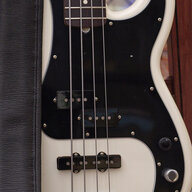
the motown bass sound is pretty crappy on its own
the magic comes from where it sits in the mix
im sure most people here have seen this but here are actual jamerson bass lines isolated from the mix
[Invalid or Expired Link Removed]
the user name and password is
username: ricksuchow
password: jamerson
Wow, major thank you for that.

Jim Carr
Dr. Jim
- Jan 21, 2006
- 16,223
- 7,613
- 76
- Disclosures
- fEARful Kool-Aid dispensing liberal academic card-carrying union member Musicians Local 72-147
...It's very much like an old school (Paul Chambers) upright sound...
I agree with everything you said EXCEPT the above...Unless I am confused (could happen
). You seem to be saying Chamber's sound decays quickly, as a muted note
might on my P-bass with a foam mute. Yet to me, Paul Chambers'
signature is his terrific sustaining and blooming tone,
especially on his E and A strings--the ultimate MWAH.
Of course, this depends on which recordings we are referencing...
I'm mostly thinking Giant Steps and Kind of Blue, though for a man
who died at age 33, Mr. PC's catalogue is huge!
BTW, those short sounding notes in PC's lines are mostly staccato
playing...deliberately short sounds...all IMHO.
Hey Jim,
First, please consider me a fellow fan of Paul Chambers. He's one of maybe half a dozen bassists of any style -- along with Jamerson, Bootsy, and a few others -- in my inner sanctum of bass heroes. What I hear with respect to sustain is that we have different standards for traditional upright vs. modern bass guitar (the newer upright players, with lower action and up-to-date electronics, sometimes go for a bass guitar-like ability to sustain).
Let me illustrate with one example from Paul Chambers and one from Jamerson. I'm with you: what could be a better choice than Kind of Blue? In the bass melody on "So What," there's the recurring end-of-phrase whole note D that, as you say, exhibits a "terrific sustaining and blooming tone." But the amplitude of that note is (to my ears) significantly lower at the end than at the beginning (and you can see it in the waveform of the digitized recording). If I play along on any of my unmuted basses, which I think are somewhat representative (a Sadowsky Modern, a '60 P, a newish P/J, and an old Steinberger) it sounds to me like my D is just about as loud at the end as at the beginning. I need to stick a mute under the strings to approximate Chambers' amplitude decay.
Similarly, in that really cool soloed Jamerson bass track from "What's Going On," there's a sustained high C# in bar 11. It's written as a dotted half in the Dr. Licks' "Standing in the Shadows of Motown" transcription, but what I hear is that it's completely gone by beat 3, and I think it's decay and not cut off. Playing along, even on my '60 Precision, that note has to be severely muted (one way or the other) to approach the drastic decay that Jamerson's getting, a lot more extreme, I will admit, than Chambers' on "So What." But as you point out, Chambers had exceptional sustain.
Even so, I still hear Jamerson's muted decay characteristics (and frequency distribution, for that matter) as being much more upright-like than anything I get on an unmuted bass guitar, or most of what I hear from other recent bass guitar players. All this while remaining in full agreement with your evaluation of Chambers' sound. Does that make sense? Thanks for bringing this up.
-Steve
First, please consider me a fellow fan of Paul Chambers. He's one of maybe half a dozen bassists of any style -- along with Jamerson, Bootsy, and a few others -- in my inner sanctum of bass heroes. What I hear with respect to sustain is that we have different standards for traditional upright vs. modern bass guitar (the newer upright players, with lower action and up-to-date electronics, sometimes go for a bass guitar-like ability to sustain).
Let me illustrate with one example from Paul Chambers and one from Jamerson. I'm with you: what could be a better choice than Kind of Blue? In the bass melody on "So What," there's the recurring end-of-phrase whole note D that, as you say, exhibits a "terrific sustaining and blooming tone." But the amplitude of that note is (to my ears) significantly lower at the end than at the beginning (and you can see it in the waveform of the digitized recording). If I play along on any of my unmuted basses, which I think are somewhat representative (a Sadowsky Modern, a '60 P, a newish P/J, and an old Steinberger) it sounds to me like my D is just about as loud at the end as at the beginning. I need to stick a mute under the strings to approximate Chambers' amplitude decay.
Similarly, in that really cool soloed Jamerson bass track from "What's Going On," there's a sustained high C# in bar 11. It's written as a dotted half in the Dr. Licks' "Standing in the Shadows of Motown" transcription, but what I hear is that it's completely gone by beat 3, and I think it's decay and not cut off. Playing along, even on my '60 Precision, that note has to be severely muted (one way or the other) to approach the drastic decay that Jamerson's getting, a lot more extreme, I will admit, than Chambers' on "So What." But as you point out, Chambers had exceptional sustain.
Even so, I still hear Jamerson's muted decay characteristics (and frequency distribution, for that matter) as being much more upright-like than anything I get on an unmuted bass guitar, or most of what I hear from other recent bass guitar players. All this while remaining in full agreement with your evaluation of Chambers' sound. Does that make sense? Thanks for bringing this up.
-Steve
One of my favorite bass works of JJ is on the Supreme's Reflections. I was just a lead singer in a highschool band back then, and never noticed that bass line until the mid-seventies when I started playing bass.
Did he play these lines with just one finger?
Did he play these lines with just one finger?

One of my favorite bass works of JJ is on the Supreme's Reflections.
Me too... one of my favorite songs. I always listened to the bass lines in Motown.. how could you not? That's one of the things that made me want to play bass.
Did he play these lines with just one finger?
The best way to get a really even tone is to use one finger. I do it all the time.. anything past 16th notes though and I have to use two.

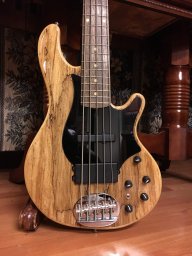
THe nuts of the sound have been covered (favor the neck PUP, a Precisiong PUP helps, flats are pretty important but not critical, the damping is important, and pay attention to the mids). The key is how your EQ sits in the mix. They built those Motown mixes around the bass. There's a TV show or radio show where Dianna Ross says the Motown sound was the sound of the bass. The kick drum isn't heavy, the guitars (gnerally at least three of them) are playing space and leaving room for the bass, the keys aren't bottom heavy, etc. Pretty much a Motown mix is the bass all by itself on the low mids, the guitars chunking on 2 and 4 along with a tambourine or finger-snaps, and those wonderful voices.
Trying to get that same sound to come across while playing with a typcial guitarist who's cranking the lows on his Super Reverb and drummer playing like Bonham while the sound is being mixed by just about anyone who's fallen prey to the dreaded "the drums sound great so the mix is done" thought process and you'll sound like crap.
But the key is not at all about equipment. If you play the lines with conviction and authority you can do it on Rick and it'll sound OK. No, won't sound like Jamerson does on the Motown recordings, but it'll sound OK.
jte
Trying to get that same sound to come across while playing with a typcial guitarist who's cranking the lows on his Super Reverb and drummer playing like Bonham while the sound is being mixed by just about anyone who's fallen prey to the dreaded "the drums sound great so the mix is done" thought process and you'll sound like crap.
But the key is not at all about equipment. If you play the lines with conviction and authority you can do it on Rick and it'll sound OK. No, won't sound like Jamerson does on the Motown recordings, but it'll sound OK.
jte
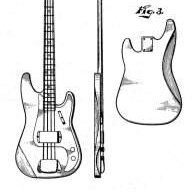
I get my Jamerson sound from my '73 P bass. That thing's got the mojo no matter what else I do to it. Sure I add foam mutes under the ashtray & sure I play it through a 1963 Ampeg B15, but that's all icing. The bass itself - even unplugged - just has *it*.
If you want the motown sound, try every bass you can until you find one that's got the mojo.
Sparing that, emphasize the neck pup, put foam mutes under the strings down by the bridge, experiment with EQ or tubes or whatever you think you need, and learn to GROOVE like you've never GROOVED before.
If you want the motown sound, try every bass you can until you find one that's got the mojo.
Sparing that, emphasize the neck pup, put foam mutes under the strings down by the bridge, experiment with EQ or tubes or whatever you think you need, and learn to GROOVE like you've never GROOVED before.
I get my Jamerson sound from my '73 P bass. That thing's got the mojo no matter what else I do to it. Sure I add foam mutes under the ashtray & sure I play it through a 1963 Ampeg B15, but that's all icing. The bass itself - even unplugged - just has *it*.
Yeah, he was recorded direct, so you aren't hearing whatever amp he was monitoring from. Just the bass and his fingers, and it sounds like some compression.
What's Goin' On (solo bass)
Yeah, he was recorded direct, so you aren't hearing whatever amp he was monitoring from. Just the bass and his fingers, and it sounds like some compression.
What's Goin' On (solo bass)
Yeah, Jamerson's signal chain has been well documented. My point is what people are chasing is in the wood, not in the electronics. It's too bad the wood is the most difficult bit to quantify or duplicate. It's also about how he sat in the mix and where everyone else sat in relation to him - the guitars gave him plenty of room - good luck finding that nowadays. The same with Stax. Steve Cropper gave Duck Dunn tons of space.


