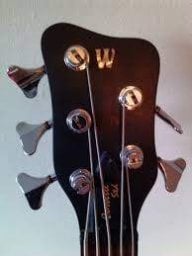
He's done that plenty!Next you'll have to build some Wal multi-coil pickups
 No pics left in this ol thread tho... My WALish bass
TalkBass has been independent since 1998. Add your voice.
Create a free account to reply to discussions, view embedded media, and browse with fewer display ads.
Join free Log in
Want zero display ads or expanded classifieds tools? Compare plans.
He's done that plenty!Next you'll have to build some Wal multi-coil pickups
No pics left in this ol thread tho... My WALish bass

There is a lot of variation when turning the knobs. I tried to record usable sounds.

There is a lot of variation when turning the knobs. I tried to record usable sounds.
That's a very funny statement that applies to many basses! People go to a lot of work to make basses very adjustable......and then find that most of that tonal range isn't really useful anywhere.

That's a very funny statement that applies to many basses! People go to a lot of work to make basses very adjustable......and then find that most of that tonal range isn't really useful anywhere.
Yes, but did you know which two those would be when you wired it up? If not, it probably wasn't a wasted effort.Of the 40 combinations (plus another infinite layer with the distiller filter), only two ever get used when playing in a band setting. All those switches and knobs for nothing!
Yep. For me all those muddy and dark unclear sounds are no-no. But when you combine dark sound of one pickup to brighter sound of another pickup there's lots of different good sounds. I think that's where filter preamps really shine!That's a very funny statement that applies to many basses! People go to a lot of work to make basses very adjustable......and then find that most of that tonal range isn't really useful anywhere.
I bought a set of Alembic Jazz bass pickups with Q filter preamp years ago because…. Alembic, right? Must be good. The range of useable tones is just as narrow as any other bass.
Although, based on the marketing hyperbole on the website, each bass is carefully "tuned" to user preference by a specific tonewood "recipe". They might as well be describing wine tasting: "notes of coriander with a fruity finish". Mostly Hogwash IMO, but they do make a gorgeous bass. I'm interminably building my own "Balance K" Fauxlembic, but went with conventional passive electronics.Alembic have an interesting ideology. Essentially showcase the best of expensive or unusual woods, but design instruments that take any perceived tonal input of the wood out the equation. Instead, build the tone of the instrument around low impedance pickups and a preamp/filter design that wouldn't be out of place in a modular synth.
I always think Alembics don't sound like they ought to, given their appearance. Clinically detailed and ultra-linear tone, but you can't dial in a solid P Bass or Rickenbacker tone just by juggling filter cutoff frequencies and filter types.
I do when that banana is $30k...I think Alembic takes cork sniffing- luthiery to the level of their own. For sure their instruments are well made from great materials but still... $30 000 for a bass? Come on!
I don't know why you should get a P-bass/Rick/J-bass/whatever sound out of a bass that's not P-bass/Rick/J-bass/whatever. If you want P-bass sound, buy a P-bass, don't buy something else. You don't buy an apple when you want a banana right? I think there are more good bass sounds than just those few classics.
Nah, it was 30K pounds of bananas, not a $30K banana. In Scranton, PA. Which is...hilly.I do when that banana is $30k...

My theory is guitarists had to have it because Brian May had it, and bassists had to have it because guitarists had it.I've never understood the basses that came out of the late '70s into the '80s with a phase reversal switch for one pickup (usually where cream Dimarzios are involved). You get a thin, oddly peaked tone with no bottom end. I've never heard it used on a record.