• TalkBass has been independent since 1998. Add your voice.
    Create a free account to reply to discussions, view embedded media, and browse with fewer display ads.
    Join freeLog in
    Want zero display ads or expanded classifieds tools? Compare plans.

My Dirt Bender - Another Jounal

There is a little bit of movement in the second hand market. It seems spring does not only revive the plants outside.
With some pedals heading out and liquid funds becoming available, I sit down to draft another short list.

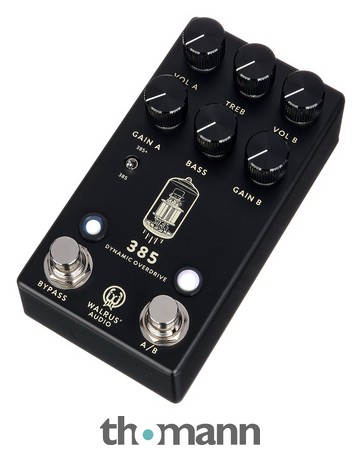
-Walrus 385. Does it have to be the Mark II unit?
-Greer Lightspeed
-Zvex Super Duper 2in1 or Channel 2
 
  • Like
Reactions: Zbysek
WhatsApp Image 2026-04-15 at 13.55.18.jpeg
 
This has been nagging me for a while, and finally one of those Nobels ODR-B pedals that is priced like an effect pedal from the nineties instead of being priced like a collector's holy grail item fell in my lap.

This is the bass version of the Nobels ODR-1. Shortly after the ODR-1 came out, the ODR-S and ODR-B were released. Both are featuring a three band EQ instead of a Spectrum knob, the ODR-S being geared towards guitar and the ODR-B for bass.


Nerdy stuff first.
Here's what I pieced together regarding the EQ:

1. The position of the Drive knob does not influence EQ.
2. Deep is boost only
3. Mids and Treble are boost and cut
4. There's a baked in tone.


The Deep knob (all knobs noon except for Deep):
combined_ODRB_bass_min_ODRB_bass_noon_ODRB_bass_max.png
The Nobels manual warns that the Deep knob might damage speakers. Obviously, there's no high pass filter of any kind, but the difference between min and max is around 11dB at 20Hz. Note how the graphs meet again at around 450 Hz.

The Hi knob (Deep at min, rest at noon, except for Hi):
combined_ODRB_treble_min_ODRB_treble_noon_ODRB_treble_max.png

The treble knob is capable of boosting and cutting, but note how the noon position seems to be still a bit below flat. No matter what you do to the treble knob, there will be a drop starting around 4k. Note how you can already see the graphs separating at 200Hz.

That leaves the mids:
combined_ODRB_mids_min_ODRB_mids_noon_ODRB_mids_max.png
The Mids seem to go from 20Hz to around 3kHz, with a solid bulge in the 200-600Hz area.

So strictly speaking, the Bass knob influences from 0-450Hz, the Mid knob goes from 20Hz-3kHz and the Treble goes from 250Hz-20kHz.
There is some SERIOUS overlap between these controls.

The flattest setting I could find is with Deep min, Mid 9 o'clock and Hi 2 o'clock:
combined_ODRB_all_noon_ODRB_Flat.png

Here you see it compared to all knobs noon.


In this setting, I ran the Drive knob from zero to full. Note: The pedal passes signal with Drive at zero, but there is a jump in volume just after the fully CCW position.
combined_ODRB_Drive_min_ODRB_Drive_9_ODRB_Drive_noon_ODRB_Drive_3_ODRB_Drive_max.png
From 9 o'clock to maximum, there's no difference in output volume, which makes balancing your tone a bit easier. You can see there is a little more bass going on the higher you go, but that's it.
 
Okay, apart from the graphs, I did want to find out how the EQ works and where it is placed in the signal chain, which is not as easily answered as one might think.

Here is my current working thesis:
There is a clean blend hidden in the circuit. The Deep and Mid knobs work with that clean blend and the Hi knob sits either on the wet side post drive or post everything.

Why is that? Well, starting from the flattest setting I could measure, I played a bit and set the drive for a bit of grit but mostly clean signal. Now I started playing around with the EQ, and the first thing I did was raise both Deep and Mids a bit - and when I did that, the signal lost grit.
I double checked, and setting more grind, repeated the process. Set the EQ to minimum and dial in a dirty tone, then max out the EQ and the dirt is gone.
Weird, but interesting!
 
That is weird. Between that behavior with the EQ, and how you mentioned that aside the from 9 o'clock to max on the gain, this pedal might take a different approach to dial in the sound.

Normally, I'd do what you're doing: set the gain for grit/crunch, then EQ, and fine tune grit and set output volume.

This might be better off setting the EQ/output volume, then dialing in your gain, and then fine-tuning.
 
Words on the Nobels ODR-B.

Outward appearance, looks and haptics:
It's hard to complain about build quality when reviewing a pedal that is at least 23 years old, has been around the block a couple of times and still works reliably. I did make it clear that I'm no friend of the Boss pedal shape and their foot switches, and the Nobels clearly took a lot of inspiration from the Boss design. The switch is equally bad - a spring loaded lid with some kind of micro switch hidden beneath. One point of credit in my book is that they decided on top jacks, though. The pedal does not feel high quality. Some of the knobs turn a bit too freely, the others are a bit stiffer, but feel gritty - I guess that decades of life invited the odd speck of dust inside from time to time and the accumulation led to increased friction.
The snob in me argues that it does not look or feel boutique. The sane person counters that it was never meant to and that it held up well so far.

Sound:
In a nutshell / TLDR:
This is the pedal that Boss should have made when they did the ODB-3.

Long version:
It's a dirt pedal and it's made for bass. Very well. Looking at the EQ, it is terribly efficient. The Deep knob is a boost-only bass control and man, it boosts bass. I'm a fan of boosting bass and I will overdo it if given the chance - but even I won't turn that thing past noon. The mids control has a well chosen frequency range to bring the bass forward in a mix. The baked in sound of the pedal is already a bit mid-forward, so with the knob at noon, you already have a good position, turn it up to step forward even more or turn it down a little for a flat response. Scooped sound is not really its thing - but scooped mids are for bedroom players. The treble control is controlling the treble - even though the pedal has a steep drop at 4k, you will get a brighter sound out of it. That treble rolloff means you can use it with modern bass amps that have tweeters or going direct without strictly needing a cab sim in place.
With that said, it's an easy thing to make that pedal sound terrible. Run the bass too high and you'll release a mudslide of epic proportions onto whomever happens to be in the sonic range of your suffering speakers. The treble is the same. When I compare it to the Origin DCX, it's like the sound you get is perfectly aligned with the haptics and looks. The DCX is made of a steel so fine, I bet you could forge a decent knife blade out of it. Turn up the treble and you get that polished steel quality in your tone. The ODR-B is probably made from die cast aluminum, and lots of plastic. And the treble has that ring to it that you associate with die cast aluminum and bits of plastic. Even if the quality of both aluminum and plastic is high, it's not stainless steel.
Playing the ODR-B, that's like Bam Magera skateboarding in 2026. Have you seen him lately? This whole pro skater business along with the Jackass series and movies and the CKY stuff meant that bodily abuse was his day job and he does not look like he spent his time off leading a healthy life either. He looks like he lived an unhealthy life to the max and for some reason survived up until now. He's stiff and looks like many movements cause pain (which they probably do). When he's skating, there's no elegance or grace in his style. It's pure efficiency. This slightly elder, slightly overweight man gets on a board and attacks the obstacles. You can see that he can't match the fire and fervor of the guys that are half his age. He's not going for the demanding tricks or takes the risks he did in his youth, but he's still on a board, still skating on a level that is astounding. He's got muscle memory and experience, so he knows what muscles are needed, and he needs less tension in his body, can ride with a higher center of gravity than a less experienced skater.
The ODR-B is also a little bit stiff in the middle, and also a bit chubby, but it also knows where to center its gravity and how much weight to put exactly where to get the job done. I feel like when you try to make it give your sound a shiny polish, it kinda lacks panache.
Here's the closest I got when going for something like a subtle grit to make it sound a bit richer:


I think it works much better when you go less subtle and dial in a tone that sounds like you mean it. I think it paired nicely with a P bass played with pick:
 
Words on the Nobels ODR-B.

Outward appearance, looks and haptics:
It's hard to complain about build quality when reviewing a pedal that is at least 23 years old, has been around the block a couple of times and still works reliably. I did make it clear that I'm no friend of the Boss pedal shape and their foot switches, and the Nobels clearly took a lot of inspiration from the Boss design. The switch is equally bad - a spring loaded lid with some kind of micro switch hidden beneath. One point of credit in my book is that they decided on top jacks, though. The pedal does not feel high quality. Some of the knobs turn a bit too freely, the others are a bit stiffer, but feel gritty - I guess that decades of life invited the odd speck of dust inside from time to time and the accumulation led to increased friction.
The snob in me argues that it does not look or feel boutique. The sane person counters that it was never meant to and that it held up well so far.

Sound:
In a nutshell / TLDR:
This is the pedal that Boss should have made when they did the ODB-3.

Long version:
It's a dirt pedal and it's made for bass. Very well. Looking at the EQ, it is terribly efficient. The Deep knob is a boost-only bass control and man, it boosts bass. I'm a fan of boosting bass and I will overdo it if given the chance - but even I won't turn that thing past noon. The mids control has a well chosen frequency range to bring the bass forward in a mix. The baked in sound of the pedal is already a bit mid-forward, so with the knob at noon, you already have a good position, turn it up to step forward even more or turn it down a little for a flat response. Scooped sound is not really its thing - but scooped mids are for bedroom players. The treble control is controlling the treble - even though the pedal has a steep drop at 4k, you will get a brighter sound out of it. That treble rolloff means you can use it with modern bass amps that have tweeters or going direct without strictly needing a cab sim in place.
With that said, it's an easy thing to make that pedal sound terrible. Run the bass too high and you'll release a mudslide of epic proportions onto whomever happens to be in the sonic range of your suffering speakers. The treble is the same. When I compare it to the Origin DCX, it's like the sound you get is perfectly aligned with the haptics and looks. The DCX is made of a steel so fine, I bet you could forge a decent knife blade out of it. Turn up the treble and you get that polished steel quality in your tone. The ODR-B is probably made from die cast aluminum, and lots of plastic. And the treble has that ring to it that you associate with die cast aluminum and bits of plastic. Even if the quality of both aluminum and plastic is high, it's not stainless steel.
Playing the ODR-B, that's like Bam Magera skateboarding in 2026. Have you seen him lately? This whole pro skater business along with the Jackass series and movies and the CKY stuff meant that bodily abuse was his day job and he does not look like he spent his time off leading a healthy life either. He looks like he lived an unhealthy life to the max and for some reason survived up until now. He's stiff and looks like many movements cause pain (which they probably do). When he's skating, there's no elegance or grace in his style. It's pure efficiency. This slightly elder, slightly overweight man gets on a board and attacks the obstacles. You can see that he can't match the fire and fervor of the guys that are half his age. He's not going for the demanding tricks or takes the risks he did in his youth, but he's still on a board, still skating on a level that is astounding. He's got muscle memory and experience, so he knows what muscles are needed, and he needs less tension in his body, can ride with a higher center of gravity than a less experienced skater.
The ODR-B is also a little bit stiff in the middle, and also a bit chubby, but it also knows where to center its gravity and how much weight to put exactly where to get the job done. I feel like when you try to make it give your sound a shiny polish, it kinda lacks panache.
Here's the closest I got when going for something like a subtle grit to make it sound a bit richer:
View attachment 7477180

I think it works much better when you go less subtle and dial in a tone that sounds like you mean it. I think it paired nicely with a P bass played with pick:
View attachment 7477181
Thanks once again for the very literary account 🙂. The description makes me think I’d like it more than I do, though. My dirt preferences are towards the completely broken but able to be implemented subtly, which is the sort of thing that your aging skateboarder analogy brings to my mind, at least. However, the Nobels sounds to my ear like a nice but fairly pedestrian overdrive, as if Magera had quit skateboarding when he was 27, got a junior executive job with a mid-tier tyre manufacturer, where he met his about-to-relapse recovering alcoholic wife in the typing pool, and is trying to suppress his suicidal ideation by getting a scooter.

But hey, our ears are all a little different, right?
 
  • Like
Reactions: OnlyFlats