View attachment 5322461
Pedal: DCX BASS
MODE: EQ
VOICE: FLAT
DRIVE: Minimum
LEVEL: Maximum
YELLOW: HF & LF fully clockwise, boosting at maximum.
GREEN: HF & LF at 12 o'clock, set for a flat frequency response. Within +/-0.5dB from around 30Hz-10kHz, the 3dB point is out of the range of hearing.
RED: HF & LF fully counter clockwise, cutting at maximum.
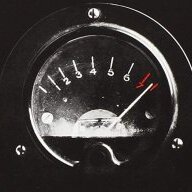
NOTE: The metering on the left hand side is the metering of the input signal level on our test hardware, hence it only displaying -X numbers. If you want to work out how much boost/cut is happening at any point, treat the GREEN line as your 0dB reference. Anything higher than that is boosting, anything lower is cutting, the meter goes in increments of 1dB.
-----------
So yes, the Q on all of this is really nice and wide. When designing the pedal, we spent a pretty good chunk of time carefully tuning the EQ points and the EQ interactions across each pedal (Boost & Bass). All with aims of keeping them feeling really musicial rather than anything approaching surgical. In the low-end the difference isn't really worth talking about, in the high-end the difference between the units is a more appreciable. That said, both Boost & Bass offer these really wide bands, so neither is likely to sound
'incorrect' on the opposing instrument. Designing the EQs in a way that we helps keeps them usable across their full sweep was quite an important design criteria for us (obviously, depending on use case).
As someones correctly pointed out, the frequency peaks of this, especially on the low end, sit lower than you might find on a typical pedal-style EQ. In the low-end especially this gives the low band a gentle low-shelving quality as the peak so low. You're only losing about 1.5dB between 39-20Hz, which on a bass guitar is unlikely to be appreciable.
As well as the differing frequency response between the Boost & Bass, there are some minor tweaks to the gain structure of each pedal that we thought necessary to further tune each unit for their respective audiences. We generally recommend people purchase the one that matches the instrument they intend to primarily use it on. We fully expect there to be a degree of interchangeability between the two.
Given what could be seen as minor differences, if you're wondering why we made the 2 models... A lot of us are studio nerds who've worked/work in recording studios, or at pro-audio companies like Focusrite & Solid State Logic. So when we were playing around with prototypes there was a degree of "Wow this sounds great on bass & guitar... It'd probably sit better on guitar if we did X/Y/Z minor tweaks... hmm bass might benefit from a slight alteration in A/B/C". At which point two slightly different models were born, in part to offer people a more optimised product, in part to satisfy our own ears.
Hope this helps,
Jacob