
200W RMS 12" speaker combo amp weighing 15 lbs. with optional battery power.

Enjoy the benefits of a premium membership!
Upgrade Account
-
TalkBass has been independent since 1998. Add your voice.
Create a free account to reply to discussions, view embedded media, and browse with fewer display ads.
Join free Log in
Want zero display ads or expanded classifieds tools? Compare plans.
You are using an out of date browser. It may not display this or other websites correctly.
You should upgrade or use an alternative browser.
You should upgrade or use an alternative browser.
Ok, so what bass evolution do you actually want?
- Thread starter krfoss
- Start date
More options
Who Replied?
I'm happy with the state of gear in the world.
I could do without the repetitive useless threads that lead to counter threads and more counter threads.
I could do without the repetitive useless threads that lead to counter threads and more counter threads.


The one thing that I kind of wish would have worked better/been developed more aw the Line 6 Variax. I think they had a good start, but then just dumped it because I'm sure there just isn't a big enough market of bass players to make it worth while. Hence all their guitar stuff.
But really, a modeling bass (especially with how far that area has come) would be awesome - especially for us "cover band" types. I even liked/agreed with most of the models they had originally. I think having the tech available to be installed in whatever body you chose would help. I get that they probably needed to do a "generic" shape to avoid issues and try to have a mass appeal, but it didn't really work. I wish I could find the video of where a guy took the guts and put it in a Ken Smith or some "nice" bass. That would help a lot I think.
If the "guts" din't have to be in the bass maybe? If the piezo pickups were under the bridge, and the knobs were obviously on the bass, the rest could be in a pedal or rack unit?. You'd probably have to be wired but that's a sacrifice I'd make. I'm wired anyway.
Or not.
The Variax was an interesting concept. I had a friend who had the guitar version & it did some great stuff. He still playes Line 6, but the variax was replaced by his other more "normal" electric guitars. I almost bought a Variax bass when I played a line 6, but didn't want to take a step down in bass quality to get that option. I use a Fractal FM3 for my modeling. Fantastic product! However, I do not want to be limited to having it in one bass & how much would it have to be "dumbed down" to fit in a control cavity. No thanks. I think there will always be small improvements in basses, but the real technological improvements will be amps & modeling.

- Jun 6, 2012
- 4,837
- 6,859
- Disclosures
- I don't wait 30 minutes after eating, to go swimming.
- Jun 6, 2012
- 4,837
- 6,859
- Disclosures
- I don't wait 30 minutes after eating, to go swimming.
And Black Velvet.For the Sussudio bassline to have played on a bass.
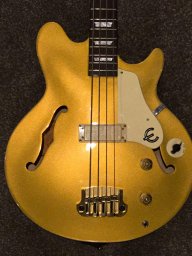
Everyone claims they want innovation, yet they’d all kill for a vintage P bass.
Now for those of us who wear our basses low. Maybe a manufacturer would incorporate a backbeat into the back of a bass body.......
Not mutually exclusive:
Something super freaking light that still looks great and is balanced.
Built in compressor or modeling/effects modules. Maybe with a charging stand.
Something super freaking light that still looks great and is balanced.
Built in compressor or modeling/effects modules. Maybe with a charging stand.
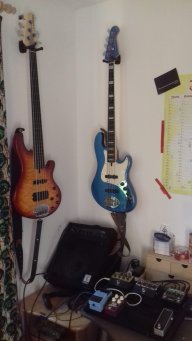
I want to know that the bass I´m buying has been made from properly sourced lumber and that the worker who built the thing has gone home with at least a living wage. And I want that to be true of every flipping instrument in the shop. I don´t want to feel squeamish going into a music shop.
Someone made a good point about the roasted necks, too: I feel that´s a genuine next step. Yamaha coming up with processes to speed-age the wood seems to be a thing, too.
Peace,
SoundSupport
Someone made a good point about the roasted necks, too: I feel that´s a genuine next step. Yamaha coming up with processes to speed-age the wood seems to be a thing, too.
Peace,
SoundSupport

I'm old school, playing mostly a DB whose design hasn't changed significantly since the 19th century. Fundamentally there's not a lot of room for improvement without making it a different instrument.
I think you could say the same for bass guitar: Leo pretty much covered the basics. You can make it lighter, and you can do all kinds of things with electronics, both onboard and downstream. You can make minor improvements to the tuning machines and bridge and truss rod, and you can make the bodies and necks out of exotic wood and/or composites. But outside of these little tweaks that don't fundamentally change the design, where is there even space for innovation?
The biggest bass guitar innovations in my playing career have been in manufacturing. Offshore CNC factories mean you can now get a consistently good instrument (built with essentially mid-century designs) for a ridiculously low price.
I'm not mad at Fender for not innovating. Their best work is in continuing to crank out Leo's original designs with minor hardware improvements.
I think you could say the same for bass guitar: Leo pretty much covered the basics. You can make it lighter, and you can do all kinds of things with electronics, both onboard and downstream. You can make minor improvements to the tuning machines and bridge and truss rod, and you can make the bodies and necks out of exotic wood and/or composites. But outside of these little tweaks that don't fundamentally change the design, where is there even space for innovation?
The biggest bass guitar innovations in my playing career have been in manufacturing. Offshore CNC factories mean you can now get a consistently good instrument (built with essentially mid-century designs) for a ridiculously low price.
I'm not mad at Fender for not innovating. Their best work is in continuing to crank out Leo's original designs with minor hardware improvements.

This seems to reinforce the notion that people, if given the chance, really just want a vintage instrument.Someone made a good point about the roasted necks, too: I feel that´s a genuine next step. Yamaha coming up with processes to speed-age the wood seems to be a thing, too.
The asymmetrical necks and graphite neck rods are innovations that people don't make much of a fuss about. Seems like something's working.
I would love an instrument that has the ability to switch between a vintage and modern tone. Think of it as a vintage p-bass and a Ken Smith at the flick of a switch.
Also, my fantasy pedal: two channel, full eq with semi-parametric on lows and mids, tube on both channels that you fade in how much tube warmth vs modern clean tone on each channel, with a tube overdrive (and perhaps compressor) all in one. Throw a tuner/ mute on there like the EBS Microbass III and you can take my money. I know its not a bass, but its something.

We can have as much development as we want, as long as we pay for it.


I’ve greatly appreciated the innovation in amps and effects. I don’t really care about innovation in basses. I’m not even sure what it means beyond adjusting the parameters of classic designs.


Ok, so what bass evolution do you actually want?
Personally either 1. nothing in particular, or 2. surprise me. The limit of what I am able to play is within me, not my basses, among which are some exceedingly fine ones. Thus the evolution I want is of myself, not the state of the bass guitar, since the limit of what can be played on my basses is already far beyond my ability.
But if the question were "what evolution does the bass guitar want?", then:
Broadly there are two types of bass guitar evolution, gradual and paradigm shift.
Gradual evolution is the norm. Generally it embodies the incorporation of new best practices, in such as the availability and use of materials, parts design, construction techniques, and geometry. However, as with most things, the greatest excellence within that domain is rare.
Paradigm shifts are rarest of all. But like all evolutionary activity, they are not necessarily improvements. Some notable examples after the pivotal Fender Precision Bass (arguably the first mature expression of the electric bass guitar) are Rickenbacker (neck through), Gittler (bodiless, headless), Steinberger L Series (monocoque, headless), Fodera Anthony Jackson Presentation (extended single cutaway, chambered, contrabass guitar), and Dingwall (multi-scale, à la Novak).
Gradual evolution is where most of the job gets done, if only due to the widespread availability of the instruments that result.
Paradigm shifts may offer either a new way to get the job done and/or an altered definition of what the job is. An extreme example of the latter is the Champan Stick. Neither fish nor fowl, it altered the realm of the bass guitar-like instrument in both concept and practice.

Nothing. Violins haven't changed in centuries. Get a decent instrument and start playing.
People keep saying this as if violins didn’t change over the course of music history.

I’d like a real bass that also has a synth integrated in it. the fretboard would trigger the synth notes by string contact and the strings are the modulation. You could blend regular bass tones with synth tones or go 100% either way.
Besides that I am happy with traditional bass offerings now. I think there are a million great options out there already.If I had to be picky, I’d like even more creativity with the colors just because, why not?
Besides that I am happy with traditional bass offerings now. I think there are a million great options out there already.If I had to be picky, I’d like even more creativity with the colors just because, why not?

Lots of things are fun to play around with and I’m always checking out new things, but when it really comes down to it, a P bass into a tube amp is still everything I need and want. I currently rock an Ashdown lb-30 and a Mesa subway cab, so I guess that’s an evolution of a b-15 or whatever.


