
Enjoy the benefits of a premium membership!
Upgrade Account
-
TalkBass has been independent since 1998. Add your voice.
Create a free account to reply to discussions, view embedded media, and browse with fewer display ads.
Join free Log in
Want zero display ads or expanded classifieds tools? Compare plans.
You are using an out of date browser. It may not display this or other websites correctly.
You should upgrade or use an alternative browser.
You should upgrade or use an alternative browser.
More options
Who Replied?


For the win!I prefer a 16+1 headstock.
Seriously though, is this possibly a touch style instrument like a Warr?
Also, both Modulus and Warrior have made 18 string basses.
But, they were triple coursed 6's.

Tune it chromatically (B,C, C#, D, D#...) and forget the frets?
If it floods in Houston again you can float it on its back and rescue little old ladies!
If it floods in Houston again you can float it on its back and rescue little old ladies!


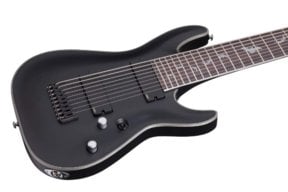
I actually like it. It reminds me of that fellow Scott Fernandez and his bass/harp things.
I am a fan of all things bass, from 1 to 100 strings.
I am a fan of all things bass, from 1 to 100 strings.


- Aug 21, 2003
- 11,601
- 18,632
- Disclosures
- A-Designs Mike Lull GK Tsunami Cables GHS Strings RMI Basswitch Nordstrand Pickups Darkglass
This times a 100. (It figures this came from You A).

I will fully admit, that I'm sure this instrument would not work for me. Earlier in my career as a player I experimented with extended range 7 sting basses. It left me with conclusions about myself and what type of player I am.
However other players like Stew Mckinsey and Scott Fernandez (who are both friends of mine) make them work and work well IMHO.
Are we opened minded musicians or the insecure jumping in with a schoolyard mob mentality on the kid get picked on?

Its easy to make fun of something behind a keyboard while drinking your coffee thinking your cool as
 . Its another to show a bit of Aloha and hope somebody can make something work that you cannot.

Oh, yeah, there is a strap button...can see it on the upper horn.There doesn't appear to be a strap button so.....


So, if it's tuned in fourths, you have 5 unique notes per string before going to the next higher string, giving...85 notes. You can play every note that a piano has (except 3) in first position. if you add in the notes higher on the neck, it has more notes available than a piano. Actually, you could have done that with 15 strings and a 2 octave neck. With 14 strings, a two octave neck, and a half step bend on the top note, you could do it with 14. So, even mathematically, it's overkill.

For equal tension, a set of strings tuned in fourths will have a diameter ratio from one string to the next of 1.33 (I'm a physicist, we think of things this way).
Starting with a .007 as the highest (1st) string, if you calculate the diameters of all the strings for equal tension, you get, for the 17th string, a required diameter of .671 inches. Actually, the situation is a bit worse than this - when you go from plain to wound strings, the air in between the windings (which is essentially massless) means you have to step up the outside diameter a bit more to make up for that. So, we're talking more in the range of .738 - roughly 3/4th of an inch in diameter to keep the lowest string from being floppy. As the 16th string is a .554, that means there will be .104" between strings at the bridge, assuming a nominal .750 string spacing center to center. You won't really be able to get your finger in there to pull on the string, you'll have to tap it from the front to get it moving. If you add an 18th string, the strings won't have any space between them - they'll overlap each other, unless you increase the spacing at the bridge. Maybe that's why only 17?
Starting with a .007 as the highest (1st) string, if you calculate the diameters of all the strings for equal tension, you get, for the 17th string, a required diameter of .671 inches. Actually, the situation is a bit worse than this - when you go from plain to wound strings, the air in between the windings (which is essentially massless) means you have to step up the outside diameter a bit more to make up for that. So, we're talking more in the range of .738 - roughly 3/4th of an inch in diameter to keep the lowest string from being floppy. As the 16th string is a .554, that means there will be .104" between strings at the bridge, assuming a nominal .750 string spacing center to center. You won't really be able to get your finger in there to pull on the string, you'll have to tap it from the front to get it moving. If you add an 18th string, the strings won't have any space between them - they'll overlap each other, unless you increase the spacing at the bridge. Maybe that's why only 17?



For equal tension, a set of strings tuned in fourths will have a diameter ratio from one string to the next of 1.33 (I'm a physicist, we think of things this way).
These instruments never have anything remotely approaching equal tension IME.

Can you work out the equal tension calculations for a multiscale 17 string bass? One that is 32" - 36".For equal tension, a set of strings tuned in fourths will have a diameter ratio from one string to the next of 1.33 (I'm a physicist, we think of things this way).
Starting with a .007 as the highest (1st) string, if you calculate the diameters of all the strings for equal tension, you get, for the 17th string, a required diameter of .671 inches. Actually, the situation is a bit worse than this - when you go from plain to wound strings, the air in between the windings (which is essentially massless) means you have to step up the outside diameter a bit more to make up for that. So, we're talking more in the range of .738 - roughly 3/4th of an inch in diameter to keep the lowest string from being floppy. As the 16th string is a .554, that means there will be .104" between strings at the bridge, assuming a nominal .750 string spacing center to center. You won't really be able to get your finger in there to pull on the string, you'll have to tap it from the front to get it moving. If you add an 18th string, the strings won't have any space between them - they'll overlap each other, unless you increase the spacing at the bridge. Maybe that's why only 17?

You get more notes, too! (Microtonal ones, anywayGiven my coments above, the one way I can see him justifying this thing is..if it's fretless.
No, I don't have a logical thought pattern behind this. I'd just like to see if mwah can be had over that many octaves.
 ).
).


