
Ignorant non-Fender-guy question: If you get a Squier body that is composed of the same woods as a Fender, how much actual material difference is there between the two? Alder Squier VS Alder Fender?

TalkBass has been independent since 1998. Add your voice.
Create a free account to reply to discussions, view embedded media, and browse with fewer display ads.
Join free Log in
Want zero display ads or expanded classifieds tools? Compare plans.

The responses you receive will be interesting to say the least.Ignorant non-Fender-guy question: If you get a Squier body that is composed of the same woods as a Fender, how much actual material difference is there between the two? Alder Squier VS Alder Fender?
What I've heard is that it has to do with specific wood choice. Like the nicer wood blanks would go to a Fender and the lower quality ones would go to a Squier. Idk, I could be wrong but if I am then yeah, theres little difference.Ignorant non-Fender-guy question: If you get a Squier body that is composed of the same woods as a Fender, how much actual material difference is there between the two? Alder Squier VS Alder Fender?
What I've heard is that it has to do with specific wood choice. Like the nicer wood blanks would go to a Fender and the lower quality ones would go to a Squier. Idk, I could be wrong but if I am then yeah, theres little difference.
Im not a big believer in tone wood either but I think most people would say that it has to do with the density of that particular piece of wood. Maybe the tree was dehydrated or it was from a particularly small tree, something like that.I could see that, so far as "nicer wood" would be in regard to grain/matching/other aesthetic concerns. Is there really that much tonal difference between two pieces of alder? Full disclosure: Given that I'm in the camp of "body wood makes very little if any difference in tone", I'd be inclined to say that if a body is 99.9999% the same dimensionally, and is composed of the same wood species, it may "still be a Squier", but what difference is that in reality? If I took a Fender body and put a Squier neck on it, would someone be able to tell me immediately that this was some kind of Folger's-style "we secretly switched his Squier body for a Fender, let's see if he notices" blind test?

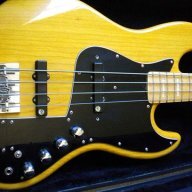

uh oh... this could be considered Spam!Have you considered a Sire?
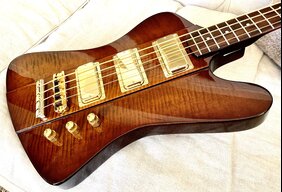
That's interesting and might be true but I very highly doubt it.What I've heard is that it has to do with specific wood choice. Like the nicer wood blanks would go to a Fender and the lower quality ones would go to a Squier. Idk, I could be wrong but if I am then yeah, theres little difference.

Have you considered a Sire?
I suspect each shop has specifications approved by the parent company for purchasing wood blanks for their shop. The specifications for Squier might or might not be as rigid as Fender or might even be different than Fender AFAIK but I'd bet there's no truth to the global sorting house process. Then again I could be wrong.
That's interesting and might be true but I very highly doubt it.
What that implies is that all wood blanks are sourced by a single shop, graded for quality, sorted into Fender and Squier piles then shipped to USA, Mexico, China and Indonesia for shaping and finishing. That would be a very labor intensive, timely and costly process. I suspect each shop has specifications approved by the parent company for purchasing wood blanks for their shop. The specifications for Squier might or might not be as rigid as Fender or might even be different than Fender AFAIK but I'd bet there's no truth to the global sorting house process. Then again I could be wrong.
My guess is that the Squiers are made from locally sourced woods and are probably different varieties of a species or a completely different species altogether. For example, the "maple" used for the body of this VM Precision is an asian variety that has few characteristics in common with american maple. Still, it's harder than agathis or basswood, and it's a pretty nice bass anyway.
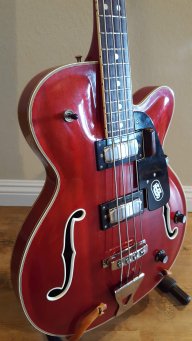
Yeah, but what species of wood is the handle made from, where was it sourced, is it the exact same spec as the original, does it have a Sams Club sticker on it or is it the cheaper Walmart import crap? These things all matter to some people.These mod discussions remind me of this joke from comedian Stephen Wright. He holds up a hatchet and says, "This is the hatchet that young George Washington used to chop down his father's cherry tree. The head has been replaced, and then the handle was replaced. But it's the same hatchet.... intrinsically."


What I've heard is that it has to do with specific wood choice. Like the nicer wood blanks would go to a Fender and the lower quality ones would go to a Squier. Idk, I could be wrong but if I am then yeah, theres little difference.

Ignorant non-Fender-guy question: If you get a Squier body that is composed of the same woods as a Fender, how much actual material difference is there between the two? Alder Squier VS Alder Fender?


