• TalkBass has been independent since 1998. Add your voice.
    Create a free account to reply to discussions, view embedded media, and browse with fewer display ads.
    Join freeLog in
    Want zero display ads or expanded classifieds tools? Compare plans.

One Bass to do it all?

I have many basses and play in many styles. I really only play one bass. I have found this one capable of capturing whatever sound I need or can get from any and all of my other basses...except the fretless.
upload_2019-9-6_11-5-50.png

But that's just me.
 
Great question and responses. I use EBMM Sterling as my one bass. It’s limitations are obvious with 4 strings, ceramic pups and aggressive growls. The preamp and right hand technique make a variety of tones possible.

I don’t like toting gear around, even a double gig bag is extra weight that requires some serious justification to carry. When I do bring a second it’s usually a fretless.

Wish I had more love for my Pedulla 6. I keep it as a wish, I think?
 
For me, a bass that will "do it all" would mean a bass that has a pair of dual-coil 4-conductor wire pickups in a suitable placement.

In other words, dual-coil pickups where I can coil-tap between series, parallel, and single-coil mode. But, the soapbars would have to be in a 60's jazz bass placement so that I can get a burpy tone while in series, a modern tone while in parallel, and a jazz-bass tone while in single-coil mode. Otherwise, if both pickups are closer to the neck, it would just sound more p-bass-ish, and if both pickups are closer to the bridge, it would sound more Warwick Thumb-ish or Ken Smith-ish.

I don't know if the above makes any sense at all. But that's what the voices in my head tell me... :woot::woot::woot:
 
You can have one bass that does it all, but part of doing it all involves a variety of string types and setups for the different techniques you may employ. Tonally, my Alembic Series I does it all right up to the point where it doesn't because it's got flats and I need rounds, or vice-versa.

So, really, I can get through any gig on any bass, but when I've got the luxury of bringing a second or third or fourth instrument along, having different setups and configurations available can sure be nice.

John
 
IMHO, a bass that will "do it all" would mean a bass that has dual-coil 4-conductor wire pickups in a suitable placement. In other words, dual-coil pickups where I can coil-tap between series, parallel, and single-coil mode. But, the soapbars would have to be in a 60's jazz bass placement so that I can get a burpy tone while in series, a modern tone while in parallel, and a jazz-bass tone while in single-coil mode.

My 6'er I posted earlier has Nordy BigRigs with series/parallel/single 3-way for each pickup. The neck pickup is set in the same position as the P pickup on my YYD (so closer to the bridge than typical dual coil placement), the bridge pickup is in-between 60's and 70's position. Only thing that would give even more flexibility would be the ability to switch between the different coils when tapping, but it works as-is for me quite well. That said, I'm typically parallel on the neck pickup, series on the bridge pickup most of the time (and usually biased one way or the other, not 50/50) as I'm not much of a single-coil guy. For me the key was placement of the neck pickup biased towards the bridge - close to a Smith placement.
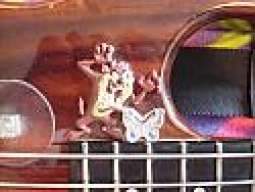
 
My 6'er I posted earlier has Nordy BigRigs with series/parallel/single 3-way for each pickup. The neck pickup is set in the same position as the P pickup on my YYD (so closer to the bridge than typical dual coil placement), the bridge pickup is in-between 60's and 70's position. Only thing that would give even more flexibility would be the ability to switch between the different coils when tapping, but it works as-is for me quite well. That said, I'm typically parallel on the neck pickup, series on the bridge pickup most of the time (and usually biased one way or the other, not 50/50) as I'm not much of a single-coil guy. For me the key was placement of the neck pickup biased towards the bridge - close to a Smith placement.


I wonder if there is a way to coil-tap 4 ways so that you can go between series, parallel, neck coil, and bridge coil. I know that on quad-coil pickups you can do neck coil, bridge coil and series, but not all four. And on Bartolini dual-coil pickups you can do series/neck coil/bridge coil.

But I am the same as you. I prefer the burpier tone of the Ken Smith pickup placement. I only wish I would have realized the importance of pickup placement a lot sooner during the earlier days of when I began tinkering with different pickups and preamps. I would have saved some serious cash!
 
In the end, for me, a wise investment and a cure for GAS was to invest in a good preamp. Now I use only one bass and if I want it to sound more growly or overdriven, I just equalize it like that. I like the idea of being monogamous :D
 
  • Like
Reactions: Bentfield
I play in a variety cover band, mostly weddings and other private events (been together for 4 years). When we started, all I played was my P Bass strung with flats. As we progressed, I convinced myself that I needed something more versatile. So I bought a Yamaha BBNE2, which is 5-strings, active electronics, dual J-type noiseless pickups, DR Hi-Beams stainless steel rounds. That Yamaha is an impressive bass! But after using it for about 15 months, I tried my P Bass again in a performance, and I remembered why I loved that bass so much. For me, a P Bass with flats is just the perfect sound for 95% (or more) of all the music I play.
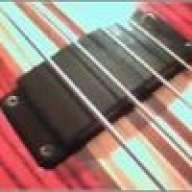
 
Tom "T-bone" Wolk (hero of mine - RIP) played a sunburst P when he was in the SNL band (alongside G.E. Smith and his telecaster). I only saw him play a different bass one time that I recall (a 5-string, can't remember the brand) and that was when he toured with Billy Joel during the Face To Face tour (with Elton John), which I had the pleasure of seeing. Bob Burke was also a hero of mine and I got to see him backing Elton on that tour (with his fretted and fretless Stingrays) which was absolutely amazing. Sadly, both of them have been gone for a while now.

But yes, I agree that there don't seem to be a lot of the "simple" basses being used in those situations.
 
  • Like
Reactions: Scarysharkface
I play in a variety cover band, mostly weddings and other private events (been together for 4 years). When we started, all I played was my P Bass strung with flats. As we progressed, I convinced myself that I needed something more versatile. So I bought a Yamaha BBNE2, which is 5-strings, active electronics, dual J-type noiseless pickups, DR Hi-Beams stainless steel rounds. That Yamaha is an impressive bass! But after using it for about 15 months, I tried my P Bass again in a performance, and I remembered why I loved that bass so much. For me, a P Bass with flats is just the perfect sound for 95% (or more) of all the music I play.
Isn't that just a string thing? I use two identical Yamaha BBN5As with my cover band and last year I just fell in love with a P. Almost bought it, but in the end I took the Yamaha to the store and compared it on neck pickup with the P. Both had the same mojo, so the P stayed in the store.
Mind you, this was with rounds, so that's why I'm asking.
 
Interesting topic as always Doc.

I think this is all subjective. For example, what electric bass for jazz, gospel, rock, etc should sound sound like is going to vary based on everyone's earballs. So just defining the standard in some universally acceptable way is likely not possible.

Me personally, I don't think there is one bass that does everything because I hear different genres differently. But I definitely believe some basses or electronics configurations do more than others.

As to why people go through careers on one instrument, I think that has to do with comfort and familiarity. A virtuoso like Victor Wooten will be that same virtuoso no matter what he plays, but he feels most at home on a Fodera. It's like an athlete finding the perfect pair of shoes.

Just my $.02