
I don't think any Fender or Squier instruments have photo tort like the PG's that MightyMite makes. Even my LTD 214 has a "real" 3d translucent tort layer though it's thin and probably made of acrylic or some other plastic rather than celluloid.FMIC certainly COULD put the pressure onto their plastics supplier to formulate a more "period-correct" looking tort, but it would doubtlessly cost them more than the regular photo-tort and other stock they're currently buying.

Enjoy the benefits of a premium membership!
Upgrade Account
-
TalkBass has been independent since 1998. Add your voice.
Create a free account to reply to discussions, view embedded media, and browse with fewer display ads.
Join free Log in
Want zero display ads or expanded classifieds tools? Compare plans.
You are using an out of date browser. It may not display this or other websites correctly.
You should upgrade or use an alternative browser.
You should upgrade or use an alternative browser.
Original Fender Tortoise Pickguards-Why Are They Not Made
- Thread starter Michael King
- Start date
More options
Who Replied?
Whoa, it's a tortloaf video!!!!

I, also, would like to see some pen examples too, as well.
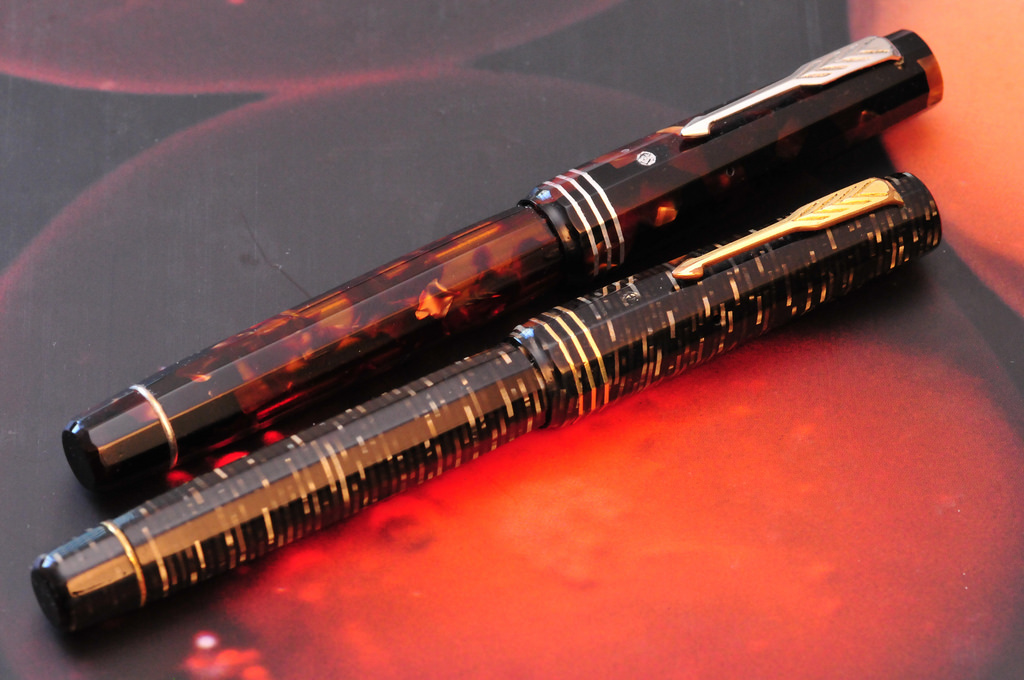
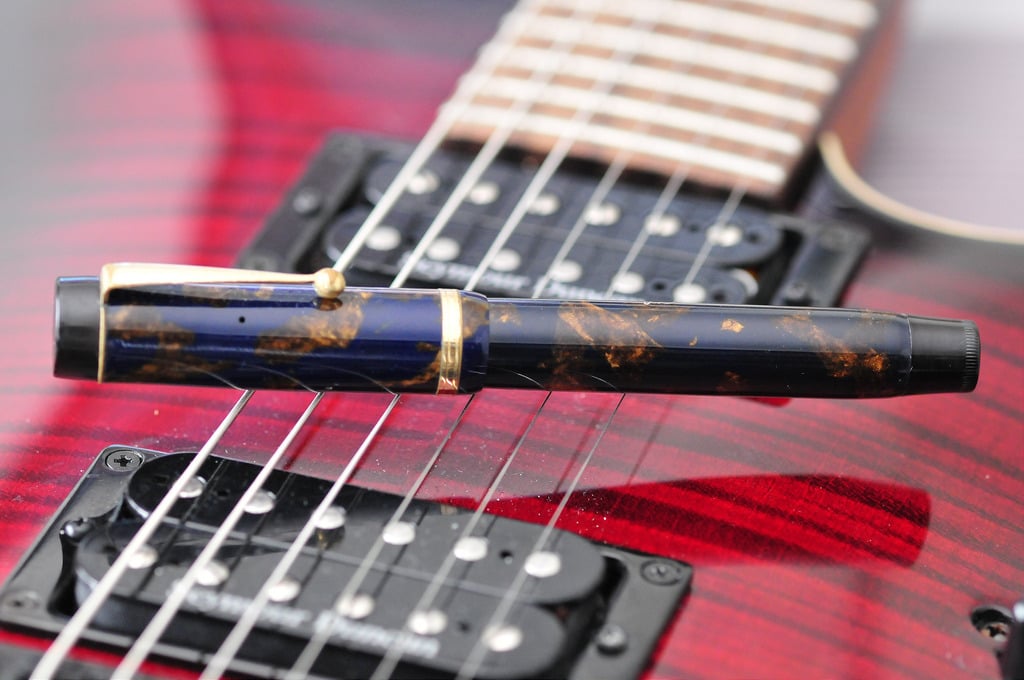
Here are some examples from my personal collection. Most of these are $1.5-2K each.
Here are four made from celluloid (vintage from the late 1930's)
A modern Japanese pen done using Raden and Rankaku techniques
The one on top in the second photo is killer!
Some banjos used to come with celluloid fretboards (way back when) and are sights to behold, I've never seen a guitar or bass with a fretboard of celluloid though.
Some banjos used to come with celluloid fretboards (way back when) and are sights to behold, I've never seen a guitar or bass with a fretboard of celluloid though.
The one on top in the second photo is killer!
Some banjos used to come with celluloid fretboards (way back when) and are sights to behold, I've never seen a guitar or bass with a fretboard of celluloid though.
That one is an Omas Extra Lucens in Tortoise celluloid, a classic pattern. The barrel is transparent so you can see the ink level. The color is a bit ambered due to age. This pattern is close to a material one would use for a pickguard.
Celluloid is way too soft to be be used as a fretboard.
I'll try to find an example, I'm pretty sure it's at least celluloid like.That one is an Omas Extra Lucens in Tortoise celluloid, a classic pattern. The barrel is transparent so you can see the ink level. The color is a bit ambered due to age. This pattern is close to a material one would use for a pickguard.
Celluloid is way too soft to be be used as a fretboard.
OK, the look is like so
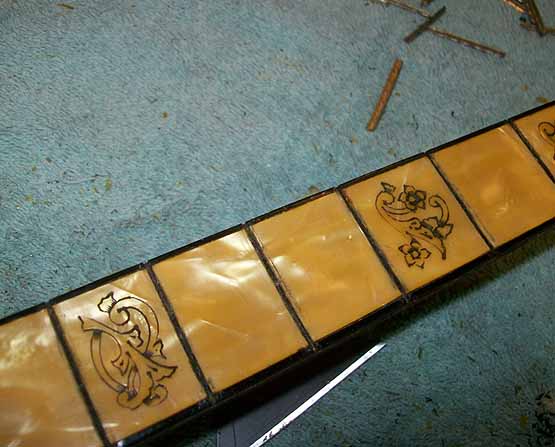
And here is a link [Invalid or Expired Link Removed]
I used to play dixieland gigs with a banjoist who said that he used to have a banjo with a celluloid fretboard and that it wasn't ideal by any means.
And here is a link [Invalid or Expired Link Removed]
I used to play dixieland gigs with a banjoist who said that he used to have a banjo with a celluloid fretboard and that it wasn't ideal by any means.

What's the bottom pen in pic 2? I've always liked that model, but forget what it is. I gave up on fountain eon collecting because my handwriting sucksHere are some examples from my personal collection. Most of these are $1.5-2K each.
Here are four made from celluloid (vintage from the late 1930's)

A modern Japanese pen done using Raden and Rankaku techniques
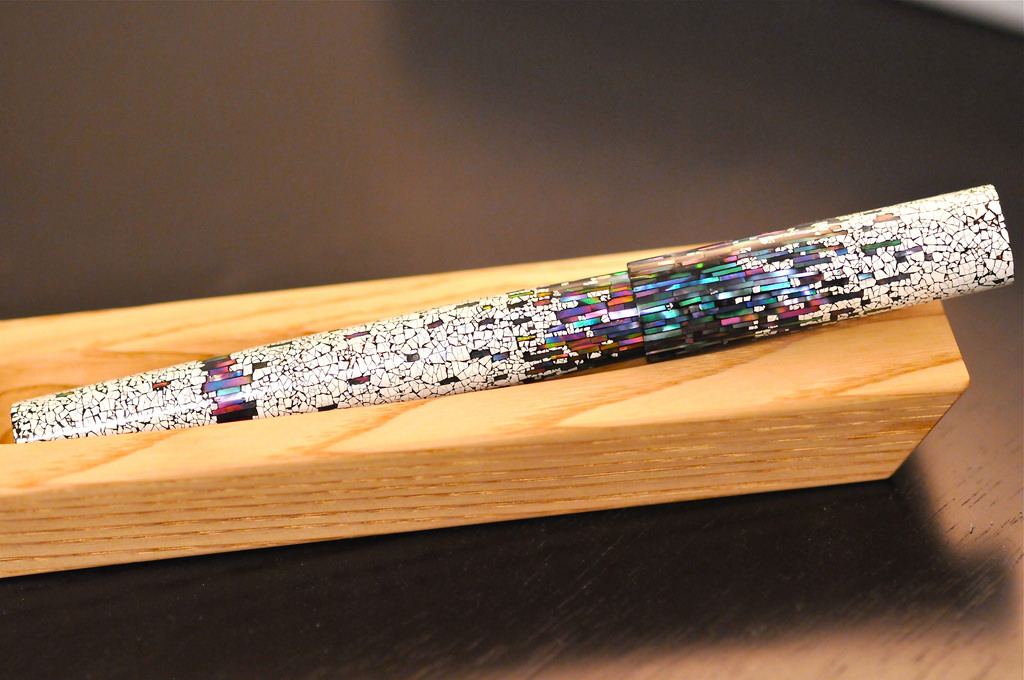
What's the bottom pen in pic 2? I've always liked that model, but forget what it is. I gave up on fountain eon collecting because my handwriting sucks
The lower pen is also an Omas Extra Lucens in the stacked ring celluloid that Parker made famous with their Vacumatic pens of the 1930's. You were probably thinking of the Parker Vacumatic which is much cheaper and made in larger quantities.
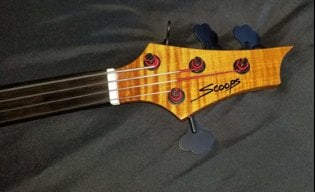
OK, the look is like so
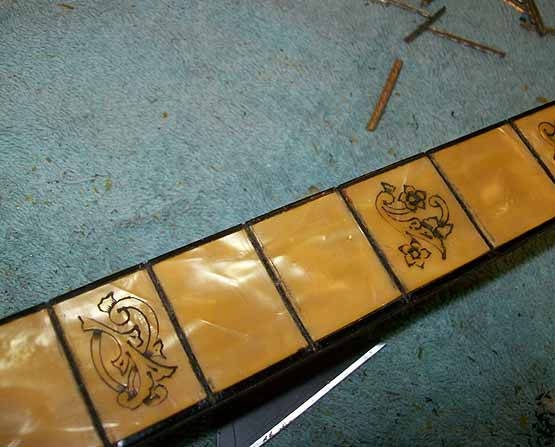
And here is a link [Invalid or Expired Link Removed]
I used to play dixieland gigs with a banjoist who said that he used to have a banjo with a celluloid fretboard and that it wasn't ideal by any means.
Quite a few years ago I came across 2 Bacon banjo's similar to the one show. An elderly lady's husband had dies and she was selling off the estate. Had the opportunity to purchase them, but opted for other things.
Truly beautiful banjos.
Thanks for the flashback
Yup, probably a vacumatic. I have several nice pens (bexley, Parker 51, pelikan) but nothing collectible


Originally I wanted to be dismissive of this comment because so many people tend to bag on Fender just because they exist. But now that I've thought about it, I think it's a legit question. Is it just because they choose to have the colors be "good enough," or is there a more involved reason? I don't know that I buy into the idea that it's all about the celluloid, but if it IS all about the celluloid, I'd like to know why in a little more detail than "It's the celluloid."I don't see why they can't at least make the colors look right on the modern reissue guards. Even though the materials used may be different nowadays (non-cellulose or whatnot), dye is still available in just about every color imaginable. The dark burgundy and browns of the newer guards just look cheapo compared to the colors of the real vintage guards. I can't think of a good reason why getting the colors right is so difficult for them.
I think there are sooo many guitar players out there buying Strats and Teles, that there is decent demand for good looking reissue guards. It seems Fender just isn't very "in tune" with what their customers want IMO. "Good enough" seems to be good enough for Fender.

For the sake of clarity and before someone calls what Fender currently uses as "tort" on all of their U.S. models "photo" or "faux" one more time, the only photo tort used is on Squier models. The rest sport a multi-ply guard with a top layer of red/clear swirl over a white layer. This simulates the tort of old. It is not a photo, such as that seen on the Squiers and sadly, some other much more expensive basses made by other companies.
I don't think it would take much from a formulaic standpoint to get the current tort in the same aesthetic ballpark as the vintage stuff, but for Fender that means months of R&D and money and to be honest, I'm not sure you'd find many players outside the realm of gear nerd forums who are so dissatisfied with the current stuff to warrant that kind of change.
I don't think it would take much from a formulaic standpoint to get the current tort in the same aesthetic ballpark as the vintage stuff, but for Fender that means months of R&D and money and to be honest, I'm not sure you'd find many players outside the realm of gear nerd forums who are so dissatisfied with the current stuff to warrant that kind of change.

I'm not sure you'd find many players outside the realm of gear nerd forums who are so dissatisfied with the current stuff to warrant that kind of change.
Yeah, exactly.
You are most likely right, and you're certainly right about me...I really don't care too much as long as it doesn't look like the Squier tort. But I was curious about it from a science standpoint.For the sake of clarity and before someone calls what Fender currently uses as "tort" on all of their U.S. models "photo" or "faux" one more time, the only photo tort used is on Squier models. The rest sport a multi-ply guard with a top layer of red/clear swirl over a white layer. This simulates the tort of old. It is not a photo, such as that seen on the Squiers and sadly, some other much more expensive basses made by other companies.
I don't think it would take much from a formulaic standpoint to get the current tort in the same aesthetic ballpark as the vintage stuff, but for Fender that means months of R&D and money and to be honest, I'm not sure you'd find many players outside the realm of gear nerd forums who are so dissatisfied with the current stuff to warrant that kind of change.

Whoa, it's a tortloaf video!!!!
It. Is. An. Actual. Tortloaf Video.
I am stunned, such a thing exists...

Yep - you can still get celluloid picks because people prefer the feel (also not they come in tort and it does look authentic) and they are great fire starters.Correct me it I'm
Wrong, but
Isn't celluloid super flammable?
I used to be a scout leader and I always kept these with me when I went camping - they'll help you light a fire even when it's raining.
It's really amazing, you just have to touch a flame to them and they go RIGHT up.
And this is also one of the reasons they don't like them for mass production too - when you have a factory with the saw blade working all day getting hot, you end up with fires which dramatically reduce productivity (Picks are punched I think).
To the OP.
The other problem with being authentic is that Fender's guard stock changed all the time and so it is somewhat impossible to be accurate to everyone's idea of what it right. Every actual authentic pickguard I've ever seen has been different - from very dark and brown to quite yellow to similar to the red the reissues came out with in the 80s. So, they've picked a colour (or a few) and run with it.
As far as photo-torts - that's only on the squiers - the MIJ/MIM/MIA Fenders are all using a "true" tort - as in several colours of plastic from clear to yellow to brown in various grades of translucency in suspension.

We can put a man on the moon but we can't make a good looking tort pick guard?
Oh yeah, that was the 60's too and we can't put a man on the moon today either
Oh yeah, that was the 60's too and we can't put a man on the moon today either

Latest posts
-

-
-
 Misled by Talkbass Seller on Recent Trade
- Latest: MultiScaleMale
-

-
