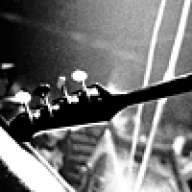
FWIW, my main P isn't a Fender... Yamaha BB800. I love it even more than my MIJ Fender P. The Yammy is a little less "tame" for lack of a better word. 

TalkBass has been independent since 1998. Add your voice.
Create a free account to reply to discussions, view embedded media, and browse with fewer display ads.
Join free Log in
Want zero display ads or expanded classifieds tools? Compare plans.
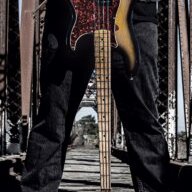
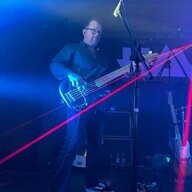
He's no noob, but I have no idea how he sets up his EQ. Didn't have an opportunity to look at it.

I've been playing a P. for a very long time & you have a valid point re. playing TECHNIQUE on a P., especially w/ flats. You have to get the notes to pop. I consider this as part of "P-Bass Sensibility". Maybe that's the problem - some players think that the BASS will do the work for them.
...
Also: bad live tone may not be the player or basses fault. A whole lot that affects live tone is out of the musicians hand. Things like how the stage is set up, PA's or lack there-of, sound guys, the room's acoustics, amp being underpowered, etc all affect live tone a lot more than "record" tone.

Here's a post from many years ago on another site that is something worth considering. This helps in understanding that "P-Bass Sensibility" I referred to in a previous post. Combine this w/ what I mentioned about the wood combos of a P. (bottom of p.7)
Invalid Link Removed
Ed Friedland - from MusicPlayer.com Forums said:To my way of thinking, the difference between a P and J bass goes way beyond the physical. Yes, P bass - fatter neck (usually), split pickup, chunkier tone, less highs. J bass - slimmer neck, easier to play, dual pickups, more note definition, more high frequency.
But... I think P or J bass is a lifestyle choice as well. Committing to the P means taking on a set of preferences, and inherent parameters. You can't or at least shouldn't try to play a P bass like a Jazz. That would be missing the point. The P bass is a fat, chunky-butt animal that likes to take up space. It demands a high level of attention to what you play, because every note hurts - or helps. There ain't no takin' it back with a P bass. You better mean it, or be very good at making it work. You can play fast on a P, but it's not nimble like a Jackrabbit, more like a Grizzly doing 60mph to catch something to eat. Slap on a P? Sure, it's chunkfunk, think Boz Scaggs "Lowdown". The pop on a P is not as sharp as a J. It's like getting sliced with a serrated steak knife. Ouch! Use only when you gots to cut through some tough meat. Classic P guys... Jamerson, Rainey, Rocco, Bob Glaub.
The J is a sleeker machine. Being a Jazz guy means having a little more wiggle room. It takes up less space in the mix, so you can get more active without squashing people. With great power comes great responsibility. Just because you CAN move around, does that mean you should? And if so - how to, how much, and why? The J is a bit skinnier, so you have to learn how to use that texture to fill it up, and how to play it fat when it needs to be fat. Soloing? Sure. Slap? You bet. Passive it cuts like a well honed Buck knife. Active with a good pre amp, more like a barbers razor. Classic J guys... Jerry Jemmot, Larry Graham, Jaco, Marcus...
Some people make a choice early on and stick with it. Their entire style is built around that early decision, whether it was conscious or not. You may know some of these people. Players that would no sooner pick up the other axe than they would deliberately eat rotten food. There's honor in this I think, it certainly makes your life simpler when it's Friday night and you're trying to decide which bass to put in the bag.
I think it behooves (love that word) a professional bassist to have both and spend time cultivating the characteristics of each instrument. You need to make each one speak it's native language. There are some gigs that just naturally call for one or another. Not to say you couldn't switch around. You learn alot about the nature of the P and J when you try to make one do what the other does naturally.
Personally, I'm more fascinated with the P because I've always been a J guy by first nature. The J thing is in my DNA, but the P has gotten into my blood. I love chunkin out some fat ass P bass. It feels like I'm on vacation. The J still feels like home even though I've spent years getting used to the 5 string. I am definitely a confirmed 24 fret guy now. I always wished Fender would come out with a killer 24 fret J bass. I know.. the Urge bass.... Like I said.....
On most of my gigs these days, there is the expectation that I'm going to solo. If I wasn't so damned attached to what happens between frets 21 and 24, I'd bring a J, but.... Luckily I've found something with 24 that does it for me. But I still miss the opportunity to play my Fenders. I actually go out of my way to cultivate Fender gigs. No solos please!
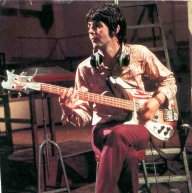


Hmmmm...
There have been quite a few posts like this that are suggesting that the P Bass requires more thought than it may seem:
1) Slightly different playing technique (to prevent clacks and make the bass "pop" or stand out)
2) A proper amplification setup - EQ, tube amp, maybe no tweeter - that is geared more toward a P Bass.
3) Strings - maybe flats instead of the traditional roundwound
Of course none of these things are set in stone, but they have been mentioned throughout the thread quite a bit.
With this in mind, is it fair to say then that there is a big misconception when it comes to the playing of the P-Bass itself?
What I mean is, the P-Bass is often viewed as a "simple" instrument that is suitable for beginners. But, when you take into account all the thought that is required to really make a P-Bass shine, it seems to me that it really isn't a beginner instrument at all. From what I'm seeing, the P-Bass really should be geared more toward a seasoned player who knows its idiosyncrasies and knows how to get the best out of it.
Does this sound like a fair statement?
Yeah, it seems like bad soundguys are the bane of bassists and bands everywhere.

 Its... Beautiful