+1, i play alot of metal and i find the p is warm and the j is bright so you can get warm lows andbright highs. of coarse different p/u bands do also make a difference. my next project bass is gonna have a p and a mm so i cant wait to here that when its done.The P/J is the perfect bass, IMHO. I love the classic Fender sounds, so a P/J is the fusion of the P Bass' fatness and the J Bass bridge pickup's attack. Add a blend control and you're really opening a plethora of sounds.
P/J's are all I play.

Enjoy the benefits of a premium membership!
Upgrade Account
-
TalkBass has been independent since 1998. Add your voice.
Create a free account to reply to discussions, view embedded media, and browse with fewer display ads.
Join free Log in
Want zero display ads or expanded classifieds tools? Compare plans.
You are using an out of date browser. It may not display this or other websites correctly.
You should upgrade or use an alternative browser.
You should upgrade or use an alternative browser.
P/J Basses
- Thread starter Yamarc
- Start date
More options
Who Replied?
If they have independant vols there shouldn't be any added impedance to alter the tone of either p/up when soloed, a 3 way switch also works for complete isolation.
It's the other way around. The pots add resistance (Close to purely resistive impedance, if you want to word it that way.) parallel to the output. Having a second volume pot decreases the total pot resistance to RTotal= 1/([1/R1)+[1/R2])
Remember that when you have two volume pots instead of one, you are forced to wire the pickup to the wiper terminal instead of the wiper going to the output, because otherwise you would mute the output when turning either volume down all the way. This means that adjusting the volume creates a variable impedance loading effect against the pickup, as the resistance from the pickup's hot to ground changes with the pot's setting.
On a traditional P bass, the wiper terminal goes to the output, so the pickup sees a constant load from the pot.
These are the main differences between P bass and J bass wiring.
If you have a 3 way switch with two volumes, you can still wire the wiper terminals to the output, because if you need to solo a pickup, you can remove the unused pickup with the switch without having to turn a volume all the way down and shorting the output.


It's the other way around.
My bad, what I think I was getting at was two separate vols each wired directly in parallel to the tone pot makes them independant rather than in series.
My bad, what I think I was getting at was two separate vols each wired directly in parallel to the tone pot makes them independant rather than in series.
They are parallel, not series.
The volume pots are independent when the pickups are wired to the wiper terminals, you just have to keep in mind the decrease of total resistance and the variable loading against the pickup when adjusting one volume. This is what sets a PJ with two volumes apart from a standard P.
*And for the record, there is no reason you can't get P bass tone from a PJ by turning down the J pickup. Differences in wiring cause rather subtle changes in tone.
I love PJ too. Well, that was my ex-wife's initials, so I don't love ALL PJ's...
Anyway. I don't want to route out my Fullerton VS '62 P bass, so the only P/Js I have now are my custom made fretless and a Guild Pilot. The fretless has Duncan 1/4 pounders and the Guild has the stock EMG with the P coils reversed. The EMG P/J set up sounds great to me with both PUPs full on, a wonderful slap bass sound.
The extra loading of the additional volume pot (or even the additional loading from my preferred Volume/Blend/Tone controls) has been fairly negligible for me. Yes, it IS an issue, but how much really comes down to YOUR bass, YOUR amp, and YOUR ears. The 3-way switching is a very good and simple solution too. My fretless started its life as one of the MIJ Jazz Bass Specials which had a 3-way toggle ('though the way it was wired, there was still loading) and the blade-styel switch that used on the Fender Tony Franklin basses is another good option. If I wasn't using a blend I'd wire the P/J up like a Telecaster- master volume, master tone, and 3 way switch.
Another good option in a P/J is to have series/parallel switch for the P coils. By itself I never cared for the P coils in parallel, but when you blend P coils in parallel with a Jazz bass PUP it gets a lot closer to the dual PUP Jazz bass sound.
BTW, two other P/J players are Tony Franklin (who used a DiMarzio Jazz bridge PUP and the blade switch) and Freebo. Freebo was Bonnie Raitt's bassist in the '70s and his famous fretless Precision (before he switched totally to Music Man StingRays) had a Jazz PUP in the bridge with a V/V/T set up. Listen to Bonnie's first two albums for some great recordings of that bass. Especially wonderful is the sound he gets (and what he plays) on "Too Long At The Fair", "Love Has No Pride" and "You've Been In Love Too Long".
John
Anyway. I don't want to route out my Fullerton VS '62 P bass, so the only P/Js I have now are my custom made fretless and a Guild Pilot. The fretless has Duncan 1/4 pounders and the Guild has the stock EMG with the P coils reversed. The EMG P/J set up sounds great to me with both PUPs full on, a wonderful slap bass sound.
The extra loading of the additional volume pot (or even the additional loading from my preferred Volume/Blend/Tone controls) has been fairly negligible for me. Yes, it IS an issue, but how much really comes down to YOUR bass, YOUR amp, and YOUR ears. The 3-way switching is a very good and simple solution too. My fretless started its life as one of the MIJ Jazz Bass Specials which had a 3-way toggle ('though the way it was wired, there was still loading) and the blade-styel switch that used on the Fender Tony Franklin basses is another good option. If I wasn't using a blend I'd wire the P/J up like a Telecaster- master volume, master tone, and 3 way switch.
Another good option in a P/J is to have series/parallel switch for the P coils. By itself I never cared for the P coils in parallel, but when you blend P coils in parallel with a Jazz bass PUP it gets a lot closer to the dual PUP Jazz bass sound.
BTW, two other P/J players are Tony Franklin (who used a DiMarzio Jazz bridge PUP and the blade switch) and Freebo. Freebo was Bonnie Raitt's bassist in the '70s and his famous fretless Precision (before he switched totally to Music Man StingRays) had a Jazz PUP in the bridge with a V/V/T set up. Listen to Bonnie's first two albums for some great recordings of that bass. Especially wonderful is the sound he gets (and what he plays) on "Too Long At The Fair", "Love Has No Pride" and "You've Been In Love Too Long".
John
I recently modded my MIM Jazz into a P/J using a Seymour Duncan SPB1 and a DiMarzio Area J. I cut the wire between the two halves of the SPB1 and wired it series/parallel, and I left the Area J wired series.
I feel the SPB1 in parallel does a pretty good job sounding like a Jazz, not so much soloed, but when I dial in some of the bridge pickup it's pretty darn close.
Oddly I noticed less tonal change between series and parallel with roundwounds. I've used three different sets of flats; TruBass 88s, Fender 9050s, and Chromes. They all bring out the character of the different settings better than the two sets of roundwounds that I've tried.
No desire to go back to a J/J, as a matter of fact I rarely play my other Fender Jazz anymore.
As always YMMV.
I feel the SPB1 in parallel does a pretty good job sounding like a Jazz, not so much soloed, but when I dial in some of the bridge pickup it's pretty darn close.
Oddly I noticed less tonal change between series and parallel with roundwounds. I've used three different sets of flats; TruBass 88s, Fender 9050s, and Chromes. They all bring out the character of the different settings better than the two sets of roundwounds that I've tried.
No desire to go back to a J/J, as a matter of fact I rarely play my other Fender Jazz anymore.
As always YMMV.

I'm currently looking for a J neck for my blue P which has always been my backup for gigs. This thread has just convinced me to mod it to a P/J configuration.
Merry Christmas to me!
Or go get a G&L SB-2. Thin jazz neck, massive P-sound and nice tonal variations by adding the jazz bridge pickup in.

Some people would say a P/J is the worst of both worlds.I've been trying to do a search on Fender style P/J basses (Lakland, Sadowsky, etc), but the search engine won't let me. Looking for opinions on the P/J set-up as compared to the standard P or J/J setups.
To the eye, P/J seems like the perfect set-up...best of both pick up worlds. Just curious about your preferences & experience with Fender Style P/J basses...seem to always be a lot of P/J basses up for sale on the classifieds. Don't see many pro playing with this set-up either. Wonder why?
Also, does having a J at the bridge effect the pure sound of the P, even when it is turned off?
Thanks
As for me, I generally associate P/J configurations with cheap (as in cheaply made) basses. Plus aesthetically I prefer either P or JJ.
As far as tone, on a J bass my least favorite setting is a solo bridge pickup. I don't like that "burpy" tone.
That all being said, I listened to the sound clips of the Lakland PJ bass and it sounds great with flatwounds. They help tame the trebly burp from the bridge pickup.
Also, I noticed if cutting through is a concern for you, a P/J cuts much better than a P bass.
My two cents.

For you DIY'ers or just to get a better understanding - here are some basic P/J wiring diagrams....
http://www.google.com/imgres?imgurl...a=X&ei=qLr6TIaaD4P7lweb39jmDA&ved=0CB8Q9QEwAA
http://www.google.com/imgres?imgurl...a=X&ei=5bv6TJDaBoS8lQfW2pzIDA&ved=0CCkQ9QEwBQ
http://www.google.com/imgres?imgurl...XrBw&esq=5&page=1&ndsp=33&ved=1t:429,r:15,s:0
http://www.google.com/imgres?imgurl...a=X&ei=Prz6TK-hEIT7lwez1bCJDA&ved=0CCUQ9QEwAg
http://www.google.com/imgres?imgurl...a=X&ei=erz6TNLmLYKClAf_4dDnDA&ved=0CCwQ9QEwBA
http://www.google.com/imgres?imgurl...a=X&ei=qLr6TIaaD4P7lweb39jmDA&ved=0CB8Q9QEwAA
http://www.google.com/imgres?imgurl...a=X&ei=5bv6TJDaBoS8lQfW2pzIDA&ved=0CCkQ9QEwBQ
http://www.google.com/imgres?imgurl...XrBw&esq=5&page=1&ndsp=33&ved=1t:429,r:15,s:0
http://www.google.com/imgres?imgurl...a=X&ei=Prz6TK-hEIT7lwez1bCJDA&ved=0CCUQ9QEwAg
http://www.google.com/imgres?imgurl...a=X&ei=erz6TNLmLYKClAf_4dDnDA&ved=0CCwQ9QEwBA

Engine207
Losing faith in humanity...one call at a time.
This.
I converted a Squier P-Bass to a P/J and needed to use a high-output J pup (DiMarzio Ultra) or it would get lost in the mighty P. Also part of my mod, was a 3-way "Tony Franklin" switch and plenty of copper shielding to keep hum at bay. I think it's a great, versatile configuration.
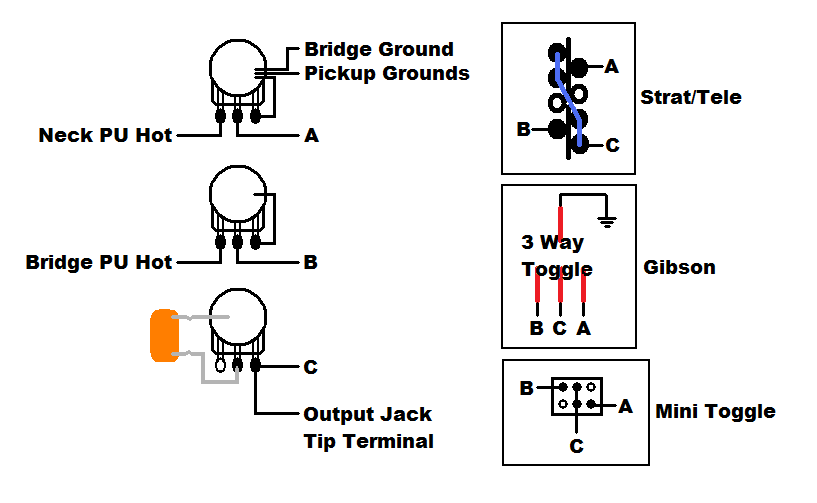
line6man was kind enough to share this wiring diagram for my build last year. I copied it from the 'Tony Franklin Tribute' thread, which is also some great discussion about DIY P/J conversions.
As far as the wiring, here is the diagram for a VVT 3 way setup:
Thanks again, man...your help was HUGE!
I have been thinking about getting something with a P/J setup.
I've also often wondered what it would be like to have a bass with a P/J setup and a soapbar (such as on a Stingray) in between. There are a lot of guitars with three pickups and I wonder what a bass would sound like with that type of setup.
I've also often wondered what it would be like to have a bass with a P/J setup and a soapbar (such as on a Stingray) in between. There are a lot of guitars with three pickups and I wonder what a bass would sound like with that type of setup.
P/J bass
P:100%
J:50-75%
Boosted mids to 3 o' Clock, bass and treble flat
Broken in chromes
Its sooo beautiful :')
P:100%
J:50-75%
Boosted mids to 3 o' Clock, bass and treble flat
Broken in chromes
Its sooo beautiful :')

- Jun 29, 2006
- 5,148
- 3,217
- Disclosures
- President, CEO, CFO, CIO, Chief Engineer, Technician, Janitor - Reiner Amplification
Love the PJ. I wish Fender offered more USA models with this config. Bring back the Hot Rod, or the ultimate, a 51 with the P-J config like my USA Schecter Model T's.
I don't own any PJs at the moment, but I've owned lots over the years.
I found them to be very versatile and I never had any problems with the J p'up affecting the P tone.
I wouldn't hesitate to get another.
I found them to be very versatile and I never had any problems with the J p'up affecting the P tone.
I wouldn't hesitate to get another.

I am a die hard P/J fan as well, especially in Spectors...but I do love 'em in Fenders, Schecters, and others....I can tell that tone from a mile away...for me there is something special about the sound of the P and J pickups combined, and it seems to cut like no other. I do switch to the P pickup solo'd at times, but rarely do I use the J solo'd.
Every time I pick up a J/J bass Im a little disappointed...its just "not me", so thats why I am switching all my J/J equipped basses to P/J if possible.
Let us not forget that the P/J config ruled in the 80's...just about every company at the time had more than a few P/J basses....including Spector and Pedulla (not cheap).
I just bought one of the new Squier Jaguar basses today...cheap...and pure P/J all the way!
Every time I pick up a J/J bass Im a little disappointed...its just "not me", so thats why I am switching all my J/J equipped basses to P/J if possible.
Let us not forget that the P/J config ruled in the 80's...just about every company at the time had more than a few P/J basses....including Spector and Pedulla (not cheap).
I just bought one of the new Squier Jaguar basses today...cheap...and pure P/J all the way!

Over the years I've owned at least 6 basses with the P/J combo and I never got rid of one of em because of the sound.
I've always been able to find plenty of useful tones in all of them. Some are active, some passive, but I've always found the combination very useful.
granted, I rarely play mine where I favor the J- I mainly use it to supplement the P and sometimes I roll it off completely. But I love having the extra flexibility, especially in a passive bass.
I've always been able to find plenty of useful tones in all of them. Some are active, some passive, but I've always found the combination very useful.
granted, I rarely play mine where I favor the J- I mainly use it to supplement the P and sometimes I roll it off completely. But I love having the extra flexibility, especially in a passive bass.

Speaking of which, I've got a Fender Aerodyne Jazz bass that has some Bassline pickups installed, however I want to see if it'd be possible to get some noiseless pickups.... any recommendations? DiMarzio? EMG?

I own both a Jazz and a P/J (RH sig). I use the P/J in my metal band, it has the power and aggression of P with the growl of the J. Before I bought my J however I played it for every style of music and I never found myself wanting for tone and versatility.


