Alright i used to think that fenders P and J bass system was board wide but i then found it wasn't really so how does one really determine if its a P or J bass in just the sense of what its best used for?

Enjoy the benefits of a premium membership!
Upgrade Account
-
TalkBass has been independent since 1998. Add your voice.
Create a free account to reply to discussions, view embedded media, and browse with fewer display ads.
Join free Log in
Want zero display ads or expanded classifieds tools? Compare plans.
You are using an out of date browser. It may not display this or other websites correctly.
You should upgrade or use an alternative browser.
You should upgrade or use an alternative browser.
P or J bass clarification
- Thread starter Bubbacritz
- Start date
More options
Who Replied?I know the wording is strange but we all know how fender has fender J basses and Fender P basses and it classifies them. I learned not all companies do this so what would be a good way of looking at other companies basses and identifying if i would be more of a p bass or j bass sound?
I'm confused.
This is a P Bass

This is a J Bass

As for sounds, read this:
This is a P Bass
This is a J Bass
As for sounds, read this:
J=deeper lows and higher highs. P=growly mids. P is a bit 'thicker' in the first positon. P is simpler tone-wise. If you play with fingers, where the pickups are may help you decide. I find that they are not as different as everyone wants them to be, but I've always preferred the P. It's less knobs, more space, and just thicker for me.


Ric5
Inactive
- Jan 29, 2008
- 29,772
- 30,452
- Disclosures
- I like 5, 8, 10, and 12 string basses
The p-bass is for those who want to play with precision.
The other one is for those who play sloppy like Jaco.


The other one is for those who play sloppy like Jaco.

I think I get what you're saying. And the answer isn't really very simple. Other companies won't generally identify their instruments in reference to Ps or Js, unless they're based on them (there are lots of copies out there, especially J copies). Many instruments will be their own thing entirely, though, and won't really have any immediate relation to either one.
Make sense?
Make sense?
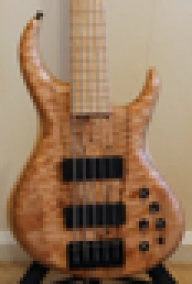
i know that but what im saying is that lets say you had a this bass

would you consider that to be more of a P or J bass in the sense of its sounds and uses and based on what, basically is there any classifications for any other basses other than fenders?
would you consider that to be more of a P or J bass in the sense of its sounds and uses and based on what, basically is there any classifications for any other basses other than fenders?

to tell when other companies are making a J style bass or a P style bass you look at the pickups .
jazz = 2 straight bars across
precision = 1 pickup split looks like a tetris piece.
this will define the sound no matter what company is making it
jazz = 2 straight bars across
precision = 1 pickup split looks like a tetris piece.
this will define the sound no matter what company is making it
Yeah superfunk knows what im talking about and i posted my previous post before i saw that but that actually helps a lot

I know the wording is strange but we all know how fender has fender J basses and Fender P basses and it classifies them. I learned not all companies do this so what would be a good way of looking at other companies basses and identifying if i would be more of a p bass or j bass sound?
Ok,I think I got this....
If it has the two little square pickups together it's gonna sound like a P bass more or less.
If it has the two skinny pickups seperate from each other it's gonna sound like a Jazz bass more or less.
If it's got other kinds of pickups it's not going to sound like either of them,more or less.
i know that but what im saying is that lets say you had a this bass

would you consider that to be more of a P or J bass in the sense of its sounds and uses and based on what, basically is there any classifications for any other basses other than fenders?
NEITHER. those are humbuckers generally associated with Musicmans, G&L and Warwicks
they are their own thing
Bubbacritz, I think there's a more "real" question behind your question.
Perhaps you'd like some advice choosing a bass?
Or a discussion of the terminology that bassplayers use to describe tones?
I'd love to see what your real question is, if you can work it out!
Perhaps you'd like some advice choosing a bass?
Or a discussion of the terminology that bassplayers use to describe tones?
I'd love to see what your real question is, if you can work it out!
i know that but what im saying is that lets say you had a this bass

would you consider that to be more of a P or J bass in the sense of its sounds and uses and based on what, basically is there any classifications for any other basses other than fenders?
There may be a way to get into the right combo of coil splits to achieve a similar tone to a Jazz, but that bass does not sound like either.
If you want the sound of a P or J, get a P or a J. Just about any other bass is going to have an entirely different sound.
ok i think i understand, what would hambuckers sound like then?
like bacon frying
like bacon frying
Yeah, hambuckers sound really crispy, lots of sizzle.
Be careful if they go microphonic. They squeal like a pig!
ok i think i understand, what would hambuckers sound like then?
They would sound like bacon smells. Which is pretty good, actually.
Humbuckers, on the other hand, sound like....nevermind.
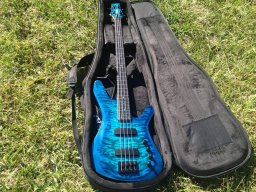
I have that bass:

(plus a nice couch), it does not fit either category. The humbuckers make it "thick" but the preamp takes care of the highs and lows. It's a different sonic category, many Warwick owners simply classify it as a "Warwick" sound.
My Lakland (below) can compare to a J or a MM (Music Man) depending on the pickups I'm favoring:

A Rickenbacker sounds like a Rickenbacker, there's no faking that one.
(plus a nice couch), it does not fit either category. The humbuckers make it "thick" but the preamp takes care of the highs and lows. It's a different sonic category, many Warwick owners simply classify it as a "Warwick" sound.
My Lakland (below) can compare to a J or a MM (Music Man) depending on the pickups I'm favoring:
A Rickenbacker sounds like a Rickenbacker, there's no faking that one.


