I notice some people talk about "short scale" when referring to basses for people with small hands. What is short scale/what is considered "short scale? What does "scale" mean in that context?

Enjoy the benefits of a premium membership!
Upgrade Account
-
TalkBass has been independent since 1998. Add your voice.
Create a free account to reply to discussions, view embedded media, and browse with fewer display ads.
Join free Log in
Want zero display ads or expanded classifieds tools? Compare plans.
You are using an out of date browser. It may not display this or other websites correctly.
You should upgrade or use an alternative browser.
You should upgrade or use an alternative browser.
Pardon my ignorance but what does "short scale" mean?
- Thread starter Twenty2AcaciaAv
- Start date
More options
Who Replied?
A typical bass has a 34" scale length.
Scale length is twice (2X) the length between the nut and the 12th fret. Many 5+ string basses are 35" scale or longer, long scale.
A short scale is a bass with a scale length of less than 34".
Scale length is twice (2X) the length between the nut and the 12th fret. Many 5+ string basses are 35" scale or longer, long scale.
A short scale is a bass with a scale length of less than 34".
MarTONEbass said:A typical bass has a 34" scale length.
Scale length is twice (2X) the length between the nut and the 12th fret. Many 5+ string basses are 35" scale or longer, long scale.
A short scale is a bass with a scale length of less than 34".
That definition is what some bassists take, but it wreaked havoc on string makers and instrument makers when the strings turned out too long or short. At some point they got together and said 34" is long, 32" medium, and 30" short scale.
Or so i've heard.
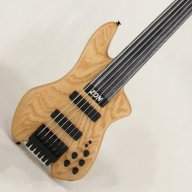
I have one, its fanned fret so the scale length varies between 27 - 29". Much easie to play than a standard 34"
All of the above definitions are correct. Now, what does that mean from the perspective of the bass player?
In the simplest terms, scale length involves the length of the neck of the bass and the distance between frets. A "short scale" bass should have a measurement of 31 inches or less from the nut at the top of the fretboard to the saddles on the bridge. This is the length of the string that will vibrate when plucked.
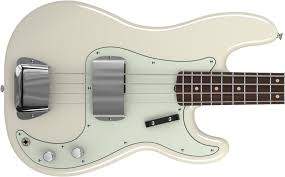
Standard scale basses measure about 34 inches for this same distance (nut to bridge saddles). These include the Fender Precision and Jazz basses, which have kind of become the models by which all electric basses are measured.
So .... "Short Scale" means that the bass has a shorter neck (usually by about three inches) and less distance between frets.
This difference of 3 inches makes these basses much easier to play for people with smaller hands (including many women and children), or people with arthritis or other hand injuries.
But, short scale basses are not JUST for people with small hands. Many folks with larger hands prefer the playability of a short scale bass. Its just a matter of what feels best to the player.
In the simplest terms, scale length involves the length of the neck of the bass and the distance between frets. A "short scale" bass should have a measurement of 31 inches or less from the nut at the top of the fretboard to the saddles on the bridge. This is the length of the string that will vibrate when plucked.
Standard scale basses measure about 34 inches for this same distance (nut to bridge saddles). These include the Fender Precision and Jazz basses, which have kind of become the models by which all electric basses are measured.
So .... "Short Scale" means that the bass has a shorter neck (usually by about three inches) and less distance between frets.
This difference of 3 inches makes these basses much easier to play for people with smaller hands (including many women and children), or people with arthritis or other hand injuries.
But, short scale basses are not JUST for people with small hands. Many folks with larger hands prefer the playability of a short scale bass. Its just a matter of what feels best to the player.


All of the above definitions are correct. Now, what does that mean from the perspective of the bass player?
In the simplest terms, scale length involves the length of the neck of the bass and the distance between frets. A "short scale" bass should have a measurement of 31 inches or less from the nut at the top of the fretboard to the saddles on the bridge. This is the length of the string that will vibrate when plucked.
Standard scale basses measure about 34 inches for this same distance (nut to bridge saddles). These include the Fender Precision and Jazz basses, which have kind of become the models by which all electric basses are measured.
So .... "Short Scale" means that the bass has a shorter neck (usually by about three inches) and less distance between frets.
This difference of 3 inches makes these basses much easier to play for people with smaller hands (including many women and children), or people with arthritis or other hand injuries.
But, short scale basses are not JUST for people with small hands. Many folks with larger hands prefer the playability of a short scale bass. Its just a matter of what feels best to the player.
I never used to think about SS basses although i loved the look of the musicmaster and mustangs.... the slab bodies. I thought more about them when I played one a few weeks back a 78' musicmaster with a good price and how it would fit my band due to the tight spaces we get crammed into sometimes.
I was shopping for one when I lucked into a mint 97' Squier Visa Musicmaster and I'm in love. I am 6'1" and about 265lbs with small girl like hands
 and it works great. It might look ike a toy strapped to me but its put a smile on my face and made me have fun playing bass for a change.
I hear you bassbully. I wouldn't say I have small hands per se, but I have shorter fingers than I really should...especially compared to my thumbs which are longer than "normal". The thing that always ticked me off was my stubby pinky, and the lack of decent movement because of that. I've overcome that in my playing, but it is still irritating. Finally got me a shortscale a few weeks ago and it is perfect. I still play around on longscales in shops but the difference in ease of play and sheer enjoyment is quite present.

I hear you bassbully. I wouldn't say I have small hands per se, but I have shorter fingers than I really should...especially compared to my thumbs which are longer than "normal". The thing that always ticked me off was my stubby pinky, and the lack of decent movement because of that. I've overcome that in my playing, but it is still irritating. Finally got me a shortscale a few weeks ago and it is perfect. I still play around on longscales in shops but the difference in ease of play and sheer enjoyment is quite present.
I hear you bassbully. I wouldn't say I have small hands per se, but I have shorter fingers than I really should...especially compared to my thumbs which are longer than "normal". The thing that always ticked me off was my stubby pinky, and the lack of decent movement because of that. I've overcome that in my playing, but it is still irritating. Finally got me a shortscale a few weeks ago and it is perfect. I still play around on longscales in shops but the difference in ease of play and sheer enjoyment is quite present.
Hey your hands sound like mine and I like the way you discribe them better than me saying "girly" I have short stubby fingers and a tiny worthless pinky that I can't get to work on a longscale. It could be I also play right when I'm a lefty? Who know's? What I do know is these SS basses are a hoot and have made playing bass fun again for me.

That definition is what some bassists take, but it wreaked havoc on string makers and instrument makers when the strings turned out too long or short. At some point they got together and said 34" is long, 32" medium, and 30" short scale.
Or so i've heard.
Well, the history is just wrong. Way before there were 35" scale basses, the common standard was the 34" was long scale, 32" was medium, and 30" was short. That's the standard that Fender and LaBella (two example with which I have first-hand experience pre-dating 1976) used since well before '76. And that's still to my knowledge, the same standard.
Scale length over 34" is "extra-long". However NONE of this terminology talks to how long your strings have to be for a particular instrument. I know that before about 1990, D'Addario regular long scale strings did indeed fit a through-body bass like the Music Man StingRay. The string packs said that they were designed to fit regular long-scale basses including the Music Man and Fender (I think that sticker specifically mentioned the Telecaster bass as well as the StingRay, but I'm not positive). At some point D'Addario changed their specs for long-scale and they became too short to fit a through-body bass, and that was by 1991.
So, in summary
A. Scale length is the nominal distance from the nut to the bridge saddles- or more precisely, twice the distance from the nut to the 12th fret.
B. Long is 34", medium is 32", short is 30", and 35" is generally an extra long.
C. "Long scale" strings may or may not fit your particular bass. It depends both on the particular bass model (not brand!), and the specific strings. DR long-scale strings fit on every through-body bass I've tried them on, D'Addario long-scale won't fit a 34" through body Lakland, Fender Sting, or pre-EB StingRay.
D. Measure the scale length AND the total length you need then compare that to what you're buying before you buy.
John


