
and the ability to boost certain frequencies certainly helps. but yes.... some lighter strings... plucking over the end of the board and the right technique are all parts as well.Active is not a requirement to get good mwah; it's is all about the bass, the strings, the setup and the player.

Enjoy the benefits of a premium membership!
Upgrade Account
-
TalkBass has been independent since 1998. Add your voice.
Create a free account to reply to discussions, view embedded media, and browse with fewer display ads.
Join free Log in
Want zero display ads or expanded classifieds tools? Compare plans.
You are using an out of date browser. It may not display this or other websites correctly.
You should upgrade or use an alternative browser.
You should upgrade or use an alternative browser.
Passive guy, should I stick to a passive fretless?
- Thread starter henryjurstin13
- Start date
More options
Who Replied?

I have a Lakland skyline. Is active but you can pull the volume control for passive mode.
Fiddled around with it a lot and now just leave it on passive mode. More mwhahh that way it seems like.
Regards
Mark
Fiddled around with it a lot and now just leave it on passive mode. More mwhahh that way it seems like.
Regards
Mark

My two fretlesses are passive. I’ve tried active fretless basses and didn’t really care for them. I also don’t see any absolute need for an active preamp in a fretless bass unless you’re running piezo pickups in it, in which case you have to have a preamp. But if you just want an active bass then get one. I don’t think a preamp brings that much to the party but that’s me. Most fretless players aren’t looking for a huge amount of tone sculpting and sonic variety because the core fretless sound can easily stand on its own without a lot of embellishment. So I’d go passive and get an outboard preamp later on if you still felt the need for one.
Just my tuppence.
Just my tuppence.

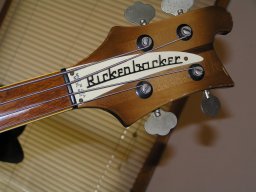
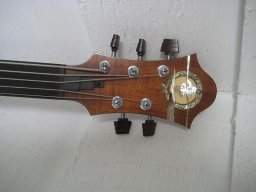
For Sale - Custom PJ-style maple fretless
And thread participant Brad Johnson’s sweet Guild For Sale - Vintage 70's Guild B301F fretless
And thread participant Brad Johnson’s sweet Guild For Sale - Vintage 70's Guild B301F fretless
Last edited:
Let your musical goal answer this one. Are you going to attempt a fretless metal version of "Roundabout" or mimic a DB on "Comin' Home Baby"? The amplification, effects and EQ you use are just as important to the overall sound as passive versus active circuits. I personally like the natural sound of passive. Regardless of which you choose, your technique is by far the most important component to your sound.
Yep....I' m mostly an active guy but prefer passive for fretless

I don't think you should rule out a bass that is active. Play what works for you. I think active preamps can be handy. As others have pointed out, piezo pickups can be great with fretless; usually, they benefit from active buffering. Stingrays sound great and are active.
Personally, I don't want my fretlesses to sound just like my fretted instruments lost their frets; I like my basses having unique sounds.
Personally, I don't want my fretlesses to sound just like my fretted instruments lost their frets; I like my basses having unique sounds.

An appropriately placed mid-boost can be a lot of fun on a fretless (e.g.Pedulla Buzz).
Also, most "active" basses actually use passive pickups with an active pre-amp, so can be wired up with an active/passive switch easily - that way you can get best of both worlds
Also, most "active" basses actually use passive pickups with an active pre-amp, so can be wired up with an active/passive switch easily - that way you can get best of both worlds
I like both. I play both.
I tend to prefer active for fretless, but not by a wide enough margin to keep me from also playing passives.
I tend to prefer active for fretless, but not by a wide enough margin to keep me from also playing passives.
jazzyitalian
Supporting Member
You can always get an active passive pre-amp. But if you were going to be 100% passive, I would at least consider adding a varitone circuitry to it.

Care to elaborate a bit? If you share the basis for your disagreement, we might both learn something.

I play an old passive fretless Jazz Special, and a active fretless Alembic.
I love 'em both and they both sound great.
I love 'em both and they both sound great.

Care to elaborate a bit? If you share the basis for your disagreement, we might both learn something.
Okay. I was actually busy on a couple of other threads so I didn't elaborate. Sorry about that.
The place (spectrally) where an active circuit can make the most difference is in the high end (treble) content of a bass. If you want lots of clank, an active circuit can be your friend. It's not my cup of tea, but for some, it's the ticket.
A typical two or three band preamp does not make the most difference in the treble area. It should make a difference overall. If you boost the treble or reduce other frequencies except for the treble you can get clank... but that's not the default sound. A preamp can dial in or out bottom, mids (optional) or highs. As I mentioned elsewhere these are typically available at the amp too. If you want lots of clank, you can still get that with a passive bass too.
Here's an EQ tip most people don't use... if you want more of anything, start by turning your amp's and bass' gains up while the EQ is flat. That'll usually yield more lows, mids and highs. Then smaller tweaks if needed go a long way. The basic deterrent is that then you'll have to learn how to control your volume with your touch but what you can gain is an incredible dynamic range at your fingertips.
Fretless is not about clank - there are no frets to bounce strings off of. The mwah (the voice of a fretless) lives in the mid frequencies. While you may find an active fretless bass you love, it's certainly not necessary for a good fretless tone. The material the fretboard is made out of is more important for a good fretless tone than whether or not is has an active circuit. If I were to design an active circuit for a fretless, it'd have a sweepable mid boost to maximize mwah.
Fretless can be about clank if that's what you want. Check out Primus... no lack of top end there. You can play a fretless and sound remarkably like a fretted bass depending on your technique. In fact technique is probably the main determinative factor on what you get out of each fretless. Once you know how to get mwah, what you can get it on becomes much less of a factor.
Depending on the bass you can use the mids to bump them up on a bass that is shy of them... but you can also pull the bass and treble back to accomplish the same thing. Is the fretboard more important than the electronics? Maybe... maybe not. It really depends on the bass and the player.
With a setup geared towards it, you can get a smooth upright like mwah by plucking over the end of the fingerboard and on two pickup basses you can get a burpy, punchy, midrangey vibe by soloing the bridge pickup and plucking in that area.. Without any EQ tweaks. If you pluck with the pads of your fingers vs. the tips the tonal variation and envelope change can be desirable too.
The player has a much bigger role in the results they get with a fretless IMO IME. again, the more you figure out with your hands, the less limiting other stuff becomes. IOW if you're not getting what you want out of a fretless it could very well be your fault. Look there first. That's what I did and it made gigging with a nice variety of basses painless, particularly my fretlesses.

In case no else has posted: "Jaco only needed a passive fretless...."
Sorry. Not sorry.

Sorry. Not sorry.
I refuse to own a guitar I gotta put a battery in to play.
This is the correct answer.

As a matter of personal preference, I love the sound of a passive fretless, but by no means am I discounting active passive basses - heck, one of the most iconic bass lines of the 80s was done on an active fretless.
As a matter of personal preference, I love the sound of a passive fretless, but by no means am I discounting active passive basses - heck, one of the most iconic bass lines of the 80s was done on an active fretless.
I have to agree with this. But Pino's playing is another case for tone is in the fingers....oops.....did I really go there? Sorry!

How does active/passive work? I thought an active/passive switch just turned on/off the eq.... and left you with no tone control.You can always get an active passive pre-amp. But if you were going to be 100% passive, I would at least consider adding a varitone circuitry to it.
School me.
jazzyitalian
Supporting Member
How does active/passive work? I thought an active/passive switch just turned on/off the eq.... and left you with no tone control.
School me.
No that's not correct. There are no absolutes in that scenario. Some preamps will leave you without a basic tone control in passive. But that's just a design decision. It's a stupid one because they're not doing a whole lot to penetrate the market. But most will leave you with a passive tone. Aguilar is a prime example of a preamp that offers a single tone control in passive and maybe 2 bands in active. Glocks have that as well.
In sum active gives you more output as it relies less on external elements, while passive is more transparent in its signals and will rely more on external elements like and amp, or an over drive. It also provides a greater range in tones. You can have 2,3 or 4 band eqs, while a passive setup will only give you a single tone with less range. Yet again you can have a tone control in passive setting with the active preamp.
Here is a link you can read. That lays it out.
Passive vs. Active Circuitry?
And then finally let me offer a suggestion that my brother makes to people that wrestle with the 2 options. He does all of the wiring for the basses we build. Here's his inexpensive way you can experiment with active passive switching without breaking you bank account or adding routings to your bass.
Go out on ebay or reverb or even here and search for the Boss LMB3 limiter / enhancer bass pedal. It's a effect pedal that operates like a pre-amp or boost. You can get them new for $80 and slightly used for $50. It also adds an eq with some really nice openess. Use that with your passive fretless and take your time with it. I mean just use it for a full year and if the day comes that you feel ready to board an active/passive preamp on your bass, at least you'll be the wiser for having learned about it with effect. And if you don't like it, then at least you haven't spent a fortune finding out and that limiter/enhancer will always come into good use for other fretted passives as well.
In Japanese. But the dude covers it all...
Last edited:
Okay. I was actually busy on a couple of other threads so I didn't elaborate. Sorry about that.
A typical two or three band preamp does not make the most difference in the treble area. It should make a difference overall. If you boost the treble or reduce other frequencies except for the treble you can get clank... but that's not the default sound. A preamp can dial in or out bottom, mids (optional) or highs. As I mentioned elsewhere these are typically available at the amp too. If you want lots of clank, you can still get that with a passive bass too.
Here's an EQ tip most people don't use... if you want more of anything, start by turning your amp's and bass' gains up while the EQ is flat. That'll usually yield more lows, mids and highs. Then smaller tweaks if needed go a long way. The basic deterrent is that then you'll have to learn how to control your volume with your touch but what you can gain is an incredible dynamic range at your fingertips.
Fretless can be about clank if that's what you want. Check out Primus... no lack of top end there. You can play a fretless and sound remarkably like a fretted bass depending on your technique. In fact technique is probably the main determinative factor on what you get out of each fretless. Once you know how to get mwah, what you can get it on becomes much less of a factor.
Depending on the bass you can use the mids to bump them up on a bass that is shy of them... but you can also pull the bass and treble back to accomplish the same thing. Is the fretboard more important than the electronics? Maybe... maybe not. It really depends on the bass and the player.
With a setup geared towards it, you can get a smooth upright like mwah by plucking over the end of the fingerboard and on two pickup basses you can get a burpy, punchy, midrangey vibe by soloing the bridge pickup and plucking in that area.. Without any EQ tweaks. If you pluck with the pads of your fingers vs. the tips the tonal variation and envelope change can be desirable too.
The player has a much bigger role in the results they get with a fretless IMO IME. again, the more you figure out with your hands, the less limiting other stuff becomes. IOW if you're not getting what you want out of a fretless it could very well be your fault. Look there first. That's what I did and it made gigging with a nice variety of basses painless, particularly my fretlesses.
Nice post - You and I are just looking at things from different angles - like the blind guys touching different parts of an elephant, we see different things.
When I talked about an active circuit doing the most at treble frequencies, I was talking from the design perspective. I design audio gear for a living, and have a background in Physics, so when I look at making a bass sound differnet, I see the problem with a different perspective, and a different set of tools.
The pickups on most basses - the magnetic kind, have some resistance, which people talk about a lot, because it's what you can measure with an inexpensive meter. This is a very minor part of the sound of your bass. They also have inductance. The fact that, if other things are held constant (like the magnetic structure and wire guage), the resistance and inductance are related, is why people talk about the resistance - it's actually the inductance which makes things ound different, but if the 2 correlate.....
Aside from the resistance and inductance, there are some parasitic things going on in a pickup - interwinding capacitance and eddy current losses, which have some effect on its sound, but not typically as much as the inductance. The other important component in a passive bass, bersides the inductance, is...the capacitance of your cable. Between those two things, there is a resonance, usually the upper mids/lower treble freq range - somewhere between 1 and 5 KHz, typically. More on this in a bit, but first, a small diversion.
Besides the electrical side of things, thare are other factors that influence the sound of your bass. The location of the pickups is a big one - the harmonics they pick up are directly influenced by where they are. The filter varies string by string. The sensing window - its width and other peculiarities, determine some of the high frequency characteristics - there's a spatial comb filter there that you can't undo electrically with any practical circuit (and it also varies string by string). There are magnetic non-linearities inherent in the spacing of the strings and pole pieces - a blade gives a different result than single pole pieces. All of this contributes to the sound of your pickup, but....I'm going to now go back to talking abou the electrical side of things.
At low and mid frequencies (below the frequency of the resonance that the inductance of your pickup and the cable capacitance (in combination with the interwinding capacitance) set up), the electrical response of a passive bass (tone control maxed) is.....actually very boring. It's flat as a pancake - in the electrical domain. You can put tone controls on an active bass that vary it, but..those same tone controls can be put on a pedal, or your amp, and the result will be absolutely the same, assuming you use the same circuit.
In an active bass, the thing you have going for you that you can't do later in the signal chain is....you have an opportunity to change the loading on the pickup, and therefore alter the response in the high frequncy region. This (yes, it's a long and twisted road to get here) is why I say that the most important thing an active circuit can do for you is in the high frequencies. Yes, it's perhaps more convenient to have a bass and or middle control on a bass instead of somewhere else, bu the sonic result does not depend on its location. In the treble region (at and above the resonance of the pickup/cable load combination, you can't do the same thing on a pedal or an amp that you can do on the bass.
So, that's why we see one thing differently - I'm looking at the thing from what do I have to do to change the sound, and how would I design that. You're looking at it from a user persective. Both valid views, just..different, and complimentary.
As far as fingerboard material goes, I've owned a bass with an ebonite (the stuff they make bowling balls out of - it's hard rubber, essentially) fingerboard - a Kramer I had for 30 years. No other fretless I've ever picked up ever sounded like that thing. Unfortunately, no other fretless I've owned weighed or neck dived like that, either. I've owned fretless basses with wood fingerboards. A very different sound. I have a fretless currently with an ebonol (composite) fingerboard. Again, a different sound. My experience is that, yes, technique and tone circuits affect the sound of a fretless, but even with that, you can go places with one kind of fingerboard, that you just can't get to with another material. As far as "clank" is concerned, what I call clank is something I've never gotten from a fretless - the hardness of a set of stainless steel frets and what I get from my technique with bouncing strings off of them is something I just can't get from a fretless. You can slap the strings off a fingerboard, but I don't call that clank. We can choose to call it that, if you want - no problem either way.
All for now - gotta go be productive.


