
Enjoy the benefits of a premium membership!
Upgrade Account
-
TalkBass has been independent since 1998. Add your voice.
Create a free account to reply to discussions, view embedded media, and browse with fewer display ads.
Join free Log in
Want zero display ads or expanded classifieds tools? Compare plans.
You are using an out of date browser. It may not display this or other websites correctly.
You should upgrade or use an alternative browser.
You should upgrade or use an alternative browser.
Passive to active thro’ the air?
- Thread starter Keetoz
- Start date
More options
Who Replied?
"If I use a wireless system for a passive bass, given the signal from the receiver unit to the amp is battery-powered, does this effectively turn a passive bass into an active one? "
No
"Active" inputs usually decrease the input signal some.. use whatever input gives you the input level you prefer
No
"Active" inputs usually decrease the input signal some.. use whatever input gives you the input level you prefer


Passive: Your bass has no powered pickups or EQ.
Active pickups: Your pickups require a power source, but the EQ circuit is passive.
Active EQ: Your pickups are passive, but the EQ circuit requires a power source.
Theoretically you could have a bass with both active pickups and EQ, but I can't think of an example.
Wireless transmitter: Used instead of an instrument cable to transfer your bass' signal to your amplifier. It doesn't provide any power to your bass, no matter what Nikola Tesla had up his sleeve.
Active pickups: Your pickups require a power source, but the EQ circuit is passive.
Active EQ: Your pickups are passive, but the EQ circuit requires a power source.
Theoretically you could have a bass with both active pickups and EQ, but I can't think of an example.
Wireless transmitter: Used instead of an instrument cable to transfer your bass' signal to your amplifier. It doesn't provide any power to your bass, no matter what Nikola Tesla had up his sleeve.

Al Kraft
Supporting Member
- May 2, 2016
- 10,777
- 40,463
- Disclosures
- Mesa Boogie beta product tester and player support
IMO this is always the correct answer no matter what's in the signal chain between a passive or active bass and the amplifier input. Many active basses and even pedals/effects do create a situation where you need a gain reduction or pad on the input signal. On the flip side, there are likely amp and passive bass combinations that work better when using the "active" input or with the input pad engaged.use whatever input gives you the input level you prefer

Al Kraft
Supporting Member
- May 2, 2016
- 10,777
- 40,463
- Disclosures
- Mesa Boogie beta product tester and player support
That's where I always start as well...and if a change is in order, it will be immediately obvious and easy to make.I always use the loudest input socket on the amp.

Frequently the only difference between "active" and "passive" is a resistor, much like plugging into the #2 input on an old Fender amp. So it's not any different than just turning down the volume on the bass. I believe at one time Trace/Elliott amps' active input had a different input impedance than the passive, but that is the only time I saw a real difference.
The need for the two jacks is based on the incorrect assumption that active basses are always of much higher output than passive. In my decades of playing both active and passive basses, often switching between them at the same gig, is that there's a negligible difference. Unless I'm using a lot of boost on all the EQ my Laklands aren't louder than .my Precisions.
Lots of active basses have trim pots that allow you to set the output to match your passive basses.
The need for the two jacks is based on the incorrect assumption that active basses are always of much higher output than passive. In my decades of playing both active and passive basses, often switching between them at the same gig, is that there's a negligible difference. Unless I'm using a lot of boost on all the EQ my Laklands aren't louder than .my Precisions.
Lots of active basses have trim pots that allow you to set the output to match your passive basses.

AFAIK, most pickup systems called "active" are actually passive pickups plugged into an onboard preamp. In general what makes a bass active is the on-board preamp. Most have active tone controls but there is nothing that says, there must be tone controls. Also some basses have a switch to toggle into passive mode, which bypasses the preamp.
If you plug a passive bass into an outboard preamp of some sort, you still have a passive bass, even if the outboard preamp has the same exact circuit as an inboard preamp.
Using one of these does not change a passive bass to active. But you do get most of the functionality and benefit of an active bass.
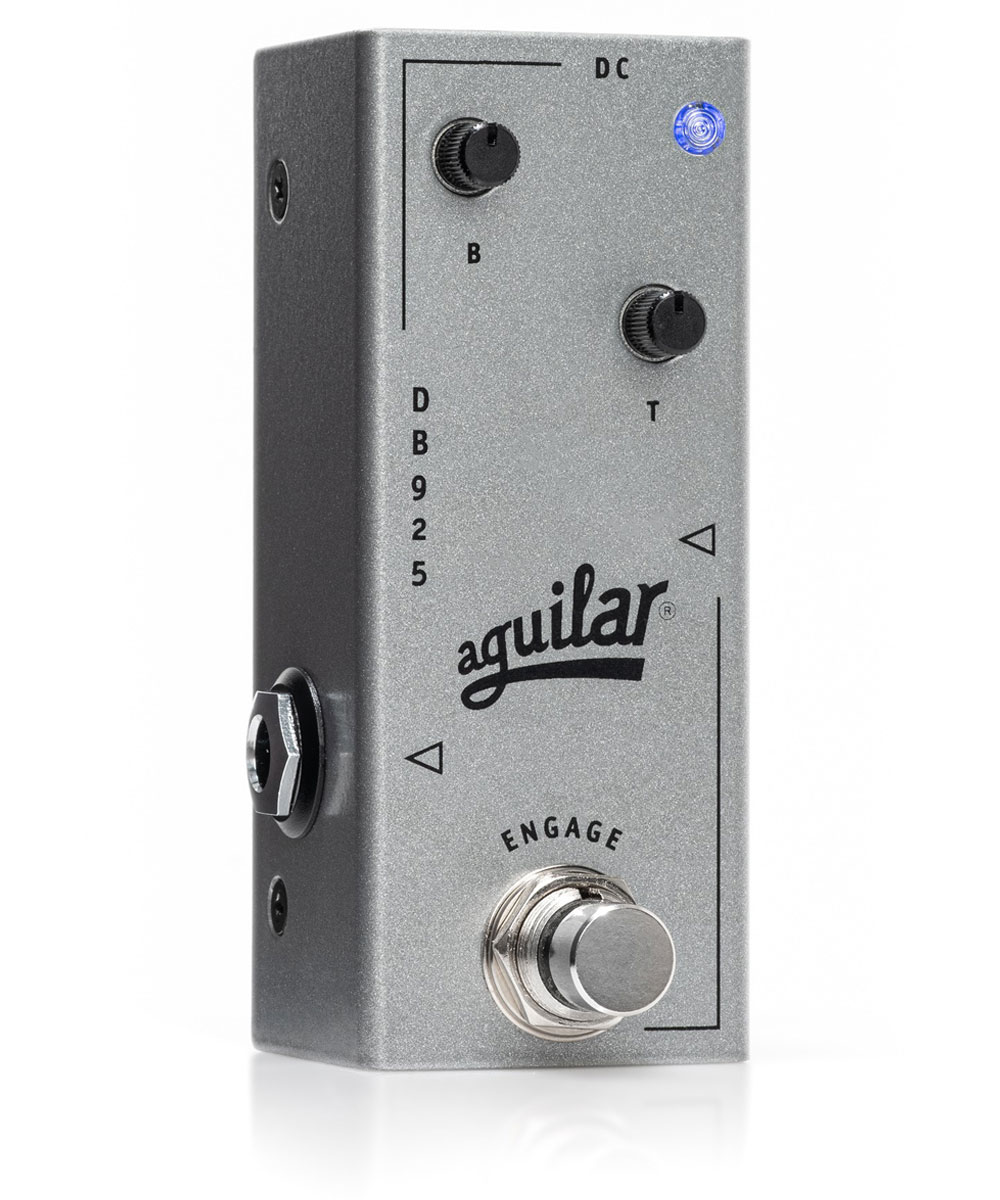
If you plug a passive bass into an outboard preamp of some sort, you still have a passive bass, even if the outboard preamp has the same exact circuit as an inboard preamp.
Using one of these does not change a passive bass to active. But you do get most of the functionality and benefit of an active bass.

- Feb 12, 2006
- 61,051
- 5
- 221,020
- Disclosures
- Development Engineer-Mesa Boogie, Development Engineer-Genzler (pedals), Product Support-Genz Benz
Yes, your wireless system does effectively turn your passive bass into an active bass as far as the amp is concerned.If I use a wireless system for a passive bass, given the signal from the receiver unit to the amp is battery-powered, does this effectively turn a passive bass into an active one? If so should I plug the receiver into the active socket on my amp?
The active inputs are generally lower sensitivity because traditionally active basses had higher signal levels but this isn't always true. Some active basses have a trim control to set the level, some are designed to have the level of a typical passive bass, and there are passive basses that are stupid hot.
In the old days, there was a resistive pad used on the inputs, but these don't work well at all with high output passive basses because they load down the pickups and they tend to sound/feel dead. Some designers these days (including me) no longer do it this way, instead, we reduce the gain of the circuit itself, leaving the input impedance untouched.
Thanks for all your replies, I hadn’t fully appreciated the difference between an active and passive bass, especially re equalisation; every day a school day eh? I’ve a Laney RB8 combo with ‘Normal’ and ‘High’ inputs and wasn’t sure what I should plug the wireless receiver jack into; it looks like trial and error is the order of the day and I suspect I’ll go for the loudest!
- Feb 12, 2006
- 61,051
- 5
- 221,020
- Disclosures
- Development Engineer-Mesa Boogie, Development Engineer-Genzler (pedals), Product Support-Genz Benz

A wireless system is a pre-amp/conditioning stage in your signal chain. They do process and can change your signal, much like an active preamp in an instrument does.
Not all wireless units perform the same. Trying one with your rig in a gig situation with all the potential for interference is a good idea. Artifacts related to the wireless communication is one part of the equation.
It is important to consider, does it change the tonal character, for better or for worse, of your rig in comparison to plugging in directly with a cable? How hard it hits the first stage of your amp is important. Is it hi-fi or does it degrade your signal.
Not all wireless units perform the same. Trying one with your rig in a gig situation with all the potential for interference is a good idea. Artifacts related to the wireless communication is one part of the equation.
It is important to consider, does it change the tonal character, for better or for worse, of your rig in comparison to plugging in directly with a cable? How hard it hits the first stage of your amp is important. Is it hi-fi or does it degrade your signal.


