Just ordered one sight unseen. Hoping it will be a good match for my Fearless F112! 700W into 8 ohms.
@CL400Peavey has a post on that.
I have only run it with my F212.... But it should be impressive through a single woofer fearless as well.

TalkBass has been independent since 1998. Add your voice.
Create a free account to reply to discussions, view embedded media, and browse with fewer display ads.
Join free Log in
Want zero display ads or expanded classifieds tools? Compare plans.
Just ordered one sight unseen. Hoping it will be a good match for my Fearless F112! 700W into 8 ohms.
@CL400Peavey has a post on that.

Don't know if this has been addressed elsewhere in the thread but does/will the MiniMega have hardware for rack mounting?
On the bottom, there are three screws on each side that go into the aluminum side extrusions. You could possibly make a template to drill holes in the shelf and use those. You would probably need to remove the rubber feet and get longer screws from your hardware store.
I'd bet you could use industrial velcro with good results if you're not planning on shipping your rack.
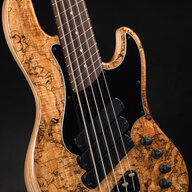
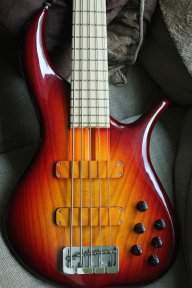


I really don't need another amp, as I'm quite happy with my GK MBF 500, but you guys have me just about convinced that I should buy one of these anyway!
Just got one from the classifieds here. Will be pairing with my Dually and Bassic. Good match @CL400Peavey ?
There's a difference between burst power and peak power. The 2000W peak rating on the box is simply marketing. The peak power of any amp is simply double the continuous power rating.
Burst power is the continuous power you get for a few cycles when playing music through an amp, measured with an oscilloscope. The mM burst power is around 1500W into 4 ohms and I think about 900W into 8 ohms.
Most power amps, no matter what type, do not run from regulated power supplies, so the power supply voltage the amp uses is higher than needed to hit rated power. When using a test sine wave signal and running at full continuous power for a long time, the supply voltage drops to a point just high enough to hit rated power output, and stays at that level for as long as the amp is pushed. If the input signal is removed, the rail voltage climbs back up. That scenario is difficult to duplicate when reproducing music or playing bass. If you play music through the amp, the rail voltage doesn't really get the chance to drop very far, so the amp has extra headroom all the time. This is also why the 8 ohm power rating of some amps is more than half of the 4 ohm power rating, because the lighter 8 ohm load doesn't make the supply sag as much.
The mM power supply is regulated, but only to a certain point. This results in sort of a best of both worlds scenario because the regulation effectively lowers the output impedance of the supply to increase the "impact" of bass hits, in other words, the supply pushes back against the amp load, and the rail voltage is higher than needed to keep headroom in reserve.
One reason why I like using a regulated supply is that the line voltage from wall sockets varies a great deal and sags pretty bad under load, which hurts amp performamce, so the supply regulation fights against that as well.
Wow. That's fast.Just got one from the classifieds here. Will be pairing with my Dually and Bassic. Good match @CL400Peavey ?
Pretty crazy to want the minimega when I have a Puma 900...but if that "burst power" is real I might just order one...

There's a difference between burst power and peak power. The 2000W peak rating on the box is simply marketing. The peak power of any amp is simply double the continuous power rating.
Burst power is the continuous power you get for a few cycles when playing music through an amp, measured with an oscilloscope. The mM burst power is around 1500W into 4 ohms and I think about 900W into 8 ohms.
Most power amps, no matter what type, do not run from regulated power supplies, so the power supply voltage the amp uses is higher than needed to hit rated power. When using a test sine wave signal and running at full continuous power for a long time, the supply voltage drops to a point just high enough to hit rated power output, and stays at that level for as long as the amp is pushed. If the input signal is removed, the rail voltage climbs back up. That scenario is difficult to duplicate when reproducing music or playing bass. If you play music through the amp, the rail voltage doesn't really get the chance to drop very far, so the amp has extra headroom all the time. This is also why the 8 ohm power rating of some amps is more than half of the 4 ohm power rating, because the lighter 8 ohm load doesn't make the supply sag as much.
The mM power supply is regulated, but only to a certain point. This results in sort of a best of both worlds scenario because the regulation effectively lowers the output impedance of the supply to increase the "impact" of bass hits, in other words, the supply pushes back against the amp load, and the rail voltage is higher than needed to keep headroom in reserve.
One reason why I like using a regulated supply is that the line voltage from wall sockets varies a great deal and sags pretty bad under load, which hurts amp performamce, so the supply regulation fights against that as well.




Anybody have both the Peavey MiniMEGA & the Mesa D800?
I'd love to hear how they compare.
Tom, without engaging the Crunch feature or any of the other doodads (Kosmos, compressor), how would you compare the two amps in "harmonic interest" and in evenness/solidity/support of the notes across the registers of the bass -- i.e. are notes in the middle of the G-string as well supported as notes low on the A and E? How about pitch definition down low?The Peavey is a bit more neutral and open, and the D-800 is a bit more voiced, but in a musical way. More options/features with the MiniMega, and a bit more horsepower, but the D-800 is reasonably flexible, and plenty loud for my purposes.