• TalkBass has been independent since 1998. Add your voice.
    Create a free account to reply to discussions, view embedded media, and browse with fewer display ads.
    Join freeLog in
    Want zero display ads or expanded classifieds tools? Compare plans.

Peavey T-40 Club

Status
Not open for further replies.
Just caught this on eBay for $250 (and shipping).

SBX25247_91609.jpg
 
Can someone comment on this tiny sized T-40 photo? It's a local sale and has a single EMG active EQ installed, but original electronics included. What jumps out at me is the bridge. I've yet to see another T-40 with that style of bridge installed so I'm guessing it's from a different model of bass. I defer to the T-40 club. :)

peavey_t40_001.jpg
 
What jumps out at me is the bridge. I've yet to see another T-40 with that style of bridge installed so I'm guessing it's from a different model of bass. I defer to the T-40 club. :)

peavey_t40_001.jpg

The bridge itself looks right. There something on either side of it. Are they just sitting there or mounted?

I guess the marks in the case lid liner kind of suggest that they are mounted (?)
 
You're correct, there are two 9V battery clips attached to the sides of the bridge. These are used to power the active EQ that was installed. I found an older black T-40 with blade pickups I purchased shipped instead of this particular one which was local so I didn't get to see or test it in person. But the owner stated the active EQ install was done without any permanent mods to the bass so it could be returned to stock condition.
 
We'll I've joined the T-40 club with the purchase of a partially working black, blade-pickup, rosewood fretboard T-40. Phase switch is defective, neck pickup doesn't work, minor dings. I have already pulled all of the electronics for testing and re-soldering. Hopefully the neck pickup isn't the actual pickup and instead is a simple wiring issue. Otherwise I'll probably just swap the bridge/neck pickup as I normally play in the neck position anyway. And I can live without the phase switch, though I'll see if I can come up with something that seems to match visually.

The funniest thing about this base is it's obviously been used. There's dents and dings and a ton of buckle dents on the back. But the silly plastic covering on the pick guard was still on there. Too funny I tell you. Who the hell gigs around with a guitar and leaves the pickguard plastic on all that time?

Ahhhh, the life of an ancient T-40 owner trying to scrounge non-existent parts. :)

I have one question about the Peavey cases. They *always* have Peavey somewhere on them, correct? The instrument was listed as having an OHSC but came in a non-labeled rectangular tolex case with brown covering inside. It looks like a generic, boring case. Can someone confirm the non-molded Peavey cases had Peavey clearly labeled on them somewhere? Interior looks more yellowish in the photos thanks to the flash but it is definitely brown in real life.

peavey_t40_001.jpg

peavey_t40_002.jpg

peavey_t40_003.jpg
 
I had a 79 T-40 that I bought new before there were molded plastic cases. It was a generic case without the brand name anywhere on it. It was not unlike the one you have, but I remember my interior being molded and black inside. And it was very heavy.

In fact, with the bass in the case, it was heavier than I was!
 
OK, I've done some troubleshooting on my T-40 neck pickup and narrowed it to the TONE POT as the culprit. I'm confident it was the .022 OHM resistor as it instantly fell apart when trying to remove it. Plus the following troubleshooting.

* Neck pickup physically works if I wire it to the volume only.
* Neck pickup physically works if wire the tone to the volume without any resistor.

Which leads me to my questions.

* Can I wire tone to the vol directly without the resistor without any serious negative effects?
* Basically I can follow schematics and solder, but without actual electronics knowledge to understand what positive/negative effects the resistor provides.
* Locally the smallest I can get is a .47 OHM resistor, could I use that instead of a .022 OHM and what effect would it have?
* Lastly, I could just bypass tone pot completely and wire directly to volume only.

The best solution would probably be to just replace all the resistors and capacitors and freshly re-wire everything as overall preventive maintenance and be done with it all. But I need an instant fix as well so I can string this bad boy back up and start playing it.
 
OK, I've done some troubleshooting on my T-40 neck pickup and narrowed it to the TONE POT as the culprit. I'm confident it was the .022 OHM resistor as it instantly fell apart when trying to remove it. Plus the following troubleshooting.

* Neck pickup physically works if I wire it to the volume only.
* Neck pickup physically works if wire the tone to the volume without any resistor.

Which leads me to my questions.

* Can I wire tone to the vol directly without the resistor without any serious negative effects?
* Basically I can follow schematics and solder, but without actual electronics knowledge to understand what positive/negative effects the resistor provides.
* Locally the smallest I can get is a .47 OHM resistor, could I use that instead of a .022 OHM and what effect would it have?
* Lastly, I could just bypass tone pot completely and wire directly to volume only.

The best solution would probably be to just replace all the resistors and capacitors and freshly re-wire everything as overall preventive maintenance and be done with it all. But I need an instant fix as well so I can string this bad boy back up and start playing it.

Fix the phase switch first. When mine got broke, it acted as a short or open to the bridge pup so I only had output from the neck pup. You could be experiencing something similar.
 
Phase switch is "fixed" by totally removing it. :) I've temporarily wired the neck pickup directly to the volume (no tone at all) to have two working pickups. Will most likely just totally un-solder everything, clean all lugs, and completely re-solder everything. The original solder points are sloppy as all get go. The pickup wire soldered to the volume pot was totally loose in the joint, but was still somehow still making a connection. I just need to find a replacement phase switch (which I'll likely never use) and .022 OHM resistor.

BTW it's a super friggin' great bass. So much low end and smooooooth unlike my Ibanez basses which are comparatively thin sounding unless you EQ the bejesus out of them. My favorite part is how MANLY they look. Big, black, chrome everywhere, big head stock - a classic muscle car of a bass.
 
P
BTW it's a super friggin' great bass. So much low end and smooooooth unlike my Ibanez basses which are comparatively thin sounding unless you EQ the bejesus out of them. My favorite part is how MANLY they look. Big, black, chrome everywhere, big head stock - a classic muscle car of a bass.

Don't have to tell me, I have 2 of them! :D
 
I have one question about the Peavey cases. They *always* have Peavey somewhere on them, correct? The instrument was listed as having an OHSC but came in a non-labeled rectangular tolex case with brown covering inside. It looks like a generic, boring case. Can someone confirm the non-molded Peavey cases had Peavey clearly labeled on them somewhere? Interior looks more yellowish in the photos thanks to the flash but it is definitely brown in real life.
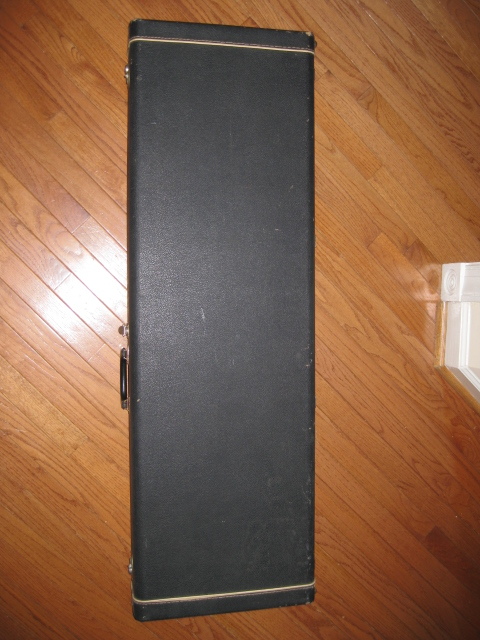
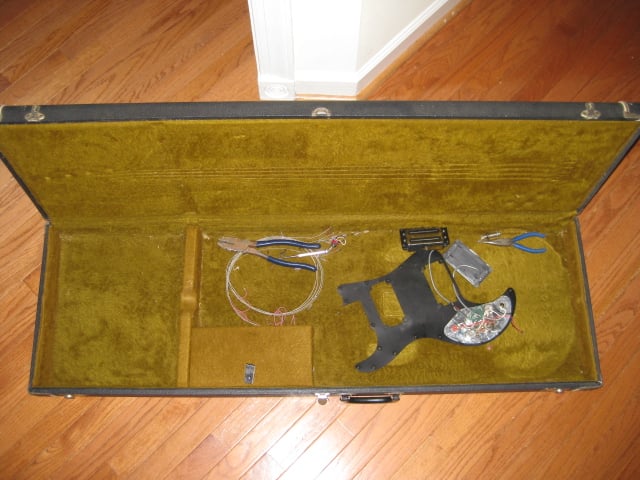
peavey_t40_002.jpg

peavey_t40_003.jpg

I have a '79 PAF T-40 which I bought from the original owner. The case I have is the same one as in your pix. I always thought the "real" Peavey case was the triangular blow molded thing, but the guy I bought it from swore it was the factory case that came with the bass when he got it. I've come to believe the early T-40's were out before the plastic cases - and that the first factory cases were indeed these brown interior jobs.
 
I have a '79 PAF T-40 which I bought from the original owner. The case I have is the same one as in your pix. I always thought the "real" Peavey case was the triangular blow molded thing, but the guy I bought it from swore it was the factory case that came with the bass when he got it. I've come to believe the early T-40's were out before the plastic cases - and that the first factory cases were indeed these brown interior jobs.

He's right. The very early T-40's came out with standard Tolex cases. The molded cases came very shortly thereafter.

The black bass above did not come with that case. The blade pickup basses all came with molded plastic cases.
 
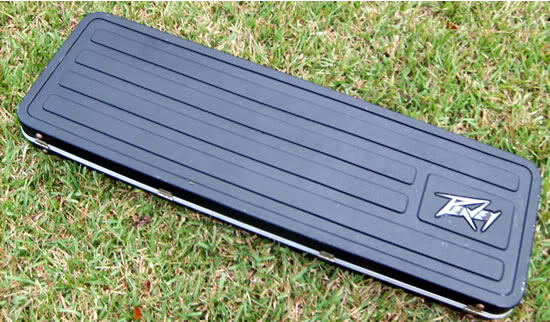
My 1978 has this case:

T40case.jpg

So does mine. I was told by Chip Todd that they only used that case for a short time, and that it was actually pretty rare (apparently they had a problem with them coming apart and warping). In fact, yours is the only other one I've ever seen.


edit: Going back through the thread, I see that a few others have this style case as well.
 
So does mine. I was told by Chip Todd that they only used that case for a short time, and that it was actually pretty rare (apparently they had a problem with them coming apart and warping). In fact, yours is the only other one I've ever seen.


edit: Going back through the thread, I see that a few others have this style case as well.

Well, I suppose it's possible they used these rectangular molded cases initially, had problems with them as you suggested, then went to the brown/tolex "generic" case while they retooled to make the triangular case we've all come to recognize as the "normal" T40 case. Plastic molding tooling to make a case like that is not made overnight, it wouldn't be surprising if they had to come up with an interim solution.

Of course, this is little more than my idle speculation...
 
Status
Not open for further replies.