
Enjoy the benefits of a premium membership!
Upgrade Account
-
TalkBass has been independent since 1998. Add your voice.
Create a free account to reply to discussions, view embedded media, and browse with fewer display ads.
Join free Log in
Want zero display ads or expanded classifieds tools? Compare plans.
You are using an out of date browser. It may not display this or other websites correctly.
You should upgrade or use an alternative browser.
You should upgrade or use an alternative browser.
Peeps who can't keep a beat
- Thread starter Joe Nerve
- Start date
More options
Who Replied?So there was a theory that in early life we all (or a very large percentage anyhow) have perfect pitch and maybe even a form of synthesia but we quickly lose it if we don't put it to use.
This is why scientists believe we have the tonal system we've got in modern music today: The notes, progressions, chords and so on resonate with the pitch we use when speaking. You'll notice that singers often have a very pleasant voice, not necessarily the tone, but the manner in which they use their voice when speaking normally, and those who have a particularly annoying voice (again, not necessarily the tone, rather the pitch in which they are speaking) are seldom musicians. This would imply it's all about genetics in combination with the nurturing of these particular traits. In my case, my "natural" (when I relax my vocal chords and just make sounds from my chest) note is a perfect A. That isn't a coincidence.
For the life of me, I can't remember where I saw this, I think it was in some BBC documentary.
TALENT!!!, which, according to Ford, is simply experience... that is, PAST life experience. Once you consider that you have 10's of thousands of years ( incomprehensible, but my mind is open to this, and I do not use drugs!! ) to have your experiences... everything else makes sense.
honey said it, why doubt it?
first of reincarnation isn't real.
second i doubt it because it's a logical impossibilty. I'm not doubting he had perfect pitch, i am doubting he could identify notes by name without ever having the concept of named notes.
in the same way a baby can recognise it's parents, but it won't be able to say their names until it's told what they are.

Do you really need a scientist to tell you whether or not someone can have natural talent? Are you that unsure of your own powers of observation?
Talent with skill is best. But sometimes talent can overcome a lack of skills, so talent without skill isn't completely worthless.
In regard to the OP, people without talent can learn, but I wouldn't say the sky is the limit. I can practice basketball 8 hours a day but I'll never be able to dunk.
I have more experience in flight instruction than music instruction. Some people have natural aptitude and others have little. Some instructors have told individuals to give it up. Other instructors then taught those individuals to fly. They could learn to a certain level, but they would have washed out of Top Gun.
Agreed. And I belive that each individual musicians have different 'natural strengths'. Just because a person have person pitch doesnt make him a great musician. If he doesnt put it to good use, it is just a curse that gives him headache whenever someone plays a tad out of tune.
What makes a good musician? A good sense of rhythm? melody? taste? creativity? technique? a great vocal timbre? a good vocal range? a good ear for improvisation? a good ear for tone?
There's just too many factors to be taken in. I personally dont have perfect pitch, and I have to say my sense of beat was pretty bad when I first started out. But fast forward 4yrs, I have to say I have improved considerably. Not to say talent doesnt play a part, but I dont believe theres nothing you cant hone. Every musicians should find out what their 'weak' points are, and work on it with extra effort.
Rhythm is arguably the most important aspect in music, and my bro imo has more talent than me in that aspect. Songs I need to take days to play and sing to, he can do it in half the time. But he havent been practising as much these few years, while Ive been doing so consistently. And with all due respect to him, Im at a totally different level than him now. Anything hes going to take weeks to learn, I can do it by ear now.
I think the biggest 'curse' any musician can suffer is not the lack of natural talent, but rather the lack of passion. And yes, I have seen musicians who claim to have played for 'more than 10 years' but still 'suck'.
But you have to take into account whether how often they practise. Someone who practise 6hours a day for 4years if going to be much better than someone who practises 1hour a week for 10years. Also, I find that the good musicians i know, they challenge themselves constantly. In the sense that, they practise hard but smart at the same time.
They understand that what they are performing is muscle memory, and they approach it in the most effecient manner. Alot of musicians doesnt improve because they just keep playing the same old stuff and keep staying in their comfort zone. The good musicians will keep trying until they get the piece right. They would set the metronome at a slow speed and practise it for hours daily till they get it clean, then get it up to speed. Isnt that the advise that most people give? BUT, how many people has got the discipline and patient to do it?
For me, discipline and patience is the most important attributes in an individual's development to become a competent musician. If you have perfect pitch, good sense of rhythm then you have an edge. But it is still nothing without effort.
The one thing I notice When I compare those who have mucho 'natural talent' is they usually practice way more than me, have more will to stick with it when they don't get something. Me, I get frustrated after 20-30 minutes if I'm struggling with a musical idea and have to take a break..
However, all the natural talent guys I know sit around learning songs and creating music all day but when it comes to jamming in the band, us trained musicians run circles around them... Just my experience.
However, all the natural talent guys I know sit around learning songs and creating music all day but when it comes to jamming in the band, us trained musicians run circles around them... Just my experience.
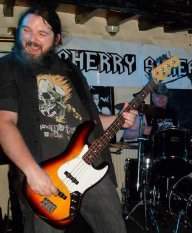
What is your take on Jaco's creativity, jus' saying, as a matter of interest?
this thread has become quite informative.
It seems that at least some scientific research affirms that talent is acquired, not innate. I am humbly yet appropriately smug
(Edit: spellcheck made it NON scientific)
My 2 cents. I believe in reincarnation, as did Henry Ford. Ford said this gives a person a very relaxed attitude... better yet, here is a quote from an extremely talented person: Mr Ford is quoted as saying "I adopted the theory of reincarnation when I was 26. Genius is experience. Some think to seem ( typo on net! ) that it is a gift or talent, but it is the fruit of long experience in many lives".
my opinion on this is that we are a product of our environment, so a little bit like Suraci's idea but I'm not so convinced by the whole re-incarnation bit.
as such I agree to an extent with Mambo4 in that I don't believe 'Talent' is something that you either have or don't have, and that you can learn anything, the Caviat I place on that is that your environment will affect your ability to learn different skills to an advanced level, and I'm not going to disagree with the previous post that suggested Environment at an earlier stage in life will affect potential to learn greater than it does in later life.
Skitch, based on that, I would say Jaco's 'Talent' would have been based on his ability to learn which would have been influenced by his environment at the early stages of his life, and from that point all the way up to his death.
all my opinion and in no way definitive (after all our environments all differ slightly and as such end up defining our opinions differently)
NB: much Kudos to Skitch who on the first page of this thread defended Mambo4's opinion (or right to an opinion) even though it opposed his own.

but you do need one to tell you his best guess of how the wind will blow tomorrow
Fixed.
Do you know the difference between a pilot and the weatherman? If the pilot's wrong the pilot dies. If the weatherman's wrong, the pilot dies.

Edit: And for all the talk of science, I haven't seen one piece of scientific data on this thread that shows natural talent doesn't exist. Only a link to Joe Hubbard which cites a study that says even talented people must practice to attain expertise. Duh. The link to that study went to a study that cited the study. Which was at the Music Academy of West Berlin. Do they have a program for the non-talented there? As a side note, I thought it was humorous that it said the ones that practiced less became teachers, who's opinions were used to determine which students were most likely to succeed.
Where are all the "scientists" on this board that are always ready to point out the faults in studies?

Skitch, based on that, I would say Jaco's 'Talent' would have been based on his ability to learn which would have been influenced by his environment at the early stages of his life, and from that point all the way up to his death.
I thank you Sir for your words in your post.
In Jaco's case, I'd just like to say that imo, the thing that ultimately saw to his demise, was a big factor in his greatness and other artist's, actor's/tresses et al, as well as the factors you have related. I do see both sides of this coin, it's interesting stuff, and as you have related, an opinion is just that, and everyone has their own and long may that continue
Fixed.
Do you know the difference between a pilot and the weatherman? If the pilot's wrong the pilot dies. If the weatherman's wrong, the pilot dies.
Edit: And for all the talk of science, I haven't seen one piece of scientific data on this thread that shows natural talent doesn't exist. Only a link to Joe Hubbard which cites a study that says even talented people must practice to attain expertise. Duh. The link to that study went to a study that cited the study. Which was at the Music Academy of West Berlin. Do they have a program for the non-talented there? As a side note, I thought it was humorous that it said the ones that practiced less became teachers, who's opinions were used to determine which students were most likely to succeed.
Where are all the "scientists" on this board that are always ready to point out the faults in studies?
I agree that there is such a thing as "natural talent", if by that we mean that musical aptitude is in part affected by genetic influences. I also think the study you refer to has some very questionable aspects. But I'd also point out the following:
1) A prediction and a guess are not the same thing.
2) There's LOTS of people posting on this board; if you think there's no scientists (why the quotation marks otherwise?) then you need to go back and resit Probability 101.

Just kidding, in that regard. But, more generally...
The reason I mention it is that I see a lot of posts on TB along the lines of "Huh - scientists? What do they know?" There's one or two in this very thread. Presumably they don't see the irony entailed by their apparent disregard for technical expertise and their owning a refrigerator / flying on a plane / getting infertility treatment / posting on the Internet, et cetera.
People who think that accepting or disregarding the findings of scientists is just a matter of personal choice clearly don't understand the nature of science.

This is something I posted in a thread entitled what is the correct age to start to learn how to read music:
I think it relates to this discussion - especially the links at the end.
Presuming the child is interested and demonstrates aptitude, the earlier they learn to read and play music, the better.
There have been studies that show the brains of children who learn to read and play music before the age of seven develop differently than those who either do not read and play music or who learn later in life.
The difference (IMO) is very significant and important in that it creates a better connection between the left and right (logic and emotional) hemispheres of the brain. Theoretically this can be responsible for better problem solving skills and the ability to perceive, understand and use patterns in other areas seemingly unrelated to music - like math or computer programming logic.
While people who don't have the benefit of learning music at an early age still do fine, even excel in all areas, there is a measurable difference in how their brain and an early trained musician's brain process information and I can't help but think that being able to leverage both hemispheres is a plus.
what is the correct age to start to learn how to read music
http://www.pbs.org/wnet/musicinstinct/
I think it relates to this discussion - especially the links at the end.
Presuming the child is interested and demonstrates aptitude, the earlier they learn to read and play music, the better.
There have been studies that show the brains of children who learn to read and play music before the age of seven develop differently than those who either do not read and play music or who learn later in life.
The difference (IMO) is very significant and important in that it creates a better connection between the left and right (logic and emotional) hemispheres of the brain. Theoretically this can be responsible for better problem solving skills and the ability to perceive, understand and use patterns in other areas seemingly unrelated to music - like math or computer programming logic.
While people who don't have the benefit of learning music at an early age still do fine, even excel in all areas, there is a measurable difference in how their brain and an early trained musician's brain process information and I can't help but think that being able to leverage both hemispheres is a plus.
what is the correct age to start to learn how to read music
http://www.pbs.org/wnet/musicinstinct/
Those studies are interesting, thanks.This is something I posted in a thread entitled what is the correct age to start to learn how to read music:
I think it relates to this discussion - especially the links at the end.
Presuming the child is interested and demonstrates aptitude, the earlier they learn to read and play music, the better.
There have been studies that show the brains of children who learn to read and play music before the age of seven develop differently than those who either do not read and play music or who learn later in life.
The difference (IMO) is very significant and important in that it creates a better connection between the left and right (logic and emotional) hemispheres of the brain. Theoretically this can be responsible for better problem solving skills and the ability to perceive, understand and use patterns in other areas seemingly unrelated to music - like math or computer programming logic.
While people who don't have the benefit of learning music at an early age still do fine, even excel in all areas, there is a measurable difference in how their brain and an early trained musician's brain process information and I can't help but think that being able to leverage both hemispheres is a plus.
what is the correct age to start to learn how to read music
http://www.pbs.org/wnet/musicinstinct/
They link in many ways to my own specialism - teaching science (or, more accurately, teaching other people how to teach science). All the research I've seen, and also some of my own, indicates that it is good to teach abstractions as soon as learners show signs of being able to deal with them, regardless of their chronological age.
Those studies are interesting, thanks.
They link in many ways to my own specialism - teaching science (or, more accurately, teaching other people how to teach science). All the research I've seen, and also some of my own, indicates that it is good to teach abstractions as soon as learners show signs of being able to deal with them, regardless of their chronological age.
I agree. Regarding "peeps who can't keep a beat" - I presume this means people who are already old enough to be in a band - adolescent or adult. Citing my friend who is my age (43) and who had a similar, but not identical musical upbringing, there is an argument that can be made that some people, for whatever reason, have a very difficult time connecting the dots, so to speak.
Sort of like seeing riding a bike - before you figure it out it can seem almost impossible, but once you do you wonder how you ever found it to be so challenging.
I believe with older people - those whose brains are not as mailable as a young child's - once intellect factors into the mix it can be as much a catalyst for learning (rhythm) as it can be a barrier to it. Call it 'thinking too much'.
My friend seems to suffer from a condition where he has to expend more energy than he should to 'think' about counting bars. Clearly he has the technical ability to reproduce music accurately and when he composes his own, it's fine as long as you accept continually variable time signatures
 - Starts off fine in 4/4 but the minute a complicated run or riff is involved the time sig may need to fluctuate to accommodate it... And this is not done intentionally. It's as if once he starts playing, he only hears the notes and loses all sense of there the bars start and end.
While I know it's true that there are many instances of music with time sig changes - his are not by design. When you lay down a simple 4/4 beat and try to get him to jam some 12 bar, unless he's soloing, he'll inevitably miss changes adding beats here, dropping beats there - and you can see this frustrates him to no end.
While I believe he is capable of overcoming this hiccup, it's very hard to see how until he breaks whatever paradigm was established early on that now prevents him from being able to conceptualize rhythm in real time.
I agree that there is such a thing as "natural talent", if by that we mean that musical aptitude is in part affected by genetic influences. I also think the study you refer to has some very questionable aspects. But I'd also point out the following:
1) A prediction and a guess are not the same thing.
2) There's LOTS of people posting on this board; if you think there's no scientists (why the quotation marks otherwise?) then you need to go back and resit Probability 101.
Just kidding, in that regard. But, more generally...
The reason I mention it is that I see a lot of posts on TB along the lines of "Huh - scientists? What do they know?" There's one or two in this very thread. Presumably they don't see the irony entailed by their apparent disregard for technical expertise and their owning a refrigerator / flying on a plane / getting infertility treatment / posting on the Internet, et cetera.
People who think that accepting or disregarding the findings of scientists is just a matter of personal choice clearly don't understand the nature of science.
Actually I did resit probability 101

I was only stating that sometimes the obvious is obvious. Then someone comes along and says “You are setting up a false dichotomy” and proceeds to provide a lovely explanation of science. There are certainly scientists on the board. But there are also many that claim to know what's scientific and what's not that have little or no scientific experience.
What I find most is that people have a particular idea and like science that agrees with it. Scientists have become the high priests of the secular world. Yet much science is disregarded if it doesn’t fit with a particular view.
Mozart is used as an example in this situation, yet no one really knows what his environment was like. But I’ll give one example I’m very familiar with. There is a child at my church that is now 10 years old. He was adopted as an infant from a mother with a drug problem. No one in his adoptive family plays musical instruments or sings.
At the age of 5 this child sat a cheap keyboard and began playing along with the music playing on the stereo. He can play anything he hears. He also has a lovely voice. He was not reared in an environment that would promote this anymore than my children, who have been exposed to my music since the womb.
The kid has talent. I don’t need a scientist to explain that to me. But that doesn’t mean I think scientists don’t know anything.
On a side note, the family also adopted his half sister a couple of years later. She has no musical inclination.
This is what I tell my students when they look at a weather forecast:
20% chance of rain = We don’t think it will rain but it might.
50% chance of rain = We don’t know what the hell it’s going to do.
80% chance of rain = We think it will rain but it might not.
It’s an educated guess. But Tuesday I flew out of Nashville and checked the weather. It was forecast to be clear. It was overcast. I could see that by walking outside and looking up. But the current weather observation said scattered. Did the guy even bother to look out the window?
I agree that there is such a thing as "natural talent", if by that we mean that musical aptitude is in part affected by genetic influences. I also think the study you refer to has some very questionable aspects. But I'd also point out the following:
1) A prediction and a guess are not the same thing.
2) There's LOTS of people posting on this board; if you think there's no scientists (why the quotation marks otherwise?) then you need to go back and resit Probability 101.
Just kidding, in that regard. But, more generally...
The reason I mention it is that I see a lot of posts on TB along the lines of "Huh - scientists? What do they know?" There's one or two in this very thread. Presumably they don't see the irony entailed by their apparent disregard for technical expertise and their owning a refrigerator / flying on a plane / getting infertility treatment / posting on the Internet, et cetera.
People who think that accepting or disregarding the findings of scientists is just a matter of personal choice clearly don't understand the nature of science.
I grew up during the height of the space race, when science and scientists were held in high regard. Since then, the image of science in the public arena has been soiled by greed, politics and dishonesty. It has gotten to the point that I commonly hear the phrase "Lies, Damned Lies, and Science". Science should be pure and honest, but our society is so corrupt that it taints everything it touches.

The OP's question is not "can music exist without talent", it is: "can one learn music without talent". At least that's the question I'm trying to answer.
LOL 4 pages in is a good place to restate the thesis, for sure.
I think "talent" (like "groove" or "feel") is starting to look a bit too fuzzy of a term for absolute statements - which I am guilty of. It means slightly different things to different people, so disagreements are starting to boil down to definitions.
A definite foil to my earlier assertions (that talent is nurture not nature) are things like absolute pitch and true tone deafness (amusia) , which they absolutely do constitute what I'd consider "natural" talent/lack thereof. So things get fuzzy...
Kudos to everybody who has posted so far, this thread has made me think things over quite a bit. Hopefully we don't derail into debating reincarnation and the scientific bias.
So here's a wrench:
Do you think talent be learned?
My response is yes - but that I suppose depends on how we define "talent"
My thinking: I didn't touch a bass before age 13, nor take serious "interest" in music before age 18.
12 year old me would clearly have shown no remarkable talent.
People who meet me today, after 20+ years of playing, might assert that I have "talent",
but I think those who knew me at 12 years old would not have seen any "talent".
Do you think talent be learned?
My response is yes - but that I suppose depends on how we define "talent"
My thinking: I didn't touch a bass before age 13, nor take serious "interest" in music before age 18.
12 year old me would clearly have shown no remarkable talent.
People who meet me today, after 20+ years of playing, might assert that I have "talent",
but I think those who knew me at 12 years old would not have seen any "talent".
So here's a wrench:
Do you think talent be learned?
I can juggle and I certainly didn't pop out with that ability.
When I consider people's perception of 'naturally talented' - as in able to pick up new, relatively complicated skills, I believe it's all relative.
I was always considered 'talented' by my peers - and some added 'naturally' to that, which made me bristle because it seemed to negate the amount of honest effort and time I spent developing my talent.
Then I'd see another of my peers who was always one note better, one lick more advanced, one song ahead of me and in the back of my mind I used to thing he was just 'naturally' better than I was - and it felt quite true since I was putting in all sorts of time and energy and was always one step behind him.
But by the same token, I was always one step ahead of the other dudes - and the guy I was following was one step behind the dude he was following - and so on and so on.
One man's 'naturally talented' friend is another man's follower. My bet is that some of us do pick up on things faster than others - and others still faster than us. But I think it's like one of those sliding numbers puzzles where once you move one chip into an empty space, another opens up.
I grew up during the height of the space race, when science and scientists were held in high regard. Since then, the image of science in the public arena has been soiled by greed, politics and dishonesty. It has gotten to the point that I commonly hear the phrase "Lies, Damned Lies, and Science". Science should be pure and honest, but our society is so corrupt that it taints everything it touches.
I quite agree about science, with one "but" ( ha ha - btw this thread is great fun ) "but" when you say 'Science should be pure'... 2 thumbs up
Then you say.. our society is corrupt.... that is where a fallacy creeps in. Who does the word society include? ScienTISTS! And faulty assumptions, omissions by scientists. Maybe even the incorrect methodology for the problem
Blame society? Sure, to a point, but that word "society", while having meaning, is a little nebulous, don't you think? The term science refers partially to the practices of scientists and the thinking that led them to their practices.
Music, ( including pedagogy ) can be viewed through the prism of science, of course.
Eg music involves math in a major way ( no pun intended- ha ha ).
But science IS NOT music. IQ tests make a distinction between the two fields of knowledge.
The topic of science was probably brought out ( in this thread ) in terms of the human being and his ability to learn... at various stages of development.... can an untalented person learn, should he try etc. Again, science can help, but teaching music is NOT science.
Science is science, music is music. There is a tendency in society ( like TB ) to over simplify here. They are akin, but NOT the same thing.
Same can be said of art. "Science is in" painting, so to speak.
Science can be superimposed on the culinary arts as well.
What else? But does anyone think that an award winning chef HAS to have scientific talent to express his genius? Or Picasso, same question?
I am trying to put science and music and music learning, in their proper perspective. Science is limited. Science is imperfect. Science is very limited in terms of Ultimate questions about Life itself. Science USED to be "a god" of mine, no longer. (This will get into an argument that I don't wish to start. So... I apologize if I offended anyone ) Science observes processes in life, but science can be taken too far, given too much credence when commonsense of an artist will due just fine, thank you very much.
One of sciences major themes is solving problems. The legitimate problem in this topic is teaching a person with little or no talent, rhythm. Can science help here or not? I am open to opinions, as are the those who have much trouble with rhythm, I should hope.
I did not bring up science in the first place... but it is telling that a very good question about teaching music, has moved to the topic of science. Again, science is not entirely adequate to solve all of man's problems... but it can certainly help.
I can juggle and I certainly didn't pop out with that ability......
But by the same token, I was always one step ahead of the other dudes - and the guy I was following was one step behind the dude he was following - and so on and so on.
One man's 'naturally talented' friend is another man's follower. My bet is that some of us do pick up on things faster than others - and others still faster than us. But I think it's like one of those sliding numbers puzzles where once you move one chip into an empty space, another opens up.
+1 The single word that comes to mind when you express here is an unpopular word in this day and age
Hierarchy or hierarchal.
I believe I am well above average in talent , and at the same time, when I get feeling overconfident, I am also aware that at any time, a person with exponentially superior talent can come into my world.. "my pond".
We all live in a immensely huge Hierarchy.. not only with musical things, many many things. We are on a long journey. Ha ha. And no, I will never argue my conviction about past and future lives... no problem.
Then you say.. our society is corrupt.... that is where a fallacy creeps in. Who does the word society include? ScienTISTS! And faulty assumptions, omissions by scientists. Maybe even the incorrect methodology for the problem
Blame society? Sure, to a point, but that word "society", while having meaning, is a little nebulous, don't you think? The term science refers partially to the practices of scientists and the thinking that led them to their practices.
I fully intended that the Science community itself be included. There are plenty of politically motivated, grant-whoring corporate stooges in the scientific ranks.


