• TalkBass has been independent since 1998. Add your voice.
    Create a free account to reply to discussions, view embedded media, and browse with fewer display ads.
    Join freeLog in
    Want zero display ads or expanded classifieds tools? Compare plans.

Plastic jacks deteriorating

Axtman

Supporting Member
Mar 3, 2008
2,570
4,686
Seattle, WA
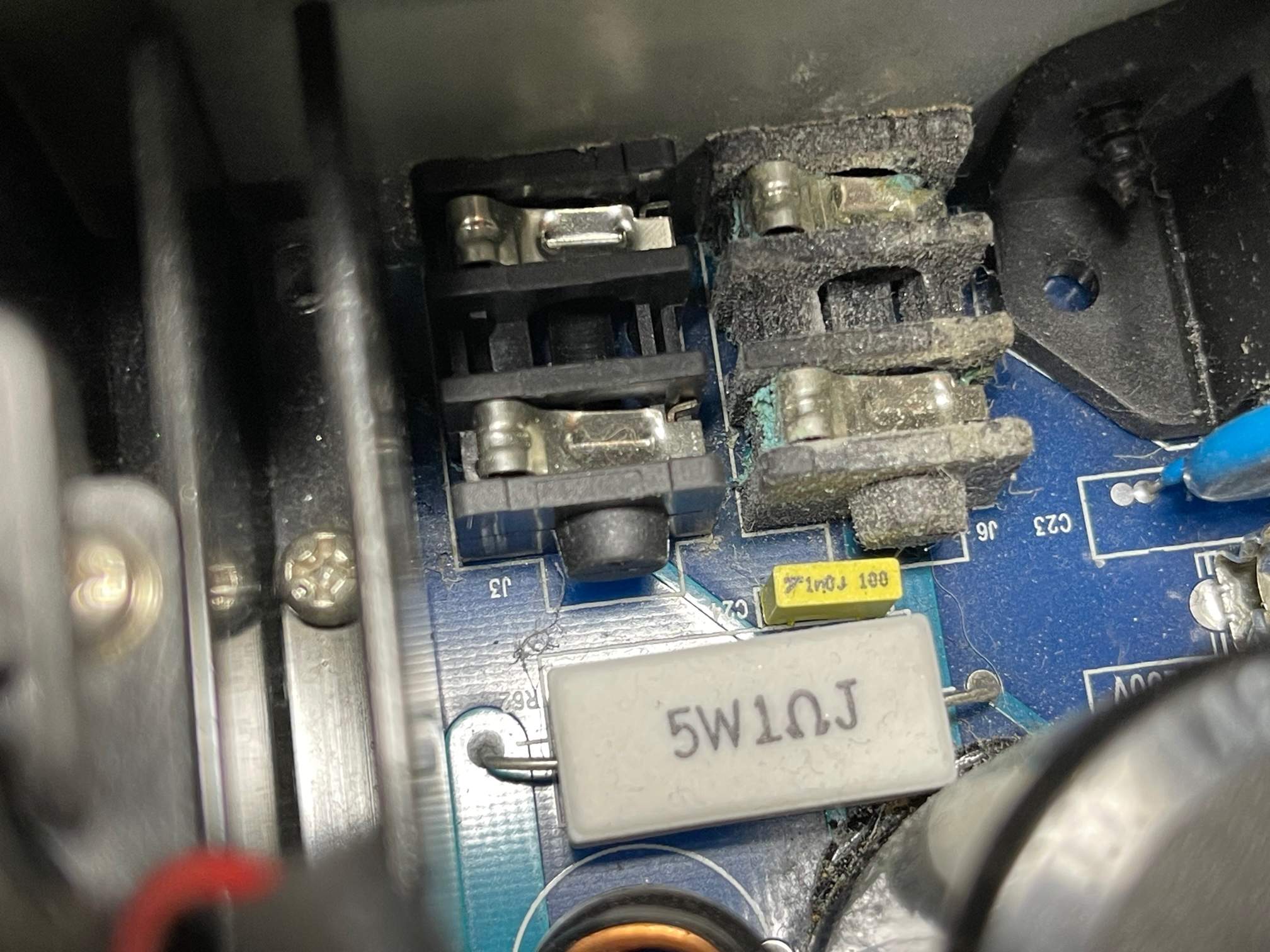
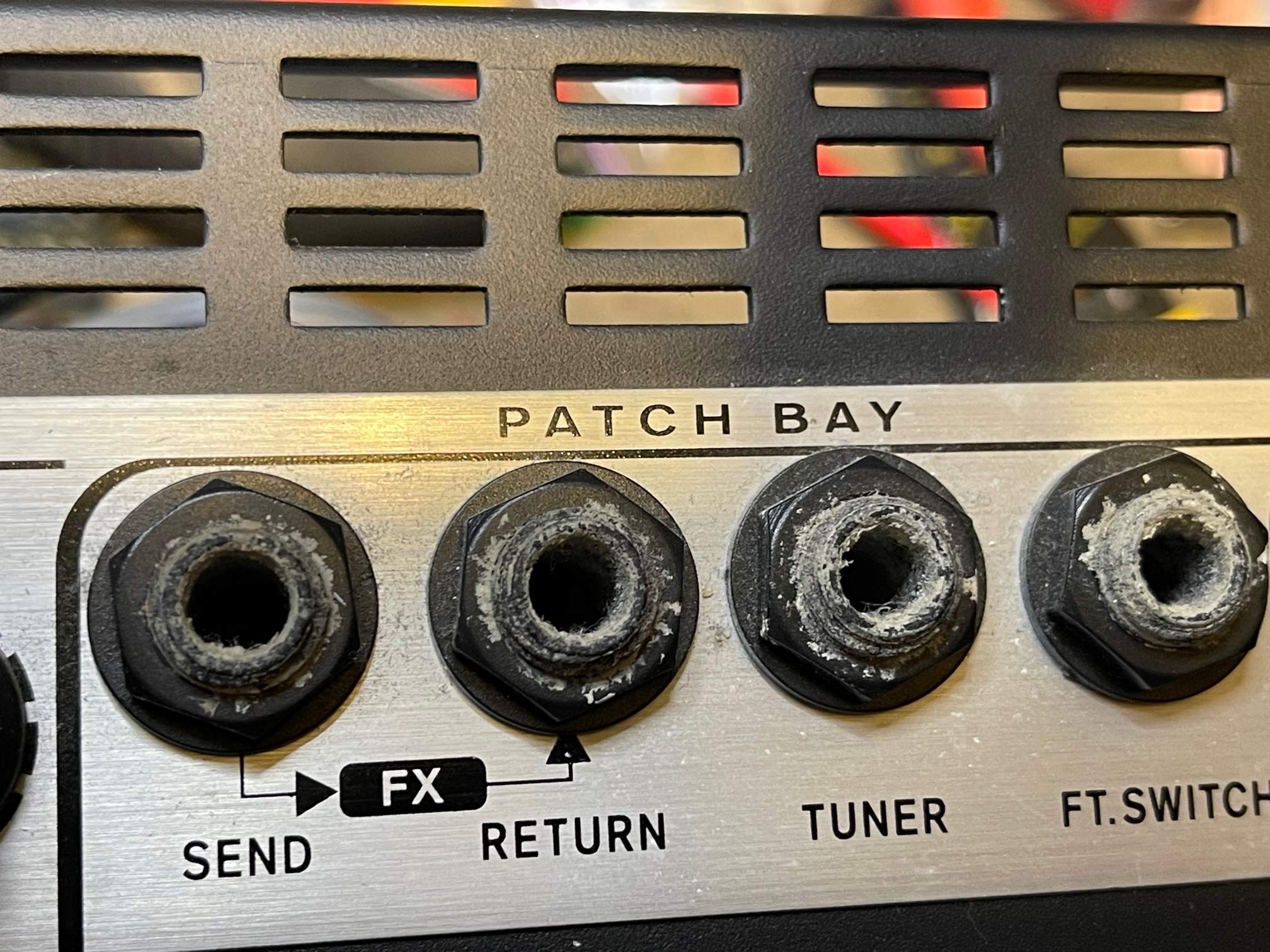
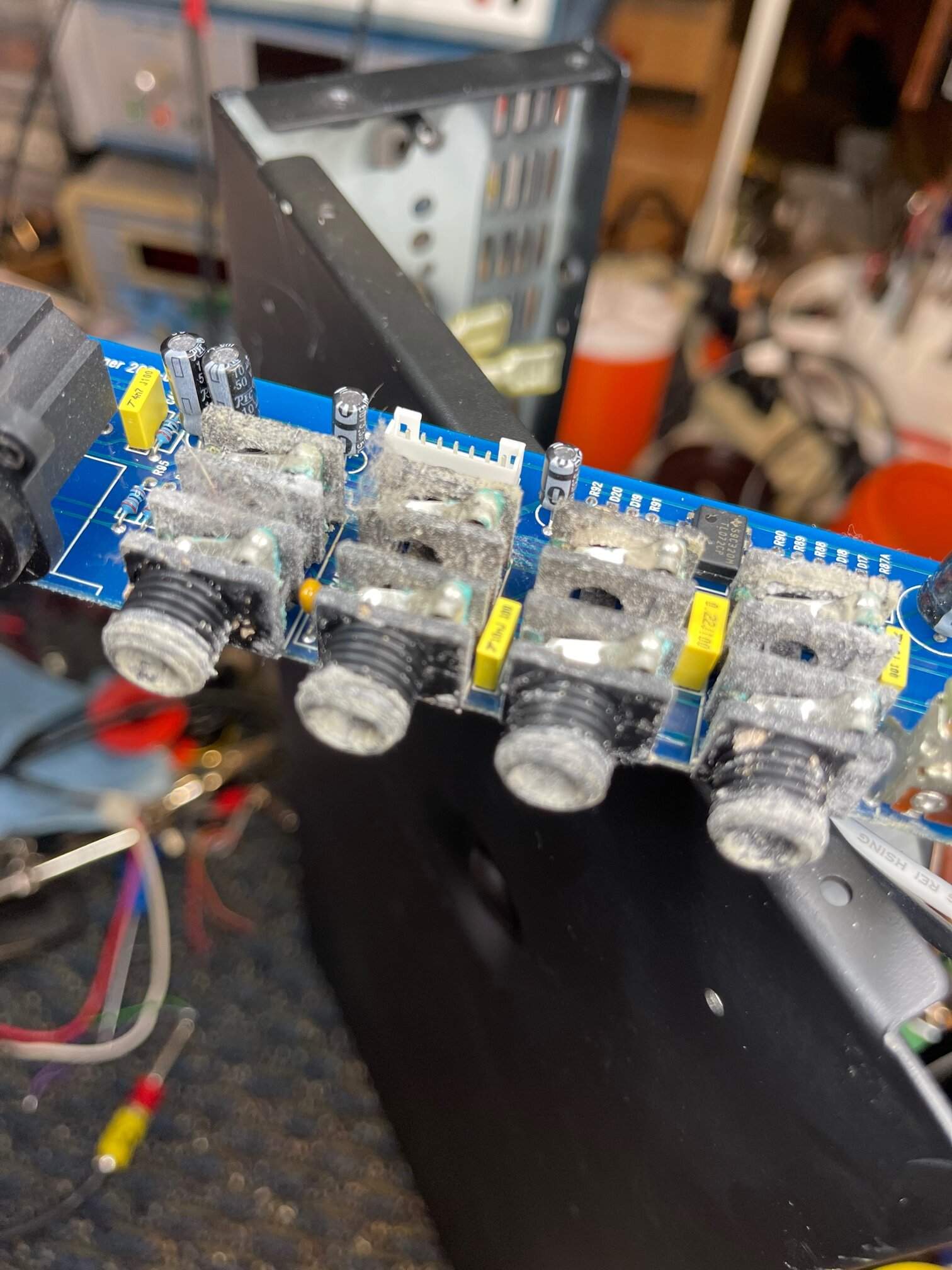
I am currently working on a GK Backline 210. The PC boards are clean and look brand new.....except the jacks. All of the plastic jacks are deteriorating and there is heavy corrosion. No other parts are corroded.

I work on amps as a hobby and have never seen this before. I figure either there was something in the plastic that is breaking down and ruining the metal parts or someone sprayed some corrosive cleaner in the jacks.
IMG_3627.jpg
IMG_3631.jpg
IMG_3629.jpg
 
  • Like
Reactions: DJ Bebop and Engle
It looks nasty. The hairiness makes me wonder if it’s a fungal growth. You never know what was sprayed on. The green on the metal is oxidization. It’s in rough shape.

If you can find the parts, I would replace the jacks.
 
Last edited:
  • Like
Reactions: Engle
There's more to this than we know. There had to be substantial moisture in order for there to be the corrosion. There also has to be acidic contamination.

Because there are 5 or 6 different styles of jack that look very similar but have different heights and pin offsets, it's best to get the original factory replacements.

This is a double sided PCB, the last thing you want to do is damage it. Carefully cut each jack out then remove the pins one by one. This is as much for your tech as for you. I doubt that there are still PCB assys. available for these amps so if it gets screwed up, it's going to be recycle time.
 
Luckily I got the amp for free because it was broken.

I did carefully unsolder the jacks. There might be some damage to the traces below the the jacks due to the plastic (or whatever) leaching. I may have to solder some small jumper wires.

Yes I did order the exact replacement jacks. I will let you know when they arrive.

The reason for my post was to see if others had experienced this issue. Like the capacitor plague, maybe there are hundreds of amps out there with the same issue or will soon have the same issue.
 
  • Like
Reactions: DJ Bebop and Engle
The capacitor plague was a very specific issue related to specific low voltage caps used in the personal computer industry and was due to incorrect counterfeiting of the electrolyte and chemical process. I haven’t seen this in caps used in audio circuits (I’ve been dealing with audio electronics for over 40 years) regardless of what urban lore might suggest.

I’ve never seen jacks look like this without either exposure to a salt or acid under a humid environment.

Look closely at the plating that is (or was) on the inside diameter of the holes. If it’s damaged (or missing), you have more work ahead.
 
The pots on my Ibanez looked like that when I bought it in 94. The jack wasn’t much better. It was new but a floor model. Nut hadn’t even been filed to a reasonable level yet. Maybe coming from South Carolina had something to do with it, heat and humidity. Didn’t take long before they locked up completely and I replaced the whole harness. Never seen any of my other basses do that over the years. The rest of the bass was beautiful. Well except for the bridge screws, but I never messed with those.
 
Last edited:
  • Like
Reactions: Gorilla Monsoon
I saw something similar in a PLC on a minivan that had been kept in Myrtle Beach. Not this bad, but I’m wondering if what you’re seeing came from humid conditions and salt air. When I pulled the card from the minivan, there were tiny crystals on it that were definitely salt. I was shocked that this was possible.
 
I saw something similar in a PLC on a minivan that had been kept in Myrtle Beach. Not this bad, but I’m wondering if what you’re seeing came from humid conditions and salt air. When I pulled the card from the minivan, there were tiny crystals on it that were definitely salt. I was shocked that this was possible.
Possible, but the same contamination should also be elsewhere in the amp.
 
  • Like
Reactions: DJ Bebop
Yeah- it’s weird that it seems limited to the jacks- it’s as if the plastic the manufacturer used is wicking some sort of hydrophilic or hydrophobic response to humidity or ozone.
Except that it has also affected the plating on the metal parts. Odd for sure.
 
  • Like
Reactions: DJ Bebop
What is so surprising is the corrosion is only limited to the jacks. Everything else is clean and almost new looking.

I also thought it was some sort of corrosion....afterall I do live in rainy Seattle and we are near salt-water. Initially I thought I could just clean the jacks and be on my merry way.

But take a look at the jacks! (And this is after I cleaned them and put them in an ultrasonic cleaner!)

IMG_3634.jpg
IMG_3635.jpg
 
  • Like
Reactions: DJ Bebop
What is so surprising is the corrosion is only limited to the jacks. Everything else is clean and almost new looking.

I also thought it was some sort of corrosion....afterall I do live in rainy Seattle and we are near salt-water. Initially I thought I could just clean the jacks and be on my merry way.

But take a look at the jacks! (And this is after I cleaned them and put them in an ultrasonic cleaner!)

View attachment 5038336 View attachment 5038337
Almost looks like a galvanic reaction.
 
  • Like
Reactions: agedhorse
Plating is destroyed, as well as the PCB damaged. I can see the annular ring and inside oh a hole on one of the pins.

Rule number one when repairing a PCB… do no additional damage. Cut the jacks apart and remove pin by pin. No solderwick, only suction.
 
Agedhorse,

I understand what you are saying about cutting the components out. In this case I was not able to figure out a way to do it. The jacks were very close to eachother and flush to the board.

We shall see what happens when I solder in the new jacks. I hope I don't end up with another parts unit. (fingers crossed).
 
  • Like
Reactions: DJ Bebop