
FYI About the latency issue, a 20ms delay would result from a distance of about 7 meters using 343 m/s as the speed of sound. Seems that could be a factor in larger ensambles

TalkBass has been independent since 1998. Add your voice.
Create a free account to reply to discussions, view embedded media, and browse with fewer display ads.
Join free Log in
Want zero display ads or expanded classifieds tools? Compare plans.
 But every single mandolin player I know rushes the tempos, so I feel my job is generally to hang on the back of the beat so that the whole tune doesn't start rolling down a hill...

As a banjo and mando player in bluegrass, my observation is that this rushing tends to be a function of age and/or experience...
I remember how I was, and a number of my peers were, back when we were 20 and playing bluegrass music. The term hot-dogger comes to mind. In comparison, us now older, more experienced players have gotten pretty tired of the faster, more monotonous stuff, plus we're looking over our shoulder wondering how much longer we'll be able to play.
More often than not, I and many of my peers are accused of playing too slowly now.
Oh well... Time moves on, gotta make space for the young flock.
FYI About the latency issue, a 20ms delay would result from a distance of about 7 meters using 343 m/s as the speed of sound. Seems that could be a factor in larger ensambles
Unfortunately, "drive" has been redefined as fast and loud. Jimmy Martin's music when it was recorded and performed had a syncopated groove, typically much slower than how it is typically performed. The Foggy Mountain Boys were much the same way - clean, accurate, and notches slower. The drive was derived from the placement of the beat. It should be like skipping rocks on water - everyone working as an ensemble, working to support the vocalist.I recently had a discussion with the drummer/mandolinist of a band I played with in my twenties. He said his biggest regret musically from that band was that we played so many songs too fast. I couldn't argue.
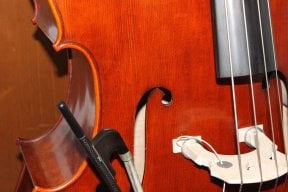
I often hear people speak of playing ahead of or behind the beat. Can someone explain how or if that applies to bassists? To my mind, there is only 1 beat, and that is generally played by the bass - whether I'm playing 70 bpm or 130. Now, your mando chop (or other instruments' backbeat) can vary, to give different effects, and the bass can speed up or slow down, but I don't understand how the bass plays anything other than THE beat.
Thanks - and happy new year - in advance, guys!
Rick Beato provides a good example of playing ahead/behind the beat here:


Have you ever played in a band that was dragging, and you tried to push them back up, but they stayed where they are? That's what it feels like for a bassist to be in front of the beat.playing ahead of or behind the beat. Can someone explain how or if that applies to bassists?


I think you have a great point and there's definitely some truth to it, IMO, but the one thing you didn't address is the "front-end" or "attack" of the pluck. For many bands, that percussive "event" signals the "beginning" of the beat, especially if your right hand is closer to the bridge than the end of the fingerboard. As usual, context is everything, IME but I thought it worth adding to the conversation.Something to think about when you are plucking a big, long bass string is that the amplitude of your note will swell and decay at a slower rate than the other instruments. Most people want to hear the peak of that swell hitting right on the beat, which means you have to attack the note on the front side of that beat. I don't think "ahead of the beat" I think of it like a spinning wheel and there is a spot on that wheel I have to push every time it comes around, and there is another spot on the wheel just behind the push that everyone hears as "the beat" every time it comes around.
I was just thinking that there is something going on with the placement of the attack and the volume swell of the note that might be analogous to using the bow. Like, the string responds differently depending on how far from the bridge the bow is placed, how high the note is being fingered on the neck, the speed of the bow, and the pressure being applied. It's the same with your right hand plucking, the space between the percussive event and the amplitude swell is shorter with your hand close to the bridge, and longer over the fingerboard, and shorter with a low-energy attack and longer with a high-energy attack. So the tone you are trying to produce and the acoustic volume you are trying to play at will have some effect on where you are placing your attack relative to the beat.I think you have a great point and there's definitely some truth to it, IMO, but the one thing you didn't address is the "front-end" or "attack" of the pluck. For many bands, that percussive "event" signals the "beginning" of the beat, especially if your right hand is closer to the bridge than the end of the fingerboard. As usual, context is everything, IME but I thought it worth adding to the conversation.
Have you ever played in a band that was dragging, and you tried to push them back up, but they stayed where they are? That's what it feels like for a bassist to be in front of the beat.
Conversely, if you've tried to slow down a runaway to no avail, that's what it feels like to play behind the beat.
These are micro adjustments made to beat alignment.
The band thinks I'm behind the beat, but I'm actually ahead of it because of the time it takes for that boom to bounce off the back wall... Good exercise for rhythm chops tho I guess..
Since I often float between bluegrass, old jazz and swing among other roots genre with all of my instruments, maybe I can help a little with this... And to be fair, I don't consider myself an expert at jazz, but I do perform a fair amount of old-jazz and have been doing so for about 15 years with various instruments; in contrast I have about half a century of bluegrass performing, primarily banjo, under my belt. That said, a lot of jazz shares a lot of characteristics with bluegrass (and there's also a lot of swing in bluegrass), and at the same time jazz shares a lot of characteristics with "classical" or orchestral music (as we commonly refer to it here to avoid confusion with music from the classical period).
In particular, in jazz the bass is the metronome for a band or combo. In early jazz that role was typically either provided by the double bass for static playing situations or by the tuba for marching or mobile bands. But, the drummer can be heard above everything else, so the bass player (or tuba player) and the drummer have to strike up a close working relationship in order for the band to work well.
Theoretically the bass should also be the metronome in bluegrass, but as suggested in my earlier post, many bluegrass environments do not actively support, or perhaps understand that. Again theoretically, since in bluegrass the banjo can be heard above everything else, the bass player and the banjo player have to build that working relationship in order for the band to work well...
And this is really important -- at the same time, if the band is purely acoustic as most bluegrass bands are, everyone has to make sure they are moderating their volume well enough that everyone can hear the double bass. This is the key to the other role that the double bass theoretically should play in acoustic bluegrass -- lead with dynamic volume control. Among acoustic bluegrass instruments, the double bass is uniquely able to lead a sensitive jam or band with dynamic volume control because of its low voice range; the banjo, and if present the fiddle, are almost always too loud and penetrating for this role, and the guitar and mandolin and Dobro are typically too quiet for this role. Not many people talk about this because dynamic volume control is so elusive for many bluegrass instrumentalists; as a serious banjoist, I've become particularly sensitive about it over the years.
Of the bands that I've played with, my favorites understood these relationships and fully supported the bass. But, it's not at all uncommon for jams or even some bands to not get any of this at all, in which case the banjo player, fiddler if present, or some combination of the mandolin, Dobro and guitar player drive the rhythm and dynamic volume control.
So, what do I do when I play the bass in bluegrass? If I'm being followed properly, I try to play ahead of the beat, and I lead with the dynamic volume control as needed for effect and clarity in the songs. And I play aggressively so the people that I'm playing with realize that I understand my role, otherwise they won't follow. If I'm not being followed properly, I play along with everyone else and melt in... And wish that I was playing with a group which did understand.
(Edited for spelling and to include fiddle.)

I agree. I tried to use Innovation Super Silvers for a few weeks, and constantly found myself out of time.One the things I most appreciate about Spiros is their extremely fast attack. I find I can place the beat (and intonate) with much greater precision on a set of Spiros than I could with Gamut gut, which I played on for a few years. You really have to stay on top or slightly ahead of the beat with low-tension gut, which means you can attack rather aggressively — that has its own appeal.
One of my favorite things about playing bass for bluegrass (or most string/drummerless bands) is the ability to manipulate the tempo to my liking




