

Enjoy the benefits of a premium membership!
Upgrade Account
-
TalkBass has been independent since 1998. Add your voice.
Create a free account to reply to discussions, view embedded media, and browse with fewer display ads.
Join free Log in
Want zero display ads or expanded classifieds tools? Compare plans.
You are using an out of date browser. It may not display this or other websites correctly.
You should upgrade or use an alternative browser.
You should upgrade or use an alternative browser.
Playing Without Looking
- Thread starter Neveragain55
- Start date
More options
Who Replied?


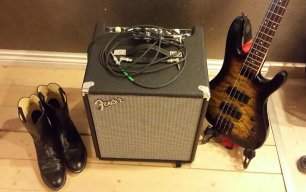
All this info worked too well. Most of the pictures from my last gig have me staring into space and looking like a friggin idiot.
All this info worked too well. Most of the pictures from my last gig have me staring into space and looking like a friggin idiot.
That's ok too....you just gotta look cool doing it.
Hah! As a bearded fat man, that'll be tough to do.That's ok too....you just gotta look cool doing it

Hah! As a bearded fat man, that'll be tough to do.
I can relate. Since I've grown my hair I look more like the comic book guy from the Simpsons than John Taylor from Duran Duran.


Or you could try these:
Amazon.com : Unique Sports Dribble Specs : Basketball Training Aids : Sports & Outdoors
Amazon.com : Unique Sports Dribble Specs : Basketball Training Aids : Sports & Outdoors
As an Amazon Associate, TalkBass may receive commissions from qualifying purchases made via links on this site.


I agree that you look WAY more pro if you can interact with the audience and other musicians and not look like you're concentrating on every note or if you are sight reading and it is interfering with that.Nothing to do with whether it's cool or not as much as I'd like the freedom to look more relaxed & comfortable with the instrument.
I've always admired cats that could play well without having to look at every move they're making.
When you’re looking at your fingers through an entire set it sort of tells the audience that you’re either a beginner, a novice, or not as experienced as the other members of the band that are wailing away (sounding good) while communicating with the audience with they're eyes.
Know what I mean?
However, this kind of thing often becomes a "THING" - "must-not-ever-look-no-matter-what-oh-god-did-I-just-peak-dear-lord-did-people-see-me-can't-look-mustn't-look-don't-look- OH NO I LOOKED - mistake!".
If it is the former than you need to get more comfortable and confident.
If it is the latter - relax - no one would expect a carpenter to never measure or a painter to not glance at his canvas and no one cares if you do.
EDIT- Also: If it's good enough for Gilmour - it's good enough.
I agree that you look WAY more pro if you can interact with the audience and other musicians and not look like you're concentrating on every note or if you are sight reading and it is interfering with that.
However, this kind of thing often becomes a "THING" - "must-not-ever-look-no-matter-what-oh-god-did-I-just-peak-dear-lord-did-people-see-me-can't-look-mustn't-look-don't-look- OH NO I LOOKED - mistake!".
If it is the former than you need to get more comfortable and confident.
If it is the latter - relax - no one would expect a carpenter to never measure or a painter to not glance at his canvas and no one cares if you do.
EDIT- Also: If it's good enough for Gilmour - it's good enough.
I absolutely agree with you, and if I mistakenly communicated that it's something I obsess over - I apologize for that too.
I'm not obsessed with being able to play for hours while not looking down once at my bass, and I feel like many that have read this thread thought that's where I was going with it, I wasn't.
I'd just like to be able to train myself to look a little less than I do now which quite honestly is almost all the time, too much of the time for my taste.
The other thing I need to do is to get myself used to distractions.
I'm a very focused person at everything I do, and little things like strange sounds off-beat to what I'm playing or someone trying to talk to me or get my attention (while I'm playing) throws me off and all of a sudden I've lost my rhythm, where I was or what I was doing.
All bad traits to have if your going to gig with others in a live setting.
I know all of these things are overcome with time and by practicing on your own by purposely causing your own distractions to the point where your oblivious.
Anyway, thanks for the reply.........
it seems that looking at your hands when playing is about the same as looking at the steering wheel when driving a car.
that said, I have to admit that I have the same problem.
that said, I have to admit that I have the same problem.

I usually just close my eyes, mostly because I just don't know where else to look. Sure, I guess it's to get into the music, but honestly it's so I'm not just staring at different things. Scanning is fine: my hands to make sure I'm in the right place, a few band members to get on track and catch gestures, and the audience. But I have a tendency to blankly stare at things for a bit longer than I should and then lose concentration on what I'm doing.
It really depends on the music though. There are times when the music is so simple, I don't have to concentrate where my hands are. There are other times when it really helps knowing what I'm doing. I think the key is whatever I'm doing, it still looks slightly presentable in terms of entertaining a crowd. Even if the music is fantastic, I don't want to visually bore a crowd. That's just me though. Or when I am actually an audience member, I just don't find it appealing watching someone have their head down unless they're doing something musically amazing.
My mic is kinda garbage, so if have to be in the right spot to be heard. I can't be twisting my head around and singing at the same time.
In the end, it's just practicing and repetition of not staring at my hands. Muscle memory or whatever.
It really depends on the music though. There are times when the music is so simple, I don't have to concentrate where my hands are. There are other times when it really helps knowing what I'm doing. I think the key is whatever I'm doing, it still looks slightly presentable in terms of entertaining a crowd. Even if the music is fantastic, I don't want to visually bore a crowd. That's just me though. Or when I am actually an audience member, I just don't find it appealing watching someone have their head down unless they're doing something musically amazing.
My mic is kinda garbage, so if have to be in the right spot to be heard. I can't be twisting my head around and singing at the same time.
In the end, it's just practicing and repetition of not staring at my hands. Muscle memory or whatever.

So I’ve been playing the bass off & on for years but even after all these years I still struggle with playing without looking......
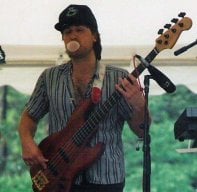
Back when I started, if you wanted to see another bass player play...one hadda practice in front of a mirror!Practice in front of a mirror. It makes a huge difference and will improve your stage presence as well.

or...


^^ This is fantastic, haha! (to the video of the guy with a sheet wrapped around his head)
Embrace this idea:
There are 2 types of motion in the left hand. The first is playing in a single position with your fingers over their respective notes on each string in that position. You have no need to look at the fingerboard whatsoever because your fingers are locked in place and you know exactly where you are. For example, in first position, your index finger should never leave the 2nd fret. Your middle finger should never leave the 3rd fret. You have a run which is a G major scale? Perfect! You can play it without needing to look, because your fingers are already where they need to be. All you have to do is press the strings down with the right fingers.
The second motion is shifting. This motion involves moving the hand between positions up or down the neck. Shifting must be practiced to the point where the distance between positions becomes muscle memory. There are 2 very important things to remember when shifting. Rule 1 - always stay in contact with the strings. If you lift your hand, you lose your entire reference point and you will be forced to either guess (risky) or look at the instrument to find the goal visually (inefficient). Lifting your hand also breaks the moment of the sound, which is usually not a good thing. Rule 2 - keep your hand in shape with your fingers open. Shifting is a movement of the ARM, not of the fingers. If you deform your fingers during the shift, you will need to spread them out again when you reach the next position, which can be risky and inaccurate. Once you shift to your new position, you go back to the the first type of motion of playing in a single position. You should know where all of your notes are in this new position.
After playing for years with groups where you have to keep an eye not only on the sheet music, but also follow your section leader, and your conductor, it will come naturally to not look at your hands or fingerboard. If you don't play with groups like that, then I guess you can just do what the guy in that video is doing.
Embrace this idea:
There are 2 types of motion in the left hand. The first is playing in a single position with your fingers over their respective notes on each string in that position. You have no need to look at the fingerboard whatsoever because your fingers are locked in place and you know exactly where you are. For example, in first position, your index finger should never leave the 2nd fret. Your middle finger should never leave the 3rd fret. You have a run which is a G major scale? Perfect! You can play it without needing to look, because your fingers are already where they need to be. All you have to do is press the strings down with the right fingers.
The second motion is shifting. This motion involves moving the hand between positions up or down the neck. Shifting must be practiced to the point where the distance between positions becomes muscle memory. There are 2 very important things to remember when shifting. Rule 1 - always stay in contact with the strings. If you lift your hand, you lose your entire reference point and you will be forced to either guess (risky) or look at the instrument to find the goal visually (inefficient). Lifting your hand also breaks the moment of the sound, which is usually not a good thing. Rule 2 - keep your hand in shape with your fingers open. Shifting is a movement of the ARM, not of the fingers. If you deform your fingers during the shift, you will need to spread them out again when you reach the next position, which can be risky and inaccurate. Once you shift to your new position, you go back to the the first type of motion of playing in a single position. You should know where all of your notes are in this new position.
After playing for years with groups where you have to keep an eye not only on the sheet music, but also follow your section leader, and your conductor, it will come naturally to not look at your hands or fingerboard. If you don't play with groups like that, then I guess you can just do what the guy in that video is doing.
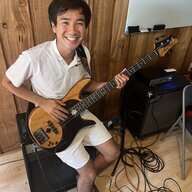
I’d say focus on the sound you want to make instead of where the frets of that sound is and let your brain figure it out
You might try these.
https://www.amazon.com/Fiada-Basket...-1-spons&sp_csd=d2lkZ2V0TmFtZT1zcF9hdGY&psc=1
https://www.amazon.com/Fiada-Basket...-1-spons&sp_csd=d2lkZ2V0TmFtZT1zcF9hdGY&psc=1
As an Amazon Associate, TalkBass may receive commissions from qualifying purchases made via links on this site.

The harder,the more difficult the music is the harder it is not to look.
John looks at the crowd for a bit.But his eyes go back to the fretboard.
John looks at the crowd for a bit.But his eyes go back to the fretboard.


