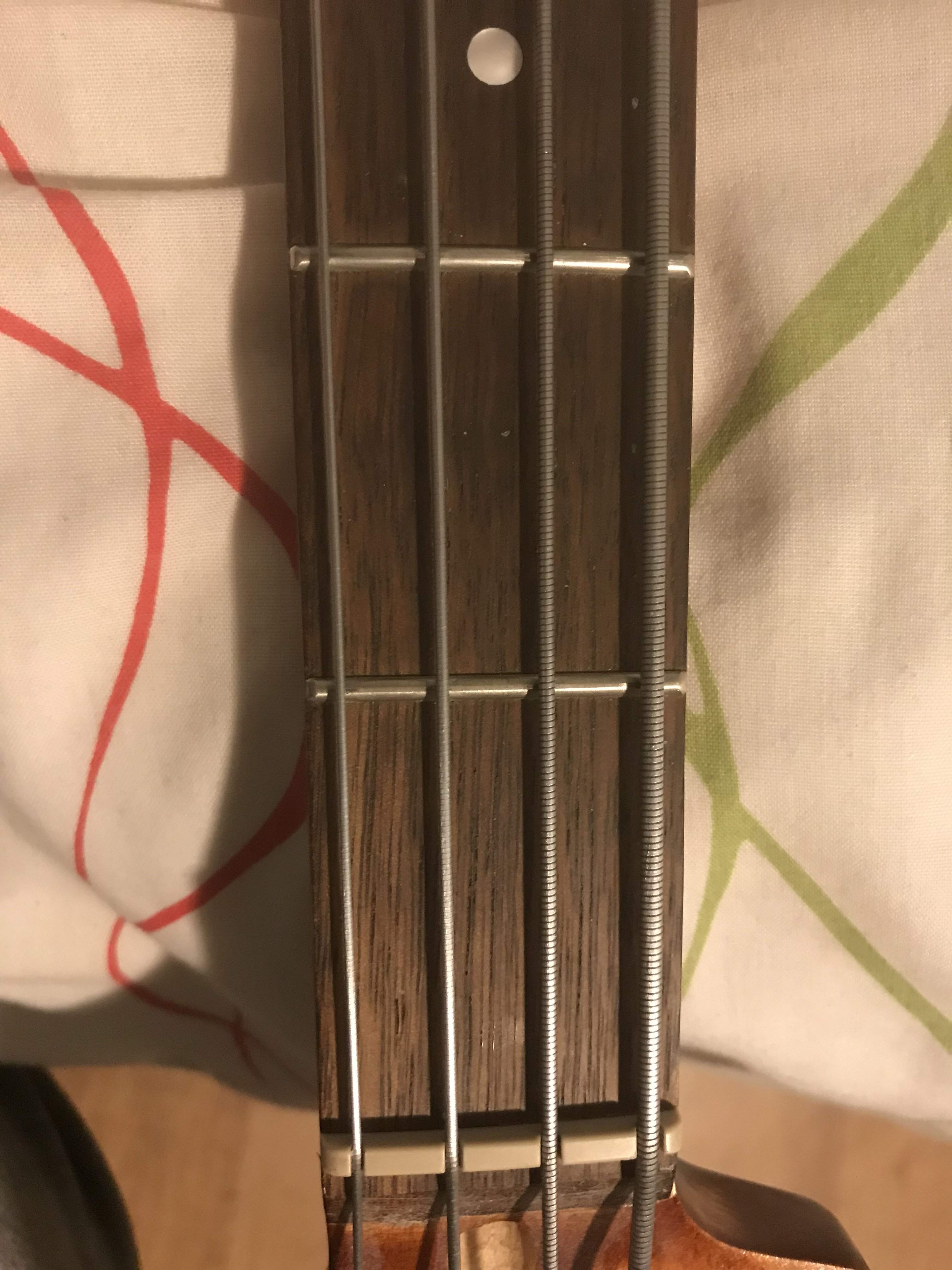
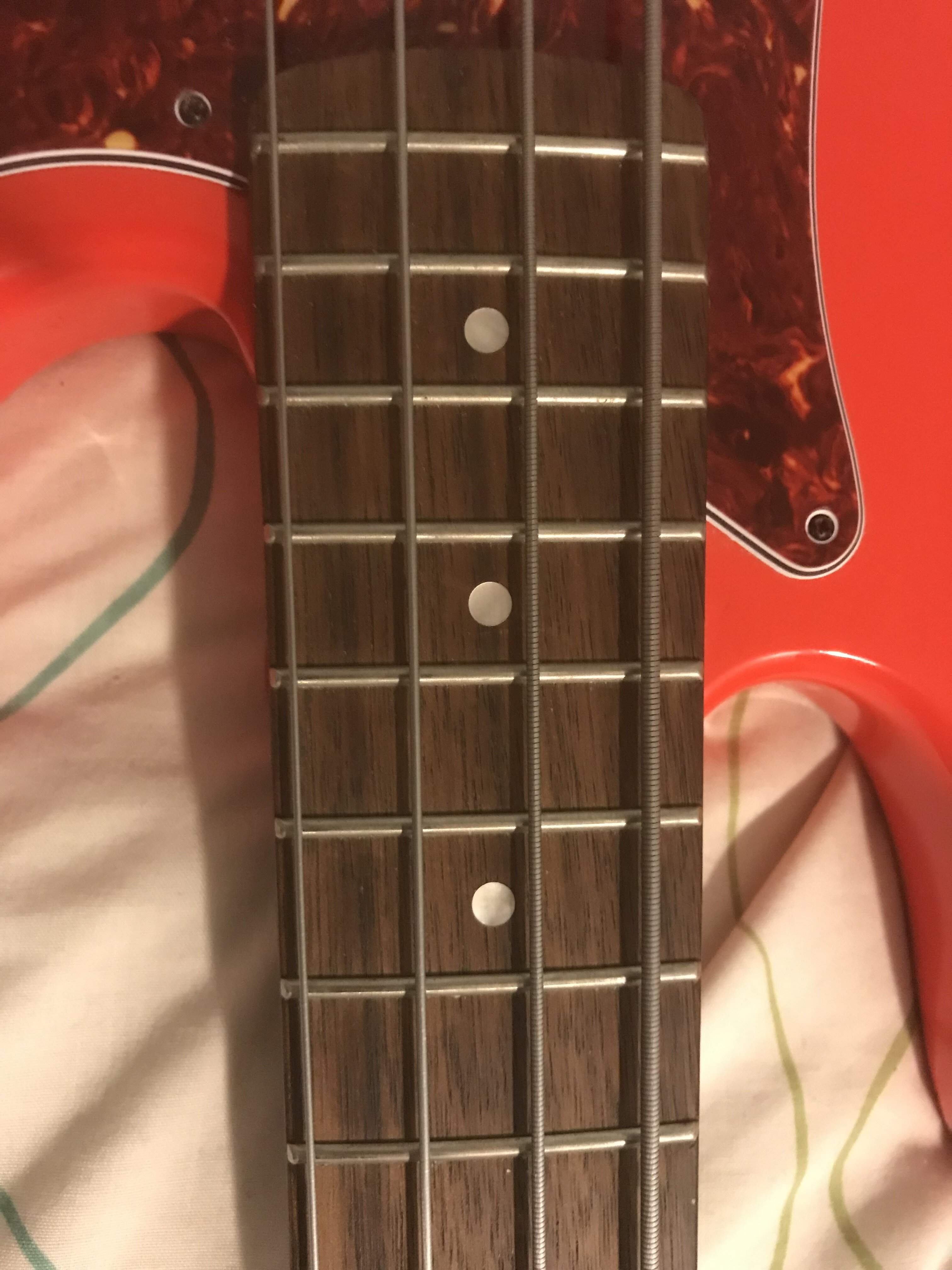
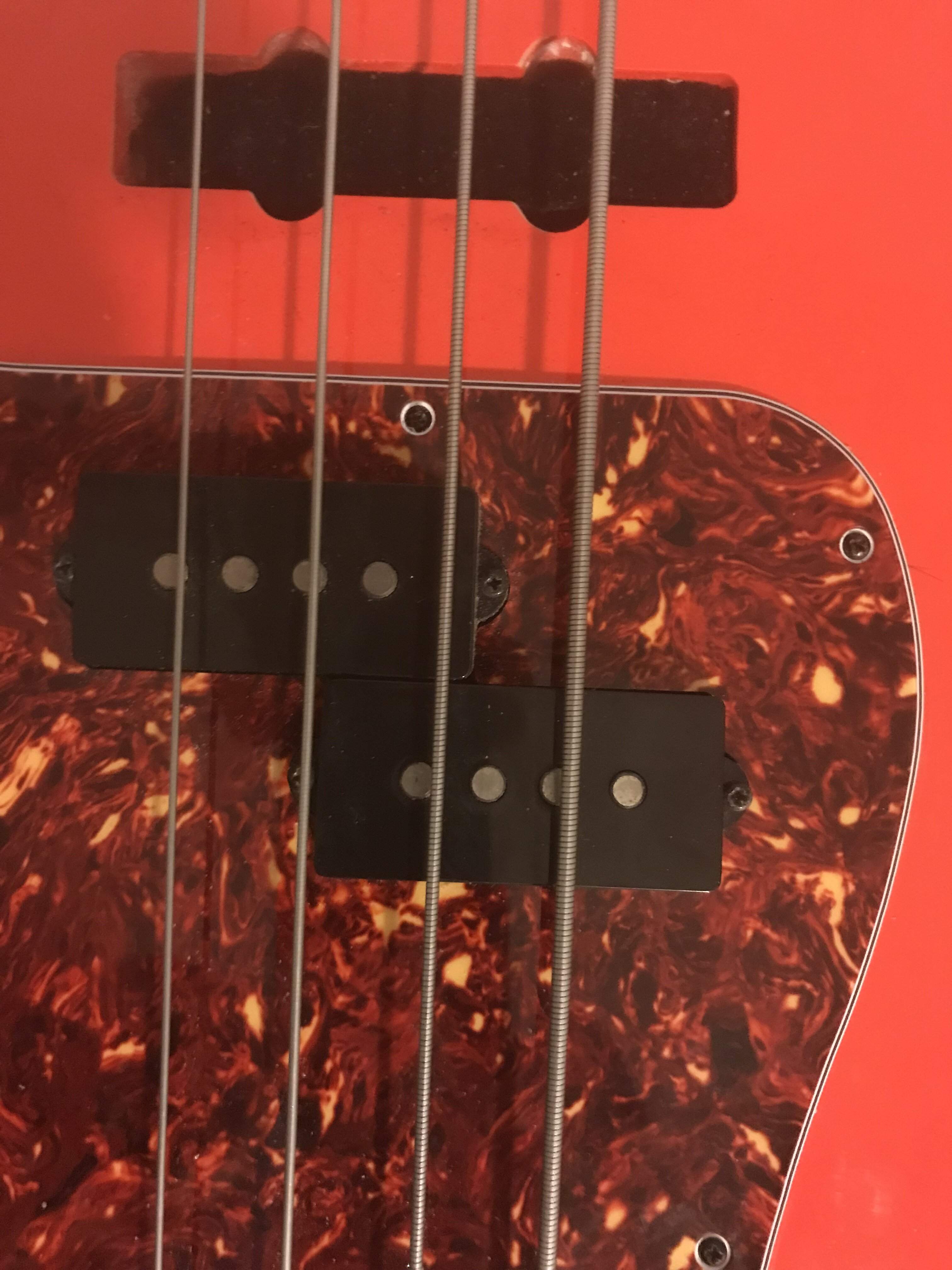
Kind of a strange question, but does anyone make a bridge for a P-J bass with the mounting screws in a different position from the 'universal' standard? Guess I could mount a new one lower on the body, but that can't be good for the overall set-up. I have a Squier P-bass which has strings that slope diagonally down towards the bridge. The neck pocket looks fine, but the bridge looks like it was mounted too low (towards the G-string). I've been playing live with it for a year or two and have ignored the fact that it's wonky and doesn't pass over the pickup magnets correctly, as it sounds fine, and fretting the G string past the 12th fret hasn't been a problem, but I'm thinking of getting a new bridge and would like to have the thing be in the right place. You can see from the last pic that the bridge is clearly too low on the body by how the strigs are passing over the empty J position. So do I fill and re-drill? Mount lower? Look for a bridge with alternate screw hole positions? (unlikely they exist?). Or just deal with it man? BTW I get a minimal pocket money allowance, so buying a new bass is out of the question.

Enjoy the benefits of a premium membership!
Upgrade Account
-
TalkBass has been independent since 1998. Add your voice.
Create a free account to reply to discussions, view embedded media, and browse with fewer display ads.
Join free Log in
Want zero display ads or expanded classifieds tools? Compare plans.
You are using an out of date browser. It may not display this or other websites correctly.
You should upgrade or use an alternative browser.
You should upgrade or use an alternative browser.
POOR BRIDGE-NECK ALIGNMENT ?
- Thread starter Sean B
- Start date
More options
Who Replied?
Ever tried loosening the neck screws and giving the neck a tug in the proper direction?
If it’s indeed bad within the limits of neck adjustment, re-drill and fill.
If it’s indeed bad within the limits of neck adjustment, re-drill and fill.


The second pic looks like the G is closer to the edge of the fretboard as well. The neck most likely just needs to be shifted in the pocket. Loosen the neck mounting screws slightly, you can detune the strings but I have done it with the strings at tension. Pull the neck towards the bass side and hold it in position while you tighten the mounting screws. This can be easier if you have some help or a third arm growing out of wherever you’d like a third arm growing out of but I usually manage to do it by myself with accompanying wild gyrations and antics. 
This is actually a pretty common adjustment on bolt neck instruments. Let us know how it works out.
This is actually a pretty common adjustment on bolt neck instruments. Let us know how it works out.
Thanks guys, I just did and it's much better. Still not properly aligned, but I'm going to live with it. Been looking at pics of the same model and the bridge is definitely mounted a bit too low. Thanks again.Ever tried loosening the neck screws and giving the neck a tug in the proper direction?
You could also get a bridge like the Hipshot Kickass that has a pretty wide range of spacing adjustment. You could shift all the brass inserts over to one side.
Just had a look, that would work. Wonder if there are any a bit cheaper with similar features.You could also get a bridge like the Hipshot Kickass that has a pretty wide range of spacing adjustment. You could shift all the brass inserts over to one side.
The suggested fix of just moving the bridge to the correct position would be much cheaper. You need a small wood dowel and glue to fill the holes, and then just drill new holes in the right place. Just costs a few bucks (pounds?) if you have a drill or can borrow one from someone. I did that recently on my Squier Jazz bass just the other day, not to move the bridge but to fix stripped holes. The bridge is rock-solid now.
There are quite a few replacement bridges out there that allow you adjust string spacing.
There are quite a few replacement bridges out there that allow you adjust string spacing.

Thanks. Probably going to end up trying this first, I'm looking at vintage style bridges and have found a couple that look to have enough plate below the holes to cover the old ones. Plan B is fill and redrill. Thanks for all the help.All you need is 5 new holes a few mm north to the old ones to re-position the bridge. You can even leave the old holes as is if they aren't too close, they be covered by the plate.

Mmm, if you don't like the original bridge, then sure get one you like position it in correct spot , drill new holes into the body (if they far enough from the old ones). And here you go. In unfortunate scenario you'll need to fill the old holes before drilling new ones.
P.S. You can also just unscrew the bridge, put in right spot and see where these new holes will be and if any of the old ones going to be visible.
P.S. You can also just unscrew the bridge, put in right spot and see where these new holes will be and if any of the old ones going to be visible.
Found a seller on Ebay with plenty of vintage style bridges. Bridge I have now is the stock Squier, nothing wrong with it, but looks as if the plate won't cover the old holes-like you said take it out and check, so will do that first. If no good, then will probably get the one below for a tenner. Looks like quite a bit of plate beneath the screw holes compared to the Squier.Mmm, if you don't like the original bridge, then sure get one you like position it in correct spot , drill new holes into the body (if they far enough from the old ones). And here you go. In unfortunate scenario you'll need to fill the old holes before drilling new ones.
P.S. You can also just unscrew the bridge, put in right spot and see where these new holes will be and if any of the old ones going to be visible.
What we count and look for is the distance between the hole and the plate edge on the bridge. It doesn't look this bridge has more space between edge holes and plate edges than Squier's. You might want something like that:
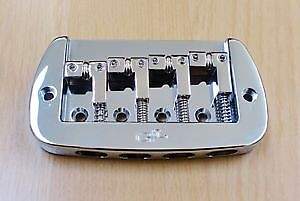
But first, please check if original bride covers the old holes when in place.
But first, please check if original bride covers the old holes when in place.
Last edited:
Bolt on necks are a blessing and a curse in issues like this. Since it gives you a point of "adjustability," it allows slight misalignments to be corrected, but it can also lead to spatial relationships that are arbitrary, masking actual problems and ending up in a worse place.
What I'd do in this case is take the strings off and tackle this one step at a time. Establish a center point on the bottom edge of the neck pocket. Then extend a line down from there across the center points in the pickup cavities. You now have a centerline for the points on the body that are hard(er) to move. Install the neck, centered in it's pocket, and check it's alignment to the centerline you made. Adjust as needed. Leave the neck alone after that. Then check the positions of the bridge mounting screws against the centerline. Plug and redrill as needed. You now have a bass where everything is centered to everything else.
Approaching this as you currently are - using the strings as a (movable) centerline, with a neck that may or may not be centered, won't inherently lead you to the "most correct" bridge position, and you may end up unhappy with the final result.
What I'd do in this case is take the strings off and tackle this one step at a time. Establish a center point on the bottom edge of the neck pocket. Then extend a line down from there across the center points in the pickup cavities. You now have a centerline for the points on the body that are hard(er) to move. Install the neck, centered in it's pocket, and check it's alignment to the centerline you made. Adjust as needed. Leave the neck alone after that. Then check the positions of the bridge mounting screws against the centerline. Plug and redrill as needed. You now have a bass where everything is centered to everything else.
Approaching this as you currently are - using the strings as a (movable) centerline, with a neck that may or may not be centered, won't inherently lead you to the "most correct" bridge position, and you may end up unhappy with the final result.
Last edited:
I'd give that neck another good pull towards the bass side. Don't drill any holes unless you absolutely have to.
Might be helpful to show a picture from the bridge end looking down toward the headstock so we can see the alignment.
Also that bridge you showed above in post #11 looks an awful lot like a stock Squier bridge (except maybe the extra 2 holes in the corners). I'd be interested to see what kind of bridge you have on the bass now.
Also that bridge you showed above in post #11 looks an awful lot like a stock Squier bridge (except maybe the extra 2 holes in the corners). I'd be interested to see what kind of bridge you have on the bass now.

Seeing more images of the all-around fit of the neck heel in the pocket, and a top-down view of the bridge along with the bridge pickup, to judge centerline relationships, could be helpful.
 Well, that certainly makes obvious where the issue is.

Latest posts
-
 Buying a vintage neck to pair with vintage body... risks/really bad idea?
- Latest: Chicken Wing
-

-

-

