
Enjoy the benefits of a premium membership!
Upgrade Account
-
TalkBass has been independent since 1998. Add your voice.
Create a free account to reply to discussions, view embedded media, and browse with fewer display ads.
Join free Log in
Want zero display ads or expanded classifieds tools? Compare plans.
You are using an out of date browser. It may not display this or other websites correctly.
You should upgrade or use an alternative browser.
You should upgrade or use an alternative browser.
Pre-amp: worth the extra money?
- Thread starter Lloux
- Start date
More options
Who Replied?
It depends on what purpose you wanted the preamp for.
In any case, $300 is a lot of money for something that basically cost $20 in parts.
In any case, $300 is a lot of money for something that basically cost $20 in parts.
It depends on what purpose you wanted the preamp for.
In any case, $300 is a lot of money for something that basically cost $20 in parts.
I agree and it's even worse since those basses are usually considered best when passive. It sounds to me like you are just going by preamp brand names. A lot of money just to experiment!
Personally you first need to decide if you want a passive bass converted to active in the first place. I do like certain active things but my starting point is a cheaper Chinese preamp to just test out the active idea first.
And IF you think active is what you want then you finally get down to the subtle differences in tone between expensive preamps. Pope, Aguilar, John East, etc. are all expensive but IF a certain subtle tone is what you want, then, obviously it's worth the expense to you. But trying them all is going to be expensive so you really want to make up your mind as to what brand gives you what you want first. Otherwise it's just a crap shoot.

Hopefully not for recording.It depends on what purpose you wanted the preamp for.
In any case, $300 is a lot of money for something that basically cost $20 in parts.
Seriously, the board components are about a buck or less at production bulk on virtually every OEM one I've seen, and they are pretty crappy/crude circuits compared to any preamp you're likely to encounter in even the lowest-end home studio gear -- with opamps sourced entirely for low 9v battery drain and costing less than 18¢ per. :scowl:
Actives are a stage convenience, not anything you want when sound really matters. How many redundant preamps do you want to run your sound through? How many times do you want to EQ that signal? Think about it.
Somewhere, there are probably a few (fabulously overpriced) decent on-board preamps, but $300? Yeah, why?
It amazes me how people seem addicted to extraneous analog circuitry of the last century, and the more drastically overpriced, the more they can't live without it.
It might depend on how you use those preamps.
I know player who run their amp in one setup, but they constantly work with the fingers and the controls on the bass. For them this is a great solution to have a potent preamp on board.
For me this is nothing. I never use the EQ on my Stingray. In my case I could spend those 300 bucks somewhere else and it wouldn't make any difference.
I mean, I have pedals that have lots of options, I have an amp that has a lot of options, I can vary my playing technique which gives me lots of options... do I need other options on my bass? For me - no.
But as usual, YMMV!
I know player who run their amp in one setup, but they constantly work with the fingers and the controls on the bass. For them this is a great solution to have a potent preamp on board.
For me this is nothing. I never use the EQ on my Stingray. In my case I could spend those 300 bucks somewhere else and it wouldn't make any difference.
I mean, I have pedals that have lots of options, I have an amp that has a lot of options, I can vary my playing technique which gives me lots of options... do I need other options on my bass? For me - no.
But as usual, YMMV!
Thanks for the input guys. I'm in the process if building a new 4 string, and figured if like to put some sweet electronics in it. I was leaning towards the pope pre with EMG's strictly for the no solder purpose. If you guys think the pre amp is a waste, then I'll definitely take the advice. Let's face it, I'm just a weekend warrior, and will rarely play out. Any suggestions on a solid pick up selection? I run through an Eden WT-500, and play anything from jazz, funk and rock. Any advice is appreciated.
I love the hot DiMarzio P-Bass pickups (had it in two basses, now in my nash '57 precision). I'd love to have that one combined with a nordstrand fat stacks in bridge position.
There we go - this is me dreaming again...
There we go - this is me dreaming again...
Interesting perspective, Bongolation – I'd always assumed active electronics would yield superior fidelity, since you were not sending a high impedance unamplified signal over the instrument cable. Now I'm going to have to find out if my basses can be converted to passive, and try a comparison.Hopefully not for recording.
It's also interesting that bassbenj suggests trying out a Chinese preamp (I'm assuming you mean the stuff you find on eBay). Being so cheap, I assumed these would be pretty worthless, but maybe not.
My current challenge is a "new" 90s Ibanez SR1306 which has some problems in the electronics (weird faint static – maybe a cap or transistor going bad). I was debating rebuilding it, or replacing it altogether, and was wondering if anyone could recommend a preamp that would be at least as good as the original. The current preamp is adequate (aside from the static), but is not in fact "whisper quiet" compared to my outboard preamps. So maybe the solution is to bypass it entirely. I'm doing recording right now, so quiet is good.
The one thing I love about these Ibanezs is the excellent hum rejection, so I'd like to keep the pickups. If they won't work in a passive set up, I'll be looking for some inexpensive "really quiet" active electronics. Or maybe I should just rebuild the existing preamp with higher quality components…
Thanks for your thoughts…
If you are willing to spend that kind of money, then IMO you would be better off investing the money in high quality pickups, and skipping the preamp.
Whatever you do, make sure you have a hum-cancelling J to go with your P, and make sure it is strong enough to keep up with the P's output.
Whatever you do, make sure you have a hum-cancelling J to go with your P, and make sure it is strong enough to keep up with the P's output.
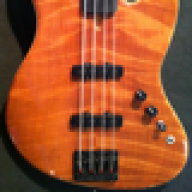
I've given up completely on active systems. I use Dimarzio Model J pickups. Between them with a pan knob, my plucking hand position, & my amp or recording systems I can get any tone I'll ever need.
I will admit that the best of them are very good. I just found myself setting it at one setting and leaving it so why bother with needless complexity?
As always YRMV.
I will admit that the best of them are very good. I just found myself setting it at one setting and leaving it so why bother with needless complexity?
As always YRMV.

Seriously, the board components are about a buck or less at production bulk on virtually every OEM one I've seen, and they are pretty crappy/crude circuits compared to any preamp you're likely to encounter in even the lowest-end home studio gear -- with opamps sourced entirely for low 9v battery drain and costing less than 18¢ per. :scowl:
I have an entirely garden variety active bass and the opamp in its preamp alone is over a dollar at any volume the maker is likely to buy them in. It is lower in noise level (the thing you give up most when you use a low current opamp) than the resistors that surround it. I've been looking at a different opamp for a possible onboard preamp project and it runs over $5 in low volumes. Super low noise, high current opamps you might find in studio gear will actually be cheaper. In any case even an 18 cent opamp will be more finely crafted than any bass you could put it in. No luthier who has ever lived has worked to the tolerances found in microelectronic devices. I've personally designed opamps using transistors so small that 10 would fit inside a single wavelength of red light....
There are reasons why you might not want an active bass for recording. Some of them are just industry bias but in fact active basses are designed for live performing where the convenience of having an onboard EQ is highly desired, by some. They are not optimized for recording but whatever shortcomings they have for that purpose are not due to cheap, crappy, low current components. On the other hand an on board preamp would pretty much have to drive me to work before I would spend $300 on it!

I'm also coming to the conclusion that passive makes for a simple throughput of signal with fewer points of failure. I am struggling with a well constructed Warwick fretless 5 that, I feel, is being choked by an MEC 2 band system that cannot be bypassed.
Do I gut the bass (or lose resale value) or sell it and build a warmoth with great wood and strong passive pickups.
What are some favorite passive pups? Looking for a punchy "old school" sound with plenty of bass and subtle treble.
Do I gut the bass (or lose resale value) or sell it and build a warmoth with great wood and strong passive pickups.
What are some favorite passive pups? Looking for a punchy "old school" sound with plenty of bass and subtle treble.

Are you familiar with what a pre-amp is gonna do to your bass' sound? In addition to giving you eq for the bass, mids and treble, the buffer in a pre-amp will give quite a bit of "zing" to your bass' sound!
If you haven't already, listen to a bass that has a pre-amp in it already, similar to the ones you are interested in.
Don't buy blindly!
There are some bass people on this forum that truly do not like pre-amps! And, there are many others that love pre-amps.
If you haven't already, listen to a bass that has a pre-amp in it already, similar to the ones you are interested in.
Don't buy blindly!
There are some bass people on this forum that truly do not like pre-amps! And, there are many others that love pre-amps.

Are you familiar with what a pre-amp is gonna do to your bass' sound? In addition to giving you eq for the bass, mids and treble, the buffer in a pre-amp will give quite a bit of "zing" to your bass' sound!
If you haven't already, listen to a bass that has a pre-amp in it already, similar to the ones you are interested in.
Don't buy blindly!
There are some bass people on this forum that truly do not like pre-amps! And, there are many others that love pre-amps.
Bingo! It seems to get lost on this forum a lot but; "Hopefully not for recording" and "usually considered best when passive" are merely 'opinions' that are not shared by all. Not just here but in the field as well.
There are too many great recordings out there done with both passive and active systems to say that one way or the other is the "best" or "only" way to go. I say to check out as many demos as you can, or better yet, try to find basses with the systems you're interested in and try them out before making a decision. There are plenty of us who have found through practical experience (not just playing live, but recording as well) that $2-300 for a preamp is well worth the investment when putting together a bass.

If you want to spend $300 on a preamp, why not go outboard? Then you can use it on any bass, and remove it from the signal chain any time you like.
Other than knob accessibility, the only thing you lose with an outboard is having a buffered signal coming straight out of the bass (before the instrument cable). Probably not a big deal for most people.
Other than knob accessibility, the only thing you lose with an outboard is having a buffered signal coming straight out of the bass (before the instrument cable). Probably not a big deal for most people.
Hopefully not for recording.
...
Actives are a stage convenience, not anything you want when sound really matters. How many redundant preamps do you want to run your sound through? How many times do you want to EQ that signal? Think about it.
Why I like getting an active/passive switch. Also depends on the kind of preamp you're running. If you want a baked in tone(Stingray) versus a flexible and convenient EQ(Audere).

I have the Aguilar obp3skpp setup in my conklin and like it a lot. I personally wouldn't spend more for something else.

In my experience, that's only true if you're running a ridiculously long cable or the input impedence of the next unit is too low. (Like the "line in" of a mixer)the buffer in a pre-amp will give quite a bit of "zing" to your bass' sound!
To me, knob accessibility is the #1 reason for having an onboard preamp with EQ.Other than knob accessibility, the only thing you lose with an outboard...
I have preamps in my gigging basses, but I'd never pay $300 for one.

I love active basses. I own two now, and I am considering building an active J in the next two years (cost and it isn't really needed). But unless this Pope preamp is the absolute money best, you excellent options for much less available. You can buy an Audere preamp for $149 that by every account I have read is excellent. You can get an Aguilar OBP series for under $200. Heck you can get a Seymour Duncan that is supposed to be pretty good for like $140 or something.
But also, don't cheap out on pickups and expect the preamp to make everything awesome. Doesn't work that way. decide on an awesome set of pickups first, then see if you have the funds or desire to add the preamp on top of it.
But also, don't cheap out on pickups and expect the preamp to make everything awesome. Doesn't work that way. decide on an awesome set of pickups first, then see if you have the funds or desire to add the preamp on top of it.
Thanks all for your input; didn't mean to hijack the thread, but it seems that the discussion of "preamp or no preamp" would be useful to the OP as well.
Following up on Bongolation’s "opinion", I tried bypassing the preamp on my SR1306, and found that things got immediately cleaner (granted, this is a 20-year-old preamp). So for recording, this is perfect; I just need to add a bypass switch – no $300 preamp needed.
I also appreciate the recommendations for less expensive preamps. For stage use, I've been hooked on active electronics since they first came out, if for no other reason than the way a volume pot rolls off the high-end at low settings – the exact opposite of what you usually want. Definitely worth $150, IMO.
It almost seems that the designers of this Ibanez intended for a bypass switch – the electronics are separate from the volume and balance knobs, which function the same as on a passive guitar. Not sure if this is a common design, but in this case a bypass switch will be easy to add.
And then I'll probably try rebuilding the preamp with modern components. I'm guessing they designed the preamp to flatter the sound of the pickups, and for probably $30 I can upgrade it with some "boutique" components. At which point it should be fine for stage use, and maybe for recording as well…
Following up on Bongolation’s "opinion", I tried bypassing the preamp on my SR1306, and found that things got immediately cleaner (granted, this is a 20-year-old preamp). So for recording, this is perfect; I just need to add a bypass switch – no $300 preamp needed.
I also appreciate the recommendations for less expensive preamps. For stage use, I've been hooked on active electronics since they first came out, if for no other reason than the way a volume pot rolls off the high-end at low settings – the exact opposite of what you usually want. Definitely worth $150, IMO.
It almost seems that the designers of this Ibanez intended for a bypass switch – the electronics are separate from the volume and balance knobs, which function the same as on a passive guitar. Not sure if this is a common design, but in this case a bypass switch will be easy to add.
And then I'll probably try rebuilding the preamp with modern components. I'm guessing they designed the preamp to flatter the sound of the pickups, and for probably $30 I can upgrade it with some "boutique" components. At which point it should be fine for stage use, and maybe for recording as well…


