
Enjoy the benefits of a premium membership!
Upgrade Account
-
TalkBass has been independent since 1998. Add your voice.
Create a free account to reply to discussions, view embedded media, and browse with fewer display ads.
Join free Log in
Want zero display ads or expanded classifieds tools? Compare plans.
You are using an out of date browser. It may not display this or other websites correctly.
You should upgrade or use an alternative browser.
You should upgrade or use an alternative browser.
PROOF! That fingerboard wood makes a difference.
- Thread starter Felken
- Start date
-
- Tags
- difference fingerboard wood
More options
Who Replied?

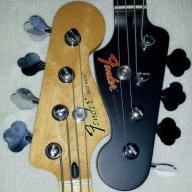
Okay, okay, maybe not proof.There seems to be people freaking out every time I say the word "proof".
Anyways, here's the video.
And you might say "pish pish, it's because it's a different bass (same model)!"
But I've seen many videos of comparisons, so why does the maple neck always sound brighter than the rosewood one?? I've never seen a video where the rosewood was brighter.
This video may not be proof, but these are the only two results I've ever seen in these comparisons:
1- They sound the same. The player always plays very lightly in this type of video.
2- Maple is brighter and rosewood is mellower. The player plays with a harder, heavier pluck.
Besides, you will only ever hear a difference when you pluck harder. Fingerboards will all sound the same when you lightly touch the strings.
EDIT:
Look at this video. No tone difference BUT, he plucks with the power of a feather:
You'd have to swap necks on the same body/pickups. It would be a much stronger case.

You'd have to swap necks on the same body/pickups. It would be a much stronger case.
Same body. Same strings. Identical setup. Same player playing the same Lick in the exact same way. THEN......nah....
The way the title was written relative to the actual text of the OP, I'm speculating he works for Huffington Post. 

It sure makes a BIIIG difference in a band mix.  You know, the type of setting where basses are supposed to be played?
You know, the type of setting where basses are supposed to be played?
I have never cared for Rosewood much. I'm def a Maple neck guy. I think maple is a bit brighter than Rosewood but as other have said tone can be tweaked easily. For me it's a "feel" thing more than anything but I do like the look of a maple neck better as well.

What I am about to say is not proof to the contrary, merely a recent experience... but I think strings have as much or more to do with brightness of sound than the fingerboard wood. I recently threw Rotosound flats on my p bass (maple) and my Adam Clayton jazz (rosewood). I admit that the jazz bass got the Steve Harris 77 flats and my p got standard 77 flats, but I could not get a mellow tone on the jazz no matter what I did. The p dialed right in.

What I am about to say is not proof to the contrary, merely a recent experience... but I think strings have as much or more to do with brightness of sound than the fingerboard wood. I recently threw Rotosound flats on my p bass (maple) and my Adam Clayton jazz (rosewood). I admit that the jazz bass got the Steve Harris 77 flats and my p got standard 77 flats, but I could not get a mellow tone on the jazz no matter what I did. The p dialed right in.
I'm goin' way out on a limb here, but maybe, just maybe, it was the difference between a P and J?
In my experience maple fretboards are just maplier, while rosewood is definitely rosier. Sorry, I didn't make a video to show this.
No. I'm no Duck Dunn, but I didn't start playing bass the day I strung those basses, either.
Normally I can make either bass do what I want, within reason. I most certainly can make a jazz bass nice and mellow. But not with those strings. And that was my point. Strings probably affect the sound more than the wood of the fingerboard.
Normally I can make either bass do what I want, within reason. I most certainly can make a jazz bass nice and mellow. But not with those strings. And that was my point. Strings probably affect the sound more than the wood of the fingerboard.
It could be the bass but the J with the maple fretboard looks like the controls are maxedSame body. Same strings. Identical setup. Same player playing the same Lick in the exact same way. THEN......nah....

I wonder why my ads for this Thread are for Crocs shoes.

30% off ugly is still not a good deal.
The maple necks on Jazz basses are just more jazzy. A rosewood neck on a P bass would be okay but the tone might not be as precisely precise as a maple. Tone is all in the paint.
Last edited:
I think to the degree there is a difference it is in feel and how our playing reflects the feel. Of my two main basses, one has and ebony board the other IRW. They feel different and I suspect my technique adjusts for it. That said, I doubt I could here a recording and pick which bass I was playing if they both were recorded using the bridge (jazz style) pickup. They have different neck pickups.
In my experience maple fretboards are just maplier, while rosewood is definitely rosier. Sorry, I didn't make a video to show this.
Just can't visualize this without pictures.
..........I was told there would be carrots here.......
Forget the bass and start writing for T.V. That was perfect!!

Well, one of them is easier to import or export...I think that affects the tone a lot.

I have a bass with a Maple neck. And I have a bass with a Rosewood neck.
Tonally I absolutely can't tell the difference between the two.
But there is the power of suggestion.
Bass Voodoo.
If everyone keeps telling me that Maple is brighter then I might start trying to convince myself that it's true.
Tonally I absolutely can't tell the difference between the two.
But there is the power of suggestion.
Bass Voodoo.
If everyone keeps telling me that Maple is brighter then I might start trying to convince myself that it's true.

That's all down to you, I'm afraidI wonder why my ads for this Thread are for Crocs shoes.



Okay, okay, maybe not proof.
Anyways, here's the video.
And you might say "pish pish, it's because it's a different bass (same model)!"
But I've seen many videos of comparisons, so why does the maple neck always sound brighter than the rosewood one?? I've never seen a video where the rosewood was brighter.
This video may not be proof, but these are the only two results I've ever seen in these comparisons:
1- They sound the same. The player always plays very lightly in this type of video.
2- Maple is brighter and rosewood is mellower. The player plays with a harder, heavier pluck.
Besides, you will only ever hear a difference when you pluck harder. Fingerboards will all sound the same when you lightly touch the strings.
EDIT:
Look at this video. No tone difference BUT, he plucks with the power of a feather:
IMO there is a slight difference. Maple is brighter becasue it's a harder wood. Rosewood is warmer becasue it's softer. I can hear it. So I feel it's true.
IMO there is a slight difference. Maple is brighter becasue it's a harder wood. Rosewood is warmer becasue it's softer. I can hear it. So I feel it's true.
As has to be posted in every one of these threads, maple is NOT harder than rosewood. This factoid has actually been measured.


