• TalkBass has been independent since 1998. Add your voice.
    Create a free account to reply to discussions, view embedded media, and browse with fewer display ads.
    Join freeLog in
    Want zero display ads or expanded classifieds tools? Compare plans.

Double Bass Purpose of an amp

I got to thinking about this because of Tio Toad's comment but also because of an interview I read with Brandford. Most of the time, when they play live there are no amps on stage and also no monitors. He's big into jazz being acoustic music. There is pa involved but mains only meaning it just takes what is happening on stage and makes it louder for the audience.

...yes, you can clearly see Jeff Watts "adjusting"...

I've seen that band many times over the years, and they always had monitors. (In fact when Bob was on the band I believe he had 2 just for himself...AND a plexiglass screen to shield his mic from Tane!)

I saw them here a year or so ago, and Eric's bass was LOUD in the mains...great, but loud (sounded like Mingus!)
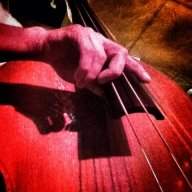
 
First, I think that Mingus sound comes from really pulling the acoustic sound out of the bass. Mingus was a huge guy with powerful hands.

Second, the Brandford thing comes from an interview I read and watching the DVD of him playing Love Supreme Live in Amsterdam. I've seen him a few times too but never really noticed the monitor situation. I notice Eric had no amp though.

I guess I am thinking more about the concept. Real world situation make us as bass players have to compensate in a variety of ways.
 
PURPOSE OF AN AMP'.
Yes Christian Mc Bride did have a Glockenklang the last
time I saw him. So there are varations, aren't there?[/QUOTE]

Here's what Christian McBride has to say about it:

"By the way, the same thing happened to me on upright during my 'purist' period, when I was encouraged to play without an amp. I figured I would have to really dig in to be heard and ended up developing tendinitis in both arms, and I had to lay off for two months."

Q: How did you remedy that situation?

"The first thingt that opened my eyes was seeing Paul Chambers on the famous 1960 Miles Davis film with the Gil Evans big band. He was playing so cool and light, and he was still getting a huge sound. Then watching Ray Brown and Ron Carter live confirmed that approach."

http://books.google.com/books?id=ss...sig=Vq49qnpvSQXxazNOOBa-dWy51ew#PRA4-PA140,M1
 
The unfortunate thing is that I think his live tone suffered.

I saw him in Spain in 1993 when I was on tour and had a night off. He had no amp. It was fairly big place and he was mic'd through the pa. I was blown away by his tone. Big, fat, woody, georgeous.

I've seen him many times since. Lately I've found his live tone lately to be lacking. His electric tone is killer but his upright tone is just ok imho. I don't know what amp he was using but it was big.

His playing still kills me every time though. :hyper:


Maybe its just the purist in me but I don't care for the live tone of lots of guys. The bass is such a beautiful sounding instrument. It seems that many people have lost sight of jazz as acoustic music and the thing that has suffered most is the tone of the bass.

Regardless, I play loud when the gig calls for it. Gotta work.

Cheers! M-->
 
I don't really worry over my amplified sound, I lucked into some really good sounding gear, an old ploytone and H & H amp. H & H was some crazy amp company in the UK. It sounds better than anything I have ever used.
My friend Henry Kaiser gave it to me. The Late east german bassist Klaus Koch used one. He was amazing.

The old polytone pick up just has the best sound of any pick up I have tried.
I used it through this little crate power block abd the extra 15 that came with the H & H the other day and I was really clear and acoustic sounding.
I have a big acoustic sound and rarely need to amplify. Christian is right about it not coming from the hands, it comes from the shoulders.

Anyway, I use the amp to be heard in less than optimum listening conditions, and that normally means putting in more highs than my acoustic sound has.
 
You know, when I was a little younger I would listen to Eddie Gomez and think "What a crappy pickup sound".

Now listen to Eddie Gomez and say "Man, Eddie is playing some incredible stuff on this tune, and his intonation is great, feel is great, melodies are just beautiful, and I can't play at Eddie's level; what can I do to make my playing more like Eddie's?"
 
You know, when I was a little younger I would listen to Eddie Gomez and think "What a crappy pickup sound".

Now listen to Eddie Gomez and say "Man, Eddie is playing some incredible stuff on this tune, and his intonation is great, feel is great, melodies are just beautiful, and I can't play at Eddie's level; what can I do to make my playing more like Eddie's?"

It really is about the music.:D
 
I was just posing a question based on the fact that we spend a good amount of time talking about amplifying our basses. Acoustic basses. As I see it that is not consistent with the "it's about the music" idea.
I have dug a lot of the things Marc and everyone else has said. But I am still trying to figure out this last comment kind of.

I think that yes, it's all about the music. But I think talking about how to get an amplified tone that is pleasing or fitting or natural .. to us, our bandmates, the audience .. is consistent with that. Maybe I misunderstood.

My idea of a good amplified tone is one that matches my acoustic tone as closely as possible. But for a lot of reasons, that seems to be really hard to do sometimes. So we spend time talking about it and experimenting with it and so on.

Because we care about the tone and we care about the music. Tone and timbre, amplified or not, is part of the music.
 
OK, let me clarify. The tools we employ to make music: basses, strings, pickups, amps etc, etc, etc are essential in our pursuit of making music the best we can and being heard by other musicians and the audience in the process. We all want to have the tools that best equip us in these pursuits.

However, the desire for better amps or whatever can sometimes cloud the real goal which is to make music. After a point, and I imagine it's different for every player, I think it's important to just be content with the gear we have and play music.

I've seen players that can absolutely play their ass off with crappy gear and others who can't play worth a $%^& but have nice basses and amps. I believe some of the later are thinking that if they can just get that new piece of gear they'll become a better player when what they should do is learn how to play.
Twenty five years ago I told a drummer that I'd like to dump my Peavy head and go with GK. "That won't make you a better bass player," he told me. Ouch!!!:crying:

BTW, I'm not immune to G.A.S. My presence here confirms that I'm interested in the tools of our trade but I'm not a member of the ___________ of the month club either.;)


Gotta practice now.

p.s. The best definition of ENOUGH: Just a little bit more.:D
 
I have dug a lot of the things Marc and everyone else has said. But I am still trying to figure out this last comment kind of.
.

I was just responding to comments that didn't seem to be totally constructive to the topic at hand.

The thing that strikes me is that how and if I amplify myself changes my playing. It also strikes me how my tone effects my playing. It seems that part of the way to have more control of that is to get as much tone and sound as you can from the bass and let the amp support.

This is an ideal.

I play very amplified and loud often. Gotta work.:cool:
 
Part of it for me, is that the gear is interesting in its own right. I have an irrational compulsion to understand how all of this stuff works. Now I don't buy a new amp every day, but I am sure that firing up my soldering iron or table saw is just another form of GAS.
 
I'm certain I play differently with an amp than without. In most cases I prefer the sound I get with one than without. I'm not an orchestral player or a cabaret jazz player from the 40's or 50's. As such the amp is just as important a tool to me as the bass, the strings, where my feet are, how I carry my weight, where I carry tension, etc.

The pursuit of an ideal tone is addressed from multiple angles. The combination of physical skills and tools are what is required for good sound.

GAS is one manifestation of this, excellent tone is another. The line between obsession and persistence is often a matter of perspective. Clearly there can be a tendency to look to tools to solve deficiencies in physical skills or the lack of time spent in acquiring them. Yet there is also a deep commitment to tool refinement that is an enhancement to skill refinement. They can look very similar from a short distance away.

It is just as short sighted to view all tool refinement as if it is always a diversion driven obsession, as it is to shortcut around the physical/mental discipline required for excellence and form an unbalanced reliance on tools.

We've all heard players that have mad skills and sound terrible. We've also heard great sounding players that have nothing to say.

The A list players have both.
 
I'm certain I play differently with an amp than without. In most cases I prefer the sound I get with one than without. I'm not an orchestral player or a cabaret jazz player from the 40's or 50's. As such the amp is just as important a tool to me as the bass, the strings, where my feet are, how I carry my weight, where I carry tension, etc.

The pursuit of an ideal tone is addressed from multiple angles. The combination of physical skills and tools are what is required for good sound.

GAS is one manifestation of this, excellent tone is another. The line between obsession and persistence is often a matter of perspective. Clearly there can be a tendency to look to tools to solve deficiencies in physical skills or the lack of time spent in acquiring them. Yet there is also a deep commitment to tool refinement that is an enhancement to skill refinement. They can look very similar from a short distance away.

It is just as short sighted to view all tool refinement as if it is always a diversion driven obsession, as it is to shortcut around the physical/mental discipline required for excellence and form an unbalanced reliance on tools.

We've all heard players that have mad skills and sound terrible. We've also heard great sounding players that have nothing to say.

The A list players have both.

+1!!!

In the spirit of total disclosure I use an amp at almost every gig.

I find this an interesting discussion topic and one that every bass player thinks about. There are guys at the extremes. I fall somewhere in the middle though maybe slightly towards the 'acoustic' end right now. I usually use an amp though. I have worked hard to get a good amplified tone and consider that part of my 'sound'.
 
OK, let me clarify. The tools we employ to make music: basses, strings, pickups, amps etc, etc, etc are essential in our pursuit of making music the best we can and being heard by other musicians and the audience in the process. We all want to have the tools that best equip us in these pursuits.

However, the desire for better amps or whatever can sometimes cloud the real goal which is to make music. After a point, and I imagine it's different for every player, I think it's important to just be content with the gear we have and play music.

I've seen players that can absolutely play their ass off with crappy gear and others who can't play worth a $%^& but have nice basses and amps. I believe some of the later are thinking that if they can just get that new piece of gear they'll become a better player when what they should do is learn how to play.
Twenty five years ago I told a drummer that I'd like to dump my Peavy head and go with GK. "That won't make you a better bass player," he told me. Ouch!!!:crying:

BTW, I'm not immune to G.A.S. My presence here confirms that I'm interested in the tools of our trade but I'm not a member of the ___________ of the month club either.;)


Gotta practice now.

p.s. The best definition of ENOUGH: Just a little bit more.:D

Uncletoad said:
I'm certain I play differently with an amp than without. In most cases I prefer the sound I get with one than without. I'm not an orchestral player or a cabaret jazz player from the 40's or 50's. As such the amp is just as important a tool to me as the bass, the strings, where my feet are, how I carry my weight, where I carry tension, etc.

The pursuit of an ideal tone is addressed from multiple angles. The combination of physical skills and tools are what is required for good sound.

GAS is one manifestation of this, excellent tone is another. The line between obsession and persistence is often a matter of perspective. Clearly there can be a tendency to look to tools to solve deficiencies in physical skills or the lack of time spent in acquiring them. Yet there is also a deep commitment to tool refinement that is an enhancement to skill refinement. They can look very similar from a short distance away.

It is just as short sighted to view all tool refinement as if it is always a diversion driven obsession, as it is to shortcut around the physical/mental discipline required for excellence and form an unbalanced reliance on tools.

We've all heard players that have mad skills and sound terrible. We've also heard great sounding players that have nothing to say.

The A list players have both.

I just reread these posts.

I said the same thing you already did.

Dooh!
 
Yup, you bassicly did. I ALWAYS use an amp. Sure. it ,may be possible to go back to gut strings hiked up like the old greats, but Ray Brown, Ron Carter and others adapted with the times and took advantage of new technologies.
Tools are essential to our tone and to the way we play but it has to be kept in perspective.
My point is this: after reaching a certain point, for most playing situations switching from Polytone to GK to AI to WW to EA to ????? probably isn't going to make a guy play better.
The great players of the past and present aren't remembered for their amplifiers.:D :D
 
Ture dat, but almost every great player I've ever seen has commented that it's essential to know about amps and pickups and sound. Case in point, I saw a Ray Drummond clinic about 17(!) years ago. He talked about how important it is to know about frequencies and then proceeded to tell the soundman which of his frequencies to boost and which to cut. Some bassists really take a "plug-n-play" kind of mentality which I really think is not the right one to have. Know what happens to your instrument when you add certain frequencies to it--and know when you need to add (or subtract) them to get that sound you want.

Ron Carter put it great in a BP interview, "From what I've heard, I've been a little dismayed at how many bass players haven't matched a pickup with thier instruments. You don't just go out and buy a pickup that works; every bass responds differently to different pickups. I'd like to see bassists invest the money to get the best sound. Same thing with amplifiers--what's the best amp for the sound you're looking for, or for the pickup you're using, or for the strings you have on? It should be a real laboratory mentality, but many players just buy an amp or a pickup that somebody else uses, and they plug it in and they're comfortable with that."

Myself included. . . doh.
 
My point is this: after reaching a certain point, for most playing situations switching from Polytone to GK to AI to WW to EA to ????? probably isn't going to make a guy play better.
Yes and no. I know my playing has changed as I've honed in on the tools that give me the sound that speaks to me. So in that sense I become a better player. From the outside the difference is hard to see. From the inside it's very profound. I'm sure I communicate that satisfaction in my playing. That portion is obvious to my bandmates as they say "boy you are starting to sound good on that thing".

Conversely true musicians play great music with what they've got. Use the tools you have and start painting.