
I've got very good advice from my guitar player about my girlfriend. They now live a happy life together, proof that he was right.The last person I would take input from is a guitar player.

Enjoy the benefits of a premium membership!
Upgrade Account
-
TalkBass has been independent since 1998. Add your voice.
Create a free account to reply to discussions, view embedded media, and browse with fewer display ads.
Join free Log in
Want zero display ads or expanded classifieds tools? Compare plans.
You are using an out of date browser. It may not display this or other websites correctly.
You should upgrade or use an alternative browser.
You should upgrade or use an alternative browser.
Question about usage of flat wound strings
- Thread starter skaine
- Start date
More options
Who Replied?

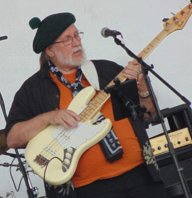
 I'd be curious about the guitar that he's playing. If it's one of these? Then, just about any electric bass could make him disappear from the mix - with not much of a problem, either. But,
 if he's playing something like this? Then he needs to turn the volume up - or remember to plug the thing in...

View attachment 3572674 I'd be curious about the guitar that he's playing. If it's one of these? Then, just about any electric bass could make him disappear from the mix - with not much of a problem, either. But,
View attachment 3572676 if he's playing something like this? Then he needs to turn the volume up - or remember to plug the thing in...
Hes playing Heritage guitar, which looks like a Les Paul in appearance.

Imo both j and p should work any day of the week.
I think the problem is behind the instrument.
Like the saying goes:
@&$-$-# goes in.....+#+$+$++#.....goes out.
I think the problem is behind the instrument.
Like the saying goes:
@&$-$-# goes in.....+#+$+$++#.....goes out.

Oddly, the Jazz Bass to my ears has a much more “precise” tone than a P, meaning that the bark and growl slice through the mix in a way that you can hear the notes more. Jazz basses are way more unforgiving in this manner, which is one of the reasons I prefer P’s. He might be referring to this pronounced accuracy he perceives from a J.
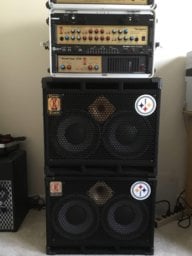
Today i had a conversation with a guitarist friend who mostly plays blues and an experienced one.
He told me that he prefers jazz bass rather than precison bass in a band. Not trying to start a jazz bass vs precison bass debate here by the way. Thats not my point.
I asked him why and he told me that P basses have more heavy and punchy sound compared to jazz basses, so his guitar sound disappears in that punchy sound. Because of that he prefers more round and warm sound that his guitar sound can be heard better.
I can hardly tell detailed stories in English due to my limited grammar and vocabulary, but it was like:
If a punchy P bass is a square with corners, so does his guitar sound. When played together two cornered sounds doesnt go well together, so he needs circles or ellipses instead of cornered sounds.
He told me this in a technical way of course, but i cant completely explain the details correctly
Back to my question, as far as i know there are many bass guitarists using P bass without a problem in a band, especially in a blues band.
So i wonder is this the reason people use flats in order to decrease that punch and get a warmer sound? What else should i consider in that matter?

No disrespect to your guitarist, but he had mud in his ears. Low mid punch is not going to make his guitar disappear. You are in a different frequency range. Now the drummer’s cymbals might be a different story. Fire the Drummer!
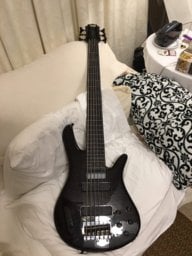
Your English is excellent!Today i had a conversation with a guitarist friend who mostly plays blues and an experienced one.
He told me that he prefers jazz bass rather than precison bass in a band. Not trying to start a jazz bass vs precison bass debate here by the way. Thats not my point.
I asked him why and he told me that P basses have more heavy and punchy sound compared to jazz basses, so his guitar sound disappears in that punchy sound. Because of that he prefers more round and warm sound that his guitar sound can be heard better.
I can hardly tell detailed stories in English due to my limited grammar and vocabulary, but it was like:
If a punchy P bass is a square with corners, so does his guitar sound. When played together two cornered sounds doesnt go well together, so he needs circles or ellipses instead of cornered sounds.
He told me this in a technical way of course, but i cant completely explain the details correctly
Back to my question, as far as i know there are many bass guitarists using P bass without a problem in a band, especially in a blues band.
So i wonder is this the reason people use flats in order to decrease that punch and get a warmer sound? What else should i consider in that matter?
In my opinion, please don’t let ax muons dictate your tone.
It’s Your tone s as bd doubt you’d dictate string , amp / cab choices to your guitarist.
Concede only if guitarist pays for strings , installation and set up.
( Then buy another bass and string it with round wound strings)
This Link Removed***SNIP***
It's impossible to really say what's going on here. My guess is that your guitar player wants to hear his guitar in the band like he hears it on its own, and that's just not the real world. Hard to know.

I played with a guitarist for about a year ago had been playing close to 30 years. He insisted I get a fender bass, and a 15 inch speaker, because he wanted a fuller sound and since he plays a fender, a fender bass would sound better with the fender guitar. I don't think many guitarists understand how the bass works. The few times he tried experimenting with my EQ he turned my tone to muddy garbage.

I think you have this backwards, the neck pup on and the bridge pup off???P with flats is standard for blues bands, not that other basses due fine with flats.
I would question whether the guitar player's tone is too bassy since "his guitar sound disappears in that punchy sound".
Is he referring to P bass with round wound strings?
Also, playing a J with dead flats with the neck pup off and over the bridge pup will get you close to a P tone.
Are you asking whether you should put flats on your bass? Yes, especially for blues.
Have you tried Fender 9050 flats?My go to flats are D’Addario Chromes. I’ve tried most and find these the liveliest and they last for a decent time. Haven’t tried Tomastic yet though, $$.

If you have a guitar player claiming he’s getting lost in the mix due to a bass, he’s doing something wrong. That’s like the bizarro world right there.

I played with a guitarist for about a year ago had been playing close to 30 years. He insisted I get a fender bass, and a 15 inch speaker, because he wanted a fuller sound and since he plays a fender, a fender bass would sound better with the fender guitar. I don't think many guitarists understand how the bass works. The few times he tried experimenting with my EQ he turned my tone to muddy garbage.
So true.......... There are guys out there who get it though, most of the guys I've played with do. But thinking that a Fender bass makes a Fender guitar sound better is way out there. Who knows though, maybe in the 70's that was a popular way of thinking.
One thing to be aware of on this topic is that all the major string makers make flats for bass and they sound different from each other in ways. GHS Precision Flats are designed to have a very thumpy, mellow sound with a quick decay to the notes. Sadowsky flats (which I use) are "brighter" in that you hear more overtones like you would on rounds and the sustain is almost like rounds as well. It really depends on the sound you are looking for and why you'd want to use them.Today i had a conversation with a guitarist friend who mostly plays blues and an experienced one.
He told me that he prefers jazz bass rather than precison bass in a band. Not trying to start a jazz bass vs precison bass debate here by the way. Thats not my point.
I asked him why and he told me that P basses have more heavy and punchy sound compared to jazz basses, so his guitar sound disappears in that punchy sound. Because of that he prefers more round and warm sound that his guitar sound can be heard better.
I can hardly tell detailed stories in English due to my limited grammar and vocabulary, but it was like:
If a punchy P bass is a square with corners, so does his guitar sound. When played together two cornered sounds doesnt go well together, so he needs circles or ellipses instead of cornered sounds.
He told me this in a technical way of course, but i cant completely explain the details correctly
Back to my question, as far as i know there are many bass guitarists using P bass without a problem in a band, especially in a blues band.
So i wonder is this the reason people use flats in order to decrease that punch and get a warmer sound? What else should i consider in that matter?
I use flats to have that smooth feel with no finger squeak but I still want punch to the tone. Labella Deep Talkin' flats are a more traditional sounding flat with muted highs and strong fundamentals. D'Addario Chromes are bright to begin with but mellow out.
Corners vs. curves...I want to think about this a bit, but it seems like a pretty neat way to describe envelope characteristics (attack/release) of certain notes. But also consider whether perception of these characteristics also is a function of timbre or tone. I'm not sure JBass/PBass defines the divide here. Playing style (legato/detached; hard or soft attack), string choice (flats/rounds) and EQ choice (bright/bassy) also are factors that affect note envelope. I get the guitarist saying he seeks contrast to his thing, which could make a lot of sense...but also could be speaking to a limitation in the guitarist's imagination. If he and the bass are in a dark and legato place, can't they make that a thing?
Last edited:
That's pretty much like my little red Epiphone in the picture - only nicer. I'd say he needs to turn his volume up; get a bigger amp; or, maybe both. And, to meet in the middle, you might need to turn your volume down a little. But, there's no real reason the two of you can't reach a compromise you both can live with.. Good luck with him...Hes playing Heritage guitar, which looks like a Les Paul in appearance.


so he needs circles or ellipses instead of cornered sounds.
Nobody going to talk about this? Nkay.....
Basically, a Jazz Bass pickup just has a little lower output and a higher resonant peak than a P Bass pickup (talking about "normal" versions of each pickup). But it can be dialed in to sound like a P: more gain, less high end and high mid. And you can do a lot to thin out a P as well (high master/low gain, reduce low end with your knobs on the amp). He's making an overly gear-based statement, when all he really wants is a certain tone that could be achieved with either model of bass, and a player who knows how to dial in an amp.
I use my Js and Ps interchangeably, mostly picked out for the gig based on looks, or on a whim. I know I can take either type and e.q. it to sound however I want. Those two basses would not have lasted with such huge popularity for 60 years functionally unchanged if they were both not usable for almost everything.
I use my Js and Ps interchangeably, mostly picked out for the gig based on looks, or on a whim. I know I can take either type and e.q. it to sound however I want. Those two basses would not have lasted with such huge popularity for 60 years functionally unchanged if they were both not usable for almost everything.
Last edited: