

Enjoy the benefits of a premium membership!
Upgrade Account
-
TalkBass has been independent since 1998. Add your voice.
Create a free account to reply to discussions, view embedded media, and browse with fewer display ads.
Join free Log in
Want zero display ads or expanded classifieds tools? Compare plans.
You are using an out of date browser. It may not display this or other websites correctly.
You should upgrade or use an alternative browser.
You should upgrade or use an alternative browser.
Rattle Can Refinish Club
- Thread starter redlikejazz
- Start date
-
- Tags
- club
More options
Who Replied?

Your clear coats will not likely fill those wood grain holes. You don't have enough cans to do it unless you're hiding a couple of cases under your bench.
BTW..... all the Behlen paint is available is quarts and gallons but not under their pricey name at your local hardware stores .
BTW..... all the Behlen paint is available is quarts and gallons but not under their pricey name at your local hardware stores .
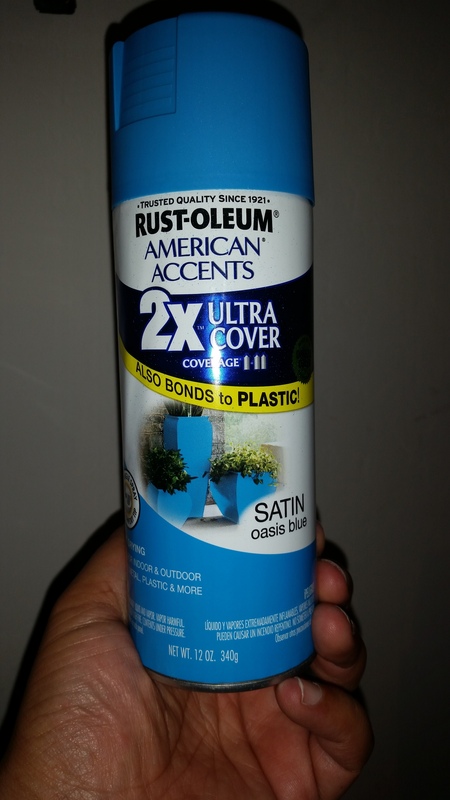
Here's what I'm using.
I've had very bad experiences with the Rustoleum paints and clearcoat. Never drying comes to mind and nasty stickiness for months too.
To get a much better product in an air dry product, use Minwax Marine Spar Varnidh.... which is really a polyurethane-like non-catalyzed spray product. I've never had it react badly with pretty much anything under it if they have quit off-gassing first. It can be bought in Satin or Shiny versions.
We'll see. So far, It's been working good for me. It's not perfect of course. But it is my first attempt at repainting a bass. I'm having a good time too.
The satin finish paint is looking really good to me. Glad I went with it instead of gloss. I'm now 3 coats of clear in so far. 1 or 2 more and I'll be done.

I need to do some patch repairs on the finish of this FrankenSquier:
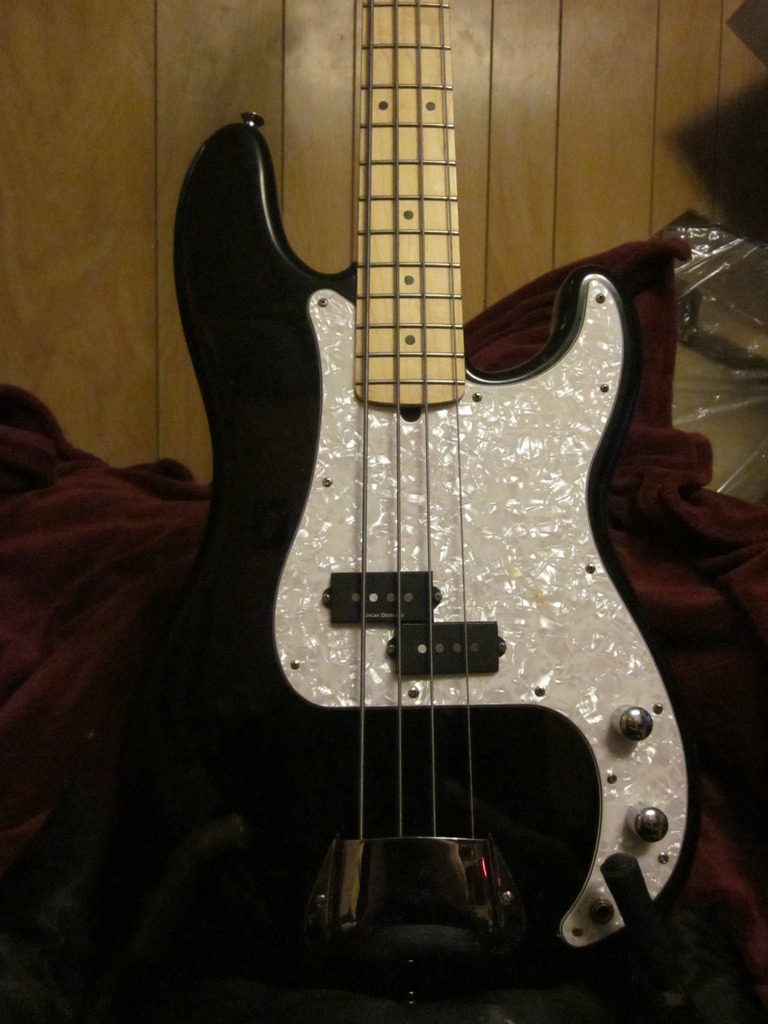
When building it, I had to move the bridge towards the E string side, and during the drilling and refilling process, I accidentally drilled thru the body, and now I need to repair and repaint that bit on the back. Can you all recommend a spray paint that would be compatible with the Poly finish, both black and a clear coat?
When building it, I had to move the bridge towards the E string side, and during the drilling and refilling process, I accidentally drilled thru the body, and now I need to repair and repaint that bit on the back. Can you all recommend a spray paint that would be compatible with the Poly finish, both black and a clear coat?
Compatible? The polyester finish is a closed molecule in that there is very little that can etch into it and make paint stick well - or at all really.
Some people try to rough sand the polyester and apply paint over the surface - and there is some success with that, but it's not 'penguin' if you know what I mean.
The right way is to strip it of all the polyester and get to bare wood and start all over again.
Are you into that?
Some people try to rough sand the polyester and apply paint over the surface - and there is some success with that, but it's not 'penguin' if you know what I mean.
The right way is to strip it of all the polyester and get to bare wood and start all over again.
Are you into that?
Nope. not at all interested if you mean I would have to do the entire body. If I can do what you said without re-doing the whole thing, that I could probably handle. If so, I would still be concerned about paint compatability when feathering the edges of the spot refinish. I don't expect it to be perfect, as long as it's better than it is now. In other words, passable. It is on the back, after all.Compatible? The polyester finish is a closed molecule in that there is very little that can etch into it and make paint stick well - or at all really.
Some people try to rough sand the polyester and apply paint over the surface - and there is some success with that, but it's not 'penguin' if you know what I mean.
The right way is to strip it of all the polyester and get to bare wood and start all over again.
Are you into that?
Nope. not at all interested if you mean I would have to do the entire body. If I can do what you said without re-doing the whole thing, that I could probably handle. If so, I would still be concerned about paint compatability when feathering the edges of the spot refinish. I don't expect it to be perfect, as long as it's better than it is now. In other words, passable. It is on the back, after all.
It's neigh-on impossible to mimic the clearcoat and the color coat which may be only a few molecules apart from each other - but OPTICALLY any 'blending' without cutting through the top clearcoat on the guitar --- is gonna look as bad as someone trying to hide a dead cat under your living room carpet.
IF the hole is small and you don't mind just a fill-n-touch with some correctly colored enamel - then you might be fortunate enough to hide your boo boo.
I'm just psycho enough to strip it all off and start all over with a new color coat and many clear coats on top of that. It is not required that you adhere to any of my insanity - but it would be prettier.
Well, it's a little more than just a hole. It's an area about 1 to 1 1/2 inch by about 1/2 to 3/4 of an inch that' all scratched up and drill and f ill job is not the best. (this is my first parts build and I got a little carless with the drill)and It definitely will require filling, sanding and polishing/buffing as the holes I drilled and dowelled was a fairly sloppy job. I was thinking I could just get away with just repainting that small area, I'm doubtful I can make it an invisible paint job, but that doesn't concern me. I just want to get rid of the ugly "scars". I figure with some carful sanding and buffing, I could make a passable job of it. So, would just a plain enamel paint be sufficient? (both black and clear coat?).It's neigh-on impossible to mimic the clearcoat and the color coat which may be only a few molecules apart from each other - but OPTICALLY any 'blending' without cutting through the top clearcoat on the guitar --- is gonna look as bad as someone trying to hide a dead cat under your living room carpet.
IF the hole is small and you don't mind just a fill-n-touch with some correctly colored enamel - then you might be fortunate enough to hide your boo boo.
I'm just psycho enough to strip it all off and start all over with a new color coat and many clear coats on top of that. It is not required that you adhere to any of my insanity - but it would be prettier.
Enamels are a wide range of paint. I wouldn't want to tell a novice that they should use enamels even after a long time working in the field. Primarily they are always soft and gouge-able with the itinerant fingernail.
You need something that is tougher and actually dries quickly to make a hard surface. .
Lacquers are so-o-o-o much easier to work with as lacquer never forgets that it is lacquer and can be re-melted into itself over and over.
Sanding is much easier too - and dry time is ridiculously fast.
Please reconsider and go for lacquers instead.
And DO NOT use any wood putty type stuff to fill holes on a guitar. It is impossible to work with and will look like fried eggs under the paint. It may also fall out of the body at the wrong time.
I use Bondo or one of it's many other brands and names - but it's still a polyester filler with some fiber in it. You can get a quart for a low price with the catalyst and you'll also love the smell. I love the smell.
Clean the hole - mix up the resin and some catalyst and slather it into the hole - working it for a few minutes.
You WILL always remember this smell ---- if you haven't already smelled it and have a love affair for it by now anyway. Did I mention that I like the smell? I do!
Carve or cheese grate the surface before it sets up hard and then use smaller and smaller coats of the polyester resin until you've got it nice and level.
THEN (there is always a 'THEN') use what I call Green Stuff - which is a very old product that is a fine filler for final sanding. It was green, hence the name. But you can get it in red, grey, blue and even green yet.
It is a lacquer based product and as such it is a great base for - wait for it -----> lacquers.
The rest is pretty much self explanatory.
You need something that is tougher and actually dries quickly to make a hard surface. .
Lacquers are so-o-o-o much easier to work with as lacquer never forgets that it is lacquer and can be re-melted into itself over and over.
Sanding is much easier too - and dry time is ridiculously fast.
Please reconsider and go for lacquers instead.
And DO NOT use any wood putty type stuff to fill holes on a guitar. It is impossible to work with and will look like fried eggs under the paint. It may also fall out of the body at the wrong time.
I use Bondo or one of it's many other brands and names - but it's still a polyester filler with some fiber in it. You can get a quart for a low price with the catalyst and you'll also love the smell. I love the smell.
Clean the hole - mix up the resin and some catalyst and slather it into the hole - working it for a few minutes.
You WILL always remember this smell ---- if you haven't already smelled it and have a love affair for it by now anyway. Did I mention that I like the smell? I do!
Carve or cheese grate the surface before it sets up hard and then use smaller and smaller coats of the polyester resin until you've got it nice and level.
THEN (there is always a 'THEN') use what I call Green Stuff - which is a very old product that is a fine filler for final sanding. It was green, hence the name. But you can get it in red, grey, blue and even green yet.
It is a lacquer based product and as such it is a great base for - wait for it -----> lacquers.
The rest is pretty much self explanatory.
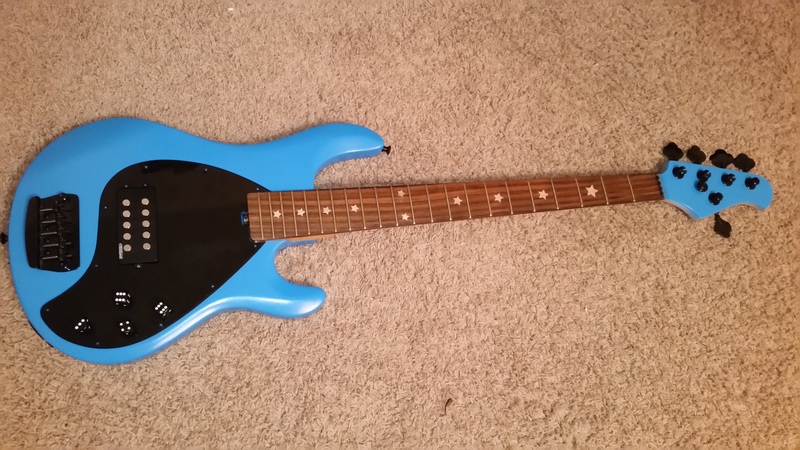
All done! Looks great to me. It came out better than expected. A couple flaws but you have to look for them closely. Not bad for my first full paint job.
Not sure if I want to go with this original pg or use the black one. Now to reassemble.

Lovely MM respray. Are those actual fret inlays, inlay stickers or just plain stickers?
All done! Looks great to me. It came out better than expected. A couple flaws but you have to look for them closely. Not bad for my first full paint job.
Not sure if I want to go with this original pg or use the black one. Now to reassemble.

Well, I was planning on using super glue as a filler, (as per Dan Erlewine's tip)the scratches and screwhole gaps are not that deep. I just have one more question, will lacquer be OK to use with a poly finish? AS I said, I only want to do a spot fix, not repaint the whole thing.Enamels are a wide range of paint. I wouldn't want to tell a novice that they should use enamels even after a long time working in the field. Primarily they are always soft and gouge-able with the itinerant fingernail.
You need something that is tougher and actually dries quickly to make a hard surface. .
Lacquers are so-o-o-o much easier to work with as lacquer never forgets that it is lacquer and can be re-melted into itself over and over.
Sanding is much easier too - and dry time is ridiculously fast.
Please reconsider and go for lacquers instead.
And DO NOT use any wood putty type stuff to fill holes on a guitar. It is impossible to work with and will look like fried eggs under the paint. It may also fall out of the body at the wrong time.
I use Bondo or one of it's many other brands and names - but it's still a polyester filler with some fiber in it. You can get a quart for a low price with the catalyst and you'll also love the smell. I love the smell.
Clean the hole - mix up the resin and some catalyst and slather it into the hole - working it for a few minutes.
You WILL always remember this smell ---- if you haven't already smelled it and have a love affair for it by now anyway. Did I mention that I like the smell? I do!
Carve or cheese grate the surface before it sets up hard and then use smaller and smaller coats of the polyester resin until you've got it nice and level.
THEN (there is always a 'THEN') use what I call Green Stuff - which is a very old product that is a fine filler for final sanding. It was green, hence the name. But you can get it in red, grey, blue and even green yet.
It is a lacquer based product and as such it is a great base for - wait for it -----> lacquers.
The rest is pretty much self explanatory.
As a joke I tell most people that polyester finishes aren't bothered by much less than a small yield nuclear explosion.
Think Corvette bodies.
Think surfboards.
Lacquer will be just as good - nay, make that: better - than most other paints IMO, for all the reasons I've already promulgated.
Think Corvette bodies.
Think surfboards.
Lacquer will be just as good - nay, make that: better - than most other paints IMO, for all the reasons I've already promulgated.
Looking even better. I'm going with the black pickguard!
OK, thanks, Joe. I'll keep that in mind whenever I get around to fixing it.As a joke I tell most people that polyester finishes aren't bothered by much less than a small yield nuclear explosion.
Think Corvette bodies.
Think surfboards.
Lacquer will be just as good - nay, make that: better - than most other paints IMO, for all the reasons I've already promulgated.

So she is a feather weight Med scale Warmoth Pine P bass . It was rr surf green for a few years and looked great but I had some gold top from the stinger for it's neck and Sherwood green sitting around sooo away we went !






with the Padouk neck
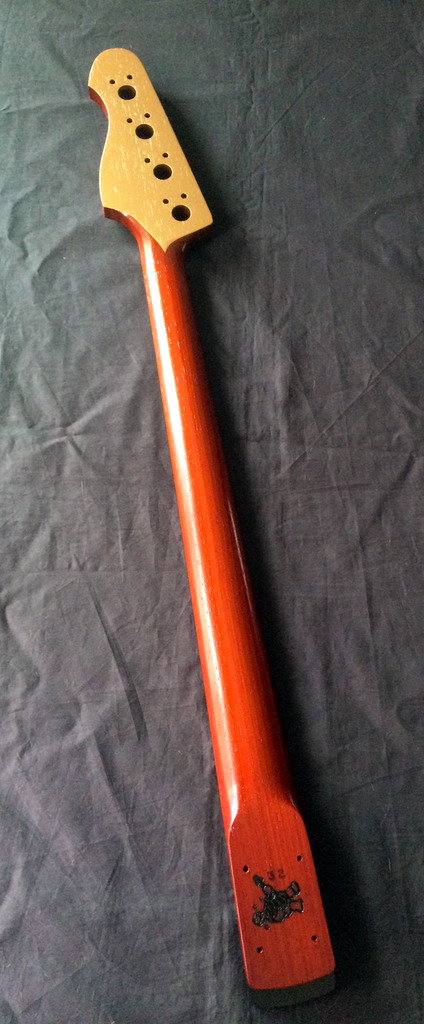
with the Padouk neck


