

Enjoy the benefits of a premium membership!
Upgrade Account
-
TalkBass has been independent since 1998. Add your voice.
Create a free account to reply to discussions, view embedded media, and browse with fewer display ads.
Join free Log in
Want zero display ads or expanded classifieds tools? Compare plans.
You are using an out of date browser. It may not display this or other websites correctly.
You should upgrade or use an alternative browser.
You should upgrade or use an alternative browser.
Reading Music
- Thread starter Dr. Cheese
- Start date
More options
Who Replied?
I will never understand why there is so much push back against this crucial skill.
I will never understand why there is so much push back against this crucial skill.
I would assume in some situations like cover bands this skill is really not needed. I play in a rock cover band and do not have to read music at all. Everything is done by ear.
It's a great skill to have and I read quite well. Part of my practice routine is to sight read classical music.
I will never understand why there is so much push back against this crucial skill.
I think there are a few factors. Instruments in the guitar family were not traditionally covered in public school Curriculums. There have always been a number of truly great players who did not read. The result was lots of nowhere near great players who felt they didn’t need to read either.
Last edited:

I learned at a pretty early age and so did both my kids.I will never understand why there is so much push back against this crucial skill.
I don’t know if there is pushback. But as a trained reader I (opinion) firmly believe the way that music is transcribed is outdated and downright wonky. The Suzuki method (strings, etc) exists with great success because of this factor. The Nashville system also has grown in relevance partly for this reason.
Learning to read IS valuable and essential for any musician who wants to make a serious go with any instrument, any genre. But I cannot blame any beginner who would choose to skip by the awkward process, basically it’s like learning Latin to master calculus. It’s only done this way because it’s always been done this way.
Learn it anyway is the only advice I’d give. It’s worth it because it is necessary to know the language in order to communicate with other musicians.
Perhaps "push back" was not the proper term to express my opinion. Everyone has personal motivation and aspirations in music. If the goal is to learn four notes to successfully play Mary Had a Little Lamb then I applaud the ambition and success with the same enthusiasm learning Trichotism, Donna Lee, Run for Cover, Leftoverture or a classical piece. The Suzuki method involves reading and the Nashville Number System, like Tab, is an efficient shortcut in the right environment. Some people may still remember that on the bandstand two fingers up indicates the key of D# and two fingers down is Bb. They are all methods to communicate the intent. But for those with aspirations of elevating their musical skills and abilities to a higher level reading, and theory, should be embraced and pursued with the same enthusiasm as Mary Had a Little Lamb. It is universally understood and opens doors that many don't believe actually exist. George Benson doesn't read but Stevie Wonder does albeit braille. Don't limit yourself simply because you don't want to make the effort or isn't as rewarding initially.

the way that music is transcribed is outdated and downright wonky....It’s only done this way because it’s always been done this way.
I suppose my opinion disagrees on that. I was not trained to read early on. My literacy came long after I knew technique, theory, and was gigging (and it's still a work in progress If I am honest). So when I came to learn notation, I already knew "how music works"
What I have always been struck by is the way that notated music embodies the theory of the western 12 tone system. I still remember the "lightbulb moment" when I wrote out all the triads of c major on the staff, and I finally became clear why the staff is laid out like that. And as far as rhythm is concerned I have never found a superior form of notation -one which noticeably improved my own sense and understanding of rhythm. When you pick up some reading skill, you start to see how it looks like music in a way that tab, chord symbols or Nashville numbers simply fail to capture. Everything else I have seen leaves some information out or has room for ambiguity.
So, I disagree that it's outdated or wonky. And of course notation has evolved to this point, historically it clearly has not always been done this way.
I'll also note that for all the mention of "pushback" every post so far is actually advocating musical literacy.
I learned to read right from the jump, and it's a skill I've used constantly throughout my life. That said, there are contexts I've been in where I didn't need it at all and didn't use it. The same is surely true for others. But even though not everybody may need to read in their particular settings, it will never, ever hurt you to be able to do so. It doesn't hurt your ear; only neglecting to develop your ear will do that. You really can have both reading skill and a good ear; many musicians do.
The thing I hate to see is this idea that learning to read music is some difficult, hard-to-obtain skill. It isn't. Anybody who's learned to write a language well enough to post on the interwebs has already learned something much harder than music notation has ever been. I suspect that some folks confuse (a) the basic ability to read with (b) the ability to read difficult music at first sight in a high-pressure situation. They're not the same thing: (b) is a specialized subset of (a) but is not synonymous with (a).
As an analogy, maybe you have a friend who can read a novel in a day, while it takes you two weeks. Your friend may be faster, but you're both readers. Unless your job requires you to read a novel a day, you don't need that particular specialized skill; but it's still handy just to be able to read, even if you read more slowly.
The thing I hate to see is this idea that learning to read music is some difficult, hard-to-obtain skill. It isn't. Anybody who's learned to write a language well enough to post on the interwebs has already learned something much harder than music notation has ever been. I suspect that some folks confuse (a) the basic ability to read with (b) the ability to read difficult music at first sight in a high-pressure situation. They're not the same thing: (b) is a specialized subset of (a) but is not synonymous with (a).
As an analogy, maybe you have a friend who can read a novel in a day, while it takes you two weeks. Your friend may be faster, but you're both readers. Unless your job requires you to read a novel a day, you don't need that particular specialized skill; but it's still handy just to be able to read, even if you read more slowly.
I learned to read right from the jump, and it's a skill I've used constantly throughout my life. That said, there are contexts I've been in where I didn't need it at all and didn't use it. The same is surely true for others. But even though not everybody may need to read in their particular settings, it will never, ever hurt you to be able to do so. It doesn't hurt your ear; only neglecting to develop your ear will do that. You really can have both reading skill and a good ear; many musicians do.
The thing I hate to see is this idea that learning to read music is some difficult, hard-to-obtain skill. It isn't. Anybody who's learned to write a language well enough to post on the interwebs has already learned something much harder than music notation has ever been. I suspect that some folks confuse (a) the basic ability to read with (b) the ability to read difficult music at first sight in a high-pressure situation. They're not the same thing: (b) is a specialized subset of (a) but is not synonymous with (a).
As an analogy, maybe you have a friend who can read a novel in a day, while it takes you two weeks. Your friend may be faster, but you're both readers. Unless your job requires you to read a novel a day, you don't need that particular specialized skill; but it's still handy just to be able to read, even if you read more slowly.
That is a great way to put it and that is what Jim says on his video.
it's still handy just to be able to read, even if you read more slowly.
My experience precisely
Start with the ask:
Reccomend an Android App, that "gamefies" reading sheet music INCLUDING FOR BASS, and has a large selection of "popular" music, some being classic rock and grunge, like the way Tab apps do? Hopefully with a one-time-$ model... Needs variable speed settings... Plays the song out loud with options to switch your instrument and rest of band on/off... Bonus points if it has an option to display "Alpha Tabs" (Note name instead of fret number on a string)... Would also take reccomends on any tab app as above that does Alpha instead of #
I can read sheet music, incredibly slowly. 6 months ago (picked up a bass) I had never even looked at tabs before. Thanks to the tab apps, in nearly no time I could sight read tabs, even at speed for simple songs I already know in my head. I even recognize patterns in tabs (ie heres the fith, heres the chord change, etc).
I recognize the value of sheet music reading, and am studying some music theory (and find it fascinating) just saying nothing beats "RockBand/GutarHero" like games as a fun learning tool. You are immediately rewarded by adding a song to your reppetoire.
Reccomend an Android App, that "gamefies" reading sheet music INCLUDING FOR BASS, and has a large selection of "popular" music, some being classic rock and grunge, like the way Tab apps do? Hopefully with a one-time-$ model... Needs variable speed settings... Plays the song out loud with options to switch your instrument and rest of band on/off... Bonus points if it has an option to display "Alpha Tabs" (Note name instead of fret number on a string)... Would also take reccomends on any tab app as above that does Alpha instead of #
I can read sheet music, incredibly slowly. 6 months ago (picked up a bass) I had never even looked at tabs before. Thanks to the tab apps, in nearly no time I could sight read tabs, even at speed for simple songs I already know in my head. I even recognize patterns in tabs (ie heres the fith, heres the chord change, etc).
I recognize the value of sheet music reading, and am studying some music theory (and find it fascinating) just saying nothing beats "RockBand/GutarHero" like games as a fun learning tool. You are immediately rewarded by adding a song to your reppetoire.
Last edited:
So that’s cool that you point out you can learn any time. I know several really good players who don’t read and think it’s too late. It’s not. Any age. I don’t experience anything like push back. Lots of things in life are challenging. Do it.I suppose my opinion disagrees on that. I was not trained to read early on. My literacy came long after I knew technique, theory, and was gigging (and it's still a work in progress If I am honest). So when I came to learn notation, I already knew "how music works"
What I have always been struck by is the way that notated music embodies the theory of the western 12 tone system. I still remember the "lightbulb moment" when I wrote out all the triads of c major on the staff, and I finally became clear why the staff is laid out like that. And as far as rhythm is concerned I have never found a superior form of notation -one which noticeably improved my own sense and understanding of rhythm. When you pick up some reading skill, you start to see how it looks like music in a way that tab, chord symbols or Nashville numbers simply fail to capture. Everything else I have seen leaves some information out or has room for ambiguity.
So, I disagree that it's outdated or wonky. And of course notation has evolved to this point, historically it clearly has not always been done this way.
I'll also note that for all the mention of "pushback" every post so far is actually advocating musical literacy.
I would assume in some situations like cover bands this skill is really not needed. I play in a rock cover band and do not have to read music at all. Everything is done by ear.
It's a great skill to have and I read quite well. Part of my practice routine is to sight read classical music.
The big misunderstanding is that most people do not "read by ear".
They do not read so as they could sight sing.
I think the main reason is that it seems impossible, unless someone like a teacher is guiding you through that, and reserved to some young genius musicians, but you can get somewhere profitable to the hearing with a bit of work.
Unfortunately, to most people, reading means just fingering the notes that are written, into an instrument.
This will not help play by ear, because it doesn't involve miuch hearing skills, while sight singing definitely is a huge ear training workout, that would benefit anyone wanting to play by ear in a rock band.
I would go back in time and explain this to myself if I could

Last edited:

As a music teacher I, of course, believe in reading music. Someone mentioned Suzuki method, which is valid but I believe limited. Rarely will an entire symphony orchestra memorize an entire piece or concert. On the other hand, I play cover band gigs from memory, having learned most by ear, but I have also used transcriptions to save myself time. I prefer standard over TAB as standard gives you more information,
like rhythm, but TAB can also be useful.
In church - and jazz gigs - I use lead sheets with chords and/or lyrics as a road map. NNS is another way to do that.
Learning to read isn’t that difficult, and I believe still a worth while endeavor. Yet, one has a hard time making the argument when players like Pino are out there. Can’t read note.
like rhythm, but TAB can also be useful.
In church - and jazz gigs - I use lead sheets with chords and/or lyrics as a road map. NNS is another way to do that.
Learning to read isn’t that difficult, and I believe still a worth while endeavor. Yet, one has a hard time making the argument when players like Pino are out there. Can’t read note.
Because for lots of us it has never been crucial. I worked full-time in music for a decade and was never once given anything in standard notation to read.I will never understand why there is so much push back against this crucial skill.
I'm certainly not anti-reading by any stretch, but its importance is debatable in many situations, and that's why we end up debating it. Not being able to read will select you out from certain categories of work, but if you don't aspire to do that sort of work it's actually not much of an issue. That probably describes most of us.
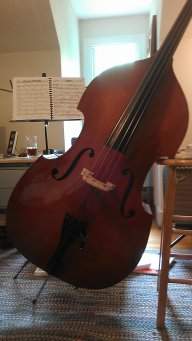
Funnily i knew how to read music from band class before picking up electric bass, bass clef even, then learned the bass without ever reading a note on paper. Now many years later, i do still think it's a useful skill, but also don't think it is a required skill. If you are a professional musician that wants to be able to play all types of gigs, it is going to get you gigs that you wouldn't had gotten otherwise though and not being able to do it could theoretically affect your potential income all things depending.

Hobbyist playing in a good ole boy band, it's all fake chord. Find the chord and fake the rest. Never had a band director hand out standard notation, it was all fake chord. I later preferred Nashville numbers and would transpose my fake chord over to NN..
That said, I'm not knocking being able to read standard notation, however do agree with the others that say you can get by with out standard notation. I read it, but, not fast enough to sight read and keep up.
Because I can read it that helps me understand what the fly specks are trying to tell me.
That said, I'm not knocking being able to read standard notation, however do agree with the others that say you can get by with out standard notation. I read it, but, not fast enough to sight read and keep up.
Because I can read it that helps me understand what the fly specks are trying to tell me.
Last edited:
A few things here:
- It’s never too late to learn how to read. I have a student in his mid 60’s who is brand new to the instrument and he’s reading. Every week he tells me how he can’t over his ability to understand this stuff. He’s not the first person I’ve taught in that age range to learn this stuff. It’s never too late, it’s just that you can’t be bothered putting the effort in. Which is okay as well, I really can’t be bothered with a lot of things so I don’t do them and the beauty of being an adult is having choices. The first lesson any students takes me by the end of it they are reading music and what’s more impressive, they end up sight reading the entire page. Doesn’t matter how often I have to do the same lesson, I always love doing it and the students reaction at the end is what motivates me to teach
- The reading world for bass players is small, in that less of us can do it that there are bass players. So the opportunities for the readers come in thick and fast. Nobodies calling you for reading work if they know you can’t read, that already excludes you from the consideration of a lot of work. My sub list of bass players is over 40 wide. On the document I have marked names, no’s, where they are based, if they can drive and if they can read. I only recommend the right people for the job so if I know you don’t have the skill set required i pass you by. You better believe that’s how most people do it as well.
- Standard notation isn’t perfect by any means but it’s the most functional method and that’s why it’s still the standard. It allows us to visualise the relationship between things in a world that is intangible. We’ve gotten rid of things that really don’t work and while what’s left can create problems here and there for the most part it gives us a lot of information to get in the ball park. We can follow a recipe and get something we can eat but you still tweak the seasoning after you’ve done it.
- There is a big difference in being able read something and play it but being able to hear it in your minds ear just be reading it. The later is, to paraphrase the great Anthony Jackson, how you turn fly sh*t into poetry.
- You can absolutely get by without reading. You can get by in your native language without being able to read as well as learning a second language. But so much more becomes available to you in terms of your opportunities, understanding, communication and development when you can also read. The purpose of language is communication and if music is a language then surely it stands to reason you want to be able to express yourself to the fullest?
As always it’s one’s choice, again the beauty of being an adult. I’d always rather prefer to know something than not know it
- It’s never too late to learn how to read. I have a student in his mid 60’s who is brand new to the instrument and he’s reading. Every week he tells me how he can’t over his ability to understand this stuff. He’s not the first person I’ve taught in that age range to learn this stuff. It’s never too late, it’s just that you can’t be bothered putting the effort in. Which is okay as well, I really can’t be bothered with a lot of things so I don’t do them and the beauty of being an adult is having choices. The first lesson any students takes me by the end of it they are reading music and what’s more impressive, they end up sight reading the entire page. Doesn’t matter how often I have to do the same lesson, I always love doing it and the students reaction at the end is what motivates me to teach
- The reading world for bass players is small, in that less of us can do it that there are bass players. So the opportunities for the readers come in thick and fast. Nobodies calling you for reading work if they know you can’t read, that already excludes you from the consideration of a lot of work. My sub list of bass players is over 40 wide. On the document I have marked names, no’s, where they are based, if they can drive and if they can read. I only recommend the right people for the job so if I know you don’t have the skill set required i pass you by. You better believe that’s how most people do it as well.
- Standard notation isn’t perfect by any means but it’s the most functional method and that’s why it’s still the standard. It allows us to visualise the relationship between things in a world that is intangible. We’ve gotten rid of things that really don’t work and while what’s left can create problems here and there for the most part it gives us a lot of information to get in the ball park. We can follow a recipe and get something we can eat but you still tweak the seasoning after you’ve done it.
- There is a big difference in being able read something and play it but being able to hear it in your minds ear just be reading it. The later is, to paraphrase the great Anthony Jackson, how you turn fly sh*t into poetry.
- You can absolutely get by without reading. You can get by in your native language without being able to read as well as learning a second language. But so much more becomes available to you in terms of your opportunities, understanding, communication and development when you can also read. The purpose of language is communication and if music is a language then surely it stands to reason you want to be able to express yourself to the fullest?
As always it’s one’s choice, again the beauty of being an adult. I’d always rather prefer to know something than not know it

I'll have to disagree.I learned at a pretty early age and so did both my kids.
I don’t know if there is pushback. But as a trained reader I (opinion) firmly believe the way that music is transcribed is outdated and downright wonky. The Suzuki method (strings, etc) exists with great success because of this factor. The Nashville system also has grown in relevance partly for this reason.
Learning to read IS valuable and essential for any musician who wants to make a serious go with any instrument, any genre. But I cannot blame any beginner who would choose to skip by the awkward process, basically it’s like learning Latin to master calculus. It’s only done this way because it’s always been done this way.
Learn it anyway is the only advice I’d give. It’s worth it because it is necessary to know the language in order to communicate with other musicians.
It's still done this way today, because it's the best way to read and communicate with other musicians.
It's not complicated and it sure isn't outdated.
What's so complicated about reading music?
I think it's an essential skill for anyone with a serious interest in music.
As a music teacher I, of course, believe in reading music. Someone mentioned Suzuki method, which is valid but I believe limited. Rarely will an entire symphony orchestra memorize an entire piece or concert. On the other hand, I play cover band gigs from memory, having learned most by ear, but I have also used transcriptions to save myself time. I prefer standard over TAB as standard gives you more information,
like rhythm, but TAB can also be useful.
In church - and jazz gigs - I use lead sheets with chords and/or lyrics as a road map. NNS is another way to do that.
Learning to read isn’t that difficult, and I believe still a worth while endeavor. Yet, one has a hard time making the argument when players like Pino are out there. Can’t read note.
Reading is easier for some than others. Personally, I formally found out that I have mild to moderate ADHD at the age of 62. It turns out my processing of auditory information is above average, but my processing of visual information is impaired. I have gotten better at reading music, but it does not flow from me yet.
Last edited:


